
• KZT/USD = 0.00215
  • TJS/USD = 0.10800
  • UZS/USD = 0.00008
  • TMT/USD = 0.29850
  • KZT/USD = 0.00215
  • TJS/USD = 0.10800
  • UZS/USD = 0.00008
  • TMT/USD = 0.29850
  • KZT/USD = 0.00215
  • TJS/USD = 0.10800
  • UZS/USD = 0.00008
  • TMT/USD = 0.29850
  • KZT/USD = 0.00215
  • TJS/USD = 0.10800
  • UZS/USD = 0.00008
  • TMT/USD = 0.29850
  • KZT/USD = 0.00215
  • TJS/USD = 0.10800
  • UZS/USD = 0.00008
  • TMT/USD = 0.29850
  • KZT/USD = 0.00215
  • TJS/USD = 0.10800
  • UZS/USD = 0.00008
  • TMT/USD = 0.29850
  • KZT/USD = 0.00215
  • TJS/USD = 0.10800
  • UZS/USD = 0.00008
  • TMT/USD = 0.29850
  • KZT/USD = 0.00215
  • TJS/USD = 0.10800
  • UZS/USD = 0.00008
  • TMT/USD = 0.29850
15 August 2026

Viewing results 1 - 6 of 2

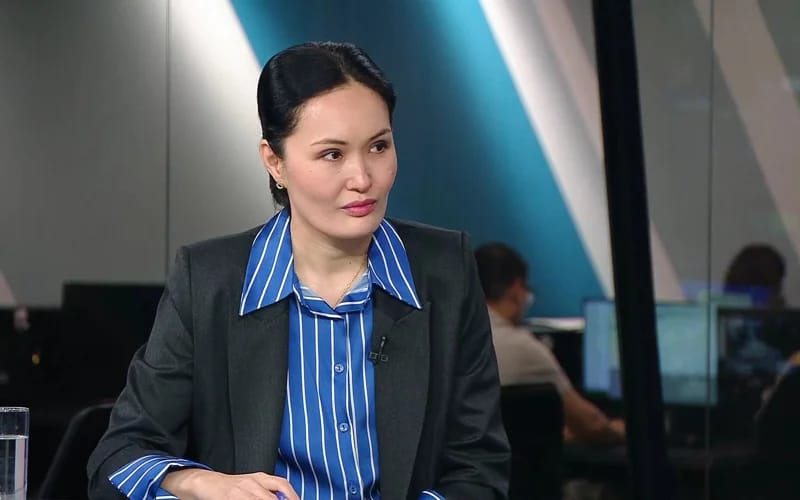
Kazakhstan Interfaith Center Chair Gulsana Kozhabay: Astana Congress Must Turn Dialogue into Action

Kazakhstan wants the Astana Congress of the Leaders of World and Traditional Religions to take a more active role in conflict prevention and postwar reconciliation, including through permanent expert engagement and a possible Islamic-Jewish roundtable in Israel in 2027. In an interview with The Times of Central Asia, Gulsana Kozhabay, chair of the board of the International Center for Interfaith and Interreligious Dialogue, explains how the Congress could expand its work between its triennial gatherings while remaining politically neutral. Speaking in a personal capacity, she discusses the limits of religious diplomacy in the conflict in Gaza. She also addresses Kazakhstan’s ambition to develop its own school in this field and explains why she believes interfaith dialogue must increasingly lead to practical action rather than declarations alone. TCA: What role can Kazakhstan’s humanitarian and spiritual diplomacy play in promoting peace, and how can the International Center contribute? Kozhabay: Let us begin by explaining in simple terms what spiritual diplomacy means. In the context of this interview, we primarily understand it as religious diplomacy. It has several layers. It includes relations between different religions, dialogue within a single religion, engagement among the Abrahamic faiths, and work at local, regional and international levels. Religious leaders and organizations can work with states, international organizations and civil society, or act independently. Many researchers believe that we are living in a post-secular period. Jürgen Habermas is one of the principal theorists associated with this approach. Modernization and technological development have clearly not pushed religion to the margins. Religions continue to play an important role in society, culture, and even politics. In many countries, including the Vatican, states in the Middle East, Egypt, Israel, the United States, and Russia, religious leaders command considerable trust, exercise influence in society, and have direct access to very large audiences. Habermas’s work is widely associated with the concept of a post-secular society and the continuing place of religion in public life. Religious diplomacy cannot, of course, prevent or resolve every conflict and crisis, or replace political negotiations. Its main value lies in preserving channels of communication alongside political dialogue, or when that dialogue becomes difficult. Reducing mistrust, countering hate speech, and explaining to the public the value of peace and human life are important elements of religious diplomacy and are reflected in the Astana Peace Declaration 2025. In his ecological encyclical Laudato si’, Pope Francis wrote that religions should engage in dialogue to protect nature, defend the poor, and build networks of respect and fraternity. Kazakhstan has always supported peaceful dialogue and a constructive international agenda. This is one of our strengths. We do not claim the role of a great power and do not seek to impose our decisions on other countries. Kazakhstan acts as a middle power that can build bridges, bring different parties to the same table, and offer neutral venues for dialogue. This is also part of Kazakhstan’s soft power. Kazakhstan is trusted as a state that consistently supports dialogue at the political level and among cultures,...

Turkmenistan’s Chief Mufti Replacement Recalls Earlier Dismissals

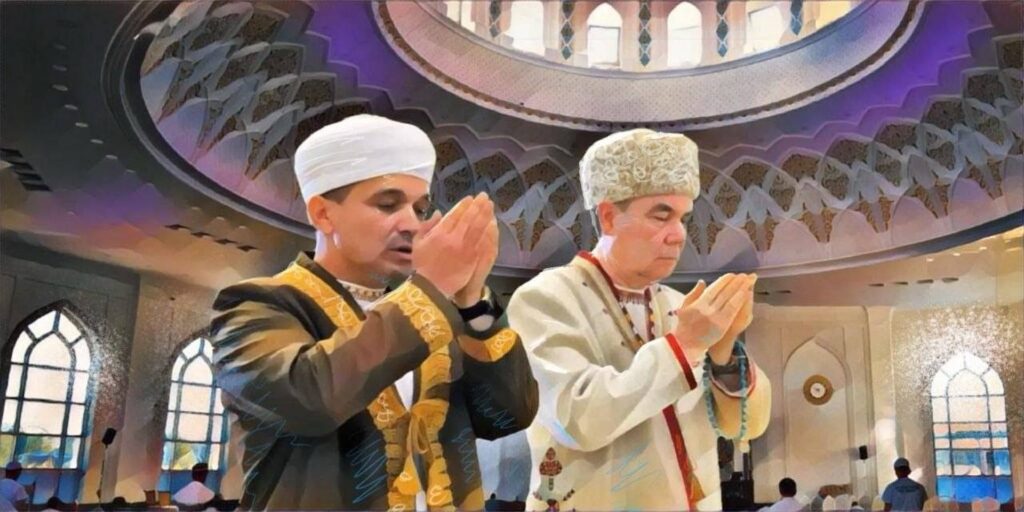
Only two people in Turkmenistan, the chairman of the Halk Maslahaty (People’s Council) and the president, have what could be considered job security. Everyone else is expendable, at a moment’s notice, and that extends to the country’s top clergy. Turkmenistan has replaced the country’s top mufti, and while the reasons for the sudden move are not clear, the removal process is very familiar for Turkmenistan. Frantic Friday On June 19, the mufti of all Turkmenistan, Yalkap Hojagulyyev, led Friday prayers at the Turkmenbashi Ruhy Mosque in Gypjak, some 11 kilometers from the capital, Ashgabat. Saparmurat “Turkmenbashi” Niyazov was Turkmenistan’s first president. The country’s compliant parliament and Halk Maslahaty bestowed the title of “Turkmenbashi,” meaning head of the Turkmen, on Niyazov. Gypjak was Niyazov’s home village, and when he was alive, he spent $100 million building a mosque that could accommodate 10,000 worshipers. After he died in late 2006, he was laid to rest at the nearby mausoleum built specially for him and his family. The June 19 Friday prayers were attended by a special visitor, Malaysian Prime Minister Anwar Ibrahim, who also paid his respects at Niyazov’s mausoleum. After prayers ended, the top figures from the muftiate, the spiritual board overseeing Islamic affairs in Turkmenistan, and select elders from around Turkmenistan met at the mosque for a discussion. That discussion included the announcement that the muftiate had appointed a new chief mufti. That person was Rahman Gurbanmyradov. Gurbanmyradov, who had been the head mufti for Ahal Region, was not at the meeting in Gypjak. He was saying prayers at the Seyit Jemaleddin Mosque in Ak Bugday District, Ahal Region, for a sadaqah (voluntary giving of charity) organized by Halk Maslahaty Chairman Gurbanguly Berdimuhamedov. Berdimuhamedov was marking the first Friday of the Islamic year 1448, which started on June 16. Back in Gypjak, senior clerics and elders were also considering what to name the new mosque being built in the newly built city of Arkadag, some 30 kilometers outside Ashgabat. Berdimuhamedov succeeded Turkmenbashi as president and held the office for roughly 15 years. During that period, government officials and state media gave him the title “Arkadag,” or “Protector.” Not surprisingly, when one of the elders at the Gypjak meeting proposed naming the new mosque in Arkadag city the Arkadag Spiritual Mosque, there was unanimous support. Why Hojagulyyev was fired is unclear, though there is speculation that Berdimuhamedov had been angry with the mufti since 2023, when Hojagulyyev brought his wife to make the Hajj at state expense. Hojagulyyev had been the head mufti since 2019. Turkmenbashi Tames the Clergy First President Niyazov is credited with bringing the entire state apparatus under his full control in the first years after Turkmenistan’s 1991 independence. However, it took him longer to achieve the total submission of Islamic clergy. Toward the end of 1999, leading Islamic cleric and scholar Khoja Ahmed Orazgylych criticized Niyazov’s public support for the traditional New Year celebration that included dancing around a Christmas tree." The practice dated back to the...