• KGS/USD = 0.01144 0%
  • KZT/USD = 0.00206 0%
  • TJS/USD = 0.10736 -0.19%
  • UZS/USD = 0.00008 0%
  • TMT/USD = 0.28490 -0.28%
  • KGS/USD = 0.01144 0%
  • KZT/USD = 0.00206 0%
  • TJS/USD = 0.10736 -0.19%
  • UZS/USD = 0.00008 0%
  • TMT/USD = 0.28490 -0.28%
  • KGS/USD = 0.01144 0%
  • KZT/USD = 0.00206 0%
  • TJS/USD = 0.10736 -0.19%
  • UZS/USD = 0.00008 0%
  • TMT/USD = 0.28490 -0.28%
  • KGS/USD = 0.01144 0%
  • KZT/USD = 0.00206 0%
  • TJS/USD = 0.10736 -0.19%
  • UZS/USD = 0.00008 0%
  • TMT/USD = 0.28490 -0.28%
  • KGS/USD = 0.01144 0%
  • KZT/USD = 0.00206 0%
  • TJS/USD = 0.10736 -0.19%
  • UZS/USD = 0.00008 0%
  • TMT/USD = 0.28490 -0.28%
  • KGS/USD = 0.01144 0%
  • KZT/USD = 0.00206 0%
  • TJS/USD = 0.10736 -0.19%
  • UZS/USD = 0.00008 0%
  • TMT/USD = 0.28490 -0.28%
  • KGS/USD = 0.01144 0%
  • KZT/USD = 0.00206 0%
  • TJS/USD = 0.10736 -0.19%
  • UZS/USD = 0.00008 0%
  • TMT/USD = 0.28490 -0.28%
  • KGS/USD = 0.01144 0%
  • KZT/USD = 0.00206 0%
  • TJS/USD = 0.10736 -0.19%
  • UZS/USD = 0.00008 0%
  • TMT/USD = 0.28490 -0.28%

Viewing results 1 - 6 of 114

Italy’s Eni Expands Energy Projects in Kazakhstan with Hybrid Power Plant

The Italian energy company Eni is accelerating the expansion of its projects in Kazakhstan. By the end of the year, the company plans to complete construction of a hybrid power plant in Zhanaozen, one of the country’s key oil and gas centers. The 247-MW project combines three energy sources: solar, wind, and gas generation. The approach is expected to reduce the carbon footprint while providing a more stable energy supply in a region where strategically important production assets are concentrated Construction is proceeding in stages. The first component is already operational. In September 2025, a solar power plant with 80,000 panels was commissioned. Full completion of the complex is scheduled for the end of 2026, following the launch of gas and wind generation facilities. According to the Ministry of Energy, the project is intended to strengthen energy security for major enterprises in the Mangistau region, including Ozenmunaygaz and the Kazakh Gas Processing Plant. In a region that regularly experiences power shortages, this is a significant development. The project was discussed during a meeting between Kazakhstan’s Minister of Energy Yerlan Akkenzhenov and Italy’s Ambassador to Kazakhstan Antonello De Riu. Italian companies are gradually expanding their presence in Kazakhstan’s energy sector, from upstream production to processing and power generation. Cooperation extends beyond electricity generation. In January 2026, QazaqGaz and Eni moved to the practical phase of exploration at the Kamenkovsky block in the Caspian Basin. Work is also continuing at the Yuzhny Shu-Sarysu and Bereke blocks. Another major initiative is the gas-chemical complex under construction in the Atyrau region. The polyethylene project, with a planned capacity of 1.25 million tons per year and an estimated cost of $7.5 billion, has already entered the construction phase. The project is being implemented by KMG PetroChem, with Italy’s MAIRE group (through its subsidiary Tecnimont) serving as a key contractor. At the same time, conventional power generation projects are advancing. Cooperation with Italian power engineering company Ansaldo Energia has enabled the installation of new gas turbines at Almaty CHPP-3, with equipment deliveries completed in January 2026. However, this expanding cooperation is taking place amid legal uncertainty. Earlier, Eni and Shell, partners in the development of the Karachaganak field, lost a key stage of arbitration proceedings in London and may be required to pay Kazakhstan between $2 billion and $4 billion. While this could affect future investment decisions, it has not so far slowed the growth of Italian companies’ activities in the country.

Kazakh Parliament Backs Caspian Green Energy Corridor Linking Central Asia to Europe

Kazakhstan’s Mazhilis, the lower house of parliament, has ratified a strategic partnership agreement with Uzbekistan and Azerbaijan on cooperation in green energy production and transmission. The agreement involved the construction of a high-voltage power cable along the seabed of the Caspian Sea. Speaking at a plenary session, Energy Minister Yerlan Akkenzhenov noted that the document had been signed by the leaders of the three countries in November 2024 on the sidelines of the COP29 climate conference in Baku. According to the minister, the agreement lays the groundwork for one of the most ambitious energy initiatives in the history of independent Kazakhstan. The project involves the creation of a “Green Energy Corridor” designed to facilitate the export of environmentally friendly electricity, as well as green hydrogen and green ammonia, from Central Asian countries to European markets via the Caspian region. A key component of the initiative is the planned installation of a high-voltage direct current underwater cable system across the Caspian Sea. Officials say the project could provide Kazakhstan with direct access to the European Union’s energy market through interconnection with a similar energy infrastructure initiative being considered in the Black Sea region. The initiative reflects a broader effort by Central Asian governments to position the region as a supplier of low-carbon energy to Europe while developing east-west infrastructure that bypasses traditional Russian transit routes. For Kazakhstan and Uzbekistan in particular, exporting renewable electricity and related products such as green hydrogen could open new markets as global demand for cleaner energy continues to grow. Italian consulting company CESI has begun preparing a feasibility study, which is expected to define the project’s financial model and core technical parameters. The cost of preparing the feasibility study is estimated at around €1 million and will be fully covered by grant funding. The Asian Development Bank and the Asian Infrastructure Investment Bank have indicated their readiness to allocate up to $2 million in additional support. To coordinate implementation, the Green Corridor Alliance joint venture was established in July 2024. Ownership is divided equally among Kazakhstan, Uzbekistan, and Azerbaijan, with each country holding a 33.3% stake. The company is currently overseeing expert consultations and preparing subsequent phases of the project. According to Akkenzhenov, successful implementation would strengthen Kazakhstan’s position in global energy markets. “The project will help position Kazakhstan as a reliable partner in sustainable energy, capable of contributing to international energy corridors and implementing large-scale technological initiatives,” he stated. The initiative is also expected to expand export potential, stimulate the development of new energy technologies, and reinforce Kazakhstan’s role as a regional energy hub. Following the parliamentary debate, the Mazhilis deputies approved the agreement, emphasising its importance for enhancing regional energy security. The project is intended to deepen the interconnection between the power systems of Central Asia and Azerbaijan and create conditions for stable exports of green electricity. At the same time, the initiative highlights the growing role of the Caspian region in emerging energy corridors linking Central Asia with European markets. Alongside transport projects...

Kazakhstan Intends to Triple Its Hydropower Capacity by 2030

Kazakhstan plans to significantly expand its hydropower capacity over the next five years. By the end of 2030, the country intends to commission new hydropower plants with a combined capacity of approximately 660 MW, nearly tripling the sector’s current installed capacity, according to the Ministry of Energy. At present, 43 hydropower facilities operate in Kazakhstan with a total installed capacity of 313 MW. The implementation of agreements already concluded is expected to raise this figure to nearly 1 GW, substantially increasing the contribution of hydropower to the national energy mix. In 2025, an additional project was added to the portfolio: the 26 MW Korinskaya HPP-2 was commissioned in the Jetisu Region. By the end of the year, total electricity generation from renewable energy sources reached 8.621 billion kWh, of which 1.196 billion kWh was produced by small and medium-sized hydropower plants. Kazakhstan continues to rely on an auction mechanism to attract investment and enhance transparency in the renewable energy sector. In 2025, 500 MW of capacity designated specifically for hydropower projects was offered through competitive auctions. According to the Ministry of Energy, this approach helps reduce project costs and foster a stable investment environment. The highest concentration of renewable energy facilities, including hydropower plants, is located in the southern and southeastern regions, Zhambyl, Almaty, and Jetisu regions. These areas benefit from significant river potential and established infrastructure capable of supporting further generation growth. The ministry states that implementation of the planned projects will diversify Kazakhstan’s energy mix, supply remote areas with stable green electricity, reduce pressure on the main transmission grids, and enhance overall system reliability. As previously reported by The Times of Central Asia, renewable energy accounted for 7% of Kazakhstan’s national energy mix by the end of 2025.

Tajikistan Plans Over $1 Billion for Rogun Hydropower Project in 2026

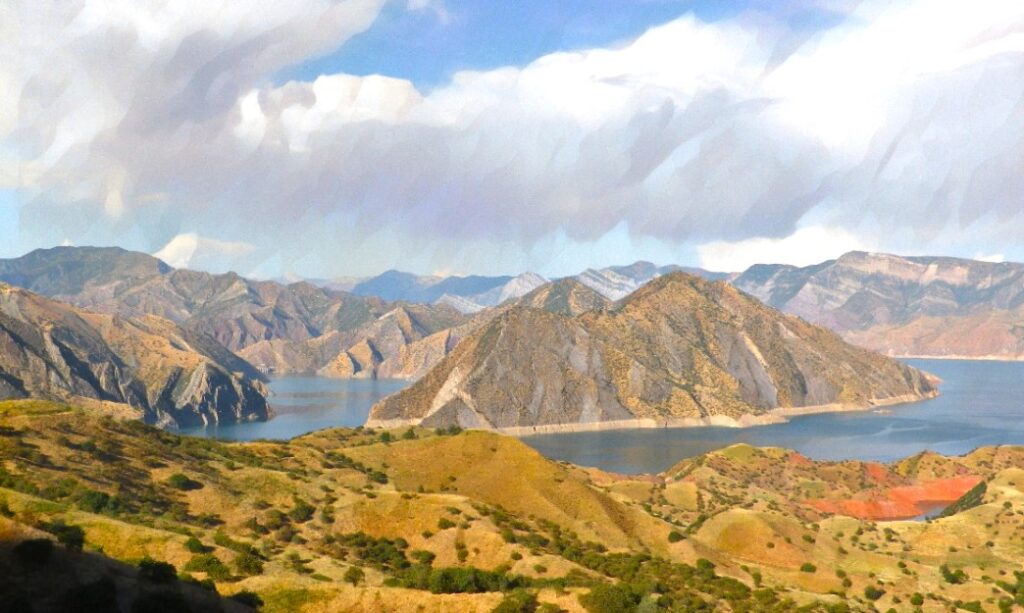
The government of Tajikistan plans to allocate at least 10 billion TJS (more than $1 billion) to finance the Rogun hydropower project in 2026, Finance Minister Faiziddin Qahhorzoda said on February 13 at a press conference in Dushanbe. The statement was later released by the Ministry of Finance and reported by Asia-Plus. Qahhorzoda specified that 8.2 billion TJS has already been earmarked in the state budget for completion of the Rogun hydropower plant. He added that additional financing could be mobilized through development partners, as agreements have been signed and the required domestic procedures and partner conditions have been fulfilled. “Certain conditions had to be met by the government of Tajikistan to access these funds. All conditions have been completed, and financing under the first tranche of $350 million has begun,” the minister said, referring to grant funding from the World Bank. He added that negotiations for an additional $300 million from the institution have been concluded successfully, with the funds expected to become available by mid-year. The minister also stated that domestic procedures are being finalized to attract $150 million from the Islamic Development Bank, as well as $100 million each from the Saudi Fund for Development, the Kuwait Fund for Arab Economic Development, and the OPEC Fund for International Development. According to Qahhorzoda, the remaining step is the completion of tender procedures. In addition, all procedures have reportedly been completed to secure $500 million from the Asian Infrastructure Investment Bank, of which $270 million is expected to be disbursed in the first tranche. According to the Finance Ministry, approximately 11 billion TJS was allocated in 2025 for the completion of Rogun, including 2 billion TJS designated for servicing Eurobonds issued to support the project. Earlier, at the end of January, the Energy Ministry stated during a separate press conference that several financing agreements signed with international partners in 2024-2025 had already entered into force. Officials noted that activating these agreements required fulfilling a number of technical and procedural conditions. The Rogun hydropower plant, located 110 kilometers from Dushanbe on the Vakhsh River, is the largest energy project in Tajikistan. Construction began in 1976 but was suspended following the collapse of the Soviet Union. Work resumed after independence. Of the six planned generating units, each with a capacity of 600 MW, two are currently operational and had produced 9.9 billion kWh of electricity by the end of last year. In December 2025, President Emomali Rahmon announced that the third unit is scheduled to be commissioned in September 2027. Once all six units are operational, the plant’s total installed capacity will reach 3.78 GW, and its 335-meter dam is projected to become the tallest in the world. The total cost of construction has been estimated at $6.2 billion.

Chinese Investor Plans 500 MW Solar and Wind Power Plants in Tajikistan

Chinese company Dayu New Energy Limited plans to develop solar and wind power plants in the Kubodiyon and Jaihun districts of Tajikistan’s Khatlon region. With a combined installed capacity of 500 megawatts, the project would rank among the largest renewable energy initiatives in the region. During negotiations, it was emphasized that Khatlon has been strengthening its economic ties with Chinese firms and offers favorable conditions for the construction of infrastructure and energy facilities. The region is seen as a key zone for attracting foreign direct investment. Dayu New Energy CEO David Liu noted that the company has operated in the renewable energy sector since 2018, specializing in the construction and operation of solar and wind power stations. He added that the firm is currently implementing wind energy projects in Georgia and Kazakhstan, underscoring its practical experience and technological capacity. Following the meeting, the head of the Khatlon region expressed support for the project and confirmed his willingness to facilitate its development. As previously reported by The Times of Central Asia, Tajikistan has significantly accelerated its transition to green energy. The country has already launched its largest solar initiative to date: the construction of two photovoltaic power plants with a combined capacity of 500 MW, an unprecedented move for the republic. In a related development, the Asian Development Bank recently approved a $1 million grant to support technical assistance for floating solar photovoltaic systems in Tajikistan.

Kazakhstan’s Renewable Energy Share Reaches 7% in National Energy Mix

By the end of 2025, renewable energy sources (RES) accounted for 7% of Kazakhstan’s electricity generation, up from 6.43% the previous year. This modest but steady increase was driven by the commissioning of nine new RES facilities with a combined capacity of 503 MW, including wind, solar, and hydroelectric power plants. While Kazakhstan still lags behind global leaders in the energy transition, it is considered one of Central Asia’s most institutionally structured and balanced markets for green energy development. The country currently operates 162 renewable energy facilities with a total installed capacity of approximately 3.5 GW. The sector remains diversified: 67 wind farms, 49 solar power plants, 43 hydropower facilities, and three biogas stations contribute to the overall mix. A key driver of Kazakhstan’s renewable energy expansion is its auction-based model for project selection, which enhances transparency and attracts private investment. Under the 2024-2027 plan, the government aims to deploy 6.7 GW of new renewable capacity, of which around 4 GW had already been allocated by December 2025. The participation of international players, including Total Eren, Masdar, China Power International Holding, and China Energy, has bolstered the sector’s technological and financial resilience. In comparison, Uzbekistan has emerged as the region’s most dynamic renewable energy market, focusing on large-scale solar and wind projects led by foreign investors. Although the share of renewables in Uzbekistan’s energy mix remains below 10%, its annual capacity additions have outpaced Kazakhstan’s in absolute terms. Unlike Kazakhstan’s market-based approach, Uzbekistan’s model relies more heavily on large, state-structured contracts, which speeds up implementation but limits competition and diversification. Total investment in Uzbekistan’s renewable sector is estimated at roughly $6 billion, with key backing from the European Bank for Reconstruction and Development (EBRD), the World Bank, and the International Finance Corporation (IFC). Kyrgyzstan and Tajikistan formally lead the region in renewable energy share due to their reliance on hydropower, which accounts for 80-90% of their electricity generation. However, this heavy dependence makes their energy systems highly vulnerable to seasonal and climatic fluctuations. Turkmenistan remains the regional outlier, with a power sector almost entirely reliant on natural gas despite significant solar potential. Renewable projects there are limited and largely experimental. In this context, Kazakhstan occupies an intermediate position, between the hydropower-heavy economies of Kyrgyzstan and Tajikistan and the fast-growing but centralized market of Uzbekistan. Its relatively low starting share in renewables is offset by a stable institutional framework, competitive project selection, and strong international participation. Kazakhstan’s targets, to raise renewable energy’s share to 15% by 2030 and to 50% by 2050, are ambitious but feasible, provided green energy development remains aligned with investments in base-load generation.