Kazakhstan’s Grain Exports to Europe Hit Russian Rail Bottleneck
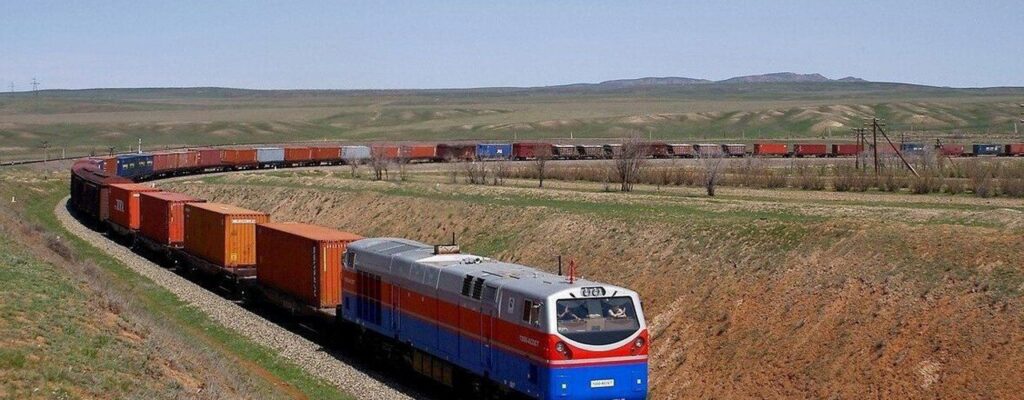
Russian Railways (RZD) has rejected October requests to transport grain from Kazakhstan through Russia to Estonian ports, citing insufficient rail capacity. There is no formal ban on shipments, but without approval, exporters cannot move their cargo along the usual route. Zeynolla Abdumanapov, head of Kazakhstan's National Association of Exporters KazGrain, reported the problem. The affected rail border crossings are Ivangorod–Narva and Pechory–Koidula, through which Kazakhstan's shipments travel to the Estonian ports of Muuga and Sillamäe. The Baltic route is particularly important for shipments of Kazakhstan's durum and high-protein wheat, as well as oilseed flax, to Europe. These crops command higher prices than ordinary wheat. On October 8, Estonia banned the transit of grain originating in or exported from Russia and Belarus. The restrictions do not apply to grain from Kazakhstan passing through Russian territory, and exporters had hoped to take advantage of available capacity at Estonian ports, where Russian grain transit had already been virtually nonexistent. However, disruptions to shipping through the Black Sea, caused by Ukrainian attacks on Russian port infrastructure and vessels, have forced Russia to redirect much of its grain toward its own Baltic ports, including Ust-Luga and Vysotsk. St. Petersburg is another destination. Russian grain also continues to pass through Latvia and Lithuania, which have not imposed equivalent bans. The shift has increased pressure on the railway network serving the Baltic region. According to Reuters, RZD has given priority to grain shipments heading toward Baltic and Arctic ports. Russia has also raised freight tariffs for shipments to Baltic and Finnish border crossings. Gani Yessenbayev, a representative of Kazakhstan Temir Zholy (KTZ), the country's state railway operator, told the Eurasian AGRICOM 2026 conference that KTZ is negotiating with RZD and recommending that exporters resubmit their applications. The volume of cargo affected by the rejections has not yet been disclosed. Russia can be bypassed via the Trans-Caspian International Transport Route through Azerbaijan and Georgia. However, KazGrain estimates that shipping costs along this route are roughly twice as high, while transshipment capacity is constrained by the facilities at Georgia's Port of Poti. For large-scale wheat exports, the additional costs could prove too high. Kazakhstan's grain trade with Iran is also becoming more difficult. According to Abdumanapov, sea freight rates from Aktau have risen from $17 to $95 per metric ton. Suppliers from Kazakhstan must compete with cheaper Russian grain, while a stronger tenge further reduces their export earnings in local currency. Most of Kazakhstan's grain exports, however, go to neighboring countries rather than Europe. From January through September 2026, grain shipments by rail for export increased by 14% to 8.4 million metric tons. Of that total, 5.5 million tons went to Central Asia. Uzbekistan received 4.11 million tons and Tajikistan 1.18 million tons. Shipments to Afghanistan totaled 762,000 tons, while China received 750,000 tons. Kazakhstan increased its agricultural export revenue by more than a third in 2025. The restrictions on transit through Russia therefore primarily threaten sales of Kazakhstan's higher-value agricultural products to the European Union. Future shipments will...