


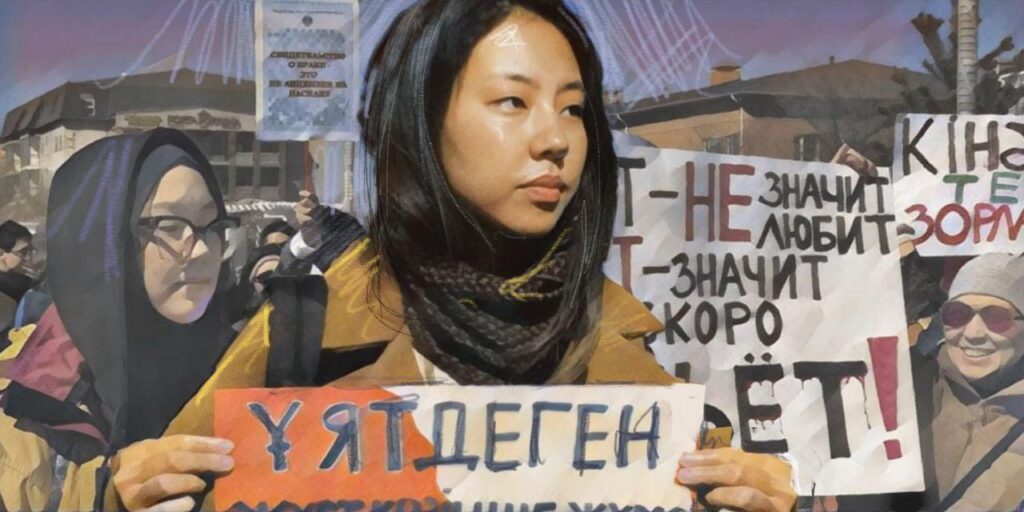
Saltanat Law One Year On: Domestic Violence Crackdown, Hidden Barriers Remain
In the spring of 2024, the world's attention turned to Astana as the trial of former minister Kuandyk Bishimbayev unfolded. Accused of the brutal murder of his common-law wife, Saltanat Nukenova, the proceedings were broadcast live, marking the region’s first live-streamed murder trial, which was widely followed like a reality show. The livestream drew hundreds of thousands across Kazakhstan, with daily clips dissected on TikTok and Telegram channels, a public fixation that turned the courtroom into a national arena Under intense public pressure, President Kassym-Jomart Tokayev signed a landmark legislative reform popularly dubbed “Saltanat's Law.” These amendments enhanced protections for women and children. The most consequential change was re-criminalizing battery and intentional infliction of minor bodily harm — offences frequently present in domestic violence cases — which had previously been treated as administrative violations. Now, over a year later, the emotional urgency has waned, giving way to the realities of implementation. The transition from legislative success to consistent enforcement has revealed systemic resistance from conservative communities and infrastructural gaps. A Statistical Paradox The initial police data may appear counterintuitive. Rather than declining, reported cases of domestic abuse surged following the law’s passage. According to the General Prosecutor’s Office and the Institute of Legislation, such offenses increased by 238% within a year, rising from 406 to 1,370 criminal cases by mid-2025. Interior Ministry data shows that more than 70,000 protective orders were issued nationwide in the first nine months of 2025, a surge driven by mandatory registration and proactive police intervention. Experts caution against interpreting this spike as a rise in violence, however. Instead, it reflects the exposure of previously hidden abuse. From 1 July 2023, police could start administrative domestic-violence cases without a victim’s complaint. The 2024 Saltanat Law then reinforced this proactive approach in the criminal sphere. The law also removed the option for repeated reconciliation. Previously, over 60% of domestic violence cases collapsed when victims, often under familial pressure, withdrew their statements. Now, cases proceed regardless. As a result, administrative arrests have doubled, supporting the argument long made by human rights activists: it is the inevitability of punishment, not its severity, that disrupts the cycle of abuse. Uneven Enforcement Across Regions The law's effectiveness varies significantly by region. High reporting rates in cities such as Almaty and Astana and in northern industrial regions often reflect improved enforcement rather than increased violence. In these areas, women are more aware of their rights, and law enforcement responds accordingly. In Astana and Almaty, police units trained specifically on domestic violence now conduct routine checks and intervene based on neighbour reports or video evidence, even without a formal complaint. Conversely, in more traditional regions, particularly Turkestan, Zhambyl, and parts of western Kazakhstan, domestic violence often remains underreported. Here, entrenched patriarchal norms and the cultural concept of uyat (shame) discourage women from seeking legal help. Local police and community leaders sometimes view reporting abuse as a family disgrace and pressure women to resolve disputes privately. In the Turkestan region, activists recount cases in...

