• KGS/USD = 0.01144 0%
  • KZT/USD = 0.00213 0%
  • TJS/USD = 0.10818 0%
  • UZS/USD = 0.00008 0%
  • TMT/USD = 0.28490 0%
  • KGS/USD = 0.01144 0%
  • KZT/USD = 0.00213 0%
  • TJS/USD = 0.10818 0%
  • UZS/USD = 0.00008 0%
  • TMT/USD = 0.28490 0%
  • KGS/USD = 0.01144 0%
  • KZT/USD = 0.00213 0%
  • TJS/USD = 0.10818 0%
  • UZS/USD = 0.00008 0%
  • TMT/USD = 0.28490 0%
  • KGS/USD = 0.01144 0%
  • KZT/USD = 0.00213 0%
  • TJS/USD = 0.10818 0%
  • UZS/USD = 0.00008 0%
  • TMT/USD = 0.28490 0%
  • KGS/USD = 0.01144 0%
  • KZT/USD = 0.00213 0%
  • TJS/USD = 0.10818 0%
  • UZS/USD = 0.00008 0%
  • TMT/USD = 0.28490 0%
  • KGS/USD = 0.01144 0%
  • KZT/USD = 0.00213 0%
  • TJS/USD = 0.10818 0%
  • UZS/USD = 0.00008 0%
  • TMT/USD = 0.28490 0%
  • KGS/USD = 0.01144 0%
  • KZT/USD = 0.00213 0%
  • TJS/USD = 0.10818 0%
  • UZS/USD = 0.00008 0%
  • TMT/USD = 0.28490 0%
  • KGS/USD = 0.01144 0%
  • KZT/USD = 0.00213 0%
  • TJS/USD = 0.10818 0%
  • UZS/USD = 0.00008 0%
  • TMT/USD = 0.28490 0%

Viewing results 1 - 6 of 113

Uzbek Scholar Proposes Unified Writing System for Turkic Languages

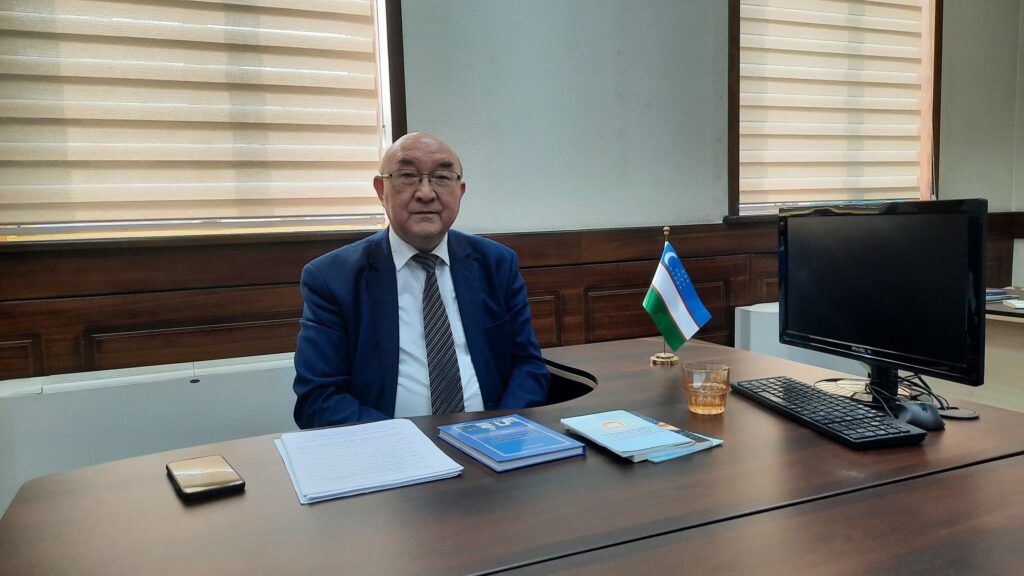
Across the Turkic-speaking world, debates over language policy and writing systems are gaining renewed importance. More than 300 million people across Eurasia speak Turkic languages, yet they use different scripts, Cyrillic, Latin, and Arabic. Uzbek scholar Bakhtiyor Karimov argues that this diversity of alphabets weakens cultural and intellectual connections among Turkic societies. Karimov, a linguist and professor who helped develop the pan-Turkic auxiliary language Ortaturk, is an academician of the Turon Academy of Sciences and director of its Ortaturk Language Research Institute. Together with Shoahmad Mutalov, he developed the concept of the Ortaturk language. In this interview, he discusses the challenges posed by alphabet diversity, his proposal for a new writing model, and his view that language policy is closely linked to political and geopolitical developments. A fragmented writing landscape Karimov describes alphabet diversity as one of the most serious challenges facing Turkic-speaking communities. “Roughly thirty Turkic languages exist,” he said. “About twenty use the Cyrillic alphabet, three use the Latin alphabet, two are transitioning toward Latin, and many communities still rely on the Arabic script. In numerical terms, around 100 million Turkic speakers use Arabic, another 100 million use Latin, and another 100 million use Cyrillic.” The situation has deep historical roots. Over the past century, shifting political systems and state policies have shaped the writing traditions of Turkic languages. As a result, speakers of closely related languages often find it difficult to read each other’s texts. For example, Uyghurs in China write using the Arabic script, while Uzbeks in Afghanistan also rely on Arabic-based writing. In Uzbekistan, both Cyrillic and Latin scripts are used. Azerbaijani communities in Iran use the Arabic script, whereas Azerbaijan employs a Latin-based alphabet. Most Turkic languages within Russia continue to use Cyrillic. Karimov also notes legal constraints. He points to Russian legislation requiring languages used in official contexts to employ the Cyrillic alphabet, arguing that this limits the ability of Turkic-speaking communities in Russia to adopt Latin scripts even if they wish to do so. “About twenty Turkic peoples living in Russia are effectively restricted to Cyrillic,” he said. Meanwhile, Turkey, Azerbaijan, and Turkmenistan have fully adopted Latin alphabets. Uzbekistan and Kazakhstan are gradually transitioning, although the process has been uneven. Kyrgyzstan continues to rely primarily on Cyrillic. “All of this means that the Turkic world is linguistically connected but graphically divided,” Karimov said. Efforts toward a common alphabet Recognizing this challenge, the Organization of Turkic States established a working group of linguists to explore the creation of a unified Turkic alphabet. Experts from Uzbekistan, Azerbaijan, Kazakhstan, Kyrgyzstan, Turkmenistan, and Turkey participated in the initiative. “They worked together for about two years and produced a draft proposal,” Karimov said. “However, the project remains under discussion and has not yet been formally adopted. Ultimately, political leaders must reach a consensus.” Karimov believes the draft proposal contains technical shortcomings, particularly in how certain sounds are represented. “In some cases, a single phoneme is represented by more than one graphic symbol,” he said. “From a computational...

Kazakh Scientists Develop Technology to Generate Electricity from Noise

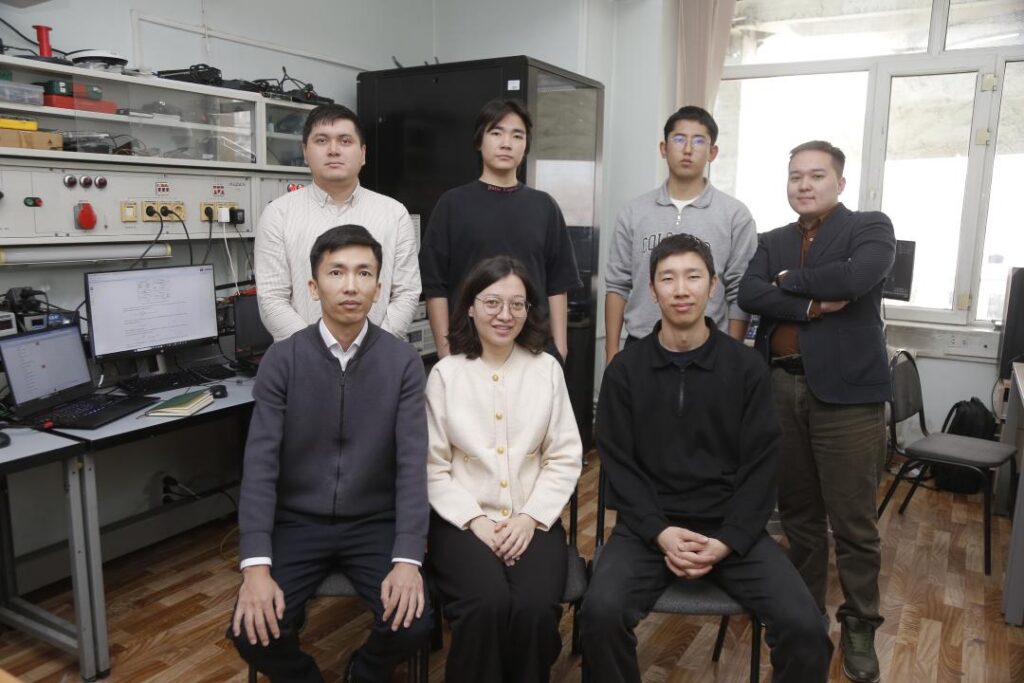
Researchers at Satbayev University in Almaty are developing a compact device capable of converting environmental mechanical vibrations into electrical energy. Mechanical vibrations are repetitive movements that occur around a system’s equilibrium position and include phenomena such as sound waves and physical oscillations. Scientists at Satbayev University aim to harness these vibrations as a stable energy source for autonomous sensors operating in remote and hard-to-access areas. The project focuses on creating an electromagnetic converter capable of operating within a frequency range from several tens to a few hundred hertz, the range most commonly found in natural vibration environments. “We are developing a device that will efficiently convert mechanical vibrations into electrical energy and serve as an autonomous power source. This will help ensure the continuous and reliable operation of Internet of Things (IoT) sensors in remote regions,” said project leader Albanbay Nurtay. The scientific basis of the technology is the law of electromagnetic induction: when a coil and magnets move relative to each other inside the device, an electrical signal is generated. Researchers are focusing on engineering solutions that maintain high efficiency across a wide range of vibration frequencies. Engineers are also working to ensure stable operation under different vibration conditions and to minimize energy losses during transmission. The project is being implemented in several stages. The first phase involves developing the conceptual design of the device, along with its 3D and mathematical models. In the next stage, Satbayev University researchers plan to build experimental prototypes and develop a dedicated testing platform to measure the device’s performance. Based on the results of these experiments, scientists will select a final prototype with optimal technical characteristics. The final stage will include the publication of research findings and the filing of a patent for the intellectual property. The device could have practical applications across several sectors, including industrial monitoring, environmental observation, and agriculture. The project represents an important step in the development of green technologies. “Efficient use of natural vibration sources opens new opportunities for energy conservation and supports the implementation of sustainable development principles and goals,” Kazakhstan's Ministry of Education noted. As previously reported by The Times of Central Asia, researchers at Nazarbayev University recently developed a medical exoskeleton designed to assist in stroke rehabilitation.

Kazakhstan-Singapore Center for Quantum Technologies Opens at Farabi University

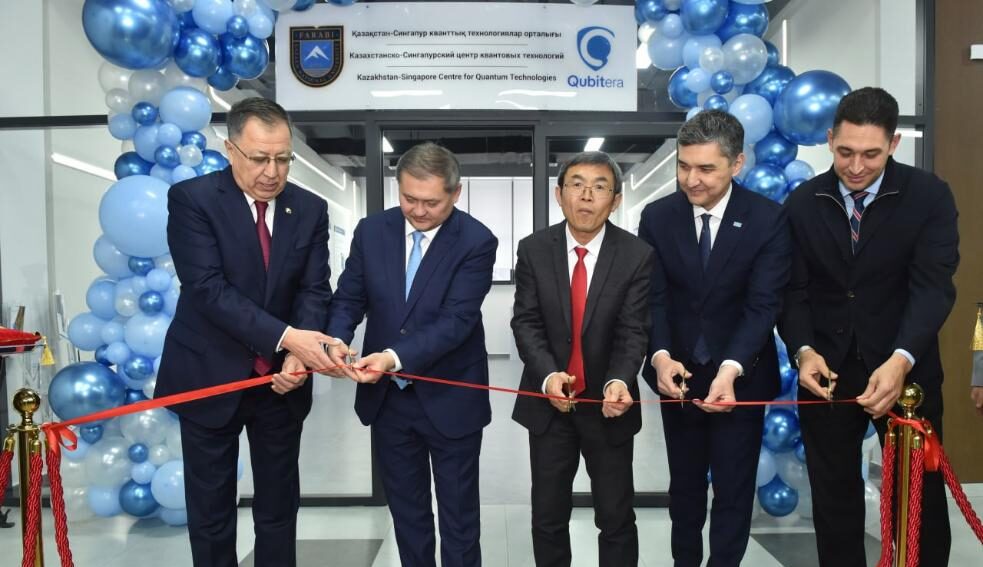
The Kazakhstan-Singapore Center for Quantum Technologies has been inaugurated at Al-Farabi Kazakh National University in Almaty. The project, implemented in partnership with Singapore-based ASTRASEC PTE. LTD and Qubitera LLP, aims to serve as a foundation for developing a national quantum technology ecosystem in Kazakhstan. According to the Ministry of Science and Higher Education, the center will focus on both fundamental and applied research, the training of researchers, engineers, and technology entrepreneurs, and the development of quantum-secure communication and computing solutions. It also plans to facilitate the transfer of advanced international expertise and support the creation of joint technology startups. The first phase of the project includes the launch of a laboratory dedicated to quantum cryptography and quantum communications. The facility is equipped with photonic systems and experimental infrastructure intended for research and specialist training. At the opening ceremony, Minister of Science and Higher Education Sayasat Nurbek said that the world is entering what he described as a “quantum revolution,” noting that traditional silicon-based digital and computing technologies are approaching their practical limits. He stated that the establishment of the center creates new opportunities for the development of Kazakhstan’s scientific and technological capacity. KazNU Rector and Chairman of the Board Zhanseit Tuimebayev emphasized the importance of integrating academia and industry, describing the center as part of the university’s strategy to transform into a research-oriented institution of international standing. He said cooperation with Singaporean partners would help combine academic expertise with advanced technological experience. Zhang Yinghua, Chairman of the Board of Directors of ASTRASEC PTE. LTD, described the development of quantum technologies as strategically important for national information security and digital resilience, highlighting quantum communication as a growing global priority. The inauguration concluded with a roundtable discussion focused on the center’s future development, quantum cybersecurity, industrial partnerships, and intellectual property protection for joint projects.

Kazakh Scientists Launch Medical Exoskeleton for Stroke Rehabilitation

Researchers at Nazarbayev University have completed development and secured state registration for a medical exoskeleton designed to aid stroke rehabilitation. The device is now ready for clinical use and mass production, according to the university’s press service. Named the Astana Gait Exoskeleton Assisted Rehabilitation (A.GEAR), the system is intended to help restore motor function in stroke survivors and individuals with musculoskeletal disorders. It received official certification following a positive evaluation from the National Center for Expertise of Medicines and Medical Devices. Nazarbayev University stated that this is one of the few high-tech medical solutions developed domestically that has received full clinical approval. Cost efficiency is cited as A.GEAR’s main competitive advantage. According to project estimates, the exoskeleton is several times more affordable than foreign alternatives, reducing Kazakhstan’s reliance on imports and increasing accessibility to modern rehabilitation tools. Professor Prashant Jamwal, the project lead, noted that it took just four years to progress from a lab concept to a certified medical product far shorter than the global average of 10 to 15 years. He added that the system could not only replace imported equipment but also reduce public expenditure on rehabilitation technologies. The project began in late 2021 at the university’s Medical Robotics Competence Center. Clinical trials took place in Karaganda and Astana, involving stroke patients and adolescents with cerebral palsy. Following the successful trials, the team began negotiations for a long-term contract with SK-Pharmacy LLP and sought a commercial distributor. Commercialization is being overseen by Robotics and Artificial Intelligence, led by Nazarbayev University graduate Shyngys Dauletbayev. In 2026, the university’s technopark aims to produce at least five exoskeleton units, with plans to scale production for distribution to medical institutions nationwide. University President Professor Waqar Ahmad highlighted that Nazarbayev University researchers rank among the top 2% of scientists globally, based on a bibliometric analysis by Stanford University. According to the Ministry of Health of Kazakhstan, approximately 40,000 people in the country suffer strokes annually, underlining a consistent demand for advanced rehabilitation solutions. As previously reported by The Times of Central Asia, Kazakhstan is also expanding the use of artificial intelligence for early diagnosis of strokes and cancer.

Kazakh Science Ministry Expands Strategic Partnership with AstraZeneca

Kazakhstan has entered a new phase of cooperation with British-Swedish pharmaceutical giant AstraZeneca, expanding the partnership beyond healthcare into science, education, and innovation. On January 26, Minister of Science and Higher Education Sayasat Nurbek visited AstraZeneca’s Discovery Centre in Cambridge, the company’s largest global research and innovation hub, where a memorandum of understanding was signed with AstraZeneca Kazakhstan. According to the ministry, the agreement paves the way for new areas of collaboration aimed at strengthening national scientific capacity, introducing advanced medical technologies, and enhancing the long-term sustainability of Kazakhstan’s healthcare system. The partnership will focus on several strategic areas: Real-World Data (RWD) and Real-World Evidence (RWE): Development of advanced data analytics tools to support scientific research, clinical decision-making, and evidence-based healthcare policy. Expansion of the Young Health Program: Prevention of non-communicable diseases among youth and the promotion of responsible health behaviors. Sustainable Development and Economic Diversification: Joint initiatives in environmental protection, green technologies, and sustainable business practices. Early Diagnosis and Healthcare Resilience: Implementation of modern screening methods, specialist training, and development of diagnostic infrastructure. Nurbek highlighted that the memorandum creates new opportunities to integrate research, education, and real-world clinical practice. “It is important not only to develop fundamental science, but also to ensure the transfer of advanced technologies and data into everyday medical practice. This partnership strengthens Kazakhstan’s scientific and biomedical potential,” he said. AstraZeneca has steadily expanded its operations in Kazakhstan in recent years. In April 2024, the Ministry of Healthcare, the Almaty city administration, national investment agency Kazakh Invest, and AstraZeneca signed an agreement on the contract manufacturing of biotechnological products. The initiative supports Kazakhstan’s strategic goal of increasing the share of domestically produced medicines to 50%. In July 2024, AstraZeneca and the state pharmaceutical distributor SK-Pharmacy signed a long-term agreement on local production and technology transfer. According to Maria Shipuleva, CEO of AstraZeneca Kazakhstan, the company’s innovative medicines will be produced at the Nobel Almaty Pharmaceutical Factory. The production portfolio includes treatments for diabetes, chronic heart failure, chronic kidney disease, multiple forms of leukemia, and cancer therapies for breast, ovarian, prostate, and pancreatic cancers.

Kazakh University Joins EU’s TiBeRIUM Project in Landmark Research Partnership

D. Serikbayev East Kazakhstan Technical University has been selected to participate in the TiBeRIUM (Titanium and Beryllium for European Resilience and Innovative Utilization of Minerals) project, part of the European Union’s Horizon Europe research and innovation program for 2021-2027, which has a total budget exceeding €90 billion. TiBeRIUM seeks to develop sustainable supply chains for critical raw materials (CRMs) and implement advanced, environmentally friendly processing technologies. The project consortium includes 25 partners from Germany, Greece, Cyprus, the United Kingdom, Norway, Spain, Poland, Belgium, Bulgaria, Finland, Kazakhstan, and Uzbekistan. The project is coordinated by Freiberg University of Mining and Technology (Germany). Kazakhstani participants include D. Serikbayev East Kazakhstan Technical University, Tenir Group, and the Ulba Metallurgical Plant. The project will carry out a comprehensive study of titanium and beryllium resources in Kazakhstan and Uzbekistan both of which are designated as CRMs by the EU due to their strategic role in European defense, green technology, industrial sustainability, and technological sovereignty. Kazakhstan is not participating solely as a raw material supplier but as a full partner in scientific research, technology development, and environmentally efficient processing. The initiative represents a shift from an "extraction-export" model to one focused on "science, technology, and added value." Participation in TiBeRIUM offers Kazakhstan access to cutting-edge international technologies, enhances applied science and engineering capacities, supports the training of a new generation of researchers and engineers, and strengthens the country’s role in global critical mineral supply chains. The project aligns with the goals of the European Critical Raw Materials Act, which seeks to reinforce the EU’s capacity and resilience in securing strategic mineral supply. The act emphasizes the importance of building mutually beneficial partnerships with third countries to diversify and stabilize critical raw material imports.