• KGS/USD = 0.01144 0%
  • KZT/USD = 0.00212 0%
  • TJS/USD = 0.10803 0%
  • UZS/USD = 0.00008 0%
  • TMT/USD = 0.28571 0%
  • KGS/USD = 0.01144 0%
  • KZT/USD = 0.00212 0%
  • TJS/USD = 0.10803 0%
  • UZS/USD = 0.00008 0%
  • TMT/USD = 0.28571 0%
  • KGS/USD = 0.01144 0%
  • KZT/USD = 0.00212 0%
  • TJS/USD = 0.10803 0%
  • UZS/USD = 0.00008 0%
  • TMT/USD = 0.28571 0%
  • KGS/USD = 0.01144 0%
  • KZT/USD = 0.00212 0%
  • TJS/USD = 0.10803 0%
  • UZS/USD = 0.00008 0%
  • TMT/USD = 0.28571 0%
  • KGS/USD = 0.01144 0%
  • KZT/USD = 0.00212 0%
  • TJS/USD = 0.10803 0%
  • UZS/USD = 0.00008 0%
  • TMT/USD = 0.28571 0%
  • KGS/USD = 0.01144 0%
  • KZT/USD = 0.00212 0%
  • TJS/USD = 0.10803 0%
  • UZS/USD = 0.00008 0%
  • TMT/USD = 0.28571 0%
  • KGS/USD = 0.01144 0%
  • KZT/USD = 0.00212 0%
  • TJS/USD = 0.10803 0%
  • UZS/USD = 0.00008 0%
  • TMT/USD = 0.28571 0%
  • KGS/USD = 0.01144 0%
  • KZT/USD = 0.00212 0%
  • TJS/USD = 0.10803 0%
  • UZS/USD = 0.00008 0%
  • TMT/USD = 0.28571 0%

Viewing results 1 - 6 of 21

Putin in Full Diplomatic Mode on SCO Sidelines

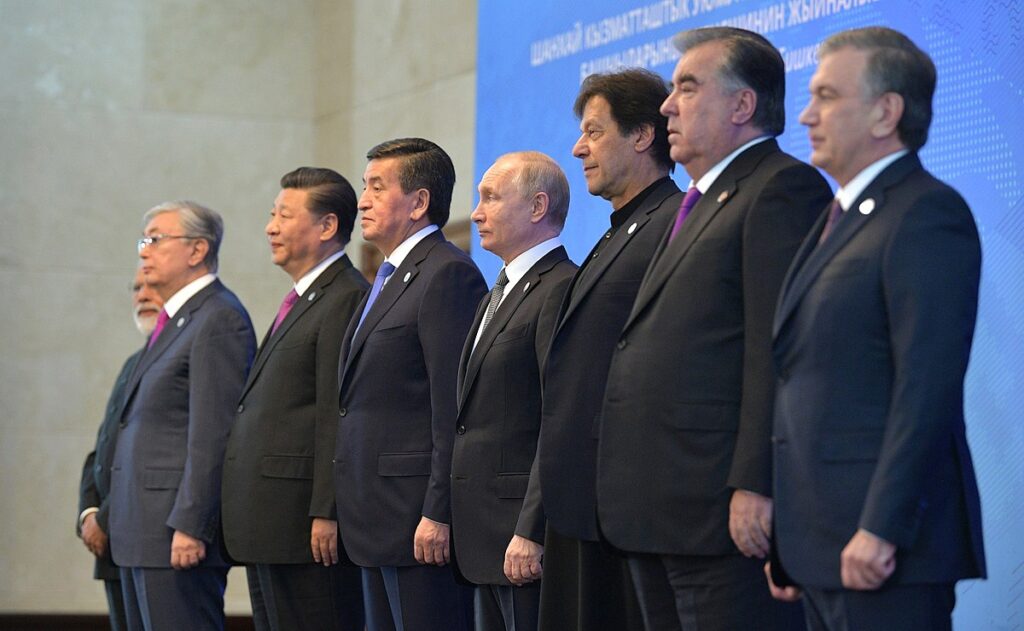
Russian President Vladimir Putin has faced Western efforts to isolate him because of the war in Ukraine. But he has a full day of diplomacy on the sidelines of the Shanghai Cooperation Organization event in Kazakhstan. Putin has meetings with the leaders of Azerbaijan, Kazakhstan, Mongolia, Turkey, China and Pakistan on Wednesday, one day ahead of the main group events at the summit in Astana, Kazakhstan’s capital, according to Tass, the official Russian news agency. Russia views the summit in Astana as an "opportunity to organize bilateral contacts with the country leaders who will attend it," said Putin aide Yury Ushakov, according to Tass. Ushakov said he expected Putin to hold several more “brief bilateral contacts” on Thursday. Putin’s flurry of diplomacy comes despite Western sanctions that have sought to weaken Russia’s military campaign in Ukraine, now in its third year. Many countries prefer to maintain trade with Russia, a key producer of energy and other natural resources. Central Asia has chosen neutrality in the Russia-Ukraine conflict and with the exception of a handful of private entities has avoided  sanctions. The SCO is a forum for discussion of security, economic and political issues. Its members are China, Russia, Kazakhstan, Kyrgyzstan Tajikistan, Uzbekistan, Iran, India and Pakistan. Belarusian President Alexander Lukashenko, a close ally of Putin, has said he expects Belarus to become a new member of the group at the Astana meeting.

SCO Summit: Tokayev and Xi Laud Kazakhstan-China Ties

On the eve of the 2024 Shanghai Cooperation Organization (SCO) Summit, hosted this year by Kazakhstan in its capital Astana, the leaders of Kazakhstan and China were keen to highlight the strength of their countries’ partnership. The SCO is a political, security and economic alliance in the wider Eurasia region, aimed at promoting trade and investments between member states, as well as global security. The Organization – which includes nine full members, four observer states and 14 dialogue partners – covers half of the world’s population, and almost a third of global GDP.  In comments to China’s Xinhua news agency, Kazakh President Kassym-Jomart Tokayev spoke of a “close political dialogue” between the two countries, supported by the SCO, thanks to which “China is consolidating its position as Kazakhstan’s leading trade and investment partner”.  Mutual trade between the countries reached a historic record of $41 billion in 2023. Tokayev added that “China became one of the top four foreign investors in Kazakhstan in 2023, investing around $2 billion in direct investments, a year-on-year growth of 16.4%. The total volume of Chinese investment in the Kazakh economy is over $25 billion. Around 4,700 Kazakh-Chinese enterprises operate in our country.” In his comments to Xinhua Tokayev also highlighted Kazakhstan’s growing cultural ties with China, mentioning a new agreement on a visa-free regime between the countries, the creation of cultural centers in both nations, and the fact that 2024 has been named the “Year of Kazakhstan tourism in China”. The president himself lived in China for eight years, where he studied Chinese in Beijing before working for the Soviet Union’s embassy to China. In turn, in a letter published by the Kazinform news agency, China’s leader Xi Jinping noted: “China is now Kazakhstan’s largest trading partner and its top export destination. Major strategic projects including the Zhanatas wind farm, Turgusun hydropower station, and the modernization of Shymkent Oil Refinery have been completed and commissioned. China-Kazakhstan crude oil and natural gas pipelines are operating in a safe and stable manner. The ‘green lanes’ for fast customs clearance of agricultural products are available at all border ports between the two countries, which makes green agri-products of high quality from Kazakhstan easily accessible for Chinese consumers. The potential for cooperation in new energy and transportation infrastructure has been unleashed. The transport and logistics terminal in Xi’an, the Western Europe-Western China Highway, and the China-Europe Railway Express all operate smoothly, providing a strong boost to the development of both China and Kazakhstan.” Kazakhstan has a multi-vector approach to its foreign policy; its role within the SCO complements the country's cooperation with the United States through the C5+1 platform, and a constant dialogue with the European Union. In a recent speech about Kazakhstan's chairmanship of the Shanghai Cooperation Organization this year, President Tokayev commented: "Kazakhstan is committed to multilateral cooperation. In our foreign policy we proceed from the national interests, and are in favor of solving all disputable issues on the basis of rational compromise. In addition to the...

SCO Summit in Astana: Correspondents from China Global Television Network, Times of Central Asia Discuss Upcoming Meeting

National leaders and other dignitaries from over 20 countries will be in the Kazakh capital of Astana this week for the annual summit of the Shanghai Cooperation Organization (SCO). The Times of Central Asia will be covering the SCO Summit live on 3 and 4 July from the city’s Palace of Peace and Reconciliation. The SCO is a political, security and economic alliance in the wider Eurasia region. This year’s Summit host Kazakhstan was a founding member of the Organization in 2001, alongside China and Russia, and its Central Asian neighbors Kyrgyzstan, Tajikistan and Uzbekistan. The last time the Summit was held in Astana, in 2017, India and Pakistan became full members. There are currently nine full member states, four observer states, and 14 dialogue partners, covering half of the world’s population, and almost a third of global GDP. This year's Summit will have significant implications for regional and global affairs. It is likely to produce initiatives aimed at reducing trade barriers, and promoting investments between SCO member states. High on the agenda will be the Belt and Road Initiative (BRI) – a crucial framework for enhancing connectivity and economic ties between China and its Central Asian partners. Other anticipated outcomes include new initiatives on climate change and sustainable development, as well as strengthened cultural and educational exchanges. Upon the initiative of Kazakhstan’s President Kassym-Jomart Tokayev, 2024 has been named the SCO “Year of Ecology”. Ahead of the Astana Summit, The Times of Central Asia’s senior editor Jonathan Campion spoke with an anchor from China Global Television Network, Mr Zhong Shi, about the role of the Shanghai Cooperation Organization plays in the Central Asia region. Their talk can be viewed in full in the videos below. In response to The Times of Central Asia’s question about what makes the SCO different from other alliances that the countries of Central Asia are aligned with, Mr Zhong explained that: “The SCO has been truly effective in combatting what we call the three enemies of all members, namely terrorism, extremism and separatism. There have been joint military drills conducted to enhance the coordination among armed forces”. Listen to Mr Zhong’s full response below: [video width="1920" height="1080" mp4="https://timesca.com/wp-content/uploads/2024/06/fullscreen-Zhong-Shi-answer-2-questions.mp4"][/video]   [video width="1920" height="1080" mp4="https://timesca.com/wp-content/uploads/2024/06/tw0-windows-Zhong-Shi-answer-2-questions.mp4"][/video] In turn, Mr Campion gave The Times of Central Asia’s perspective on the upcoming Summit. Asked about the impact that the Belt and Road Initiative has had on Central Asia, he replied: "Central Asia is evolving as a land bridge component to the Belt and Road Initiative linking China to the Caspian Sea. We’re seeing that investments in transport infrastructure are unlocking the region’s vast natural resources. With the world making a green transition, Kazakhstan stands out, as it has an abundance of critical materials – or green metals as they are known – that are used in the components of green technologies.” Listen to Mr Campion’s full response below: [video width="1920" height="1080" mp4="https://timesca.com/wp-content/uploads/2024/06/Jonathon-answer-Q2.mp4"][/video]   [video width="1920" height="1080" mp4="https://timesca.com/wp-content/uploads/2024/06/Jonathon-answer-Q3.mp4"][/video]