
• KZT/USD = 0.00215
  • TJS/USD = 0.10810
  • UZS/USD = 0.00009
  • TMT/USD = 0.29850
  • KZT/USD = 0.00215
  • TJS/USD = 0.10810
  • UZS/USD = 0.00009
  • TMT/USD = 0.29850
  • KZT/USD = 0.00215
  • TJS/USD = 0.10810
  • UZS/USD = 0.00009
  • TMT/USD = 0.29850
  • KZT/USD = 0.00215
  • TJS/USD = 0.10810
  • UZS/USD = 0.00009
  • TMT/USD = 0.29850
  • KZT/USD = 0.00215
  • TJS/USD = 0.10810
  • UZS/USD = 0.00009
  • TMT/USD = 0.29850
  • KZT/USD = 0.00215
  • TJS/USD = 0.10810
  • UZS/USD = 0.00009
  • TMT/USD = 0.29850
  • KZT/USD = 0.00215
  • TJS/USD = 0.10810
  • UZS/USD = 0.00009
  • TMT/USD = 0.29850
  • KZT/USD = 0.00215
  • TJS/USD = 0.10810
  • UZS/USD = 0.00009
  • TMT/USD = 0.29850
28 August 2026

Viewing results 1 - 6 of 4

$128 Million Ski Resort Near Bishkek to Use Chinese Financing

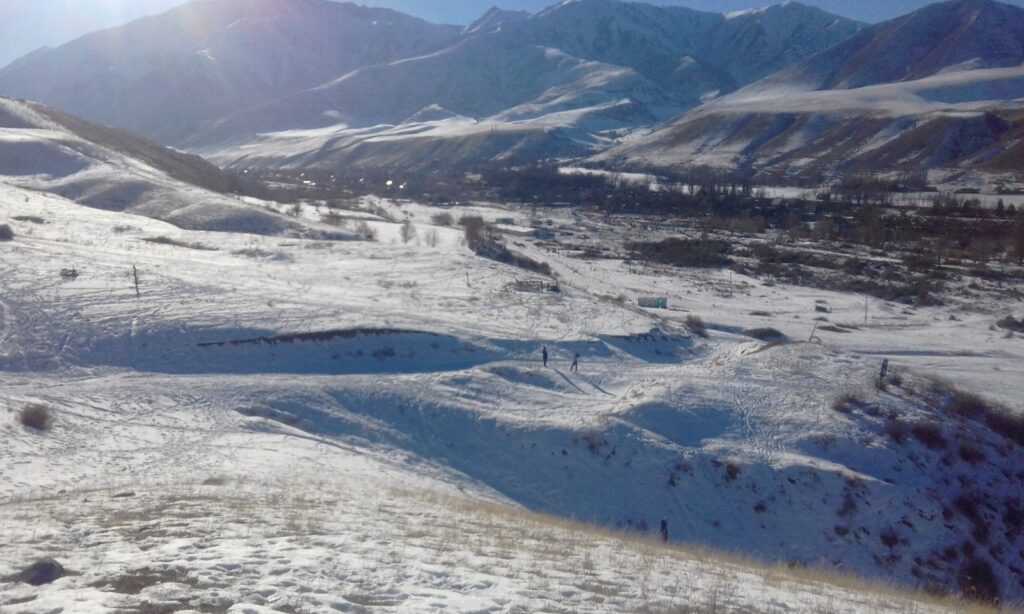
Kyrgyzstan is launching another major ski resort project. The year-round Baytik Mountain Resort, valued at $127.9 million, will be built 35 kilometers from Bishkek. China National Heavy Machinery Corporation (CHMC) will participate in both the construction and financing of the project. On August 27, the Tourism Development Support Fund, Valmont Group, and the National Investment Agency signed a public-private partnership agreement to build the resort in Kashka-Suu. The first phase of infrastructure is expected to be commissioned within four to five years. Kashka-Suu has been a ski destination since the Soviet era, with its first ski club established in 1976. The plans include cable cars, ski slopes with artificial snowmaking, accommodation, and facilities for summer recreation and business events. Funding will also come from state-owned Eldik Bank and a private partner. The project is expected to create at least 1,500 jobs during construction and around 800 permanent jobs once operational, with at least 80% of the latter to be held by Kyrgyz citizens. Baytik comes as Kyrgyzstan pursues a much larger expansion of its ski tourism infrastructure. In the east of the country, the government is already developing the Ala-Too Resort, valued at around €1.2 billion. The project will link Jyrgalan, Ak-Bulak, and Boz-Uchuk, with plans for 260 kilometers of ski runs and construction extending through 2038. As The Times of Central Asia previously reported, work began in August 2025. The two projects have different locations and potentially different markets. Ala-Too is being developed near Issyk-Kul as a large international tourism cluster. Baytik’s main advantage is its proximity to Bishkek and the country’s largest international airport. Karakol, Kyrgyzstan’s best-known ski destination, is roughly 400 kilometers from the capital. Baytik is intended to create a major year-round recreation area within easy reach of Bishkek. The investment comes as Kyrgyzstan’s tourism revenues are growing. Foreign visitors spent almost $1.1 billion in the country in 2025, up from $1.02 billion a year earlier, while tourism’s share of the economy reached 3.8%. Travelers from neighboring Central Asian countries and Russia continue to account for most foreign arrivals. For Kyrgyzstan, developing mountain resorts offers a way to reduce the tourism industry’s dependence on the summer season and Issyk-Kul. CHMC’s involvement brings another potential source of capital to the project. Chinese companies have long been involved in infrastructure projects in Kyrgyzstan, particularly in transport and energy. With Baytik, a major Chinese contractor is moving into the country’s tourism infrastructure.
Kyrgyzstan Advances Construction of Ala-Too All-Season Ski Cluster

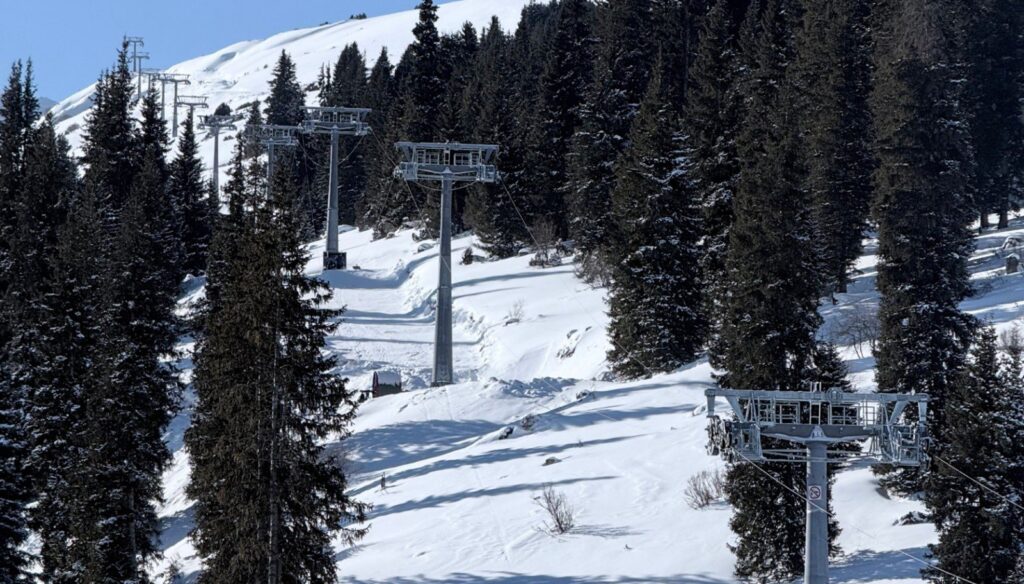
On February 25, Kyrgyzstan’s Ala-Too Resort OJSC and the Austrian company Doppelmayr, a global leader in cable car construction, signed a contract for the installation of four additional cable-car lines at the Jyrgalan resort. The site represents the first phase of the Ala-Too Resort project, a flagship state investment initiative to develop an all-season mountain ski cluster in the Issyk-Kul region, east of Lake Issyk-Kul. Construction of the Ala-Too Resort cluster, which will combine three resorts, Jyrgalan, Ak-Bulak, and Boz-Uchuk, began in August 2025. The new agreement follows a contract signed last year under which Doppelmayr is currently building two cable-car lines at Jyrgalan. Their commissioning is scheduled for May 2026. The four additional cable-car lines are expected to be completed by the end of this year, with the official opening of Jyrgalan planned for December. Once operational, the total length of cable-car lines at the resort will exceed 8 kilometers, while ski trails will extend to 46 kilometers. Doppelmayr has also completed a 1-kilometer cable-car line in the Ala-Archa State Nature Park, located about 30 kilometers from the capital, Bishkek. Officially opened on February 18, it became Kyrgyzstan’s first gondola lift. According to the Ministry of Economy and Commerce, the Ala-Too Resort project will be implemented in stages through 2038, with total investments estimated at approximately €1.2 billion. The cluster aims to attract up to 4 million tourists annually. The total area of the mountain cluster will cover 3,916 hectares, with ski slopes extending to 260 kilometers. Project developers state that this would place Ala-Too Resort among the world’s top ten resorts by total trail length and make it the largest ski destination in Central Asia. The development plan includes the construction of private villas and three- to five-star hotels, as well as a panoramic restaurant, conference facilities, a medical center, a stadium, an amphitheatre, and recreational parks. Infrastructure works are currently underway, including the construction of power transmission lines, drinking water systems, and wastewater treatment facilities. Reconstruction of the road linking Jyrgalan with Karakol, the administrative center of the Issyk-Kul region, has also begun. The Ala-Too Resort project is expected to provide a significant boost to Kyrgyzstan’s tourism sector, positioning the country as a major destination for mountain skiing in Central Asia.

“Winter Begins in Karakol”: Kyrgyzstan Launches Ski Season with Cultural Events

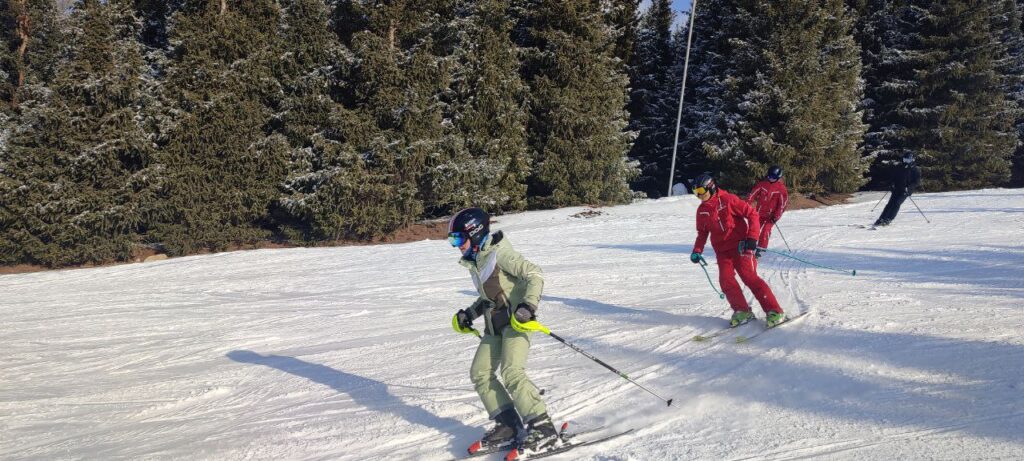
The winter tourist season has officially opened in Karakol, Kyrgyzstan, long considered one of Central Asia’s top destinations for active winter tourism. The city is traditionally the first in the country to open its ski slopes, and this year’s launch was not merely technical, but a full-scale event aimed at boosting both domestic and international tourism. A festive program was held at the ski base, featuring music and dance performances, as well as the launch of the “Jaryk Fest” festival. Local artisans hosted master classes in felt-making, showcasing clothing and souvenir production. This crafts section played an important role in positioning the region as a cultural as well as an adventure destination. [caption id="attachment_40525" align="aligncenter" width="402"] @TCA[/caption] “Jaryk Fest is a celebration of light, snow, and vivid emotions. It’s timed to coincide with the opening of the winter season across Kyrgyzstan. We even have a slogan: ‘Winter begins in Karakol,’” said Ulukbek Almakebek, manager of the Karakol ski resort, in an interview with The Times of Central Asia. According to the organizers, the resort continues to draw tourists from Russia and Kazakhstan, but recent years have seen a notable rise in visitors from Europe and Southeast Asia, a trend that Kyrgyzstan is actively encouraging by expanding its winter tourism offerings. Skiers highlight Karakol’s unique terrain as one of its main attractions. Many of the trails pass through dense coniferous forests, creating picturesque and varied descents not found at other regional resorts. Erdenet Kasymov, director of the Kyrgyzstan Tourism Department, noted that winter tourism is rapidly diversifying. In addition to traditional skiing and hot springs, European tourists are increasingly opting for mountain hiking and horseback riding. [caption id="attachment_40526" align="aligncenter" width="396"] @TCA[/caption] “Tourists from South Korea and India are particularly drawn to snowshoeing in deep snow. It’s a relatively new form of recreation, but one that’s quickly gaining popularity,” Kasymov said. One emerging trend is winter yachting on Issyk-Kul Lake. Because the lake does not freeze in winter, it offers an extended season and opportunities for new types of recreation. Two modern yachts have already been acquired for the region, and work is ongoing to restore older vessels and build docks and piers. This approach aligns with a vision outlined by President Sadyr Japarov, a native of the Issyk-Kul region, who has previously called for moving beyond the traditional separation of “winter” and “summer” tourism. According to Japarov, Kyrgyzstan is building a model of year-round tourism designed to take advantage of the country’s diverse natural offerings.

New Flight to Link Almaty and Kyrgyzstan’s Karakol Ski Resort

As the winter tourism season approaches, Kyrgyzstan’s state-owned Asman Airlines has announced the launch of a new regular flight connecting Almaty, Kazakhstan’s largest city, with the Kyrgyz town of Karakol, home to the country’s most popular ski resort. The Karakol-Almaty-Karakol route is set to begin operations on December 5, with flights scheduled every Friday and Sunday. The flight time is approximately 35 minutes. Asman Airlines will operate the Dash 8 Q400, a Canadian-made short-haul turboprop aircraft that can carry up to 80 passengers and has a range of up to 2,000 kilometers. Karakol is the highest ski resort in Central Asia, located at an altitude of 3,040 meters in the Tien Shan Mountains. The resort offers panoramic views of the surrounding peaks and nearby Lake Issyk-Kul. Situated just 7 kilometers from Karakol and 400 kilometers from Bishkek, it features ski trails suitable for both professional athletes and beginners. The ski season runs from December to March. The new air route is expected to significantly improve access to Karakol for weekend travelers from Kazakhstan’s commercial capital. In a related development, Kazakhstan and Kyrgyzstan have further enhanced air connectivity with the launch of a direct flight linking their capitals, Astana and Bishkek. On November 10, Kazakhstan’s Vietjet Qazaqstan operated its inaugural flight on the Astana-Bishkek route. The service runs twice a week, on Mondays and Thursdays. Officials anticipate that the new flights will promote tourism, business, and cultural exchange between the two neighboring countries.
