• KZT/USD = 0.00219
  • TJS/USD = 0.10840
  • UZS/USD = 0.00008
  • TMT/USD = 0.29850
  • KZT/USD = 0.00219
  • TJS/USD = 0.10840
  • UZS/USD = 0.00008
  • TMT/USD = 0.29850
  • KZT/USD = 0.00219
  • TJS/USD = 0.10840
  • UZS/USD = 0.00008
  • TMT/USD = 0.29850
  • KZT/USD = 0.00219
  • TJS/USD = 0.10840
  • UZS/USD = 0.00008
  • TMT/USD = 0.29850
  • KZT/USD = 0.00219
  • TJS/USD = 0.10840
  • UZS/USD = 0.00008
  • TMT/USD = 0.29850
  • KZT/USD = 0.00219
  • TJS/USD = 0.10840
  • UZS/USD = 0.00008
  • TMT/USD = 0.29850
  • KZT/USD = 0.00219
  • TJS/USD = 0.10840
  • UZS/USD = 0.00008
  • TMT/USD = 0.29850
  • KZT/USD = 0.00219
  • TJS/USD = 0.10840
  • UZS/USD = 0.00008
  • TMT/USD = 0.29850
23 November 2026

Viewing results 1 - 6 of 2

Kazakhstan Victims Compensation Fund Pays Out Just 9% of Revenue

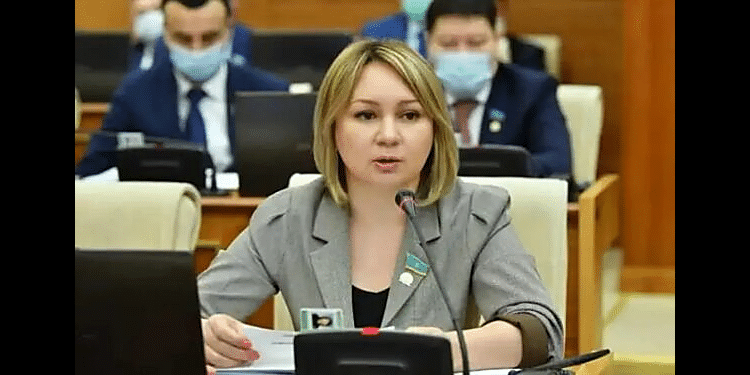
Kazakhstan’s Victims Compensation Fund has collected more than 9.3 billion tenge ($20.6 million) over eight years but paid out only about 9% of that amount to crime victims. Snezhanna Imasheva, a member of the Kurultai, Kazakhstan’s unicameral parliament, has proposed increasing compensation payments or expanding eligibility. On November 4, Imasheva submitted a parliamentary inquiry to the prosecutor general and the ministers of internal affairs and finance. She cited Finance Ministry figures showing that around 5,500 victims had received just over 855 million tenge ($1.9 million) by July 2026, while approximately 8.5 billion tenge ($18.8 million) remained in the fund. The fund was established in 2018, but compensation payments did not begin until July 2020. On November 4, Imasheva submitted a parliamentary inquiry to the prosecutor general and the ministers of internal affairs and finance. She cited Finance Ministry figures showing that around 5,500 victims had received just over 855 million tenge ($1.9 million) by July 2026, while approximately 8.5 billion tenge ($18.8 million) remained in the fund. The fund was established in 2018, but compensation payments did not begin until July 2020. Imasheva called for an assessment of whether victims are aware of their right to compensation. The fund provides one-time payments to victims of certain crimes, including minors subjected to sexual violence, victims of human trafficking or torture, and people who suffered serious bodily harm or contracted the human immunodeficiency virus as a result of a crime. In cases involving a victim’s death, eligible relatives can receive compensation. Payments currently range from 129,750 to 216,250 tenge (286–477). The amounts are tied to Kazakhstan’s monthly calculation index (MCI), a government-set benchmark used to calculate fines and benefits, among other payments. The law provides compensation of 30, 40, or 50 MCI. These multiples have remained unchanged since the system was introduced, although the value of the index in tenge is adjusted annually. One source of revenue is mandatory contributions imposed on convicted offenders, ranging from 5 to 30 MCI depending on the severity of the crime. Imasheva also called for an examination of why so little of the money paid to victims has been recovered from offenders and others legally required to repay it. Victims can apply for compensation within three years of being formally recognized as victims in a criminal case. Under the law, the authority handling the case must review an application within 10 calendar days of its registration. Payment must then be made within 10 calendar days after the list of recipients is submitted to the authority responsible for disbursement. In practice, however, Imasheva said the process can take up to four months. She proposed automating applications and payments, potentially through a digital platform operated by the Committee on Legal Statistics and Special Records under the Prosecutor General’s Office.


Kazakhstan Amnesty Bill Could Free 1,500 Inmates, Excludes Violent Offenders

Kazakhstan’s Mazhilis, the lower house of parliament, has approved in its first reading a draft amnesty law tied to the adoption of the country’s new Constitution. The measure could affect approximately 16,500 people, including around 1,500 inmates who could be released from prisons and other detention facilities. The initiative is notable for its scale and because it combines criminal and administrative amnesty measures for the first time in Kazakhstan’s history. According to lawmakers, the administrative component alone could affect around one million unpaid fines. The proposal has sparked public debate over whether individuals involved in high-profile criminal cases could benefit from the measure. Some lawmakers have also argued that journalists and bloggers convicted under controversial legislation should be included. Who Will Benefit? According to Snezhanna Imasheva, chair of the Mazhilis Committee on Legislation and Judicial and Legal Reform, individuals convicted of minor offenses and criminal misdemeanors would be eligible for full release from punishment. For offenses classified as medium severity, a different approach would apply. Individuals who caused no damage, or who have fully compensated victims, could qualify for complete release. Others could receive reductions in the remaining portions of their sentences. Among the most common offenses covered by the amnesty are theft, livestock theft, and embezzlement or misappropriation of entrusted property. Certain economic crimes may also qualify for partial sentence reductions. In some cases, individuals convicted of fraud could receive reduced sentences, provided the offenses do not involve corruption, particularly large-scale damages, or other exclusions specified in the legislation. Imasheva said that approximately one million unpaid administrative fines totaling nearly $33 million could be written off. The measure would apply to fines for offenses committed before midnight on March 17, 2026, shortly after Kazakhstan’s new Constitution was adopted in a nationwide referendum. Who Will Not Be Released? The draft law excludes crimes against life and health, corruption offenses, terrorism, and extremism. Those convicted of murder, assisting suicide, intentional infliction of serious, moderate, or minor bodily harm, assault, torture, stalking, HIV transmission, and sexual offenses will not be eligible for amnesty. Those convicted of murder, assisting suicide, intentional infliction of bodily harm, assault, torture, stalking, HIV transmission, and sexual offenses will not be eligible for amnesty. The measure also excludes recently criminalized offenses such as acting as a financial “dropper” in fraud schemes and bride kidnapping. High-Profile Convicts Remain Excluded Former minister of national economy Kuandyk Bishimbayev, who was convicted in May 2024 of murdering his common-law wife, Saltanat Nukenova, will neither be released nor receive a sentence reduction. His convictions for murder committed with extreme cruelty and torture fall among the offenses excluded from the amnesty. Another widely publicized defendant, Perizat Kairat, will also be ineligible. Kairat, the founder of the charity Biz Birgemiz Qazaqstan 2030, was convicted in a high-profile fraud case involving funds raised for flood victims and other charitable causes. Lawmakers said her conviction for large-scale fraud falls under offenses excluded from the amnesty. In July 2025, Kairat was sentenced to ten years in prison, while her...