• KZT/USD = 0.00222
  • TJS/USD = 0.10840
  • UZS/USD = 0.00009
  • TMT/USD = 0.29760
  • KZT/USD = 0.00222
  • TJS/USD = 0.10840
  • UZS/USD = 0.00009
  • TMT/USD = 0.29760
  • KZT/USD = 0.00222
  • TJS/USD = 0.10840
  • UZS/USD = 0.00009
  • TMT/USD = 0.29760
  • KZT/USD = 0.00222
  • TJS/USD = 0.10840
  • UZS/USD = 0.00009
  • TMT/USD = 0.29760
  • KZT/USD = 0.00222
  • TJS/USD = 0.10840
  • UZS/USD = 0.00009
  • TMT/USD = 0.29760
  • KZT/USD = 0.00222
  • TJS/USD = 0.10840
  • UZS/USD = 0.00009
  • TMT/USD = 0.29760
  • KZT/USD = 0.00222
  • TJS/USD = 0.10840
  • UZS/USD = 0.00009
  • TMT/USD = 0.29760
  • KZT/USD = 0.00222
  • TJS/USD = 0.10840
  • UZS/USD = 0.00009
  • TMT/USD = 0.29760
06 October 2026

Viewing results 1 - 6 of 5

Uzbekistan Gas Exports Fall 35% as Imports Rise

Uzbekistan is spending more on gas imports while earning less from exports. In January-August 2026, exports of natural and manufactured gas fell 34.8% year-on-year to $322.3 million, according to data from the National Statistics Committee of the Republic of Uzbekistan. Over the same eight months, the country imported $1.22 billion worth of gas, 15.2% more than a year earlier. Of that amount, $124.3 million was spent on liquefied gas, including propane, with the value of those imports rising about 3.5-fold. In value terms, Uzbekistan imported almost four times as much gas as it exported. The country continues to sell gas to China while bringing in supplies from Russia and Turkmenistan to cover its domestic needs. Domestic natural gas production fell 16.3% year-on-year to 24.2 billion cubic meters in January-August, while demand remains high. The government said in August that expanding industrial capacity and the needs of a growing population were increasing demand for natural gas and petroleum products, with seasonal consumption adding further pressure. Five gas fields have been discovered since the beginning of the year, while 80 wells have been drilled, some to depths of 6,000 meters or more. Another 40 are planned for the fourth quarter. In May, BP p.l.c., formerly British Petroleum, acquired a 40% stake in a project covering six exploration blocks in western Uzbekistan’s Ustyurt region. State-owned Uzbekneftegaz and the State Oil Company of the Republic of Azerbaijan (SOCAR) each hold 30%. SOCAR operates the project and has been carrying out seismic exploration ahead of drilling. Uzbekistan is also expanding its gas transmission system. Plans include new trunk pipelines and upgraded compressor stations, while the introduction of modern electric motors at some stations is expected to save up to 125 million cubic meters of gas a year.
SOCAR and BP Prepare for Exploration Drilling in Uzbekistan’s Ustyurt Region

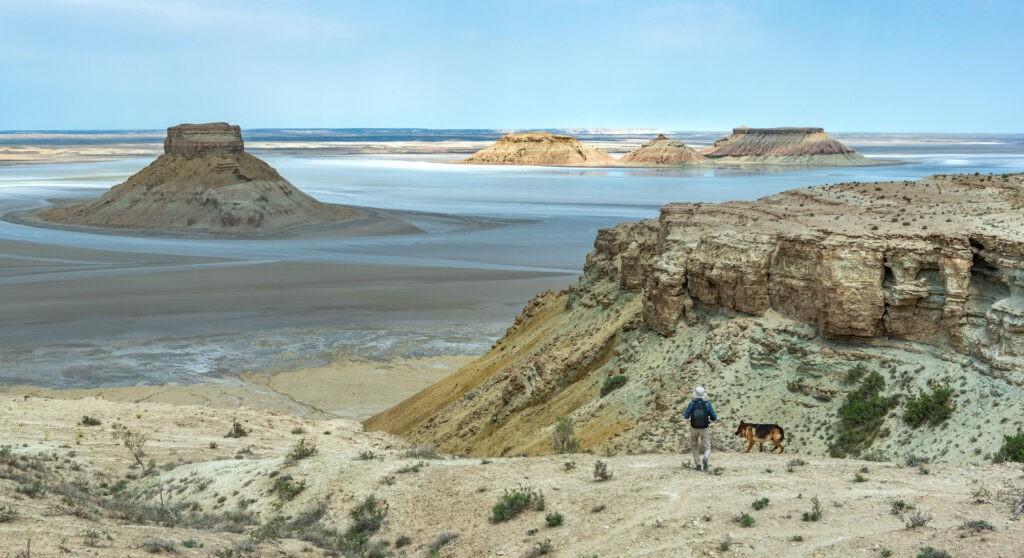
Azerbaijan’s SOCAR, Britain’s BP, and state-owned Uzbekneftegaz are preparing for exploration drilling across six blocks in Uzbekistan’s Ustyurt region. Following completion of a 3D seismic survey, the next stage involves processing the data and selecting a site for the first exploration well. Drilling will help establish whether preliminary estimates of 100 million metric tons of oil and 35 billion cubic meters of gas could translate into commercially recoverable reserves. The work covered the Boyterak, Terengquduq, Birqori, Kharoy, Qoraqalpoq, and Qulboy blocks in the Republic of Karakalpakstan. The seismic survey covered more than 3,000 square kilometers, compared with a minimum commitment of 1,000 square kilometers. The partners reviewed the completed fieldwork and discussed preparations for exploration drilling at a managing committee meeting in Tashkent on September 7. The data still need to be processed and interpreted, and no drilling location or date has been announced. Total investment in the project has been estimated at approximately $2 billion, with development dependent on a commercial discovery. The partners remain at the exploration stage and have committed to drilling one well. Decisions on further investment will depend on its results. Uzbek officials expect the six blocks could contain around 100 million metric tons of oil and 35 billion cubic meters of gas. Potential annual oil production has been estimated at five million metric tons. All three figures remain projections: seismic data help identify promising structures, but drilling is needed to confirm the presence and characteristics of hydrocarbons. Uzbekistan’s Energy Ministry, SOCAR, and Uzbekneftegaz signed a production-sharing agreement covering the six blocks in July 2025. SOCAR was designated the operator. BP joined the project in May 2026, acquiring a 20% interest from each of the two original partners. The British company now holds 40%, while SOCAR and Uzbekneftegaz retain 30% each. The deal marks BP’s return to exploration in Uzbekistan, where it first signed exploration agreements with the same partners in 2018 before withdrawing in 2021. The acquisition coincided with BP’s renewed emphasis on oil and gas investment. The company had previously reduced its exploration portfolio as part of a shift toward low-carbon energy, but subsequently revised its strategy and refocused on its traditional business. When BP joined the project, its regional president for Azerbaijan, Georgia, and Turkey, Gio Cristofoli, said the company saw significant resource potential in Uzbekistan. He said participation in the agreement would expand BP’s exploration portfolio and support its long-term organic growth. For SOCAR, the Ustyurt survey is its largest seismic exploration project outside Azerbaijan. In June, the company reported that more than 80% of the seismic program had been completed and that initial results were providing insights into deeper geological structures. SOCAR announced the completion of fieldwork in July, with data processing expected to finish in the first quarter of 2027. The partners have developed a work plan through 2029. Uzbekneftegaz head Abdugani Sanginov previously proposed accelerating the project and beginning drilling by the end of 2027, but an approved drilling schedule has not been published. Uzbekistan needs to find...

Uzbekistan Expands Energy Cooperation With SOCAR and BP at Energy Week Forum

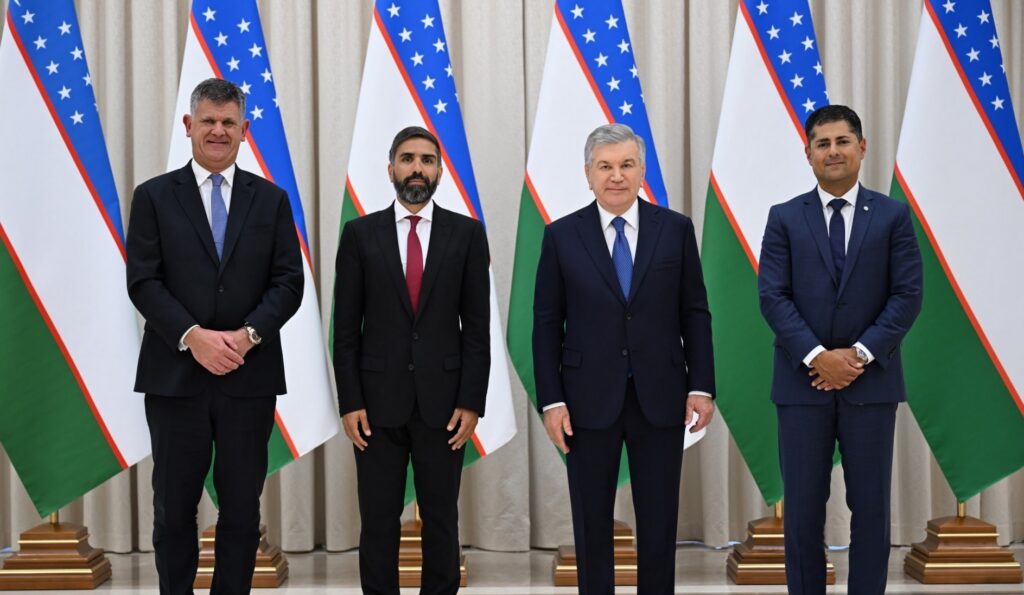
President Shavkat Mirziyoyev held talks on May 13 with executives from Azerbaijan’s state oil company SOCAR and energy giant BP during the Uzbekistan Energy Week 2026 forum in Tashkent. According to the Uzbekistan's presidency, Mirziyoyev met with SOCAR President Rovshan Najaf, as well as BP representatives Ariel Flores and Giovanni Cristofoli, to discuss expanding cooperation in the energy and oil and gas sectors. The sides noted the growing partnership between Uzbekistan and SOCAR, particularly in the development of hydrocarbon fields on the Ustyurt Plateau in western Uzbekistan. Officials also agreed to open a SOCAR representative office in Uzbekistan as cooperation between the two countries deepens. BP’s participation in the Ustyurt project was also highlighted during the meeting. Discussions focused on joint projects involving oil and gas exploration, hydrocarbon production, deep processing of raw materials, and long-term supplies of oil and petroleum products. The parties also discussed cooperation in training specialists for the energy industry. Najaf also thanked Mirziyoyev for Uzbekistan’s support in preparations for hosting the FIFA U-20 World Cup in 2027, which Uzbekistan and Azerbaijan are set to organize jointly. Najaf also serves as chairman of the Association of Football Federations of Azerbaijan. Energy cooperation between Uzbekistan and Azerbaijan has expanded significantly over the past year. In 2025, Uzbekistan’s Energy Minister Jurabek Mirzamahmudov said SOCAR and Uzbekneftegaz had established a joint operating company to oversee the Ustyurt project under a Production Sharing Agreement. Mirzamahmudov said seismic surveys covering more than 3,000 kilometers were expected to begin before the end of the year, followed by the drilling of the first exploration well. Last August, Azerbaijani President Ilham Aliyev announced that SOCAR had officially begun operations at an oil field in Uzbekistan. Aliyev said at the time that both sides hoped to make a major oil discovery within the next few years.

Uzbekistan and SOCAR Advance $2 Billion Ustyurt Energy Project

Uzbekistan’s Minister of Energy, Jorabek Mirzamahmudov, has outlined the country’s deepening energy cooperation with Azerbaijan’s state oil company SOCAR, highlighting progress on a recently signed Production Sharing Agreement (PSA) for the Ustyurt region and broader plans in petrochemicals and electricity trade. In an interview with Azerbaijani media outlet Report, Mirzamahmudov confirmed that Uzbekistan, SOCAR, and Uzbekneftegaz have already established a joint operating company to oversee the Ustyurt project. Fieldwork is expected to accelerate soon, with seismic surveys covering over 3,000 linear kilometers set to begin before year-end, followed by the drilling of the first exploration well. The PSA structure splits ownership equally between the state and investors, with SOCAR and Uzbekneftegaz as the primary partners. British energy major BP has shown interest and is in preliminary discussions to join the consortium. Azerbaijani President Ilham Aliyev stated in August that SOCAR had commenced work at an Uzbek oil field following the contract signing. He expressed optimism about potential discoveries within the next one to two years. Mirzamahmudov acknowledged that earlier data on Ustyurt had not suggested large hydrocarbon reserves but said that modern interpretation techniques have revealed greater potential. While refraining from early reserve estimates, he said SOCAR specialists are optimistic about promising oil indicators. If confirmed, Uzbekistan plans to build a new refinery. Total investment in the Ustyurt project is projected at around $2 billion. The minister said SOCAR and Uzbekneftegaz would finance the project’s initial stages, with BP possibly joining later. He did not rule out future collaboration with Azerbaijan on major fields like Shah Deniz or Absheron but emphasized that Uzbekistan’s current priority is increasing domestic production. In the long term, joint ventures in third countries are also being considered. Trans-Caspian Energy and Renewables Push Mirzamahmudov also discussed the proposed trans-Caspian high-voltage direct current (HVDC) cable project aimed at exporting renewable energy to Europe. A joint venture involving Azerbaijan, Kazakhstan, and Uzbekistan has already been formed. The Asian Development Bank is assisting in selecting a consultant for the project’s feasibility study. Several countries, including Saudi Arabia, have expressed interest. Uzbekistan currently generates more than 20% of its electricity from renewables and aims to increase that share to 54% by 2030. In the Ustyurt region alone, wind projects totaling over 2.5 GW are under development, with the first 100 MW already operational. The government also plans to deploy hybrid wind-solar-storage systems with a minimum capacity of 5 GW. Localization and Petrochemical Cooperation Mirzamahmudov noted that future oil and gas processing facilities could be localized in special economic zones in Bukhara, Karakalpakstan, and Khorezm, which are currently being evaluated for infrastructure and logistics readiness. A joint venture with SOCAR Trading is already exporting polymer products, and ongoing discussions aim to expand cooperation in fuel production and fertilizer manufacturing.

Aliyev: SOCAR Begins Oil Project in Uzbekistan, Results Expected Soon

Azerbaijani President Ilham Aliyev has announced that the State Oil Company of Azerbaijan (SOCAR) has officially launched operations at an oil field in Uzbekistan. “SOCAR has already started work on an oil field in Uzbekistan, and the contract has been signed. We hope to hear good news within one to two years, and we all look forward to the announcement of a major oil discovery in Uzbekistan,” Aliyev said, as reported by Report. Aliyev also highlighted Azerbaijan’s longstanding energy partnership with Turkmenistan, noting that expanding cooperation to include Uzbekistan presents new strategic opportunities for regional development. Energy cooperation in Central Asia continues to deepen. In March 2025, Kazakhstan’s national oil company KazMunayGas and SOCAR agreed to increase oil transit volumes via the Aktau-Baku-Ceyhan route, reinforcing Azerbaijan’s growing role as a transit hub for Central Asian energy exports.