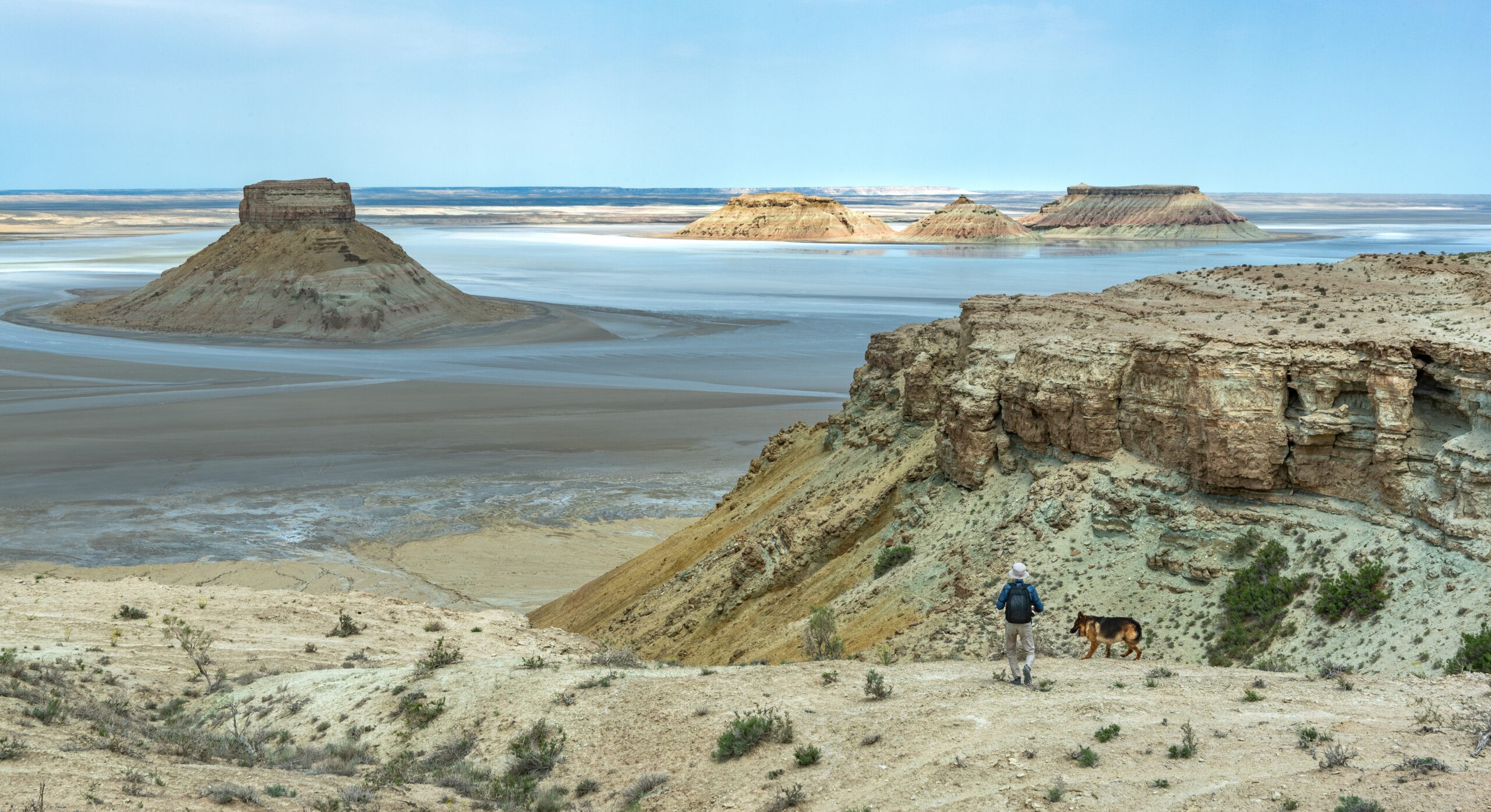
Azerbaijan’s SOCAR, Britain’s BP, and state-owned Uzbekneftegaz are preparing for exploration drilling across six blocks in Uzbekistan’s Ustyurt region. Following completion of a 3D seismic survey, the next stage involves processing the data and selecting a site for the first exploration well. Drilling will help establish whether preliminary estimates of 100 million metric tons of oil and 35 billion cubic meters of gas could translate into commercially recoverable reserves.
The work covered the Boyterak, Terengquduq, Birqori, Kharoy, Qoraqalpoq, and Qulboy blocks in the Republic of Karakalpakstan. The seismic survey covered more than 3,000 square kilometers, compared with a minimum commitment of 1,000 square kilometers.
The partners reviewed the completed fieldwork and discussed preparations for exploration drilling at a managing committee meeting in Tashkent on September 7. The data still need to be processed and interpreted, and no drilling location or date has been announced.
Total investment in the project has been estimated at approximately $2 billion, with development dependent on a commercial discovery. The partners remain at the exploration stage and have committed to drilling one well. Decisions on further investment will depend on its results.
Uzbek officials expect the six blocks could contain around 100 million metric tons of oil and 35 billion cubic meters of gas. Potential annual oil production has been estimated at five million metric tons. All three figures remain projections: seismic data help identify promising structures, but drilling is needed to confirm the presence and characteristics of hydrocarbons.
Uzbekistan’s Energy Ministry, SOCAR, and Uzbekneftegaz signed a production-sharing agreement covering the six blocks in July 2025. SOCAR was designated the operator.
BP joined the project in May 2026, acquiring a 20% interest from each of the two original partners. The British company now holds 40%, while SOCAR and Uzbekneftegaz retain 30% each. The deal marks BP’s return to exploration in Uzbekistan, where it first signed exploration agreements with the same partners in 2018 before withdrawing in 2021.
The acquisition coincided with BP’s renewed emphasis on oil and gas investment. The company had previously reduced its exploration portfolio as part of a shift toward low-carbon energy, but subsequently revised its strategy and refocused on its traditional business.
When BP joined the project, its regional president for Azerbaijan, Georgia, and Turkey, Gio Cristofoli, said the company saw significant resource potential in Uzbekistan. He said participation in the agreement would expand BP’s exploration portfolio and support its long-term organic growth.
For SOCAR, the Ustyurt survey is its largest seismic exploration project outside Azerbaijan. In June, the company reported that more than 80% of the seismic program had been completed and that initial results were providing insights into deeper geological structures. SOCAR announced the completion of fieldwork in July, with data processing expected to finish in the first quarter of 2027.
The partners have developed a work plan through 2029. Uzbekneftegaz head Abdugani Sanginov previously proposed accelerating the project and beginning drilling by the end of 2027, but an approved drilling schedule has not been published.
Uzbekistan needs to find new fields as production declines at mature assets. Gas output fell from 61.6 billion cubic meters in 2018 to 41.5 billion in 2024. In the first quarter of 2026, it declined another 15% year on year. The country already imports Russian and Turkmen gas to meet domestic demand.
Ustyurt’s appeal therefore extends beyond its potential as an export base. New reserves are needed to supply power plants and industry and meet growing domestic consumption. Recoverable volumes, production rates, and infrastructure costs will determine its contribution.