• KGS/USD = 0.01144 0%
  • KZT/USD = 0.00200 0%
  • TJS/USD = 0.10475 -0.19%
  • UZS/USD = 0.00008 0%
  • TMT/USD = 0.28490 0%
  • KGS/USD = 0.01144 0%
  • KZT/USD = 0.00200 0%
  • TJS/USD = 0.10475 -0.19%
  • UZS/USD = 0.00008 0%
  • TMT/USD = 0.28490 0%
  • KGS/USD = 0.01144 0%
  • KZT/USD = 0.00200 0%
  • TJS/USD = 0.10475 -0.19%
  • UZS/USD = 0.00008 0%
  • TMT/USD = 0.28490 0%
  • KGS/USD = 0.01144 0%
  • KZT/USD = 0.00200 0%
  • TJS/USD = 0.10475 -0.19%
  • UZS/USD = 0.00008 0%
  • TMT/USD = 0.28490 0%
  • KGS/USD = 0.01144 0%
  • KZT/USD = 0.00200 0%
  • TJS/USD = 0.10475 -0.19%
  • UZS/USD = 0.00008 0%
  • TMT/USD = 0.28490 0%
  • KGS/USD = 0.01144 0%
  • KZT/USD = 0.00200 0%
  • TJS/USD = 0.10475 -0.19%
  • UZS/USD = 0.00008 0%
  • TMT/USD = 0.28490 0%
  • KGS/USD = 0.01144 0%
  • KZT/USD = 0.00200 0%
  • TJS/USD = 0.10475 -0.19%
  • UZS/USD = 0.00008 0%
  • TMT/USD = 0.28490 0%
  • KGS/USD = 0.01144 0%
  • KZT/USD = 0.00200 0%
  • TJS/USD = 0.10475 -0.19%
  • UZS/USD = 0.00008 0%
  • TMT/USD = 0.28490 0%

Viewing results 1 - 6 of 8

Kyrgyzstan Achieves Self-Sufficiency in Six Staple Food Products

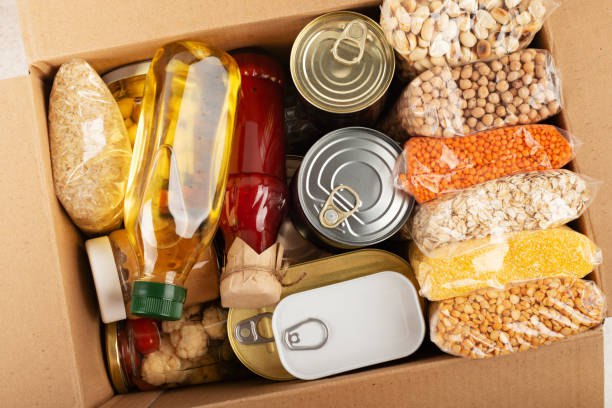
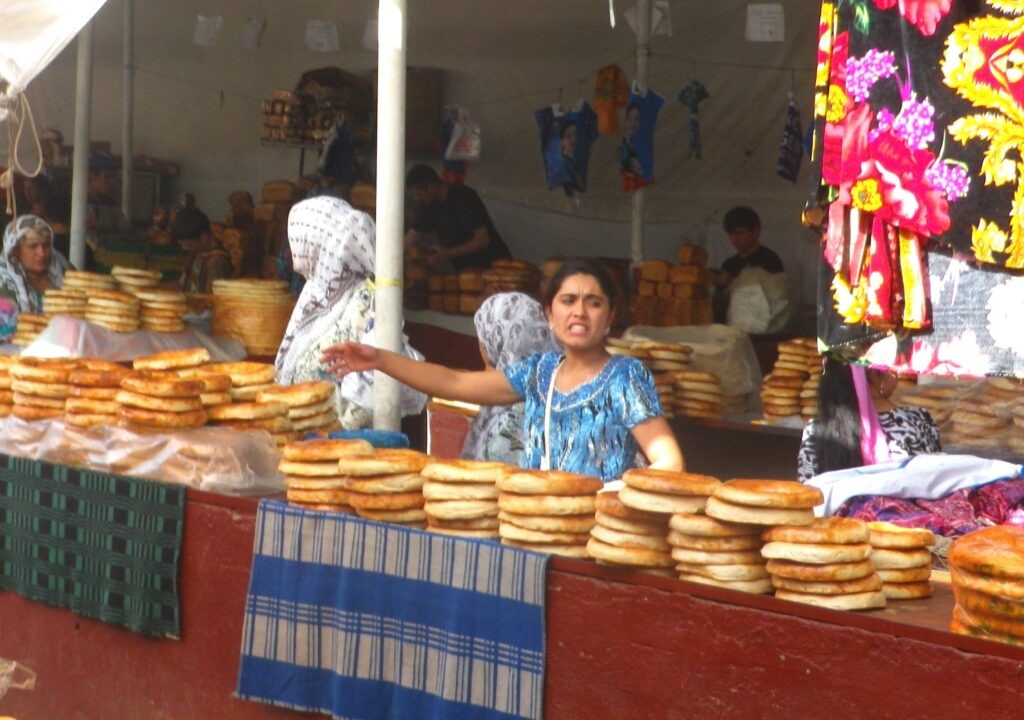
Kyrgyzstan is now fully self-sufficient in six of nine socially important food products: potatoes, milk, meat, vegetables, eggs, and sugar, according to the Ministry of Water Resources, Agriculture, and Processing Industry, which oversees national food security through agricultural production monitoring. The country achieved full self-sufficiency in sugar in 2024, having previously relied on imports. Regarding meat, Kyrgyzstan meets its domestic demand for beef and lamb and is close to achieving self-sufficiency in poultry. However, higher meat prices in neighboring Uzbekistan and Tajikistan led Kyrgyz farmers to export meat for greater profits. In response, the government introduced a ban on meat exports and imposed price controls to stabilize domestic markets. To support local egg producers, the government has banned egg imports amid rising domestic production. Kyrgyzstan now exports chicken eggs; from January to August 2025, the country exported 3.3 million eggs. The remaining three staple food products, bread (including flour and grain), vegetable oil, and fruit, are still partially dependent on imports.

Five-Year Plan for Food Independence in Tajikistan Faces Tough Questions

The Tajik government has approved a new Food Security Program for 2026-2030, aiming to drastically reduce reliance on food imports and enhance the sustainability of Tajikistan’s agricultural sector. Progress and Persistent Challenges The initiative is backed by a budget of 378.2 million somoni (approximately $41.6 million), with nearly 80% funded by international donors. The program’s architects express confidence that Tajikistan can fully meet domestic food needs by 2030, while also improving food quality and accessibility across all social strata. Indeed, progress has been made. In the early 2010s, Tajikistan met only 70% of its food requirements. By 2024, this figure had risen to 80%. Last year alone, agricultural output increased by 10%, with notable growth in cereals, melons, and fruit production. Still, significant structural problems persist: Wheat, sugar, and vegetable oil remain heavily import-dependent Domestic meat production covers only about half of national demand Irrigation infrastructure is outdated and inefficient Climate risks, including droughts, floods, and glacial melt, pose growing threats Additionally, food remains a heavy financial burden: more than 50% of household budgets are spent on food, leaving many families vulnerable to price fluctuations. Key Objectives and Measures The program outlines several goals: Increase agricultural output by at least 10% by 2028 Raise investment in the sector by 15% compared to 2025 Modernize irrigation systems and improve processing infrastructure Introduce digital tools and climate-resilient farming practices By 2030, the government pledges to reduce household food costs, improve livestock productivity, develop logistics infrastructure, and launch targeted support and educational campaigns for vulnerable groups. Budget Breakdown The $41.6 million budget is allocated as follows: $18.7 million - land reclamation and restoration $6 million - agricultural machinery and equipment $5.5 million - development of food and logistics infrastructure (warehousing, cold storage, processing, and transport) $2.5 million - organic crop protection $2.2 million - climate adaptation and sustainable agriculture $1.2 million - livestock development $770,000 - breeding and seed production $407,000 - agricultural digitization $550,000 - nutrition and public awareness programs Funding sources: 79% from international donors 14% from the state budget 7% from the private sector Major risks to implementation include climate-related disasters, deteriorating irrigation networks, technological lags, volatile global food prices, and geopolitical instability. To mitigate these, the government plans to establish a monitoring and early warning system alongside rapid crisis-response mechanisms. Reality or Ambition? The Ministry of Agriculture, along with regional authorities, will oversee implementation. Monitoring will adhere to national standards to ensure transparency. Experts agree the program is ambitious and its success hinges on the pace of agricultural modernization and efficient resource management. Tajikistan’s goal is clear, but success will depend on whether ambition is matched by sustained implementation and adaptability.

Despite Official Optimism, Southern Kyrgyzstan Struggles with Food Shortages

Kyrgyzstan’s Minister of Water Resources, Agriculture, and Processing Industry, Bakyt Torobaev, has reported steady growth in both agricultural output and the processing industry. Speaking at a briefing in Bishkek, Torobaev stated that agricultural production in the first half of 2025 reached $1.3 billion, $160 million more than in the same period last year, representing an annual growth rate of nearly 4%. The processing sector also showed gains, with output valued at $556 million in the first six months of the year. Torobaev added that the population was “provided with six basic foodstuffs: milk, meat, potatoes, vegetables, sugar, and eggs.” However, figures from the United Nations World Food Programme (WFP) paint a less optimistic picture. The agency’s research indicates that 8% of Kyrgyzstan’s population faces food shortages, while 53% have access only to the minimum required food supply. According to a WFP report, most households (74%) rely on negative coping strategies, such as depleting savings, borrowing money, and cutting expenditures on education and healthcare to meet their food and other basic needs. Additionally, 10% of the population reported a decline in income over the past year, with an average reduction of 37%. The WFP stated that the Jalal-Abad and Osh regions, both in the more densely populated south, account for nearly half of all citizens experiencing food shortages. High poverty levels in these areas, as well as in Batken, reflect the country’s highest rates of economic and food insecurity. The WFP supports vulnerable households through research, targeted material aid, and community programs aimed at building a sustainable food system. Assistance includes fortified wheat flour, vegetable oil, and cash transfers to low-income families participating in community development or human capital projects. The agency also supplies wheat flour to schools to improve nutrition for students in grades 1-4.

Kyrgyz Authorities Take Action to Curb Rising Food Prices

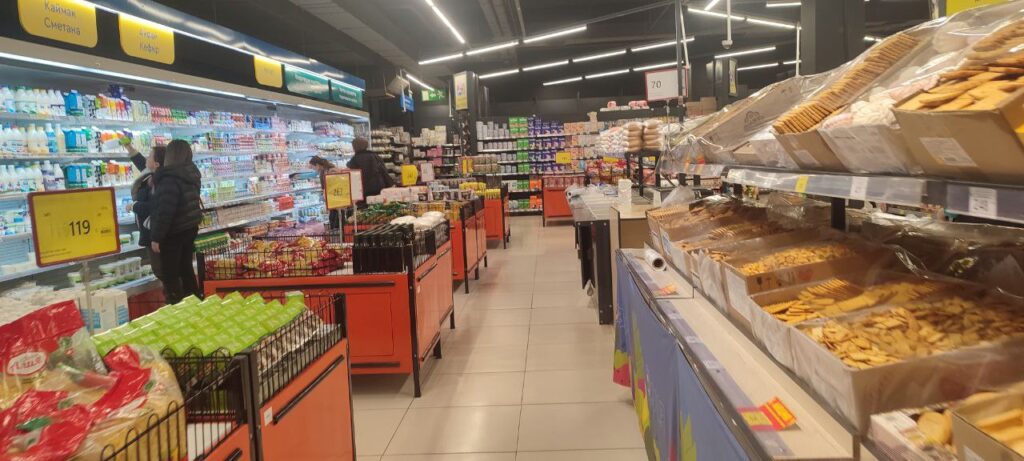
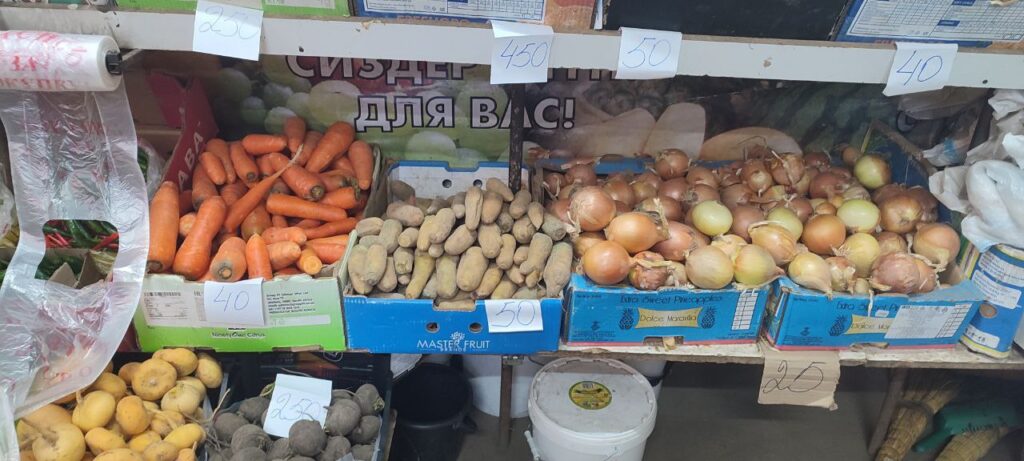
Kyrgyzstan’s Deputy Prime Minister Bakyt Torobaev has directed key government agencies to implement urgent measures aimed at stabilizing prices for socially significant food products. According to official information, the government’s list of essential goods includes meat, vegetable oil, flour, potatoes, sugar, carrots, onions, and other staples, totaling 50 items. Torobaev’s directive includes enhanced monitoring of price fluctuations, tighter oversight of food imports and exports, and a focus on inflation risk mitigation. He has called for the development of short-term mechanisms to contain price increases. The Antimonopoly Regulation Service and the National Statistics Committee have been tasked with conducting daily price monitoring in major cities. The State Tax Service has been instructed to explore the possibility of reducing VAT on imported food products. In parallel, the National Bank of Kyrgyzstan is expected to design preferential loan mechanisms for agricultural producers and livestock breeders. Torobaev emphasized the urgency of these measures, noting that approximately 65% of the population derives income from agriculture, and that expanded state support is critical to economic stability. In Bishkek, the government plans to open municipal pavilions where essential food items will be sold at fixed prices. If successful, the model will be scaled to other regions as part of broader anti-crisis efforts. “The Cabinet of Ministers is continuously working on implementing and overseeing a unified pricing policy,” said Torobaev. According to the National Statistics Committee, Kyrgyzstan’s consumer price index rose by 4% in the first half of 2025. Food prices increased by an average of 6%, with potatoes showing the steepest rise, nearly 50%, during the same period.

Kyrgyzstan Grows Toward Food Security with Surplus Potato and Carrot Harvests

The Kyrgyz government is stepping up efforts to ensure food security and stabilize prices for socially important goods, including staple vegetables such as potatoes and carrots. In response to rising prices, the Ministry of Water Resources, Agriculture, and Processing Industry has decided to maintain existing potato crop volumes while expanding carrot cultivation. According to the ministry, the active open-field growing season is currently underway. In 2025, potato planting areas reached over 64,000 hectares, with a projected harvest exceeding 1.1 million tons. Domestic demand is estimated at approximately 760,000 tons annually, allowing for surplus exports. However, the ministry cautioned farmers against indiscriminately expanding potato acreage in pursuit of higher profits, warning that an oversupply could depress prices and reduce incomes. “To prevent unjustified price increases for socially significant products, the Ministry of Agriculture continues to monitor market prices daily. If risks of domestic shortages arise due to excessive exports or speculative practices by intermediaries, temporary export restrictions will be considered,” the ministry stated. Amid recent price surges for carrots, the government has expanded carrot cultivation by 223 hectares in the Chui region. “The second carrot harvest will ensure a stable domestic supply and help contain price increases,” said Agriculture Minister Bakyt Torobaev. The ministry attributes the current price increases to heightened demand for Kyrgyz vegetables from member states of the Eurasian Economic Union (EAEU) and neighboring countries. Uzbekistan remains the largest importer of Kyrgyz potatoes. In 2024, Kyrgyz exports to Uzbekistan doubled to 68,500 tons, prompting state intervention and temporary export restrictions to prevent domestic shortages and inflation. In addition to Uzbekistan, Kyrgyzstan annually exports over 10,000 tons of potatoes to Kazakhstan, as well as smaller volumes to Russia and Azerbaijan.

Kyrgyz Authorities Seek to Classify Cement as Socially Significant

The Ministry of Economy and Commerce of the Kyrgyz Republic has released a justification for its decision to include cement on the list of socially significant goods, a designation that allows the government to regulate prices for essential items, including construction materials. According to the ministry, the absence of state oversight has led to unjustified increases in cement prices, placing upward pressure on housing costs and hindering the construction of social and infrastructure projects. “This situation limits the population's access to quality, affordable housing and slows the country’s socio-economic development,” the ministry stated. By classifying cement as a socially significant good, the government gains the authority to regulate its price. The move aims to stabilize the construction market, lower building costs, and improve housing affordability for the public. Officials at the ministry expressed confidence that the measure would not cause any significant negative consequences. The only potential downside, they noted, would be a reduction in profits for cement manufacturers and intermediaries, primarily in conditions of market volatility where price ceilings may be imposed. Kyrgyz economists support the move, arguing that state price regulation will help stabilize the domestic cement market, stimulate the construction industry, and improve the broader socio-economic outlook. They also believe it will bolster regulatory oversight of the construction sector. The ministry further warned that the lack of effective pricing mechanisms poses risks of shortages or sudden price spikes during periods of heightened demand. In contrast, stable cement prices would boost confidence among construction firms, enabling better planning and project implementation. To ease supply constraints, the Kyrgyz cabinet previously lifted a temporary ban on cement imports, aiming to satisfy a growing demand from construction companies and the general population through additional foreign supply.