• KZT/USD = 0.00219
  • TJS/USD = 0.10820
  • UZS/USD = 0.00008
  • TMT/USD = 0.29850
  • KZT/USD = 0.00219
  • TJS/USD = 0.10820
  • UZS/USD = 0.00008
  • TMT/USD = 0.29850
  • KZT/USD = 0.00219
  • TJS/USD = 0.10820
  • UZS/USD = 0.00008
  • TMT/USD = 0.29850
  • KZT/USD = 0.00219
  • TJS/USD = 0.10820
  • UZS/USD = 0.00008
  • TMT/USD = 0.29850
  • KZT/USD = 0.00219
  • TJS/USD = 0.10820
  • UZS/USD = 0.00008
  • TMT/USD = 0.29850
  • KZT/USD = 0.00219
  • TJS/USD = 0.10820
  • UZS/USD = 0.00008
  • TMT/USD = 0.29850
  • KZT/USD = 0.00219
  • TJS/USD = 0.10820
  • UZS/USD = 0.00008
  • TMT/USD = 0.29850
  • KZT/USD = 0.00219
  • TJS/USD = 0.10820
  • UZS/USD = 0.00008
  • TMT/USD = 0.29850
25 November 2026

Viewing results 1 - 6 of 3

Kazakhstan Appoints New KTZ Chief as IPO Faces Possible Delay

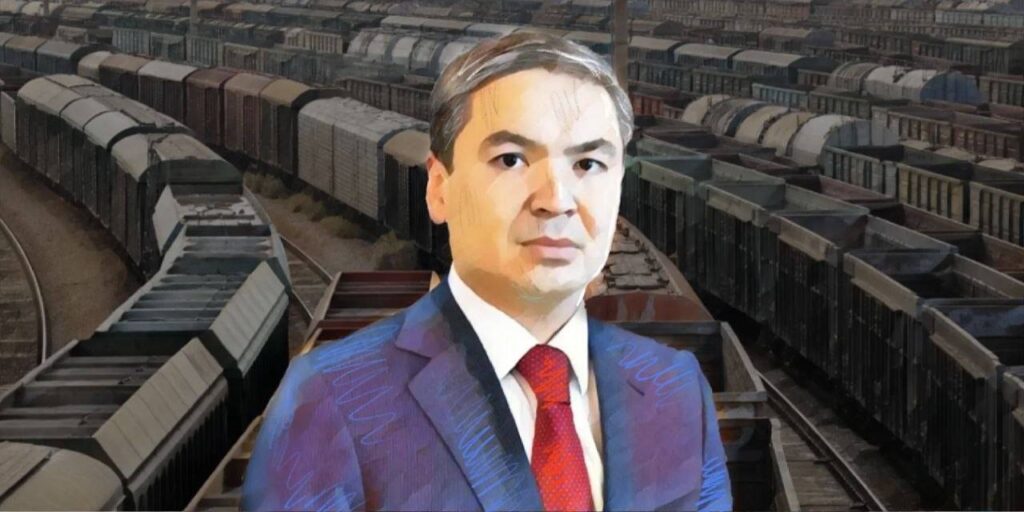
Kazakhstan has appointed a new chief of the national railway company, Kazakhstan Temir Zholy (KTZ), as its owner, Samruk-Kazyna, says investment banks advising on the company's stock market debut have recommended postponing it until 2027. The appointment follows the arrest of KTZ's former chairman and comes days before a temporary waiver on a breached loan condition expires. Yersaiyn Nagaspayev, previously minister of industry and construction, took charge on November 24. He worked at KTZ before entering the cabinet. Prime Minister Olzhas Bektenov met with KTZ management and instructed Nagaspayev to strengthen oversight and anti-corruption controls, and demanded greater personal responsibility from executives. “Those who are not prepared to work for the benefit of the state must leave,” he said. Nagaspayev's predecessor, Yelzhas Otynshiyev, was detained on November 11 by the National Security Committee’s anti-corruption service alongside Nurlan Zhakupov, head of Samruk-Kazyna, Kazakhstan’s sovereign wealth fund. Otynshiyev had only led KTZ since July. Both were ordered into pretrial custody on November 14 on suspicion of a corruption-related offense. The authorities have not disclosed details of the alleged crime, and neither has been convicted. The IPO Timetable Shifts Again Samruk-Kazyna told Interfax on November 23 that investment banks advising the railway had recommended moving its initial public offering (IPO) to 2027. The fund cited deteriorating international markets and recent volatility. China International Capital Corporation (CICC) is the sole sponsor of KTZ's Hong Kong listing, according to the stock exchange filing. Samruk-Kazyna has not identified which investment banks recommended postponement. The listing is being prepared for exchanges in Hong Kong, London, and Kazakhstan. KTZ passed a Hong Kong listing hearing on November 5, and the exchange published a post-hearing filing on November 11, the same day the heads of KTZ and Samruk-Kazyna were detained. The timetable had already changed once: in May, a minister suggested early 2027, but Samruk-Kazyna subsequently restored its end-of-2026 target. Under the original offering plan, KTZ would retain IPO proceeds for investment and debt repayment, including construction of the Bakhty–Ayagoz railway, a 303-kilometer line intended to establish a third rail crossing with China and ease congestion at the two existing crossings. Any postponement would push back that potential source of capital. Infrastructure spending remains substantial. TCA’s latest freight figures show Middle Corridor container traffic rose 64% to 57,300 TEUs in January–October. Kazakhstan aims to increase annual shipments to 300,000 TEUs by 2029. Bektenov wants the Darbaza–Maktaaral railway, which will expand freight capacity to Uzbekistan, and the Moyynty–Kyzylzhar line, which will shorten the Middle Corridor route by 149 kilometers, completed this year. The Bakhty–Ayagoz line is scheduled for completion in 2027. Debt and the November 30 Waiver Outstanding KTZ borrowing reached 3.78 trillion tenge ($8.5 billion) at the end of September, up from 3.19 trillion tenge at the end of 2025, while its first-half net profit more than doubled to 191 billion tenge. KTZ’s June financial statements show that it breached a borrowing condition, with its debt ratio reaching 1.18 against a maximum of 1.15 set by some lenders. HSBC...
S&P Upgrades Uzbekistan’s Credit Rating as GDP Revision and Gold Reserves Strengthen Finances

S&P Global Ratings has upgraded Uzbekistan’s sovereign credit rating from BB to BB+, placing the country one notch below investment grade. The November 20 decision reflects stronger public finances, growing international reserves, and economic reforms. A substantial upward revision to Uzbekistan’s GDP figures and elevated gold prices also contributed to the improvement. The upgrade, which carries a stable outlook, is Uzbekistan’s highest sovereign credit rating to date. S&P cited improvements in economic policymaking, reforms to the energy sector and state-owned enterprises, and stronger external financial buffers. Among Central Asian countries, Kazakhstan holds a BBB rating from S&P, one notch above the minimum investment-grade threshold of BBB−, following an upgrade in August 2026. Turkmenistan is rated BB− by Fitch, while Kyrgyzstan and Tajikistan hold B+ ratings from S&P. The broader financial positions of the five countries are examined in The Times of Central Asia’s Central Asia: Balance Sheet. GDP Revision Improves Debt Indicators A significant factor in S&P’s decision was a revision of Uzbekistan’s economic statistics, announced on November 13, just one week before the upgrade. The government increased its estimate of nominal GDP for 2025 by 15%, or approximately $22 billion, to $169 billion. The GDP revision helped lower S&P’s projected average net government debt-to-GDP ratio for 2026–2029 from 30% to 24%. The statistical revision does not itself reduce the amount owed. The revision covered figures dating back to 2017, incorporating updated enterprise reporting and business surveys, alongside adjustments to estimates of trade, services, and agricultural production. It follows an earlier revision reported by TCA in November 2025, when Uzbekistan raised its estimate of 2024 GDP by 5.6%, to $121.4 billion. S&P expects net government debt to reach approximately 26% of GDP by 2029 as borrowing continues to finance investment programs. Gold Reserves Rise as Export Earnings Fall Higher gold prices and the accumulation of domestically produced gold have strengthened Uzbekistan’s international reserves. The increase has come alongside a sharp decline in gold export revenues. According to Uzbekistan’s National Statistics Committee, gold exports fell from $9.8 billion in January–September 2025 to $2.8 billion during the same period in 2026, a decline of approximately 71%. Total exports fell 5.5% to $25.8 billion, while the trade deficit widened from approximately $6.9 billion to $13.7 billion as imports also increased. The Central Bank increased its physical gold holdings to approximately 454 metric tons by November 1, the highest level in its published records. International reserves stood at $63.6 billion, of which approximately $58 billion, or 91%, consisted of gold. ING interpreted the combination of lower gold exports and rising central bank holdings as evidence that Uzbekistan was retaining more gold rather than selling it abroad. The bank reported that physical gold exports fell to 18 metric tons in January–September 2026, from 85 metric tons in the same period of 2025. As previously reported by TCA, physical gold holdings increased to approximately 446 metric tons in September, even as the value of international reserves fell by $5.54 billion during the month. Despite accumulating additional...

Kazakhstan to Receive Maximum Weight in New JPMorgan Bond Index

Kazakhstan will receive the maximum 8% country weight in JPMorgan’s new index for frontier market government bonds, creating an opportunity to attract new foreign buyers of tenge-denominated debt. JPMorgan plans to launch the GBI-EM Edge by the end of September. The maximum weight for any single country is capped at 8%, and Kazakhstan will receive the full quota. Vietnam, Pakistan, and Bangladesh will have the same weight. Other major components will include Egypt, Morocco, Nigeria, and Sri Lanka. The index will cover 26 countries, with nearly $330 billion in bonds eligible for inclusion. GBI-EM Edge is designed for frontier markets, relatively less accessible markets outside JPMorgan’s main emerging market benchmark. Inclusion is a separate development from Kazakhstan’s efforts to join that main index. The index will serve as a benchmark for international asset managers. Some funds seek to replicate its composition, while others use it to compare the performance of their own portfolios. A country’s weight can therefore influence how much money investors allocate to its bonds. However, the nearly $330 billion represents the value of bonds eligible for the GBI-EM Edge, not the amount of future investment. JPMorgan has not yet said how much capital will directly track the new index. That will largely determine how significant the additional demand for Kazakh debt may be. Foreign Investors Have Already Increased Their Holdings Foreign investors began actively buying Kazakhstan’s government debt even before JPMorgan’s decision. According to the Analytical Center of the Association of Financiers of Kazakhstan (AFK), non-resident holdings of government securities reached KZT 2.5 trillion, or about $5.4 billion, by the end of June. During the first half of the year, their portfolio grew by 28.3%, while the share of non-residents in the government securities market increased from 6.2% to 6.9%. In June alone, foreign investors added KZT 185.1 billion, or about $400 million. Just a year and a half earlier, non-resident holdings stood at around KZT 1.1 trillion, or about $2.4 billion. Kazakhstan has maintained a high base rate to combat inflation. This has also kept yields on government bonds high. According to AFK, real yields on government securities – meaning returns above inflation – ranged from 5.7% to 7.4% in the first half of the year. The association’s analysts also linked strong demand to expectations of a gradual reduction in the base rate. For a foreign fund, the trade can look attractive: raise money in a market with lower interest rates, buy tenge, and invest in Kazakh government bonds. If the tenge remains stable or strengthens, the investor benefits both from the high interest rate and from the currency movement. If the tenge falls, some of that return disappears when the investment is converted back into dollars. The tenge’s appreciation has already helped foreign bondholders. It strengthened by 2.6% during August, ending the month at KZT 461.57 per dollar, according to the National Bank. AFK points to another effect of foreign purchases. To buy the bonds, non-residents sell foreign currency and purchase tenge, increasing the supply...
