• KGS/USD = 0.01144 0%
  • KZT/USD = 0.00205 0%
  • TJS/USD = 0.10722 0%
  • UZS/USD = 0.00008 0%
  • TMT/USD = 0.28490 0%
  • KGS/USD = 0.01144 0%
  • KZT/USD = 0.00205 0%
  • TJS/USD = 0.10722 0%
  • UZS/USD = 0.00008 0%
  • TMT/USD = 0.28490 0%
  • KGS/USD = 0.01144 0%
  • KZT/USD = 0.00205 0%
  • TJS/USD = 0.10722 0%
  • UZS/USD = 0.00008 0%
  • TMT/USD = 0.28490 0%
  • KGS/USD = 0.01144 0%
  • KZT/USD = 0.00205 0%
  • TJS/USD = 0.10722 0%
  • UZS/USD = 0.00008 0%
  • TMT/USD = 0.28490 0%
  • KGS/USD = 0.01144 0%
  • KZT/USD = 0.00205 0%
  • TJS/USD = 0.10722 0%
  • UZS/USD = 0.00008 0%
  • TMT/USD = 0.28490 0%
  • KGS/USD = 0.01144 0%
  • KZT/USD = 0.00205 0%
  • TJS/USD = 0.10722 0%
  • UZS/USD = 0.00008 0%
  • TMT/USD = 0.28490 0%
  • KGS/USD = 0.01144 0%
  • KZT/USD = 0.00205 0%
  • TJS/USD = 0.10722 0%
  • UZS/USD = 0.00008 0%
  • TMT/USD = 0.28490 0%
  • KGS/USD = 0.01144 0%
  • KZT/USD = 0.00205 0%
  • TJS/USD = 0.10722 0%
  • UZS/USD = 0.00008 0%
  • TMT/USD = 0.28490 0%

Viewing results 1 - 6 of 26

Opinion: Ghosts of the Gulag: Kazakhstan’s Uneasy Dance With Memory and Moscow

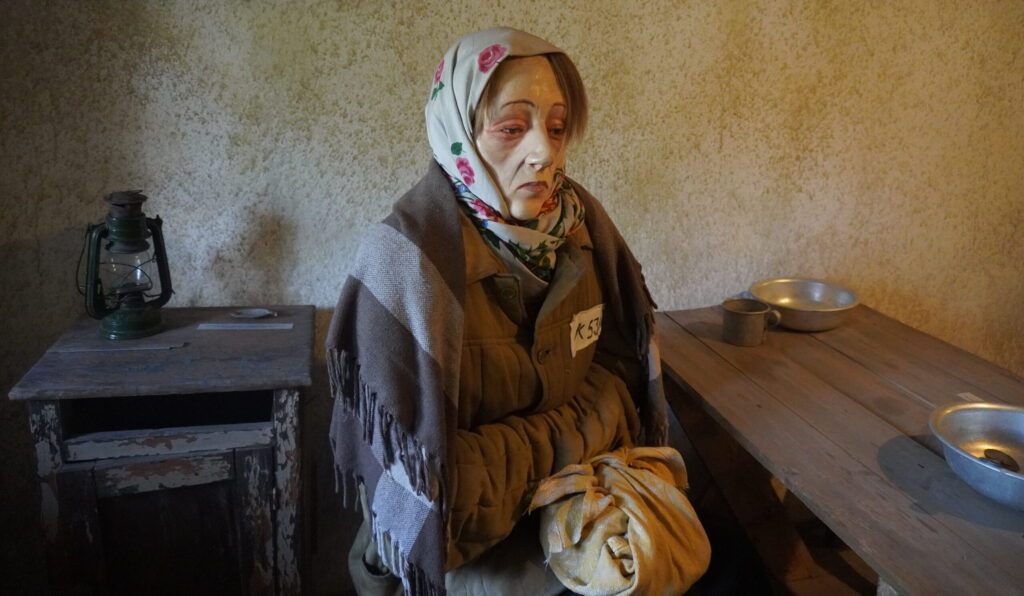
In May 2025, the authorities in Moscow unveiled a life-size bas‑relief sculpture of Josef Stalin in the Taganskaya metro station. The next month, a statue of Lenin was pulled down in Osh, Kyrgyzstan. Between these two symbolic acts lies Kazakhstan, caught in a tug-of-war over the memory of Soviet-era repression. Between 1920 and 1960, millions of prisoners were deported to more than fifty labor camps across what was later to become the Republic of Kazakhstan. Those who weren’t executed on the spot — political opponents, intellectuals, artists — were forced to work in mines, construction sites, or collective farms feeding Soviet industrial expansion. The death toll remains unknown but is believed to be in the millions. Today, this dark past draws in history buffs and thrill-seekers. But darktourism.com, the go-to website on the topic, warns them: forgotten cemeteries, ghost villages, crumbling camps — this gulag archipelago is well hidden in the steppes. No sign points the way to the Museum of Political Repression in Dolinka, housed in the former headquarters of Karlag, one of the largest camps of the Soviet Gulag system. The only other gulag transformed into a museum is ALZHIR, built on the ruins of the Akmola camp near Astana. It commemorates the 18,000 women imprisoned between 1939 and 1953 for being the wives of “traitors to the motherland.” These two museums now stand as official symbols of Soviet repression in Kazakhstan, and, more subtly, as frontline sites in a broader memory war across the former Soviet Union. Selective Memory When the museums were nationalized in the 2000s, their message became tightly controlled. Portraits and quotes from former president Nursultan Nazarbayev began to cover the walls. Guillaume Tiberghien, a specialist in dark tourism at the University of Glasgow, calls it a “selective interpretation of history.” The goal? To unify the country’s 160 ethnic groups under a shared narrative of collective suffering. At both Karlag and ALZHIR, guides emphasize acts of solidarity between Kazakh villagers and deportees — hospitality, compassion, bits of cheese tossed over barbed wire fences to feed the starving. [caption id="attachment_34338" align="aligncenter" width="2560"] Execution scene recreated at the Karlag museum; image: Manon Madec.[/caption] The past is staged. Between wax statues with sunken faces, sound effects mimicking heartbeats, and torture room reconstructions, the visitor is drawn into a visceral experience, sometimes at the cost of accuracy. “You wonder if the museum overdoes it to trigger emotion,” Tiberghien remarks. Margaret Comer, a memory studies expert at the University of Warsaw, explains: “It’s sometimes easier to mourn victims than to identify perpetrators.” [caption id="attachment_34337" align="aligncenter" width="2560"] Execution scene and fake blood, reconstructed in the Dolinka museum; image: Manon Madec.[/caption] The complicity of local Kazakhs is never addressed. Russian responsibility is blurred behind vague terms like “NKVD” or “Stalinist repression.” At ALZHIR, visitors learn only about Sergey Barinov — a Russian commandant described as cultured, discreet, and caring toward the women detained. The other two camp directors are never mentioned. In other former Soviet republics — Ukraine, the Baltics, Georgia — such...

Kazakhstan: Court Says 1986 Protester Was Victim of Political Repression

Four decades after participating in anti-Soviet protests in Kazakhstan, a 64-year-old man has been recognized as a victim of political repression by a court in the former Soviet republic. The ruling is part of a sweeping effort by Kazakhstan’s government to rehabilitate the reputations of people who faced persecution during Soviet rule, which ended when the country became independent in 1991. Many cases go back to a time of forced resettlement, famine and execution nearly a century ago, drawing on documents and the expertise of scholars and other specialists that lay bare historical trauma even as Kazakhstan maintains close trade and diplomatic ties with its neighbor, Russia. On Thursday, Kazakhstan’s Supreme Court released a statement about a more recent case, saying a resident of Aktobe city in western Kazakhstan who was a philosophy and economics student at Kazakh State University had been expelled for allegedly disturbing public order. “The reason for his expulsion was his detention by law enforcement officers on December 18, 1986 - on suspicion of participating in the December events, without charges being brought,” the court said. It did not name the student. The so-called December events refer to a 1986 protest movement called the Jeltoqsan that young people began in Almaty, then known as Alma-Ata. The demonstrations escalated into clashes with Soviet security forces and lasted for several days. The catalyst for the upheaval was the removal of Dinmukhamed Kunaev, an ethnic Kazakh who was the first secretary of Kazakhstan’s Communist Party, and his replacement with an ethnic Russian. The direct challenge to authority highlighted the erosion of Moscow’s control that would eventually end with the collapse of the Soviet Union. According to Kazakhstan’s Supreme Court, the student who was detained was freed, but he was expelled from the Communist Party, faced persecution, and couldn’t find a job. His wife was also turned down for jobs. Between 1990 and 1993, the couple and their three young children had to rent housing and were in a “socially vulnerable position,” the court said. This year, the man, now 64 years old, filed a lawsuit to be recognized as a victim of political repression because of his participation in the 1986 protests. Court No. 3 of Aktobe agreed that he had been subjected to political persecution, including restrictions on labor rights, the Supreme Court said. The Aktobe court based its decision on documents from the university and the prosecutor's office, as well as witness testimony. Kazakhstan’s law on rehabilitation of victims of political repression can provide for the restoration of violated rights as well as financial compensation.

Lenin Falls in Osh: Central Asia Redefines Its Soviet Legacy

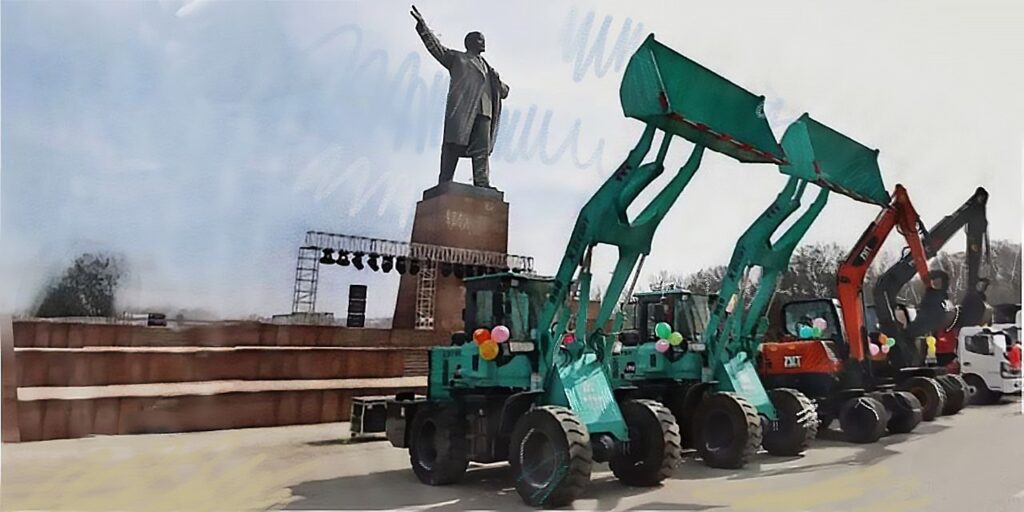
The recent removal of a towering 23-meter-tall monument to Vladimir Lenin in Osh, Kyrgyzstan, has ignited heated debate both domestically and abroad. While many are surprised the monument remained in place for more than three decades after the fall of the Soviet Union, its dismantling is part of a broader regional trend of de-Sovietization, a complex process involving the renaming of cities, removal of Soviet-era symbols, and the reassertion of national identity across Central Asia. A Symbol Removed, A Debate Ignited [caption id="attachment_32769" align="aligncenter" width="2560"] Lenin Monument in Osh, October 2024; image: TCA, Jonathan Campion[/caption] On June 7, Osh authorities dismantled what was once the tallest Lenin statue in Central Asia. Originally installed in 1975, the monument is to be relocated to a city park, according to the local government. Officials stressed the move was intended to improve the city’s architectural landscape, not to make a political statement, and have warned against "politicizing" the issue. Despite official reassurances, the move has sparked sharp reactions on social media and in the press, with Russian media outlets characterizing the relocation as an anti-Russian gesture. Generational divides have become apparent: younger residents tend to support the removal, while older citizens have expressed dismay over what they see as the erasure of history. “It’s a shame. It was more than a monument, it was part of our lives,” Elena, a local schoolteacher told The Times of Central Asia. “We joke that Lenin crossed the ‘red line’ and got demolished.” Irina Bayramukova, a 68-year-old public figure, called the decision a mistake. “The Lenin monument by Nikolai Tomsky was not only artistically significant, it represented an era. Removing it is like declaring war on those who identify with that past,” she told TCA. Kyrgyzstan, like other Central Asian republics, has been distancing itself from its Soviet legacy since gaining independence in 1991. One of the earliest symbolic moves was the renaming of the capital, once called Frunze after a Bolshevik military leader, back to Bishkek, a modified version of its pre-Soviet name. A Museum to Mikhail Frunze still stands in Bishkek, where the thatched-roof hut of his boyhood was purportedly transported brick by brick. A supporter of Stalin’s rival Zinoviev, when forced to undergo routine surgery by Uncle Joe in 1925, Frunze “mysteriously” died of chloroform anesthetic poisoning. Redefining History [caption id="attachment_32778" align="aligncenter" width="2560"] Lenin Monument in Bishkek; image: TCA, Stephen M. Bland[/caption] Originally erected in 1984 in the Central Square of Bishkek, a Lenin statue was relocated behind the State Historical Museum in 2003. As previously reported by TCA, earlier this year a debate on removing the monument altogether flared up. In 2022, the National Historical Museum of the Kyrgyz Republic in Bishkek finally reopened its doors after being closed in 2016 for renovations which were planned to take less than a year but ended up taking six years. Several government officials were charged with misappropriating funds designated for the renovations, with former Prime Minister Sapar Isakov sentenced to 18 years in prison. Reportedly, over...

Tokayev Honors Victims While Putin Rewrites Stalin’s Past

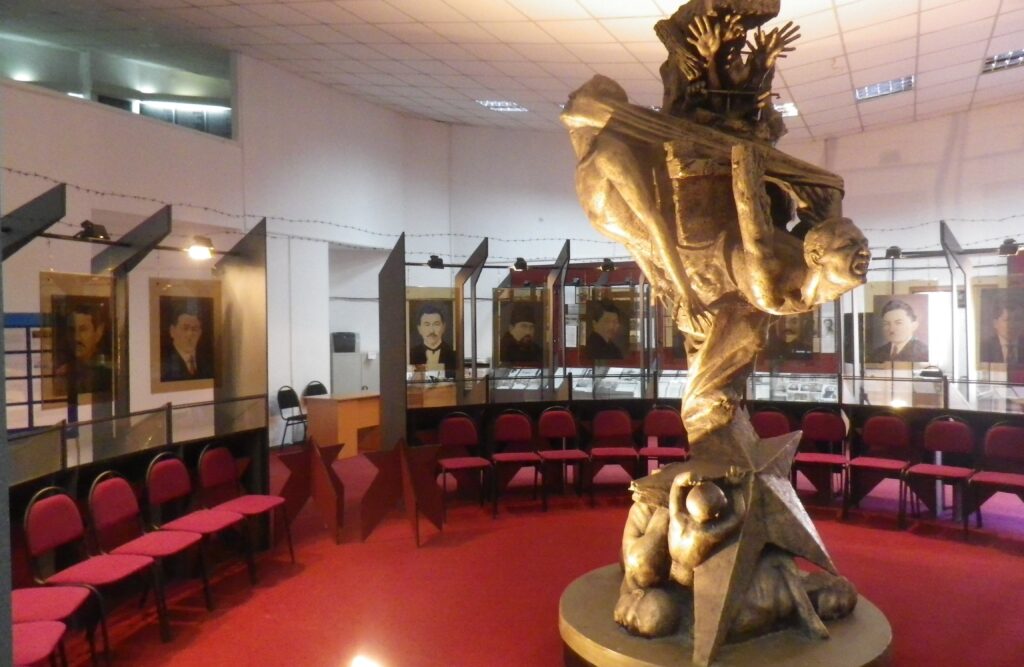
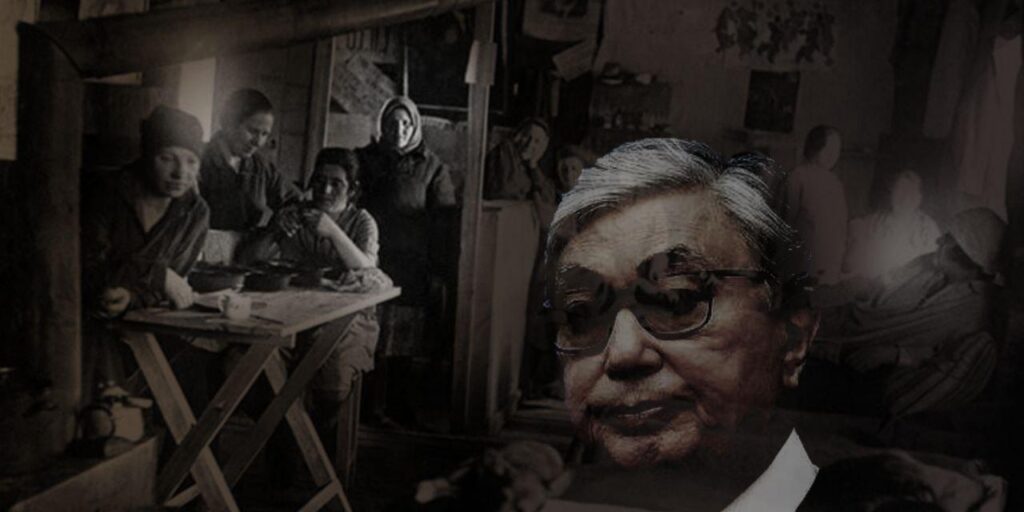
On May 31, 2025, President Kassym-Jomart Tokayev of Kazakhstan stood at the Museum and Memorial Complex “ALZhIR,” which Stalin had established in 1937 as a camp in the Soviet Gulag. Akmola was the name of Astana at the time, and “ALZhIR” is a Russian acronym for “Akmola Camp of Wives of Traitors to the Motherland.” The former Gulag camp, as its name indicates, was for women (a total of roughly 8,000, not to mention over 1,500 children born in the camp) who were detained solely for their familial associations with accused intellectuals or political dissidents. The full name of the Complex, which opened in 2007, is the Museum and Memorial Complex in Memory of Victims of Political Repression and Totalitarianism. In a solemn wreath-laying ceremony, declaring the imperative to preserve memory and confront the Soviet past directly, Tokayev provided a stark contrast to simultaneous developments in Russia, where orchestrated celebrations and symbolic gestures have contributed to the resurrection and sanitization of Stalin’s legacy. [caption id="attachment_32500" align="aligncenter" width="1200"] The Museum and Memorial Complex “ALZhIR”; image: TCA [/caption] This year, Russia’s state apparatus has initiated a broad and deliberate campaign to reinsert Stalin into the country’s national consciousness. Major new monuments have been erected, existing public spaces have been renamed, and state-controlled media have popularized new narratives of Stalin’s leadership. The unveiling of a statue of Stalin in mid-May at the Taganskaya metro, one of Moscow’s busiest stations, received a significant degree of international attention. It was a meticulous restoration of the bas-relief sculpture, “The People’s Gratitude to the Commander-in-Chief,” a work that had been destroyed during the Khrushchev-era de-Stalinization. Cities like Vologda, where Stalin was exiled from 1911 to 1914, have joined this revival, with local leaders organizing public lectures praising his wartime “strategic genius.” Volgograd’s airport was renamed as Stalingrad International Airport by presidential decree. The 80th anniversary of the Soviet victory over Nazi Germany provided a ready pretext for these efforts. The resurrection of Stalin’s image in Russia serves more than a commemorative function. It represents a strategic deployment of a historical narrative to justify present-day authoritarian practices. President Vladimir Putin has repeatedly drawn explicit parallels between the sacrifices of the Battle of Stalingrad and contemporary military operations in Ukraine, framing the use of force as a historical imperative. State-controlled media in Russia reinforce this framing, while educational curricula have been revised to highlight Stalin’s leadership while marginalizing the atrocities of his regime. This selective memory is an active construction of ideological hegemony, consolidating state power through the manipulation of historical truth. Yet while Russia is reconstructing a mythic narrative that merges nostalgia with political expediency, Kazakhstan is confronting the traumas of its past. Over the past five years, the State Commission on the Rehabilitation of Victims of Political Repression has reviewed thousands of cases, exonerating over 300,000 individuals. Public debates, academic conferences, and community initiatives have reinforced this commitment, along with the publication of survivor testimonies and the release of new archival materials. These materials cover not just...

Kazakh Theatrical Performance Breaks Annual Record

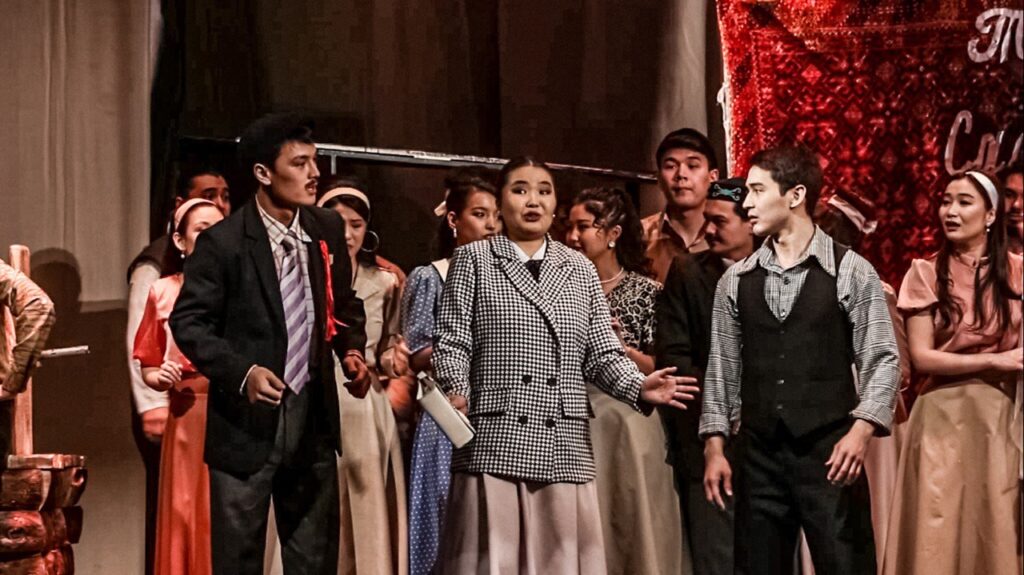
The play Gauhartas, directed by Kazakhstani theater artist Askhat Maemirov, has been staged over 250 times within a year, marking a record achievement in Kazakhstan’s theater industry. This widely acclaimed production is an adaptation of a work by esteemed Kazakh writer, Dulat Isabekov. His story depicts the life of a Kazakh family during the Soviet period, shedding light on the struggles of ethnic minorities under an authoritarian regime. In 1975, the Kazakhfilm studio produced a movie based on this work.   With every show selling out, the play has already drawn nearly 75,000 spectators. It has been performed in several major cities across Kazakhstan, including Aktau, Atyrau, Oral, Taldykorgan, and Almaty. Plans are now in place to present the production on an international stage. “In this production, we emphasize the significance of family and cultural values in Kazakh society,” said the director of the musical drama. “We examine the roles of mothers and fathers, questioning their responsibilities and influence. By portraying the life of an ordinary Kazakh family, we aim to reflect deeper human emotions. At its core, the play conveys the importance of safeguarding love and happiness within the home.” Though Gauhartas was first introduced to readers fifty years ago, its themes remain highly relevant today. The dynamics of family life and the bond between parents and children continue to be timeless subjects in literature and theater, and currently, many young people in Kazakhstan are coming to watch this play. [caption id="attachment_29683" align="aligncenter" width="1023"] Image: TCA, Duisenali Alimakyn[/caption] This work was written by the recently deceased Kazakh writer, Dulat Isabekov, when he was 25 years old while serving in the military near Moscow. Depicting Kazakh society, including one family’s internal resistance to the system and the impact of Soviet society on people, this work became one of the author’s timeless creations. The play offers a fresh perspective to Kazakh audiences by addressing the issue of women’s equality. It delves into the fractured relationship between society, a father, and a son, highlighting their inability to connect and understand one another, ultimately leading to tragedy. In essence, this work looks back at the past, aligns with the present, and paves the way for a hopeful future.

Kyrgyzstan’s Rebrand: New Country, or New Distractions?

On January 29, in what became a viral social media post, Seide Ibraimova and her mother drove to the site of VDNKh, the exhibition center built in the Kirghiz SSR to demonstrate the achievements of socialist science and culture. Her mother, wrapped in a white headscarf, reminisced happily about the times she’d spent there, surrounded by poplar trees in the shadow of the mountains. Seide’s father was one of the architectural team who built the main pavilion in 1974. But as they arrived at the site, they found nothing but rubble. The government had bulldozed the pavilion to make way for a new congress hall. “How could they?” said the old lady in a choked whisper. “Your father gave his heart and soul to this, for the people of the republic. The number of delegations who came here… how could they?” In the post’s comments section, an intense debate began. Some lamented the loss of the exhibition center: “Without this historic architecture, Bishkek will be nothing more than a concrete jungle,” said one. Another invoked Chingiz Aitmatov’s famous mankurt metaphor, describing those who had destroyed the site as having “no sense of memory or feelings, without attachment, who do not know who they are or where they come from.” Others were less sentimental, pointing out that VDNKh had been left to rot for two decades, and that those venerating the Soviet relics were the real mankurts, “forgetting your language, preaching the history and ideology of the fascists who invaded and occupied our country.” “You can forget the USSR,” said another. “We live in a sovereign state, the Kyrgyz Republic!” These online spats come at a time when Kyrgyzstan is going through a form of national branding under the government of Sadyr Japarov. But is the country really shedding its Soviet skin, or are the changes mere window dressing? [caption id="attachment_29217" align="aligncenter" width="1600"] The ruins of the VDNKh pavilion, February 2025; image: Joe Luc Barnes[/caption] Around two hundred meters from the wreckage of the pavilion is Yntymak-Ordo, or the “new White House”. This is the newly-constructed official administrative building of Kyrgyzstan’s president – a squat structure with thick columns, topped by a glass dome and surrounded by iron bars and armed guards. Reminiscent of many of the other presidential palaces that have sprung up across Central Asia over the past thirty years, it is an assertion of power. Further along Chinghiz Aitmatov Avenue (which was called Prospekt Mira until 2015) are scores of new high-rise residential buildings. Each month, new approvals are granted for more of these in the city center, contributing to a construction boom. Some see this as a deliberate attempt to erase the Soviet past from the city and replace it with their own idea of a modern Kyrgyz capital. The aesthetic shift is not just architectural. The government recently launched a competition for a new Kyrgyz national anthem. Aspiring composers have been invited to submit their proposals, the commission recently confirming that 23 have been accepted so...