
• KZT/USD = 0.00221
  • TJS/USD = 0.10830
  • UZS/USD = 0.00008
  • TMT/USD = 0.29760
  • KZT/USD = 0.00221
  • TJS/USD = 0.10830
  • UZS/USD = 0.00008
  • TMT/USD = 0.29760
  • KZT/USD = 0.00221
  • TJS/USD = 0.10830
  • UZS/USD = 0.00008
  • TMT/USD = 0.29760
  • KZT/USD = 0.00221
  • TJS/USD = 0.10830
  • UZS/USD = 0.00008
  • TMT/USD = 0.29760
  • KZT/USD = 0.00221
  • TJS/USD = 0.10830
  • UZS/USD = 0.00008
  • TMT/USD = 0.29760
  • KZT/USD = 0.00221
  • TJS/USD = 0.10830
  • UZS/USD = 0.00008
  • TMT/USD = 0.29760
  • KZT/USD = 0.00221
  • TJS/USD = 0.10830
  • UZS/USD = 0.00008
  • TMT/USD = 0.29760
  • KZT/USD = 0.00221
  • TJS/USD = 0.10830
  • UZS/USD = 0.00008
  • TMT/USD = 0.29760
18 October 2026

Viewing results 1 - 6 of 3

Two Central Asian Satellites Reach Orbit on SpaceX Rocket

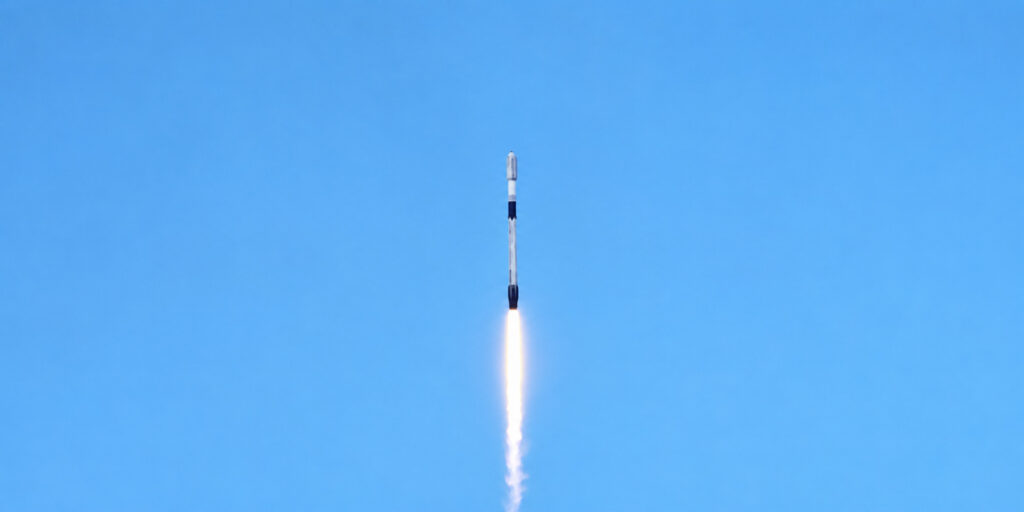
A single SpaceX rocket carried two Central Asian spacecraft into orbit: Kyrgyzstan’s first national satellite and a spacecraft developed with the participation of students in Kazakhstan. The Falcon 9 lifted off from Vandenberg Space Force Base in California on October 1 as part of the Transporter-18 rideshare mission. The flight carried 130 payloads into low Earth orbit. Kyrgyzstan’s satellite weighs about five kilograms and is designed for Earth observation, with its data intended to help monitor agriculture, water resources, and environmental change. A team of about 10 engineers worked on the spacecraft for roughly two and a half years. Kazakhstan’s NIS PocketQube is a cube measuring just 5 × 5 × 5 centimeters and weighing about 250 grams. The spacecraft was developed at NIS Astana-Nura, part of the Nazarbayev Intellectual Schools (NIS) network. The satellite project began in 2019, and the school established its NIS Space laboratory and introduced a course in space technology electronics the following year. Seventeen students worked on the satellite’s hardware and software and helped prepare it for testing. In December 2022, the spacecraft underwent thermal-vacuum and mechanical testing at Kazakhstan’s National Space Center. Specialists from Kazakhstan Gharysh Sapary, Kazakhstan’s national space company, and Ghalam, a Kazakh-French spacecraft joint venture, also participated in the project. Unlike Kyrgyzstan’s Earth-observation satellite, NIS PocketQube is primarily an educational project. NIS says a ground station will be installed to receive and process telemetry, giving students across Kazakhstan access to the data for research and engineering projects. Kazakhstan already operates communications and Earth-observation satellites. By 2030, the country plans to establish an international Earth-observation constellation of nine satellites: six from Kazakhstan and one each from Mongolia, the Republic of the Congo, and Nigeria.
Kyrgyzstan’s First Satellite to Launch Aboard SpaceX Falcon 9

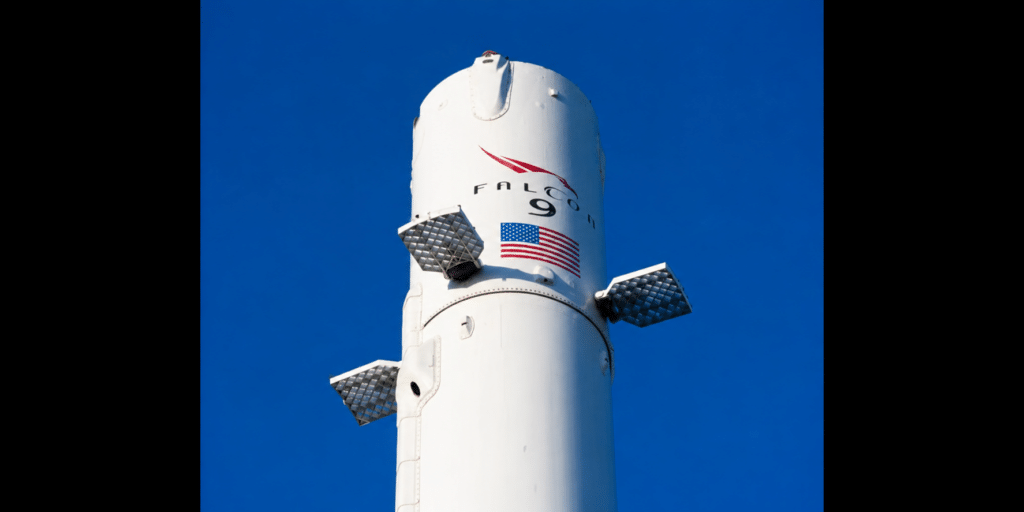
Kyrgyzstan plans to send its first national satellite into low Earth orbit on October 1. The roughly five-kilogram spacecraft, developed over about two and a half years, is due to launch from California aboard a SpaceX Falcon 9 rocket. President Sadyr Japarov has arrived in Los Angeles to attend events marking the launch, Kabar reported on October 1, citing the presidential administration. SpaceX is targeting October 1 for its Transporter-18 mission, a dedicated rideshare launch for small satellites, from Vandenberg Space Force Base in California. The 58-minute launch window opens at 11:18 a.m. Pacific Time, or 12:18 a.m. on October 2 in Bishkek. A backup opportunity is available the following day. Falcon 9 is scheduled to carry 130 payloads, including CubeSats and microsatellites. Under SpaceX’s rideshare model, several customers share capacity on the same rocket, making access to low Earth orbit more affordable for smaller countries. SpaceX does not separately name the Kyrgyz spacecraft in its published launch description. The satellite, equipped with high-resolution cameras, was unveiled on September 24 at the Lenin Plant in Bishkek. About 10 Kyrgyz engineers worked on the spacecraft, which is estimated to have cost 10–12 million soms, or approximately $115,000–140,000. Ilya Cherny, director of Kyrgyz Electronics, previously said that most of the technologies used were Russian. Developing all of the satellite’s systems from scratch, he said, would have taken considerably longer. The project also involves state-owned Kyrgyz Asman, which Kyrgyz authorities describe as the company responsible for developing and assembling the spacecraft. The satellite is intended for Earth observation. Its imagery is expected to be used to monitor crops and pastures for signs of drought and assess the effects of natural disasters. For mountainous Kyrgyzstan, satellite data are particularly important for monitoring water resources and glaciers because mountain rivers provide irrigation for farmland and feed the country’s hydropower system. Having its own spacecraft would give Kyrgyzstan an additional source of data on areas that are difficult to monitor from the ground. The developers say Kyrgyzstan may eventually need four or five satellites to meet these monitoring needs. Kazakhstan already operates communications and Earth-observation satellites, while Uzbekistan is also expanding its space program. In August, a Chinese-built satellite named Samarkand-2028 entered orbit carrying an artificial intelligence module developed by Uzbek engineers. Uzbekcosmos, the country’s space agency, has stressed that the spacecraft is not Uzbekistan’s national satellite. Uzbek engineers are separately working on the 6U-format Mirzo Ulugbek scientific satellite, which is planned for launch in 2028.

Starlink Set to Launch Internet Services Nationwide in Kazakhstan

Starlink, a subsidiary of Elon Musk’s SpaceX, will officially begin offering satellite internet services in Kazakhstan in the third quarter of 2025. The Ministry of Digital Development, Innovation, and Aerospace Industry of the Republic of Kazakhstan announced that an agreement has been signed with Starlink, ensuring compliance with national laws on information security and telecommunications. Expanding Internet Access to Remote Areas With this agreement, Kazakhstani users can now legally purchase and connect Starlink satellite terminals. Until now, the service had operated only in pilot mode, providing internet access exclusively to schools. “Starlink was not previously available to the public. Now, after reaching this agreement, the company has committed to fully comply with our legislation on information security and communications,” said Digital Development Minister Jaslan Madiev. The initiative is part of President Kassym-Jomart Tokayev’s directive under the national project Accessible Internet, which aims to close the digital divide. The project focuses on underserved areas, such as mountain villages, remote pastures, schools, and healthcare facilities, where laying fiber-optic infrastructure is logistically or economically impractical. Starlink’s technology uses a constellation of low-Earth orbit satellites, positioned approximately 550 kilometers above the Earth, to deliver high-speed broadband with low latency, even in rural and hard-to-reach locations. Background: A Long Road to Starlink Kazakhstan’s engagement with Starlink began in 2023 when the government, frustrated by the lack of progress from domestic telecom operators, initiated direct negotiations with SpaceX. Then-Minister Bagdat Musin announced a partnership to provide internet connectivity to 2,000 rural schools.. “Lauren Dreyer and I informed the President that in schools where students only receive 4 megabits per second through outdated satellite dishes, we would bridge the gap within six months. Lauren Dreyer, Vice President of SpaceX and Elon Musk’s deputy, confirmed Starlink’s commitment,” Musin said at the Digital Bridge forum. By April 2024, 447 rural schools were connected via Starlink. By July, that number had risen to 1,729. Attempted Ban and Backlash Despite the rollout’s success, in December 2024, the Ministry of Digital Development, Innovation and Aerospace Industry (MDDIAI) proposed banning Starlink and similar services. Citing Article 23 of the National Security Law, the ministry argued that Kazakhstan should prohibit telecommunications networks operated from outside the country. The draft regulation targeted four companies, Inmarsat, Iridium, Thuraya, and Starlink, and was published for public comment on the Open Regulations website. It immediately drew widespread criticism. In response to the backlash, the proposal was withdrawn for revision.
