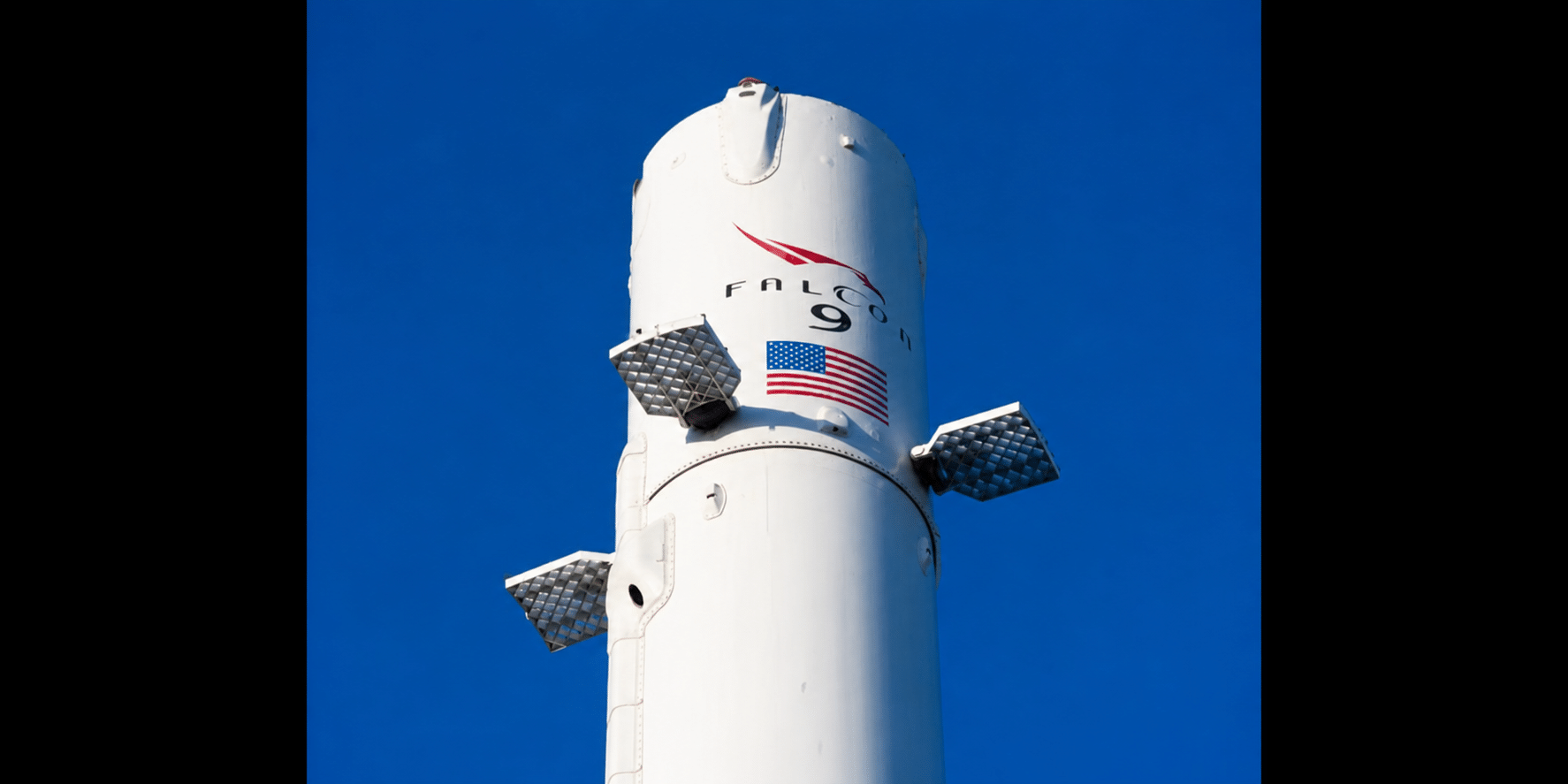
Kyrgyzstan plans to send its first national satellite into low Earth orbit on October 1. The roughly five-kilogram spacecraft, developed over about two and a half years, is due to launch from California aboard a SpaceX Falcon 9 rocket. President Sadyr Japarov has arrived in Los Angeles to attend events marking the launch, Kabar reported on October 1, citing the presidential administration.
SpaceX is targeting October 1 for its Transporter-18 mission, a dedicated rideshare launch for small satellites, from Vandenberg Space Force Base in California. The 58-minute launch window opens at 11:18 a.m. Pacific Time, or 12:18 a.m. on October 2 in Bishkek. A backup opportunity is available the following day.
Falcon 9 is scheduled to carry 130 payloads, including CubeSats and microsatellites. Under SpaceX’s rideshare model, several customers share capacity on the same rocket, making access to low Earth orbit more affordable for smaller countries. SpaceX does not separately name the Kyrgyz spacecraft in its published launch description.
The satellite, equipped with high-resolution cameras, was unveiled on September 24 at the Lenin Plant in Bishkek. About 10 Kyrgyz engineers worked on the spacecraft, which is estimated to have cost 10–12 million soms, or approximately $115,000–140,000.
Ilya Cherny, director of Kyrgyz Electronics, previously said that most of the technologies used were Russian. Developing all of the satellite’s systems from scratch, he said, would have taken considerably longer. The project also involves state-owned Kyrgyz Asman, which Kyrgyz authorities describe as the company responsible for developing and assembling the spacecraft.
The satellite is intended for Earth observation. Its imagery is expected to be used to monitor crops and pastures for signs of drought and assess the effects of natural disasters.
For mountainous Kyrgyzstan, satellite data are particularly important for monitoring water resources and glaciers because mountain rivers provide irrigation for farmland and feed the country’s hydropower system. Having its own spacecraft would give Kyrgyzstan an additional source of data on areas that are difficult to monitor from the ground. The developers say Kyrgyzstan may eventually need four or five satellites to meet these monitoring needs.
Kazakhstan already operates communications and Earth-observation satellites, while Uzbekistan is also expanding its space program. In August, a Chinese-built satellite named Samarkand-2028 entered orbit carrying an artificial intelligence module developed by Uzbek engineers. Uzbekcosmos, the country’s space agency, has stressed that the spacecraft is not Uzbekistan’s national satellite. Uzbek engineers are separately working on the 6U-format Mirzo Ulugbek scientific satellite, which is planned for launch in 2028.