
• KGS/USD = 0.01143 0%
  • KZT/USD = 0.00205 0%
  • TJS/USD = 0.10433 0.1%
  • UZS/USD = 0.00008 0%
  • TMT/USD = 0.28577 0%
  • KGS/USD = 0.01143 0%
  • KZT/USD = 0.00205 0%
  • TJS/USD = 0.10433 0.1%
  • UZS/USD = 0.00008 0%
  • TMT/USD = 0.28577 0%
  • KGS/USD = 0.01143 0%
  • KZT/USD = 0.00205 0%
  • TJS/USD = 0.10433 0.1%
  • UZS/USD = 0.00008 0%
  • TMT/USD = 0.28577 0%
  • KGS/USD = 0.01143 0%
  • KZT/USD = 0.00205 0%
  • TJS/USD = 0.10433 0.1%
  • UZS/USD = 0.00008 0%
  • TMT/USD = 0.28577 0%
  • KGS/USD = 0.01143 0%
  • KZT/USD = 0.00205 0%
  • TJS/USD = 0.10433 0.1%
  • UZS/USD = 0.00008 0%
  • TMT/USD = 0.28577 0%
  • KGS/USD = 0.01143 0%
  • KZT/USD = 0.00205 0%
  • TJS/USD = 0.10433 0.1%
  • UZS/USD = 0.00008 0%
  • TMT/USD = 0.28577 0%
  • KGS/USD = 0.01143 0%
  • KZT/USD = 0.00205 0%
  • TJS/USD = 0.10433 0.1%
  • UZS/USD = 0.00008 0%
  • TMT/USD = 0.28577 0%
  • KGS/USD = 0.01143 0%
  • KZT/USD = 0.00205 0%
  • TJS/USD = 0.10433 0.1%
  • UZS/USD = 0.00008 0%
  • TMT/USD = 0.28577 0%

Viewing results 1 - 6 of 5

Can Special Economic Zones Become a Driver of Economic Growth in Kazakhstan?

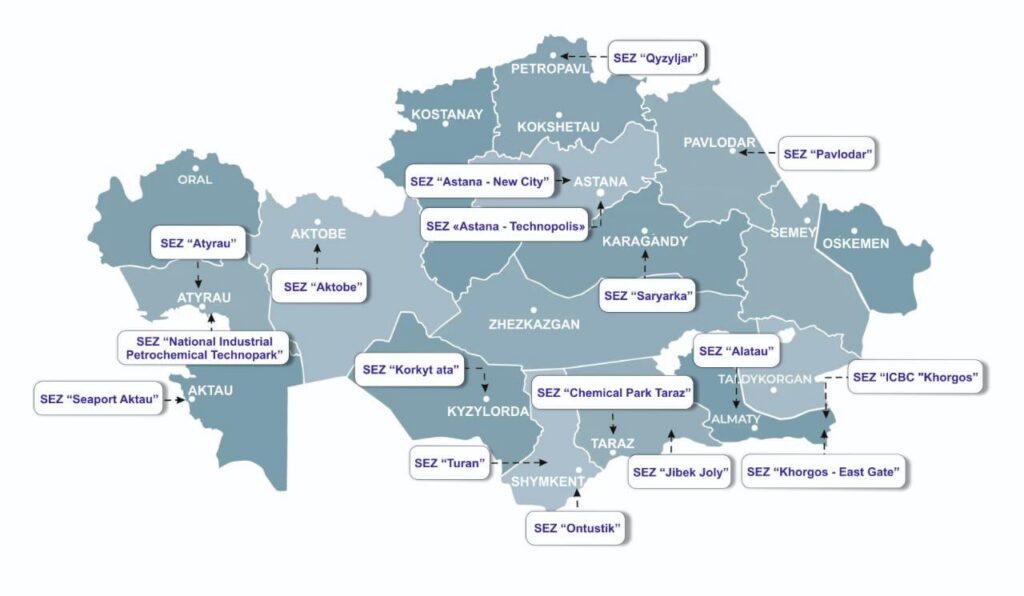
Kazakhstan currently has 17 special economic zones (SEZs) operating across 14 regions, three of which were created in 2025. How effective is this tool for attracting investment, reducing import dependence, and developing exports? And how will the SEZ model evolve within the framework of the Single Coordination Center? Yerlan Kusainov, Deputy Chairman of the Board of JSC Kazakhstan Center for Industry and Export “QazIndustry,” discussed these issues with The Times of Central Asia. TCA: Kazakhstan currently has 17 SEZs. How many companies operate in them, and what is the total volume of production? Kusainov: There are 1,144 participants registered in SEZ territories. Of these, 558 projects are already operational, while another 586 are in the implementation stage. Since the establishment of the zones, enterprises have produced goods worth 13.9 trillion tenge (about $28 billion). The current occupancy rate of the SEZs is 42.4%. This indicator is dynamic and may change as new contracts are signed or as some participants cease operations. TCA: What types of products are manufactured in the SEZs, and how does this contribute to reducing import dependence? Kusainov: The SEZs cover a wide range of industries, including manufacturing, construction, transport and logistics, and tourism. For example, the Aktau Seaport SEZ is implementing projects in the chemical industry, including the production of caustic soda and hydrochloric acid by Topan Chemical Industries. These products are widely used in metallurgy, the oil and gas industry, and water treatment. Previously, a significant portion of such products was imported, but production is now being localized in Kazakhstan. A major petrochemical cluster is being formed in the Jibek Joly SEZ. Projects there include the production of mineral fertilizers, chemical reagents, and polymer products. Participating companies include HIM-plus, KPM Plast, Chemical Engineering, and C9 Technologies. These projects are expected to supply the domestic market while also supporting exports. In the Pavlodar SEZ, projects are being implemented in metallurgy and petrochemicals. These include the production of calcined petroleum coke by UPNC-PV, car wheels by Vector Pavlodar, and aluminum ingots and alloys by LeichtMetall KZ and Unimetals. These products are exported to markets in Europe and Asia. The Ontustik SEZ focuses on the textile industry, where a full cotton-processing cycle has been established, from raw materials to finished products. Enterprises there produce cotton and synthetic yarn, carpets, and other textile goods. Another important site is the Park of Innovative Technologies SEZ, where projects in digital technologies and electronics are being developed. Key participants include the Institute of Physics and Technology, KT Cloud Lab, which is building a data center, and DS Multimedia CA, which manufactures electronic components. Together, these projects contribute to reducing import dependence and building export-oriented industries. TCA: What is the export volume of SEZ enterprises? Kusainov: The total export volume from SEZ enterprises has reached about $2 billion. In 2025 alone, exports amounted to approximately $490 million, compared with $148 million in 2021, an increase of 231%. TCA: How much investment has been attracted through the SEZs? Kusainov: Over the entire period of...
Kazakhstan Unveils Alatau: Investor-Led City with Crypto Ambitions

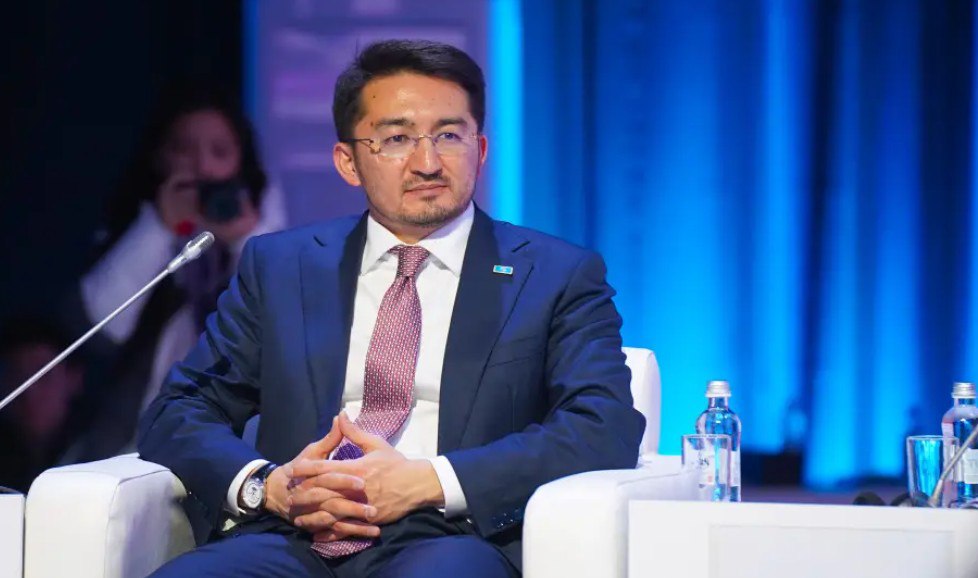
A major new urban development project is underway in Kazakhstan’s Almaty region, where a city named Alatau is being built with an emphasis on private investment and innovation. According to Zhaslan Madiyev, Minister of Digital Development, Innovation, and Aerospace Industry, the city is envisioned as a "magnet" for both domestic and international investors. Initially known as G4 City, the Alatau project was designed as a “smart city” comprising four interconnected districts: Gate District - A financial and business hub Golden District - A center for education and healthcare Growing District - An industrial and logistics zone Green District - An area for recreation and entertainment The development plan for Alatau aims to attract KZT 3.7 trillion (approx. $7.2 billion) in investment and expand the population from 52,000 to 2 million residents. The city will also be part of a special economic zone, with over 170 projects valued at KZT 12.5 trillion (around $24.4 billion) earmarked for implementation. Speaking at the Astana International Forum (AIF), Madiyev stated that the city could take one of two development paths: state-funded, as in the cases of Astana and Turkestan, or developed as a platform for private investment. “There are several options for how the city can be developed,” he said. “Alatau can be made a platform for investors. However, this requires an environment where the private sector can thrive. We need to design the entire landscape to support that in Alatau.” Madiyev also proposed key regulatory and infrastructural reforms to attract foreign investors. English should become the city’s main business language, cryptocurrency should be permitted for free circulation, and foreign nationals should be allowed to purchase real estate. These initiatives, he argued, would help position Alatau as a hub for education and tourism. “This city can become a magnet for young people who dream of living in places like Dubai,” Madiyev said. “We hope they will choose Alatau.”

Kazakhstan Establishes New Special Economic Zone in Kyzylorda Region

Kazakhstan has launched a new special economic zone (SEZ) named "Korkyt Ata", located in the Kyzylorda region. Spanning 550 hectares, the SEZ is strategically positioned near the international transport corridor Western Europe-Western China, enhancing its potential as a hub for industrial growth and regional trade. According to the project’s developers, the SEZ aims to foster competitive industrial production, attract both domestic and foreign investment, and facilitate the introduction of advanced technologies. Its proximity to the major transport artery is expected to improve access to Central Asian markets and beyond. Korkyt Ata will operate under a special legal regime offering tax and customs incentives to investors. By 2049, it is projected to attract over 150 billion KZT ($290 million) in investment, including 80 billion KZT ($155 million) in foreign capital. Currently, Kazakhstan hosts 15 special economic zones, each with distinct industrial priorities. These include the Aktau Seaport SEZ, strategically located along the Trans-Caspian International Transport Route (TITR), also known as the Middle Corridor, which connects China to Europe through Kazakhstan. Additionally, two key SEZs are positioned along the Kazakh-Chinese border: Khorgos International Center for Border Cooperation (ICBC), facilitating cross-border trade and joint ventures; Khorgos-Eastern Gate SEZ, a logistics hub featuring industrial complexes and a dry port that links China with Central Asia and the Middle East. The establishment of Korkyt Ata underscores Kazakhstan’s ongoing strategy to strengthen its economic infrastructure through diversified SEZs. By leveraging its geographic advantages and investor-friendly policies, the country aims to solidify its role as a vital link in Eurasian trade and industrial networks.
