• KGS/USD = 0.01144 0%
  • KZT/USD = 0.00215 0%
  • TJS/USD = 0.10680 0.19%
  • UZS/USD = 0.00008 0%
  • TMT/USD = 0.28530 0%
  • KGS/USD = 0.01144 0%
  • KZT/USD = 0.00215 0%
  • TJS/USD = 0.10680 0.19%
  • UZS/USD = 0.00008 0%
  • TMT/USD = 0.28530 0%
  • KGS/USD = 0.01144 0%
  • KZT/USD = 0.00215 0%
  • TJS/USD = 0.10680 0.19%
  • UZS/USD = 0.00008 0%
  • TMT/USD = 0.28530 0%
  • KGS/USD = 0.01144 0%
  • KZT/USD = 0.00215 0%
  • TJS/USD = 0.10680 0.19%
  • UZS/USD = 0.00008 0%
  • TMT/USD = 0.28530 0%
  • KGS/USD = 0.01144 0%
  • KZT/USD = 0.00215 0%
  • TJS/USD = 0.10680 0.19%
  • UZS/USD = 0.00008 0%
  • TMT/USD = 0.28530 0%
  • KGS/USD = 0.01144 0%
  • KZT/USD = 0.00215 0%
  • TJS/USD = 0.10680 0.19%
  • UZS/USD = 0.00008 0%
  • TMT/USD = 0.28530 0%
  • KGS/USD = 0.01144 0%
  • KZT/USD = 0.00215 0%
  • TJS/USD = 0.10680 0.19%
  • UZS/USD = 0.00008 0%
  • TMT/USD = 0.28530 0%
  • KGS/USD = 0.01144 0%
  • KZT/USD = 0.00215 0%
  • TJS/USD = 0.10680 0.19%
  • UZS/USD = 0.00008 0%
  • TMT/USD = 0.28530 0%

Viewing results 1 - 6 of 218

ESPN’s Laura Sanko Dives into Kazakh Culture, Inspired by UFC’s Shavkat Rakhmonov

American TV host and ESPN journalist Laura Sanko, known for her admiration of Kazakh UFC fighter Shavkat Rakhmonov, has shared her journey of learning the Kazakh language​. Sanko acknowledged that the process has been challenging but expressed enthusiasm for mastering new words and phrases. “It’s difficult. You would laugh if you saw me. I sit in my hotel room, watch YouTube videos, and try to repeat after them. When I think I’ve succeeded, I send an audio file to Sayat Abdrakhmanov, Shavkat Rakhmonov's manager, asking him to check. Then he translates my phrases into Kazakh, and I listen to them slowly, over and over,” she revealed during an interview with Schrödinger's Sport. Despite her dedication, Sanko modestly assessed her progress, emphasizing the significant effort required to learn Kazakh. “I learned that ‘sәlemetsiz be’ means ‘hello.’ I picked that up through YouTube. I wanted to prepare for a simple conversation, but I’m far from that. Kazakh is very difficult for Americans. It requires using deep throat muscles, while English relies on more frontal sounds. It’s hard for us to get it right,” she explained. Sanko has long been a familiar name among martial arts fans in Kazakhstan. She began following Rakhmonov’s career even before his debut in the UFC​. Her admiration for the fighter has occasionally sparked rumors of romantic interest, but Sanko maintains that her fascination is purely professional. Sanko’s admiration for Rakhmonov extends beyond his fighting skills to Kazakhstan's culture. She has made public appearances in traditional Kazakh attire, such as during a UFC weigh-in​. Ahead of Rakhmonov’s most recent fight, she appeared in a traditional Kazakh outfit and, after his seventh consecutive UFC victory, delivered a speech in Kazakh - a gesture widely appreciated by Kazakhstani fans. Shavkat Rakhmonov is one of Kazakhstan's most celebrated MMA athletes. Currently ranked No. 2 in the welterweight division, Rakhmonov remains undefeated with a 19-0 record.

2025 Asian Youth Games Moved from Tashkent to Bahrain

The Olympic Council of Asia (OCA) has announced that the 3rd edition of the Asian Youth Games in 2025, which had been due to be hosted in Tashkent, is to be moved to Bahrain. This decision was put down to some of the venues in the Uzbek capital being unready. Uzbekistan's National Olympic Committee (NOC) issued a statement explaining that the country had asked the OCA to postpone the competition for one year. There have been delays in the construction of the $289 million Olympic Campus due to post-pandemic constraints. However, the OCA refused the postponement because the 2025 Games are a selection stage for the 2026 Youth Olympic Games in Dakar, Senegal. As a result, the event will now be hosted by Bahrain. The OCA recommended that Uzbekistan focus on preparations for other sporting events, such as the Islamic Solidarity Games or the Asian Indoor and Martial Arts Games. "The construction of the Olympic City remains a key project for the development of sports in Uzbekistan. We intend to complete its construction on time and turn it into a base for major international competitions," the NOC said.

France to Support Development of Kyrgyzstan’s Largest Ski Resort

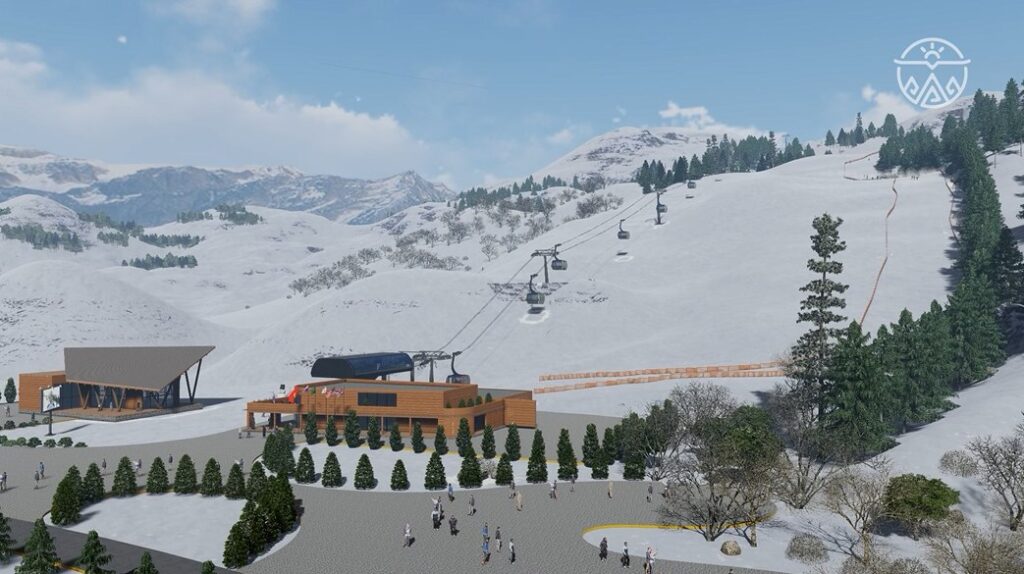
Kylychbek Rysaliyev, President of Kyrgyzstan’s Tourism Development Support Fund, recently met with French Ambassador to Kyrgyzstan Nicolas Faye to discuss enhancing bilateral cooperation in tourism. During the talks, Ambassador Faye reaffirmed France’s commitment to supporting the development of a major skiing complex in the Issyk-Kul region. Highlighting the importance of the Three Peaks Ski Complex project, Ambassador Faye described it as a priority for the French Embassy, promising France’s expertise in its design and execution. “The lack of direct flights between Kyrgyzstan and France currently hinders a broader influx of tourists,” noted Ambassador Faye, emphasizing that improving air connectivity could significantly boost tourism potential. Rysaliyev underscored the value of French expertise, pointing to France’s robust tourism industry, which is a key driver of its national economy. He expressed confidence that collaboration on the Issyk-Kul ski complex would facilitate valuable knowledge exchange and elevate Kyrgyzstan’s position as a global tourist destination. The Three Peaks Ski Complex, a flagship initiative announced by Kyrgyz President Sadyr Japarov, is already in its preparatory phase. Infrastructure improvements, including road construction, power supply, and water systems, are underway. The state-owned company Kyrgyz Courchevel has been tasked with overseeing the project’s development. The first phase of the resort, set to open by 2030, will include 60 kilometers of ski tracks out of an anticipated 200 kilometers, six ropeways, and a range of facilities such as hotels, restaurants, ethno-towns, and conference halls. The project is expected to position the Issyk-Kul region as a premier skiing destination, fostering economic growth and attracting international visitors.

My First International Competition – Anara Ashimova, Silver Medalist in Shaolin Wushu

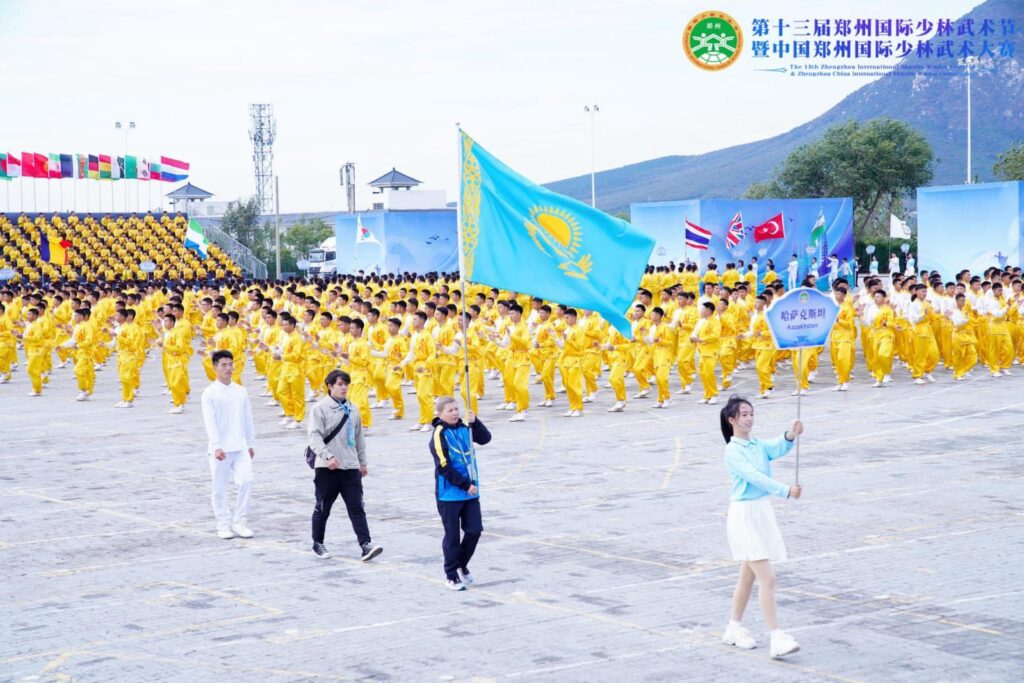
I was never a big sports person, but working at the computer and not moving much eventually made me realize I needed some kind of physical activity to cheer myself up and to recharge my body. After all, I wanted to be healthy and active in my maturity - I don’t want to call it old age. I had doubts about my physical abilities, but I was resolute, so I decided to go for a sport with exercises that are possible for and improve the health of people of age. Therefore, I took up the sport of Wushu, starting in a large group under the guidance of Gaini Kypshakbai, a master of the art. The first few months were challenging, but I slowly developed new skills. A lot of people quit during this time, and eventually only three of us were left in the group. Gradually, I developed an obsession with the classes as a way to strengthen my body and spirit. Our coach, Gaini, deserves a separate piece to be written about her for her patience and mentoring, but for now, I will just say that I'm grateful and full of respect for her. Laoshi (coach in Chinese) Gaini gently introduced us to the Tai Chi community, an association of enthusiasts who are passionate about what they do. In my third year of classes, I wanted to broaden my horizons, watch the masters, and show off my modest skills. So, after participating in the Championship for the Republic of Kazakhstan, we went to China for The 13th Zhengzhou China International Shaolin Wushu Competition. [caption id="attachment_25561" align="aligncenter" width="1280"] Team Kazakhstan; image: A.Ashimova[/caption] Our team consisted of twelve people of different ages ranging from 30 to 65; it was the first international competition for all of us. Some of us were leaving Kazakhstan for the first time, but I'd been to Urumqi 20 years before. Everything that awaited us upon our arrival in China impressed and delighted us. The first thing that pleased me was how clean and organized everything was. People were friendly and willing to help, and, most importantly, it was completely safe. The cities we visited were very green with beautiful trees and lots of flowers; the parks were well-maintained, and the air was clean and fresh. Almost every city had the same level of population as Kazakhstan, but it never felt crowded. Everything was organized, clear, and accessible. For us, the myth that the Chinese do not speak English was also dispelled. If we encountered a language barrier, it was easily overcome by modern online translators. The youth of China were very bright, independent, and open. The Opening Ceremony of the festival was an indescribable delight. The small town of Danfeng welcomed us alongside representatives of 65 schools of Tai Chi. The competition was a festival celebrating the different styles of Wushu. We couldn’t contain our excitement as we took pictures on our smartphones and greeted the young athletes from the windows of the bus as thirty-five...

Kazakhstan Sports Anticipates Influx of Russian and Belarusian Athletes

Kazakhstan's lower house of parliament, the Mazhilis, has approved in its first reading a bill on physical culture and sports that would ban the funding of foreign athletes (legionnaires) from the state budget and national companies with government stakes. However, even if this bill is enacted, Kazakh sports teams will retain a legal avenue to invite athletes from Eurasian Economic Union (EAEU) countries using public funds. For the first time, Kazakhstan’s national legislature is proposing a provision prohibiting the use of state funds to finance athletes who are not citizens of Kazakhstan, with the goal of prioritizing Kazakh athletes in terms of both sports representation and financial support. Minister of Tourism and Sports Yerbol Myrzabasynov has also suggested setting a cap on state funding for professional sports clubs, which would vary by sport according to national priorities. “The freed funds will be redirected towards children’s and youth sports, including boarding schools, youth sports schools, sports reserves, and facility upgrades,” Myrzabasynov explained. The bill was approved in the first reading. Currently, government funding for sports clubs in Kazakhstan comes from two main sources. Teams competing internationally, such as the Barys hockey team in the Continental Hockey League, the Astana basketball team in the VTB United League, and the Astana cycling team in the World Tour, receive support from the Samruk-Kazyna fund. Other teams in soccer, hockey, basketball, and volleyball competing in Kazakhstan’s national championships are funded by local budgets, with Astana’s soccer team - which also receives sponsorship from the Samruk-Kazyna fund - being the sole exception. Should the bill pass, these teams will need to rely on Kazakh athletes — or athletes from EAEU countries such as Russia, Belarus, Armenia, and Kyrgyzstan. The Treaty on the Eurasian Economic Union, enacted in January 2015, promotes the free movement of services, goods, capital, and labor across member states, ensuring equal labor rights and remuneration for citizens of EAEU countries. This treaty means that Kazakh clubs cannot restrict funding for athletes from EAEU nations without breaching international commitments. In Kazakh soccer, for instance, EAEU athletes are not counted as foreign players in the Premier League, a policy instituted after the Kazakhstan Football Federation set a limit on foreign players several years ago, capping each team’s roster at eight foreign players per season. Athletes from Russia, Belarus, Armenia, and Kyrgyzstan, however, are treated as domestic players due to Kazakhstan’s international obligations. This arrangement stems from Kazakhstan’s Law on Legal Acts, which stipulates that ratified international treaties take precedence over national laws. Therefore, if the bill banning foreign athletes' funding from the state budget is fully enacted, EAEU athletes will remain exempt from this ban. The bill must still pass through a second reading in the Mazhilis, two readings in the Senate, and obtain presidential approval before it becomes law. Questions remains as to whether Kazakh sports clubs will use this provision to hire athletes from EAEU countries, given potential legal challenges. Local administrations (akimats) who would be affected by any restrictions on funding for...

Children’s Delphic Games Open in Kyrgyzstan

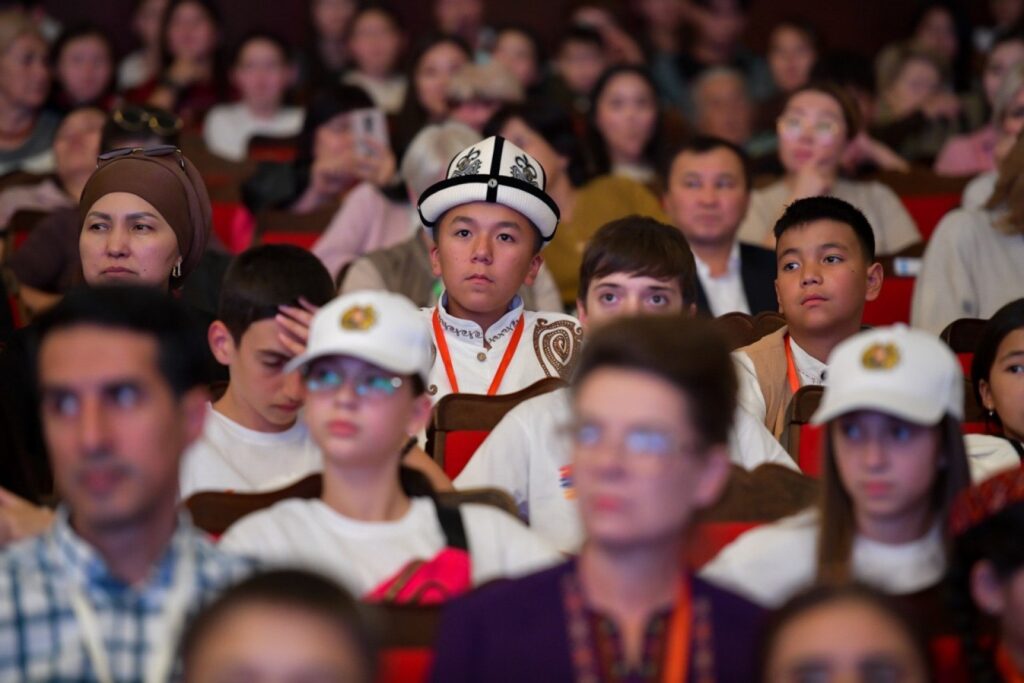
The First Open Children's Delphic Games for CIS countries has begun in Bishkek. The opening ceremony was held at the Toktogul Satylganov Kyrgyz National Philharmonic. The event strives to revive the ancient Greek traditions of the Delphic Games, which took place in the city of Delphi and were dedicated to art and culture. The competition program this year includes competitions for piano, violin, classical guitar, pop and solo singing, folk dance, and DJing. The festival features folk instruments, arts and crafts, and sign language songs. Asel Chynbaeva, Commissioner for Children's Rights, opened the Games by speaking about the importance of the Delphic Games as a platform for cultural exchange and showcasing talent among young people from Eurasian countries. This year special attention is being paid to the Paradelphi nomination, which includes the performance of works in sign language. This emphasizes the importance of inclusiveness and demonstrates how art can overcome barriers and unite people. The Games will run until October 5.