• KZT/USD = 0.00210
  • TJS/USD = 0.10810
  • UZS/USD = 0.00008
  • TMT/USD = 0.29850
  • KZT/USD = 0.00210
  • TJS/USD = 0.10810
  • UZS/USD = 0.00008
  • TMT/USD = 0.29850
  • KZT/USD = 0.00210
  • TJS/USD = 0.10810
  • UZS/USD = 0.00008
  • TMT/USD = 0.29850
  • KZT/USD = 0.00210
  • TJS/USD = 0.10810
  • UZS/USD = 0.00008
  • TMT/USD = 0.29850
  • KZT/USD = 0.00210
  • TJS/USD = 0.10810
  • UZS/USD = 0.00008
  • TMT/USD = 0.29850
  • KZT/USD = 0.00210
  • TJS/USD = 0.10810
  • UZS/USD = 0.00008
  • TMT/USD = 0.29850
  • KZT/USD = 0.00210
  • TJS/USD = 0.10810
  • UZS/USD = 0.00008
  • TMT/USD = 0.29850
  • KZT/USD = 0.00210
  • TJS/USD = 0.10810
  • UZS/USD = 0.00008
  • TMT/USD = 0.29850

Viewing results 1 - 6 of 47

Central Asia Attracted $24.8 billion in Investments in 2024

Despite global economic challenges, Central Asia has experienced growth in attracting foreign direct investment (FDI). According to the United Nations Economic and Social Commission for Asia and the Pacific (ESCAP), investment in the region increased by 27%, reaching $24.8 billion in 2024. Kazakhstan and Uzbekistan have become the main centers of attraction for capital, offering investors significant opportunities in the energy sector and green technologies. Uzbekistan attracted $4 billion in foreign investment, reflecting a 49% year-on-year decline. However, the country is actively developing sustainable environmental projects. South Korea’s Western Power plans to build a $152 million biofuel plant in Fergana region. The plant will process cotton stalks to heat greenhouses, which will replace coal and reduce emissions by 120,000 tons of CO2 over 10 years. This project reflects Uzbekistan's policy of reducing dependence on fossil fuels and introducing “green” technologies. Kazakhstan maintained its position as the regional leader in attracting investment, accounting for 63% of Central Asia's total FDI. The country increased its investment inflow by 88%, reaching $15.7 billion. An important role was played by Qatari company UCC Holding, which invested $11 billion in the construction of two gas processing plants, a compressor station, and new main gas pipelines. These projects strengthen Kazakhstan's role as a key energy hub in the region. Kyrgyzstan recorded the highest relative growth in investment, increasing by 310% to $2.1 billion. Turkmenistan and Tajikistan received $339 million and $281 million, respectively. As for outgoing investments, their volume from the region decreased by 58% to $2.3 billion. Russia remains the primary source of outgoing investments, accounting for 90% ($2.1 billion). Georgia invested $105 million, Azerbaijan $76 million, and Kazakhstan $47 million.

Uzbekistan’s Debt to Russia Climbs Amid Rising Regional Loans

Russia’s foreign lending surged to over $30 billion in 2023, the highest level since 1999, with Egypt, Bangladesh, and India receiving the largest new loans. Uzbekistan also saw a notable rise in its debt to Russia during the year. Uzbekistan’s debt to Russia increased by $41.3 million in 2023, contributing to the overall growth in the country’s financial obligations to foreign lenders. Russia’s Top Debtors Belarus remains Russia’s largest debtor, with $7.75 billion in loans, accounting for 25% of Russia’s total foreign lending. Bangladesh follows with $6.6 billion (22%), and India ranks third with $4.1 billion (14%). Other significant borrowers include Egypt, which owes $3.3 billion (11%), and Vietnam at $1.4 billion (5%). Egypt experienced the largest debt increase in 2023, with an additional $1.45 billion borrowed from Russia. Bangladesh and India saw increases of $745 million and $363 million, respectively. Afghanistan’s debt to Russia grew by $19.9 million, while smaller increments were recorded in countries like Zambia, Yemen, Sri Lanka, Ecuador, Sudan, and Moldova, which collectively added $26.54 million in debt. Uzbekistan’s Broader Debt Outlook As previously reported by The Times of Central Asia, Uzbekistan’s public debt is projected to reach $45.1 billion by the end of 2025, equivalent to 36.7% of the country’s GDP. By the end of 2023, public debt is expected to stand at $39.7 billion. The Uzbek government’s budget for 2025 highlights significant fiscal commitments, with 52% - amounting to $27.02 billion - allocated to social programs, reflecting the government’s emphasis on social spending.

National Bank of Kazakhstan Predicts Higher 2025 Oil Prices Than Bank of America

The National Bank of Kazakhstan (NBK) has revised its forecast for 2025 oil prices, lowering the projected cost from $82.5 to $70 per barrel. Despite this adjustment, the NBK remains more optimistic than Bank of America, which recently reduced its 2025 oil price forecast to $65 per barrel. Bank of America’s Forecast Initially, Bank of America analysts projected Brent oil prices at $80 per barrel for 2025, aligning closely with the NBK's earlier forecast of $82.5. However, last week, Francisco Blanch, head of global commodities and derivatives research at Bank of America, announced a significant revision, citing oversupply and reduced demand driven by the global shift toward cleaner energy sources and transportation. The new forecast sets oil prices at $65 per barrel. NBK’s Adjusted Outlook In its updated Monetary Policy Report, the NBK revised its oil price forecast for 2025 to $70 per barrel, compared to an average of $80.3 in 2024. The adjustment reflects weaker anticipated demand from China and OECD countries, coupled with slower global economic growth. The NBK noted that "the relaxation of production restrictions by OPEC+ countries starting in 2025, alongside increased output from North and South America, will likely create a supply surplus in the oil market." External Influences The U.S. presidential election results could also impact global oil dynamics. President-elect Donald Trump and his administration have pledged to sharply increase domestic oil production beginning in January 2025, aiming to reduce petroleum prices. Additionally, Trump has suggested a potential withdrawal from the Paris Climate Agreement, which could further incentivize support for U.S. oil companies. For Kazakhstan, declining oil prices present significant fiscal challenges. According to the Ministry of Finance, the country collected 655.2 billion KZT ($1.2 billion) in mineral extraction tax (MET) from oil companies during the first 11 months of 2024. Oil export revenues contributed approximately 2 trillion KZT ($3.8 billion), bringing total budget revenues from the oil sector to over 2.3 trillion KZT ($4.4 billion) this year. The potential reduction in oil prices could, therefore, have a substantial impact on Kazakhstan’s economy, particularly on its budgetary revenues derived from the oil industry.

Kazakhstan Tops Central Asia with Region’s Highest Pensions

Kazakhstan leads Central Asia in pension payments, with the highest average pension in the region, according to Kaktus.media. Kazakh citizens receive an average of approximately 89,275 KZT ($175.30) per month, as reported by the region's statistical agencies. Kyrgyzstan holds second place, with an average pension of 9,379 KGS ($108) at the end of 2023. Uzbekistan follows with an average of 1.2 million UZS ($93.40), while Turkmenistan ranks fourth, offering an average of 300 TMT ($85.60). Tajikistan reports the lowest pension payments in the region, where pensioners receive just an average of 370 TJS ($33.80) per month. Kazakhstan has also announced measures to further support its pensioners. Beginning January 1, 2025, the country will implement an annual indexation of solidarity pensions by 8.5%. Additionally, basic pensions and social benefits will increase by 6.5% annually, a move designed to improve the welfare of retirees.

Uzbekistan’s Gold Reserves Drop by $1.7 Billion in December

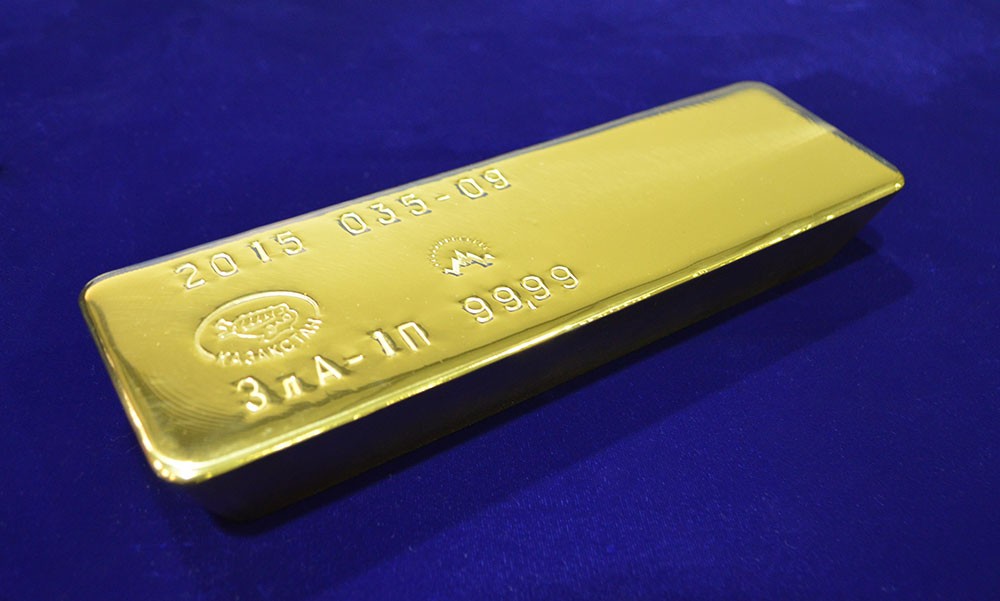
Uzbekistan’s international reserves declined in November, with the Central Bank of Uzbekistan reporting a decrease of $1.7 billion, or approximately 3.9%, bringing the total reserves to $41.5 billion as of December 1. The country’s gold reserves, which form a significant part of its international assets, saw a decrease in value by $623 million—from $33.4 billion to $32.7 billion—despite a slight increase in the physical volume of gold to 12.3 million troy ounces. Meanwhile, assets in freely convertible currency dropped by $1.04 billion in November, reaching $8.2 billion. This decrease is mirrored in the cash held in foreign accounts by the Central Bank, which also fell by $1.04 billion to $8.08 billion. Of this, $370.1 million is held in accounts with other central banks and the International Monetary Fund (IMF), while the remaining $7.7 billion is distributed among foreign financial institutions. In contrast to the decline in gold and currency reserves, the value of securities purchased by the Central Bank rose slightly, increasing by $101.3 million during the same period. Uzbekistan’s international reserves had reached a record high of $39.15 billion as of September 1, a peak since the country began disclosing reserve data in 2018. While November’s decline marks a significant drop, the reserves remain above the levels recorded earlier in the year. The fluctuation in Uzbekistan’s reserves reflects changing global market conditions and highlights the dynamics of managing gold and foreign currency assets. As the Central Bank navigates these challenges, the stability and long-term outlook of Uzbekistan’s financial reserves remain areas to watch closely.

Why Kazakhstan Wants to Change Subsoil User Taxation

Kazakhstan is considering a significant change in the taxation of subsoil users, with Minister of Industry and Construction Kanat Sharlapayev proposing the introduction of royalties to replace the current mineral extraction tax (MET) for licenses issued from January 1, 2026. According to Sharlapayev, this shift would attract more investors to Kazakhstan and encourage the domestic processing of raw materials. Why Investors Are Dissatisfied with MET The MET, introduced in 2008, is levied on subsoil users for every type of mineral, hydrocarbon, underground water, and therapeutic mud extracted in Kazakhstan. Each resource is taxed at a separate rate, calculated based on the volume of extracted raw materials rather than their actual sale or revenue. This has caused dissatisfaction among both local and foreign subsoil users. Over the years, discussions have intensified about replacing MET with royalties, which would calculate taxes based on the volume of products sold or profits earned. Sharlapayev stated during a recent government meeting that experts from the World Bank have recommended this change to make Kazakhstan’s mining sector more attractive to investors. “Globally, the most popular taxation model in the mining and metallurgical sector is based on the volume of products sold or profits earned. Kazakhstan, however, uses the mineral extraction tax. Introducing royalties tied to the sales value of minerals would be more transparent and familiar to international mining players,” Sharlapayev explained. Sharlapayev also emphasized that replacing MET with royalties would incentivize domestic production by imposing lower taxes on minerals processed within Kazakhstan compared to those exported without processing. He urged Prime Minister Olzhas Bektenov to instruct the Ministry of Finance and the Ministry of National Economy to include royalty provisions in the new Tax Code, expected to take effect in 2026. However, these changes would only apply to licenses issued from January 1, 2026. Concerns Over the Transition The Ministry of Finance has expressed reservations about the proposed shift, citing potential revenue losses. In September, Zhanybek Nurzhanov, Deputy Chairman of the State Revenue Committee, warned that transitioning to royalties could cost the state budget hundreds of billions of tenge. “We can switch to royalties only if there are no losses for the budget. If we simply introduce royalties and reduce business payments, it raises a serious question—how do we offset nearly half a trillion tenge in lost tax revenue?” Nurzhanov said. Additionally, Nurzhanov pointed out that determining the true value of exported raw materials would require the establishment of specialized laboratories, imposing financial burdens on both businesses and the state. This, coupled with the complexities of administering royalties, could deter subsoil users. Kazakh economist Galymzhan Aitkazin echoed these concerns, noting that MET’s fixed rates provide predictability for both businesses and the government, while royalties—tied to revenue or market prices—introduce variability. “The simplicity of flat MET rates allows companies to plan effectively and helps the government forecast revenues. By contrast, royalties linked to revenue or market prices could lead to payment variability, complicating financial planning for both parties,” Aitkazin explained. He also emphasized that MET’s straightforward...