• KZT/USD = 0.00224
  • TJS/USD = 0.10850
  • UZS/USD = 0.00008
  • TMT/USD = 0.29850
  • KZT/USD = 0.00224
  • TJS/USD = 0.10850
  • UZS/USD = 0.00008
  • TMT/USD = 0.29850
  • KZT/USD = 0.00224
  • TJS/USD = 0.10850
  • UZS/USD = 0.00008
  • TMT/USD = 0.29850
  • KZT/USD = 0.00224
  • TJS/USD = 0.10850
  • UZS/USD = 0.00008
  • TMT/USD = 0.29850
  • KZT/USD = 0.00224
  • TJS/USD = 0.10850
  • UZS/USD = 0.00008
  • TMT/USD = 0.29850
  • KZT/USD = 0.00224
  • TJS/USD = 0.10850
  • UZS/USD = 0.00008
  • TMT/USD = 0.29850
  • KZT/USD = 0.00224
  • TJS/USD = 0.10850
  • UZS/USD = 0.00008
  • TMT/USD = 0.29850
  • KZT/USD = 0.00224
  • TJS/USD = 0.10850
  • UZS/USD = 0.00008
  • TMT/USD = 0.29850
14 November 2026

Viewing results 1 - 6 of 2

Tokayev Moves to Tackle Corruption After Samruk-Kazyna and KTZ Arrests

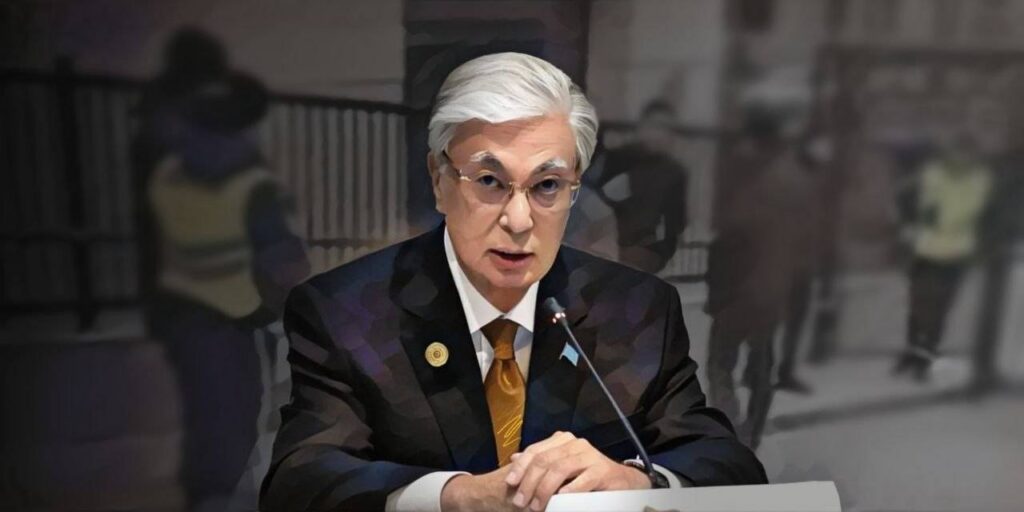
Kazakh President Kassym-Jomart Tokayev has described the detention of the heads of the Samruk-Kazyna sovereign wealth fund and the national railway company Kazakhstan Temir Zholy (KTZ) as evidence of serious corruption problems within state-owned enterprises. Speaking at a Security Council meeting on November 13, he warned that such cases threaten Kazakhstan's international reputation and foreign partners' confidence in its largest companies. "This is an extremely serious signal of large-scale corruption in state-owned companies," Tokayev said. He emphasized that the inquiry had only just begun and that it was premature to disclose details. On November 11, the Anti-Corruption Service of Kazakhstan's National Security Committee (KNB) detained Samruk-Kazyna CEO Nurlan Zhakupov, KTZ chief Yelzhas Otynshiyev, and several other individuals on suspicion of a corruption-related offense. The next day, the KNB confirmed both men were in custody but gave no details, citing restrictions on disclosure during pretrial proceedings. Zhakupov had headed the fund since April 2023. Otynshiyev had led KTZ since July 2026, having previously held senior positions at Samruk-Kazyna. The case, which involves the leaders of both KTZ and its sole shareholder, Samruk-Kazyna, signals that senior positions at major state companies do not shield executives from anti-corruption scrutiny. Neither executive has been convicted. In August 2025, then-transport vice minister Satzhan Ablaliyev was detained on suspicion of taking a bribe. In October 2023, former Justice Minister Marat Beketayev was arrested and sentenced to nine years in 2025 for fraud, embezzlement, and illegal business activities. Cash Footage Draws Attention Police stood beside bags and banknotes strewn across the pavement outside an Astana apartment building in a video circulating on November 12. The clip, published by Kursiv, showed several men gathered near the entrance, with loose notes and bundles on the ground. Reporters from Tengrinews identified the location as the Atlant residential complex on Kunaev Street. The authorities have not confirmed a link between the cash and the arrests. Samruk-Kazyna manages Kazakhstan's largest state-owned assets, including companies in the oil and gas, energy, transportation, and telecommunications sectors. Its portfolio includes KazMunayGas, Kazatomprom, Kazakhtelecom, and KTZ. The railway operator handles a substantial share of the country's freight transportation, including transit between China and Europe and shipments along the Trans-Caspian International Transport Route, also known as the Middle Corridor. Tokayev placed particular emphasis on the fund's international commitments, noting its involvement in major investment projects with foreign companies and financial institutions. "Behind every such agreement and partnership lie extensive negotiations conducted over many years, Kazakhstan's commitments, and the international community's trust in our country," the president stressed. Tokayev said the fight against corruption should strengthen investor and creditor confidence in Samruk-Kazyna while making the fund’s operations more transparent and effective. In a statement, Samruk-Kazyna said the fund and its subsidiaries were continuing normal operations and would honor their obligations to investors, creditors, and business partners. At the same meeting, Tokayev ordered the government and oversight bodies to submit proposals by November 24 to reduce corruption at state companies. He said the probe must not interrupt their operations....

Uzbekistan Privatization: Unsold State Assets Relisted With $85 Opening Bids

Uzbekistan has begun putting previously unsold state assets back on the market, with opening bids starting at 1 million Uzbek soums, or about $85. The first lots include stakes in small companies, a district laboratory, vacant buildings, and a former mineral fertilizer warehouse. That figure is the opening bid in an electronic auction, not a valuation of the property. The final price will be determined by bidding. The new rules took effect on September 8 and cover 84 previously unsold assets. They are part of a new privatization package approved by President Shavkat Mirziyoyev on August 28. The government also plans to offer stakes in another 84 companies, 1,242 real estate properties, and about 8,000 hectares of land. The package also calls for 85 enterprises to be liquidated or reorganized. Among the first offerings is a 100% stake in Bukhsu Scientific Biotechnology, a limited liability company registered in Bukhara. Despite its name, the state registry lists its activity as auxiliary services in the field of education. Another lot is a 100% stake in Yangiyo‘l tuman laboratoriya, a district laboratory in Yangiyul District, Tashkent Region. The state had already tried to sell it, offering the stake for about $820 in May 2026, but no buyer emerged. Also for sale are a 100% stake in Iqtisod-Moliya and a 30% stake in Ferula Shifobaxsh. The latter is associated with agriculture and is currently listed in the state registry as inactive. The real estate lots include retail premises, vacant buildings, and a former warehouse used to store and distribute mineral fertilizers. In Samarkand Region, authorities separately announced the renewed sale of five properties in the Narpay, Kattakurgan, Pakhtachi, and Urgut districts. All of the assets have been offered for sale before without success. Uzbekistan has been selling state-owned companies, banks, real estate, and land for years. Large transactions attract international capital. Alongside them, however, is a less visible part of the state economy: small businesses and properties with no obvious buyer. The problem predates the latest decree. As of April 1, 2025, more than 3,600 state assets remained on sale with a combined starting value of about $1.4 billion. Prices had been reduced for 440 assets after they remained unsold for more than three months. In 153 cases, prices had been cut by 70–90%. In 2024, Mirziyoyev criticized slow sales and inflated valuations of some state property. A new privatization program at the time included stakes in hundreds of enterprises and more than 1,000 real estate properties. The latest decree accelerates the process. After three months without a buyer, the price of an asset can be reduced in stages. Some properties can also be sold through a hybrid auction, in which the price falls until a bidder emerges and then rises as participants compete. Payment terms are also changing. Buyers need to make an initial payment of only 15%, with the remainder payable in interest-free installments. If 35% is paid within the first three months, the balance can be spread over up to five...