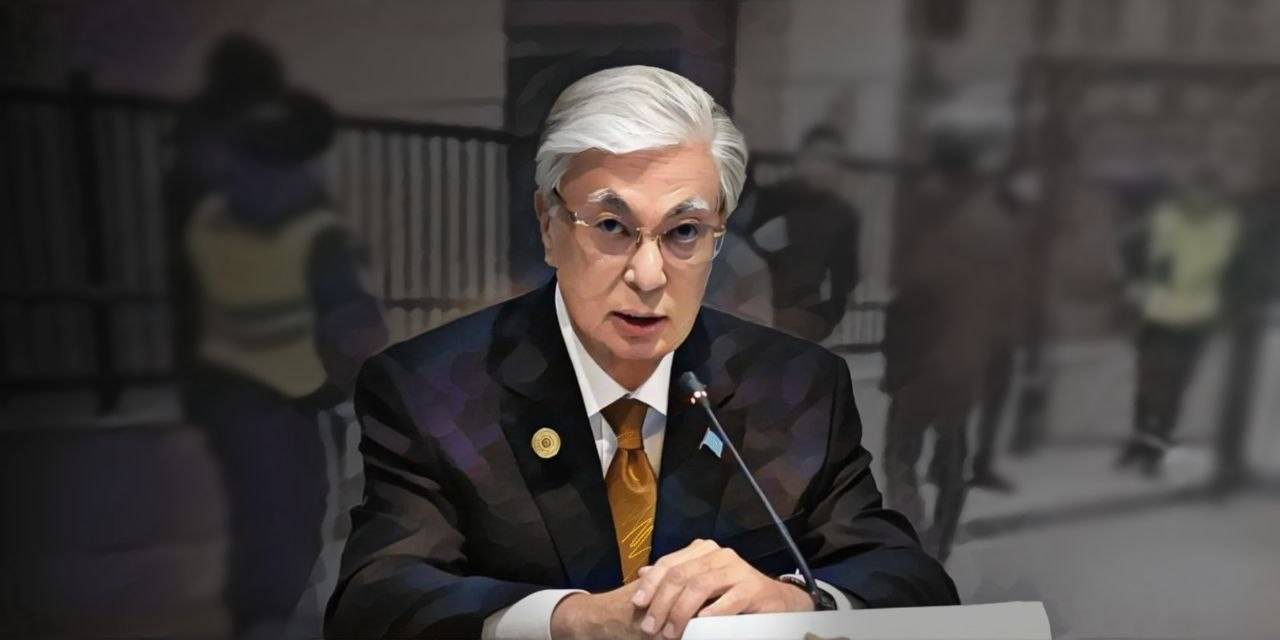
Kazakh President Kassym-Jomart Tokayev has described the detention of the heads of the Samruk-Kazyna sovereign wealth fund and the national railway company Kazakhstan Temir Zholy (KTZ) as evidence of serious corruption problems within state-owned enterprises. Speaking at a Security Council meeting on November 13, he warned that such cases threaten Kazakhstan’s international reputation and foreign partners’ confidence in its largest companies.
“This is an extremely serious signal of widespread corruption in state-owned companies,” Tokayev said. He emphasized that the inquiry had only just begun and that it was premature to disclose details.
On November 11, the Anti-Corruption Service of Kazakhstan’s National Security Committee (KNB) detained Samruk-Kazyna CEO Nurlan Zhakupov, KTZ chief Yelzhas Otynshiyev, and several other individuals on suspicion of a corruption-related offense. The next day, the KNB confirmed both men were in custody but gave no details, citing restrictions on disclosure during pretrial proceedings.
Zhakupov had headed the fund since April 2023. Otynshiyev had led KTZ since July 2026, having previously held senior positions at Samruk-Kazyna.
The case, which involves the leaders of both KTZ and its sole shareholder, Samruk-Kazyna, signals that senior positions at major state companies do not shield executives from anti-corruption scrutiny. Neither executive has been convicted.
In August 2025, then-transport vice minister Satzhan Ablaliyev was detained on suspicion of taking a bribe. In October 2023, former Justice Minister Marat Beketayev was arrested and sentenced to nine years in 2025 for fraud, embezzlement, and illegal business activities.
Cash Footage Draws Attention
Police stood beside bags and banknotes strewn across the pavement outside an Astana apartment building in a video circulating on November 12. The clip, published by Kursiv, showed several men gathered near the entrance, with loose notes and bundles on the ground. Reporters from Tengrinews identified the location as the Atlant residential complex on Kunaev Street. The authorities have not confirmed a link between the cash and the arrests.
Samruk-Kazyna manages Kazakhstan’s largest state-owned assets, including companies in the oil and gas, energy, transportation, and telecommunications sectors. Its portfolio includes KazMunayGas, Kazatomprom, Kazakhtelecom, and KTZ. The railway operator handles a substantial share of the country’s freight transportation, including transit between China and Europe and shipments along the Trans-Caspian International Transport Route, also known as the Middle Corridor.
Tokayev placed particular emphasis on the fund’s international commitments, noting its involvement in major investment projects with foreign companies and financial institutions.
“Behind every such agreement and partnership lie extensive negotiations conducted over many years, Kazakhstan’s commitments, and the international community’s trust in our country,” the president stressed.
In a statement, Samruk-Kazyna said the fund and its subsidiaries were continuing normal operations and would honor their obligations to investors, creditors, and business partners.
At the same meeting, Tokayev ordered the government and oversight bodies to submit proposals by November 24 to reduce corruption at state companies. He said the probe must not interrupt their operations.
KTZ IPO Faces Uncertainty
The timing is particularly sensitive for KTZ, which is preparing for an initial public offering (IPO). The company has been considering stock exchanges in Kazakhstan, London, and Hong Kong, with plans to use the proceeds to repay debt and finance investment projects. Financial experts interviewed by Kursiv suggested that the offering could be postponed, as the absence of senior management may complicate corporate decision-making.
Hong Kong’s stock exchange published KTZ’s post-hearing information pack on November 11, the same day as the arrests. The document moved the listing process forward, but the share offer has not launched. Under Samruk-Kazyna’s May plan, KTZ would issue new shares and retain the proceeds for investment and debt repayment, including the 303-kilometer Bakhty–Ayagoz railway.
KTZ had 3.78 trillion tenge ($8.5 billion) in borrowing as of September 30, up from 3.19 trillion tenge at the end of 2025. Lenders waived a borrowing-covenant breach until November 30. The company lists potential IPO proceeds among measures to strengthen its finances and restore compliance. KTZ has not announced a postponement of the share sale.
Tokayev described the investigation as the first major corruption case involving state-owned companies since the principle of “Law and Order” was enshrined in Kazakhstan’s new Constitution, adopted in a referendum on March 15, 2026, and brought into force on July 1.
“When it comes to the state’s reputation, public trust in national institutions, and Kazakhstan’s international standing, all of us entrusted with public authority must take a principled stand in defending the national interest. This is our civic and political duty,” the president said.
In early November, Prime Minister Olzhas Bektenov criticized Samruk-Kazyna’s management over delays in certain investment projects and demanded stronger oversight of their implementation. The KNB has not linked those criticisms to the current case.
The authorities must now establish the circumstances of the alleged offense. Meanwhile, the arrests of two strategically important company chiefs have become a test of Kazakhstan’s system for managing state-owned assets.