
• KGS/USD = 0.01144 0%
  • KZT/USD = 0.00202 0%
  • TJS/USD = 0.10563 -0.09%
  • UZS/USD = 0.00008 0%
  • TMT/USD = 0.28490 0%
  • KGS/USD = 0.01144 0%
  • KZT/USD = 0.00202 0%
  • TJS/USD = 0.10563 -0.09%
  • UZS/USD = 0.00008 0%
  • TMT/USD = 0.28490 0%
  • KGS/USD = 0.01144 0%
  • KZT/USD = 0.00202 0%
  • TJS/USD = 0.10563 -0.09%
  • UZS/USD = 0.00008 0%
  • TMT/USD = 0.28490 0%
  • KGS/USD = 0.01144 0%
  • KZT/USD = 0.00202 0%
  • TJS/USD = 0.10563 -0.09%
  • UZS/USD = 0.00008 0%
  • TMT/USD = 0.28490 0%
  • KGS/USD = 0.01144 0%
  • KZT/USD = 0.00202 0%
  • TJS/USD = 0.10563 -0.09%
  • UZS/USD = 0.00008 0%
  • TMT/USD = 0.28490 0%
  • KGS/USD = 0.01144 0%
  • KZT/USD = 0.00202 0%
  • TJS/USD = 0.10563 -0.09%
  • UZS/USD = 0.00008 0%
  • TMT/USD = 0.28490 0%
  • KGS/USD = 0.01144 0%
  • KZT/USD = 0.00202 0%
  • TJS/USD = 0.10563 -0.09%
  • UZS/USD = 0.00008 0%
  • TMT/USD = 0.28490 0%
  • KGS/USD = 0.01144 0%
  • KZT/USD = 0.00202 0%
  • TJS/USD = 0.10563 -0.09%
  • UZS/USD = 0.00008 0%
  • TMT/USD = 0.28490 0%
20 February 2026

Viewing results 1 - 6 of 6

Opinion: Turning Rivalry into Opportunity: Kazakhstan’s Strategic Autonomy

Over the past decade, global geopolitics has witnessed a clear return to Great Power competition, reviving elements of Cold War-style rivalry and a pronounced East-West divide. Yet, contrary to the belief that international relations are defined exclusively by great powers, the countries of Central Asia, historically perceived as chess pieces between Moscow, Washington, and Beijing, have been exercising their own autonomy and asserting independent foreign policy paths. Kazakhstan, the region’s largest and most resilient economy, has arguably emerged as a leading example of this movement. Through a careful balancing strategy, Kazakhstan has worked to avoid firmly aligning itself with any one geopolitical camp. Rather than choosing sides, it has chosen options. However, when pressure from one power arises, Astana’s response has rarely been resistance for its own sake, but rather negotiation and taking advantage of the opportunities that power can offer it. Essentially, if alignment is expected, it comes at a price. In this sense, great-power competition is treated less as an existential threat and more as a marketplace – one in which influence is traded. However, the question is, is there space for both Beijing and Washington? In this context, there is much to examine regarding last week’s B5+1 forum in Bishkek. Bringing together government officials and private sector representatives from Kazakhstan, Kyrgyzstan, Tajikistan, Turkmenistan, Uzbekistan, and the United States, the forum aimed to deepen economic ties and explore investment opportunities. Among the attendees was Sergio Gor, the U.S. Special Envoy for South and Central Asia. Perhaps the B5+1 forum is not just a routine investment event; it’s a signal from the U.S. to China. A cornerstone of the cooperation between the U.S. and Kazakhstan was illustrated by the creation of a partnership in rare metals. The Ulba Metallurgical Plant (UMP) is located in north-eastern Kazakhstan. UMP is one of the very few facilities worldwide capable of carrying out the full processing cycle for rare metals. What elevates this cooperation beyond conventional trade is UMP’s production of materials such as beryllium and tantalum. These materials are critical inputs for the defense industry supplied to major aerospace and defense contractors, including Boeing and Lockheed Martin, both of which conduct business with the U.S. Department of Defense. Thus, Kazakhstan’s contribution to the U.S. defense supply chains signals a broader shift in regional geopolitics. By enabling access to strategically important resources that underpin advanced military technologies, Astana is strengthening its economic alignment with Washington, while subtly influencing the broader balance of defense capabilities between Western and Eastern powers. Furthermore, another one of the headline-making deals at the B5+1 forum was the announcement of a joint venture between U.S.-based Cove Capital LLC and Kazakhstan’s National Mining Company to develop the world’s largest known undeveloped tungsten resource. This deal is significant against the backdrop of the ongoing tug-of-war between Beijing and Washington over strategic natural resources, and analysts note that the U.S. and China are already competing for Kazakhstan’s tungsten – another material crucial in the defence and microelectronics industries. China presently controls nearly...

Opinion: Central Asia and the Venezuelan Crisis

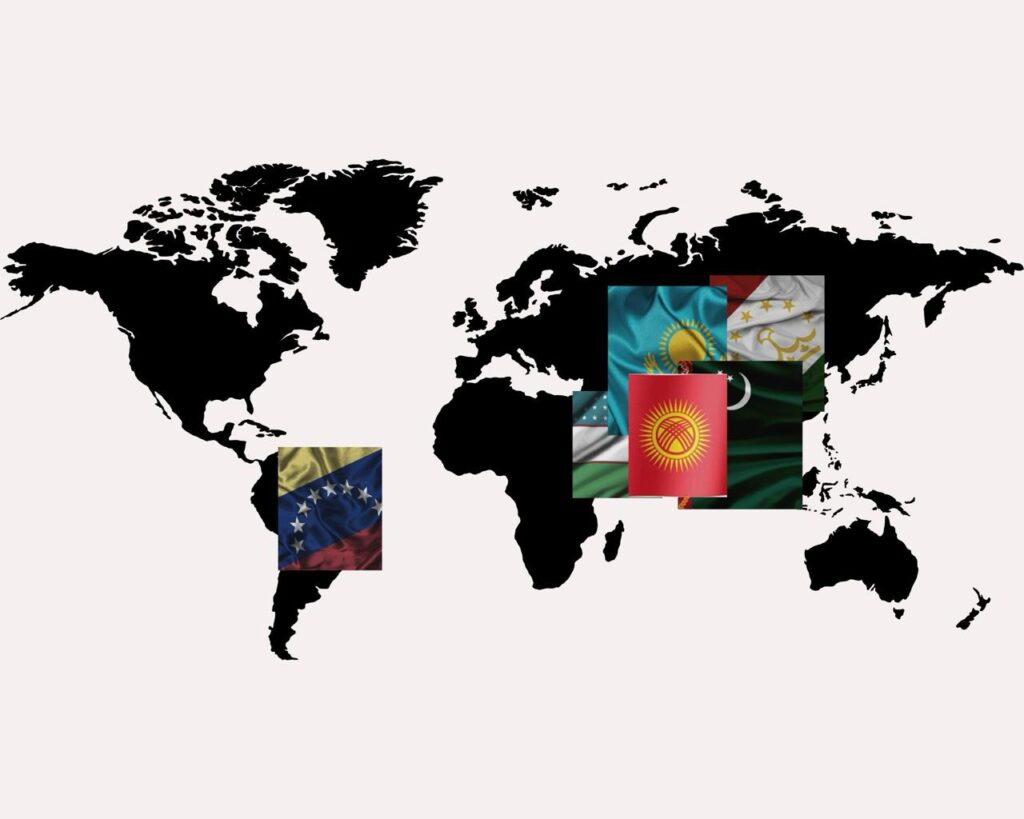
For Central Asian countries, the central challenge in international politics is no longer choosing alliances, but coping with external shocks and global turbulence that originate far beyond the region.  The unfolding crisis in Venezuela is a case in point. At first glance, the situation concerns Latin America and the global oil market, but its implications extend well beyond, directly affecting Central Asia’s strategic interests. The core issue is not oil per se, but the reemergence of force as a legitimate instrument for altering political and economic conditions. For a region positioned at the crossroads of major power interests and reliant on external stability, this shift is profoundly consequential. The Venezuelan crisis should be understood as a precedent, one that signals how global power centers may act as established norms erode. For Central Asia, this heralds a more unpredictable international environment in which regional states must navigate competing interests without the benefit of stable rules. While Venezuela is often reduced to an oil story, the broader economic stakes involve control over the architecture of strategic resource flows. This resonates with the situation in the C5, Kazakhstan, Kyrgyzstan, Uzbekistan, Tajikistan, and Turkmenistan, where resources such as oil, gas, uranium, and rare earth metals are also of significant external interest. The logistics and transit of these resources are increasingly entangled in geopolitical bargaining. The Venezuelan example reinforces a growing trend: the nexus of economics and security is tightening, and access to resources is increasingly secured through political leverage. In this context, Iran holds particular relevance. For Central Asia, Iran is not an abstraction; it represents transit routes, energy corridors, access to southern seas, and a component of regional balance. Heightened pressure on Tehran directly affects both the opportunities and risks facing the region. When viewed through the lens of Iran, developments in Venezuela serve as a psychological and political precedent, broadening what appears acceptable within Washington’s strategic calculus. While a direct replication of the Venezuelan scenario in Iran is unlikely, given the vastly different military, political, and regional risks, the mere lowering of the threshold for force-based solutions is significant. The cost of direct confrontation with Iran would be far higher, with potential repercussions for the entire Middle East security architecture. Operation Absolute Resolve has objectively increased the confidence of those who favor the use of force against Iran. This confidence is likely to grow if United States actions in Venezuela carry minimal international consequences, avoid triggering uncontrollable regional escalation, and are perceived as domestically successful. In either case, Venezuela’s “success” has already lowered psychological barriers to coercion, strengthening arguments for hardline scenarios and re-legitimizing force as a policy tool, rather than a measure of last resort. Broadly speaking, the Venezuelan crisis highlights a global shift from rules to precedents. For the five, and increasingly for the emerging six that includes Azerbaijan, the fragmentation of international norms raises costs and leaves each country more vulnerable to external pressure. In this environment, coordination and consistency on issues such as transit, security, and sanctions are...