• KGS/USD = 0.01143 0%
  • KZT/USD = 0.00205 0%
  • TJS/USD = 0.10724 0.09%
  • UZS/USD = 0.00008 0%
  • TMT/USD = 0.28571 0%
  • KGS/USD = 0.01143 0%
  • KZT/USD = 0.00205 0%
  • TJS/USD = 0.10724 0.09%
  • UZS/USD = 0.00008 0%
  • TMT/USD = 0.28571 0%
  • KGS/USD = 0.01143 0%
  • KZT/USD = 0.00205 0%
  • TJS/USD = 0.10724 0.09%
  • UZS/USD = 0.00008 0%
  • TMT/USD = 0.28571 0%
  • KGS/USD = 0.01143 0%
  • KZT/USD = 0.00205 0%
  • TJS/USD = 0.10724 0.09%
  • UZS/USD = 0.00008 0%
  • TMT/USD = 0.28571 0%
  • KGS/USD = 0.01143 0%
  • KZT/USD = 0.00205 0%
  • TJS/USD = 0.10724 0.09%
  • UZS/USD = 0.00008 0%
  • TMT/USD = 0.28571 0%
  • KGS/USD = 0.01143 0%
  • KZT/USD = 0.00205 0%
  • TJS/USD = 0.10724 0.09%
  • UZS/USD = 0.00008 0%
  • TMT/USD = 0.28571 0%
  • KGS/USD = 0.01143 0%
  • KZT/USD = 0.00205 0%
  • TJS/USD = 0.10724 0.09%
  • UZS/USD = 0.00008 0%
  • TMT/USD = 0.28571 0%
  • KGS/USD = 0.01143 0%
  • KZT/USD = 0.00205 0%
  • TJS/USD = 0.10724 0.09%
  • UZS/USD = 0.00008 0%
  • TMT/USD = 0.28571 0%

Viewing results 1 - 6 of 48

Tajik Border Troops Kill Three Afghans Suspected of Opium Smuggling

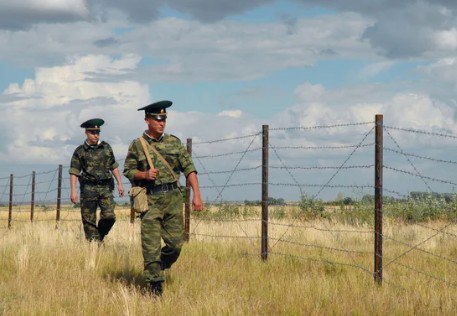
An armed clash occurred on the evening of January 29 along the Tajik-Afghan border, in Tajikistan's Shamsiddin Shokhin district, as local border forces intercepted an attempted drug smuggling operation. According to the Border Troops of the State Committee for National Security (GKNB), the incident occurred around 7:30 p.m. in the area overseen by the Bahorak border post of military unit 0341. The GKNB reported that five Afghan nationals illegally crossed into Tajikistan. Once the group was located, border guards attempted to apprehend them. The intruders resisted arrest and opened fire in an attempt to retreat across the border. In the ensuing exchange, three were killed on the spot. The GKNB identified the deceased as Jovid Valadi Davlatmand and Rashid Valadi Davlatmand, residents of Kariai Vorich, and Sobir Valadi Zohir from Kariai Andjir, Takhar province. Two others managed to flee under the cover of darkness, retreating toward Afghan territory. The Tajik-Afghan border has seen a steady rise in armed incidents over the past year, driven largely by drug trafficking and the movement of armed groups across remote mountain crossings. Tajik authorities have repeatedly warned that narcotics smuggling networks operating out of northern Afghanistan remain a persistent security threat despite stepped-up patrols and surveillance. At the scene, border guards recovered three Kalashnikov rifles with four magazines, approximately 150 rounds of mixed-caliber ammunition, a large number of spent cartridges, and four bags containing 73 packages of narcotics, identified as hashish and opium. A boat, likely used for crossing the border, was also discovered. Officials say drug trafficking remains the primary driver of cross-border violence in the region. Afghanistan remains the world’s largest producer of opiates, and Tajikistan is a key transit route for narcotics moving north toward Central Asia and Russia, making the border a frequent flashpoint for armed encounters. The January 29 clash adds to a series of escalating incidents along the Tajik-Afghan border. Two weeks ago, on the night of January 18, Tajik security forces killed four armed individuals, whom they identified as members of a terrorist organization, in the same border zone. Border violence has intensified since last November. In two separate incidents, five Chinese citizens were killed in attacks originating from Afghan territory. In December, two Tajik border guards were killed during a confrontation with armed intruders in the Sarchashma border detachment's area of responsibility. Tajik security forces maintain that full control over the national border is being upheld, and have vowed to respond to all threats with force and immediacy.

Deadly Clashes and Gold Mines Fuel Tensions on the Tajik-Afghan Border

Along a short strip of the Tajik-Afghan border, there has been a lot of activity in recent months, including the most serious incidents of cross-border violence in decades. Most of this activity has involved Tajikistan’s Shamsiddin Shohin district, a sparsely inhabited area where the population ekes out a living farming and herding in the foothills of the Pamir Mountains. Why the situation changed so suddenly is not entirely clear, but it is clear that the district is now the hot spot along the Tajik-Afghan frontier. A Dubious Post-Independence Reputation The Shamsiddin Shohin district is in Tajikistan’s southwestern Khatlon region. The district is located near the place where Afghan territory starts to make its northern-most protrusion. The elevation across most of the district is between 1,500-2,000 meters. The district is about 2,300 square kilometers and has a population of some 60,000. Shuroobad, population roughly 11,000, is the district capital, and the entire district was once called Shuroobad. It was renamed Shamsiddin Shohin in 2016 to honor the Tajik poet and satirist of the late 19th century, who was born in the area. Tajikistan and Afghanistan are divided by the Pyanj River, which further downstream merges with other rivers to become the Amu Darya, known to the Greeks as the Oxus, one of Central Asia’s two great rivers. [caption id="attachment_41640" align="aligncenter" width="2560"] The road to Shuroobad; image: TCA, Stephen M. Bland[/caption] The Tajik-Afghan frontier is about 1,360 kilometers. Some 70 kilometers is the southern border of the Shamsiddin Shohin district, but it is the first area, traveling downstream, where the current of the Pyanj River slows significantly. In the first years after the Bolshevik Revolution broke out, many Tajiks fled through what is now the Shamsiddin Shohin district into Afghanistan. Some seventy years later, thousands of Tajiks again fled through the district into Afghanistan when the newly independent state of Tajikistan was engulfed by civil war. The United Tajik Opposition (UTO), the group fighting against the Tajik government during the 1992-1997 civil war, made frequent use of the Shamsiddin Shohin area to bring weapons from Afghanistan. UTO fighters had safe havens in Afghanistan, and they often made their way through this district, retreating south of the border and returning via the district once they were rested and resupplied. There are only a few roads in the Shamsiddin Shohi district. The European Union funded the construction of the Friendship Bridge, which was completed in 2017, and connects the district to Afghanistan. It has often been closed by the Tajik authorities due to security concerns emanating from the Afghan side of the border. Anyone crossing illegally from Afghanistan into the Shamsiddin Shohin district could easily hide in the rugged hills and abundance of caves in the area, making it ideal for smugglers and other intruders. Aside from a few small villages along the banks, there are no settlements for 20 to 30 kilometers north of the river. Border posts were built during the time Tajikistan was a Soviet republic. Russian border guards remained in...

Rising Border Insecurity Puts Chinese Interests at Risk in Tajikistan

Mounting insecurity along the Tajikistan-Afghanistan border is increasingly threatening Chinese interests and heightening Beijing’s concerns about regional stability, Al Jazeera has reported, citing recent incidents and official statements from Dushanbe. According to the report, the Tajik authorities have recorded multiple armed infiltrations from Afghan territory in recent months, resulting in more than a dozen deaths. Among the victims were five Chinese nationals working on infrastructure and mining projects in remote areas of Tajikistan. The attacks reportedly targeted Chinese companies and personnel specifically, prompting alarm in Beijing. Al Jazeera noted that China is Tajikistan’s largest creditor and one of its most significant economic partners. Chinese firms have a major presence in road construction, infrastructure, and extractive industries, many of which are situated near the porous Afghan border. The growing threat of violence has raised serious concerns among Chinese officials about the safety of their citizens and investments. Tensions escalated dramatically on November 26, when a drone strike hit a Chinese-operated gold-mining facility, and gunfire targeted workers at a state-owned enterprise. Several Chinese nationals were reportedly killed in the coordinated attacks. In response, the Chinese embassy in Dushanbe advised Chinese citizens and enterprises to withdraw from border areas and called on Tajik authorities to take “all necessary measures” to protect Chinese nationals and assets. Citing regional analysts, Al Jazeera reported that although no group has claimed responsibility, the tactics are consistent with those used by Islamic State Khorasan Province (ISKP). Analysts believe ISKP is attempting to undermine the Taliban’s claims of providing security by deliberately targeting foreign nationals, particularly Chinese workers. Tajik officials described the incidents as evidence of the Taliban’s “irresponsibility” and repeated failure to deliver on its international commitments. Dushanbe has demanded an official apology and concrete guarantees regarding border security. Most of the recent attacks, according to Tajik authorities, have originated from Afghanistan’s Badakhshan province, a complex and fragile security zone. The Taliban’s crackdown on poppy cultivation, which has provoked resentment among local farmers, is believed to have further destabilized the area. The Taliban have expressed regret over the incidents, blamed unspecified non-state actors, and insisted that Afghanistan poses no threat to neighboring countries. They reaffirmed their commitment to the Doha Agreement and regional stability. In December, Tajikistan’s State Committee for National Security (SCNS) reported another armed incident on the southern frontier. According to the SCNS, three armed individuals crossed into Tajik territory late on December 23 and attempted to attack a border post in the Shamsiddin Shohin district. The intruders, who refused to surrender, were killed in a firefight. Two Tajik border guards also died in the clash, underscoring the persistent volatility along the border.

Two Tajik Border Guards Killed in Attack Along Afghan Border

Tajikistan’s border troops have reported an armed incident along the country’s southern border with Afghanistan. While the attackers were neutralized during the confrontation, Tajikistan suffered casualties among its personnel. According to the State Committee for National Security (SCNS) of the Republic of Tajikistan, the incident occurred late on December 23, 2025. Three armed individuals described as “members of a terrorist organization” attempted to launch an attack on border post No. 5 “Bo” of the 0341 “Sarchashma” detachment in the Shamsiddin Shohin district. The intruders illegally crossed the state border at approximately 11:30 p.m. and entered Tajik territory. The following morning, at 11:15 a.m., Tajik border guards located the suspects. According to the official statement published by the Khovar news agency, the attackers refused to surrender and opened fire. All three assailants were killed in the ensuing operation. Tajik security forces seized a significant cache of weaponry at the scene, including three M-16 rifles, a Kalashnikov assault rifle, three foreign-made pistols equipped with silencers, ten hand grenades, one pair of night vision goggles, explosives, and other combat gear. Two members of the Border Troops of the SCNS, Zirekhbon Navruzbekov and Ismatullo Kurbonov, were killed in the clash. Authorities extended their condolences to the families of the fallen officers. The SCNS noted that this was the third such incident in the past month involving armed incursions from Afghan territory. In a strongly worded statement, the border service criticized the Taliban authorities for failing to uphold their international obligations and repeated commitments to secure the border and prevent terrorist activity. “These facts confirm that the Taliban government is demonstrating a serious and repeated inability and irresponsibility, in fulfilling its international obligations and consistent promises to ensure security and stability on the state border with the Republic of Tajikistan,” the statement read. Tajikistan called on Afghan authorities to issue a formal apology and implement additional effective measures to secure the shared border. According to Tajik officials, the border area is now stable, and an investigation into the latest incident is ongoing. Two earlier attacks were reported on November 26 and 30, 2025, also originating from Afghan territory. In those incidents, five Chinese citizens were killed and three injured. The attacks targeted a mining company in the Shohin district and a construction company in the Darvaz district. Tajikistan condemned the attacks and demanded that the Taliban arrest those responsible. The Afghan Foreign Ministry responded by stating that the attacks were intended to “create instability and mistrust between countries in the region.” President Emomali Rahmon publicly condemned the incidents and ordered Tajik security forces to take decisive measures to restore stability and prevent further cross-border attacks.

Taliban Arrests Suspects After Deadly Attacks on Chinese Citizens Near Tajik-Afghan Border

The Taliban has announced the arrest of two suspects following two deadly attacks on Chinese workers in Tajikistan’s border regions, which left five dead and several others injured. Afghan media, citing Taliban officials, reported that two individuals were detained in connection with the killings of Chinese nationals in Tajikistan. According to Ehsanullah Kamgar, a spokesperson for the Taliban’s security department in Afghanistan’s Badakhshan province, the arrests took place in the Maymay district. The identities of the suspects have not been disclosed. Tajikistan’s security services believe that the militants crossed the border from this area before launching an assault in the Darvaz district on November 30. The attack targeted Chinese workers from a road construction company in the village of Shodak, killing two and injuring two more. Authorities said the assault occurred around 6:45 p.m. local time. The border situation has deteriorated rapidly. Within one week, two armed attacks were carried out from Afghan territory targeting Chinese nationals in Tajikistan. The first incident occurred on November 26 in the Shamsiddin Shokhin district, where three employees of the Shokhin-SM company were killed and one other was injured in a drone strike. The second attack took place on November 30, when a terrorist group crossed from Ruzvayak, a village in Badakhshan, Afghanistan, and targeted workers from the China Road and Bridge Corporation. The outcome was again tragic: two Chinese workers were killed and two were wounded. Tajik border guards emphasized that these attacks have occurred despite heightened security in the border regions. “Criminal groups continue to destabilize the situation,” the border agency said in a statement. Following the violence, the Chinese embassy in Dushanbe issued a strong demand for the Tajik authorities to “take all necessary measures” to protect Chinese citizens and employees of companies operating near the Afghan border. On December 1, Tajikistan’s President Emomali Rahmon convened an emergency meeting with the heads of the country’s law enforcement agencies. He “strongly condemned the illegal and provocative actions of Afghan citizens” and ordered tighter security controls to prevent further cross-border attacks.

Tajikistan Reports New Militant Attack from Afghanistan; Chinese Citizens Killed

A deadly cross-border attack has once again drawn attention to the volatile security situation along the Tajik-Afghan border. Armed militants opened fire on foreign workers in Tajikistan, prompting sharp condemnation from Dushanbe and renewed calls for Kabul to enhance control over its border regions. According to the press center of Tajikistan’s State Committee for National Security (GKNB), the latest incident occurred on November 30 at approximately 6:45 p.m. near the village of Shodak, located in the rural village of Vishkharv, Darvaz district. The gunfire reportedly came from the Afghan village of Ruzvayak, in the Mohi Mai district of Badakhshan province. Militants targeted employees of the China Road and Bridge Corporation, a Chinese state-owned construction company. Two Chinese nationals were killed in the attack, and two others were wounded. This was not an isolated incident. On November 26, militants launched a similar cross-border assault in the Shamshiddin Shohin district, resulting in the deaths of three Chinese employees of the Shokhin-SM company and injuring another. Both attacks originated from Afghanistan’s Badakhshan province, raising serious concerns among Tajik authorities about what appears to be a growing pattern of cross-border violence. Despite ongoing efforts to enhance security, Dushanbe acknowledged continued attempts by armed criminal groups to destabilize the situation. “The Tajik side, expressing deep concern, strongly condemns these alarming actions by criminal groups and calls on the current authorities of Afghanistan to take timely and effective measures,” read a statement from the Border Troops press center. The GKNB stated that additional measures are being implemented to strengthen border protection and ensure the safety of both Tajik citizens and foreign workers. Authorities also reported that the situation remains “stable and under control,” and that investigations are underway. In a separate statement, the Ministry of Foreign Affairs of Tajikistan condemned the attacks as “brutal actions by terrorist groups” and urged the Afghan authorities to guarantee the security of border areas. Official reactions followed from Kabul, Islamabad, and Tehran. Representatives of the Taliban (designated as a terrorist organization and banned in several countries) extended condolences to both Tajikistan and China. They asserted that the attacks were carried out by factions seeking to “create tension and mistrust between countries in the region,” and expressed willingness to cooperate in the investigation and information exchange. On December 1, President Emomali Rahmon convened an emergency meeting with the heads of Tajikistan’s law enforcement and security agencies. According to the presidential press service, Rahmon “strongly condemned the illegal and provocative actions of Afghan citizens,” called for tougher preventive measures, and instructed security forces to reinforce surveillance and control along the entire border zone.