• KGS/USD = 0.01144 0%
  • KZT/USD = 0.00215 0%
  • TJS/USD = 0.10680 0.19%
  • UZS/USD = 0.00008 0%
  • TMT/USD = 0.28530 0%
  • KGS/USD = 0.01144 0%
  • KZT/USD = 0.00215 0%
  • TJS/USD = 0.10680 0.19%
  • UZS/USD = 0.00008 0%
  • TMT/USD = 0.28530 0%
  • KGS/USD = 0.01144 0%
  • KZT/USD = 0.00215 0%
  • TJS/USD = 0.10680 0.19%
  • UZS/USD = 0.00008 0%
  • TMT/USD = 0.28530 0%
  • KGS/USD = 0.01144 0%
  • KZT/USD = 0.00215 0%
  • TJS/USD = 0.10680 0.19%
  • UZS/USD = 0.00008 0%
  • TMT/USD = 0.28530 0%
  • KGS/USD = 0.01144 0%
  • KZT/USD = 0.00215 0%
  • TJS/USD = 0.10680 0.19%
  • UZS/USD = 0.00008 0%
  • TMT/USD = 0.28530 0%
  • KGS/USD = 0.01144 0%
  • KZT/USD = 0.00215 0%
  • TJS/USD = 0.10680 0.19%
  • UZS/USD = 0.00008 0%
  • TMT/USD = 0.28530 0%
  • KGS/USD = 0.01144 0%
  • KZT/USD = 0.00215 0%
  • TJS/USD = 0.10680 0.19%
  • UZS/USD = 0.00008 0%
  • TMT/USD = 0.28530 0%
  • KGS/USD = 0.01144 0%
  • KZT/USD = 0.00215 0%
  • TJS/USD = 0.10680 0.19%
  • UZS/USD = 0.00008 0%
  • TMT/USD = 0.28530 0%

Viewing results 1 - 6 of 315

Uzbekistan Sees Opportunities in Afghanistan

Uzbekistan’s business relations with neighboring Afghanistan are booming. In 2024, Uzbek-Afghan trade came to some $1.1 billion, and more than $1 billion of that was Uzbek exports to Afghanistan. It seems after the February 22-23 visit of Taliban acting Deputy Prime Minister for Economic Affairs Abdul Ghani Baradar to Uzbekistan, that figure is likely to continue climbing. Baradar met with Uzbek Prime Minister Abdullo Aripov and Deputy Prime Minister Jamshid Khojayev to discuss trade and investment, which is essentially the basis of Uzbekistan’s relations with Taliban-ruled Afghanistan. The immediate results of these talks were modest, but projects due to start in the near future offer substantial profits for both Uzbekistan and Afghanistan. Uzbekistan agreed to lift restrictions on imports of Afghan agricultural goods, which facilitated another agreement establishing a free economic zone in Uzbekistan’s border area that would have factories for processing pine nuts and cotton from Afghanistan. Agricultural goods are the bulk of Afghanistan’s exports to Uzbekistan, which is not surprising since more than 40 years of war have prevented Afghanistan from building many plants and factories for producing finished goods. A report from November 2024 said in the first ten months of the year, Uzbekistan’s exports to Afghanistan came to some $855.9 million, while Afghan exports to Uzbekistan amounted to only some $28.3 million. Power On Uzbekistan is the leading exporter of electricity to Afghanistan, supplying nearly 60% of Afghanistan’s electricity imports, and that amount could increase soon. Baradar’s delegation discussed progress on the 500 kV transmission line from Uzbekistan’s Surkhan region to Dashti-Alvan, near the Baghlan provincial capital Pul-e-Khumri, which will increase Uzbekistan’s electricity exports to Afghanistan by some 70%. Construction of the 260-kilometer transmission line started in 2018 and has been repeatedly delayed. Baradar said Uzbek officials agreed to cut the cost of building the transmission line from $252 million to $222 million. Turkmenistan is also considering building a 500 kV transmission line to Dashti-Alvan. Uzbek Deputy Prime Minister Khojayev and Baradar reviewed progress at Afghanistan’s Toti-Mardan gas field, just south of the border with Turkmenistan, which is believed to contain vast reserves of natural gas. In November 2024, Uzbekistan signed a ten-year contract to develop the gas field, pledging to invest $100 million in the project each year. According to reports about Baradar’s recent visit, drilling at the site is expected to begin soon. Prime Minister Aripov said Uzbek investors were already preparing to start construction of a cement plant in Afghanistan’s Samangan Province. Taliban officials have been offering Uzbek companies opportunities in Afghanistan’s mining sector for months. The Taliban acting minister of mines and petroleum, Hidayatullah Badri, was part of Baradar’s delegation and he met with Uzbek officials to discuss cooperation in developing Afghanistan’s mineral resources. The Afghan delegation again proposed Uzbek participation in developing mining sites, but there was no word in reports on any agreements. Aripov mentioned Uzbekistan was interested in the exploration and extraction of oil and gas, both of which Uzbekistan needs for domestic consumption, but did not mention mining....

Uzbekistan and Taliban Agree on Hairatan-Herat Railway Project

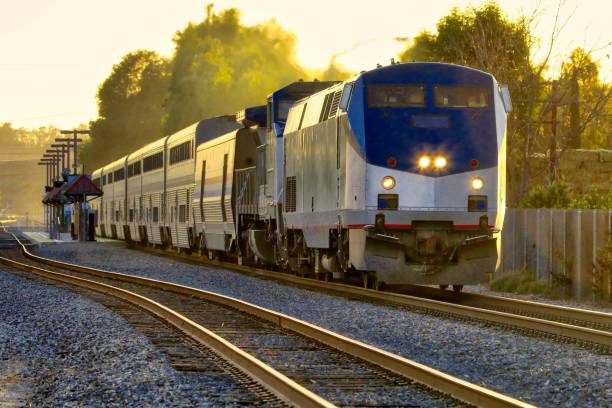
Taliban Deputy Chief Minister Abdul Ghani Baradar announced that construction on the planned Hairatan-Herat railway would begin within 10 days of a feasibility study, which Uzbekistan will finance. He also stated that Uzbekistan had agreed to reduce the cost of a power transmission line project to Afghanistan by $30 million, lowering the total to $222 million, Amu TV reports. The announcement followed Baradar’s two-day visit to Uzbekistan. The railway project aims to extend the existing line from Hairatan, a key trade hub on the Uzbekistan-Afghanistan border, through Mazar-e-Sharif and on to Herat. The first phase, a 75-kilometer section from Hairatan to Mazar-e-Sharif, was completed in 2010 with funding from the Asian Development Bank. The planned extension is expected to enhance trade links between Central Asia and the Middle East. During the visit, Baradar and his delegation met with Uzbek Prime Minister Abdulla Aripov and Deputy Prime Minister Jamshid Khodjayev to discuss trade, energy, aviation, and infrastructure. Baradar stated that Uzbekistan had agreed to increase electricity exports to Afghanistan during the summer and reduce tariffs. Taliban Commerce Minister Nooruddin Azizi added that discussions also covered trade and banking cooperation, as well as a potential railway extension from Hairatan to Spin Boldak. Additionally, Uzbekistan will lift restrictions on Afghan agricultural exports and establish four trade centers in major cities across both countries. Aripov visited Kabul last August for talks focused on boosting trade, strengthening energy cooperation, and collaborating on copper, iron, oil, and gas projects. Both sides agreed that trade between Uzbekistan and Afghanistan could reach $1 billion in 2024 and expand to $3 billion in the near future.

Uzbekistan-Afghanistan Relations Falter Over Return of Taliban Helicopters

Uzbekistan has returned some of the helicopters flown into its territory by Afghan pilots during the Taliban’s takeover of Afghanistan to the United States, Voice of America reported, citing Pentagon officials at an event at the Uzbek Embassy in Washington. Most of the American aircraft brought to Uzbekistan by Afghan pilots have now been returned. Recently, seven Black Hawk helicopters were sent back to the United States, according to Voice of America. Uzbekistan’s decision has drawn criticism from the Taliban-controlled Ministry of Defense, which claims the aircraft belong to Afghanistan and should be returned. “These helicopters were taken to Uzbekistan when officials from the previous administration fled. They are Afghan property and should not be transferred to the United States,” the ministry stated. It also called on neighboring countries to respect Afghanistan’s rights and urged the U.S. to return the aircraft instead of creating further obstacles. U.S. Ambassador to Uzbekistan Jonathan Henick confirmed that in 2021, Washington and Tashkent reached an agreement regarding the aircraft. He noted that some military equipment remains in Uzbekistan and that both countries have begun working on a joint program related to it. Afghanistan’s Ministry of Defense, however, has rejected any such agreement, stating that the U.S. has no right to seize or transfer Afghan property. It urged Uzbekistan to return the aircraft in the spirit of good neighborly relations. According to Afghan media, prior to the Taliban’s takeover in August 2021, Afghanistan had 164 warplanes, but only 81 remain. Some Afghan pilots also flew aircraft to Tajikistan. Uzbekistan has made it clear that the helicopters are now under U.S. jurisdiction. The Taliban, however, continues to insist that they rightfully belong to Afghanistan and should be returned.

Afghanistan as Part of Central Asia: Expectations, Reality, Challenges, and Threats

Afghanistan has increasingly been regarded in expert and journalistic circles as part of Central Asia, which is justifiable from a physical-geographical perspective. However, given current regional realities, it is still premature to classify the country as part of Central Asia in terms of being internationally recognized as such. The outcome of the 19th-century rivalry between the British and Russian Empires for influence in Central Asia, known as the "Great Game," not only established the modern southern borders of the region but also set Afghanistan and its northern neighbors on entirely different social and historical paths. The countries differ in value systems, ideologies, public consciousness, and, of course, economic development. At the same time, experts from the Russian Institute for Central Asian Studies note that "In the early 21st century, approaches to analyzing regional realities shifted towards geo-economics. The spatial dimension of Central Asia began to be seen as a zone for pipeline transit." This perspective is hard to argue against — Afghanistan’s current geopolitical interests and challenges are largely tied to the economic interests of countries at the regional level. This includes India, Iran, China, the UAE, Pakistan, Russia, Turkey, and the Central Asian states, for whom Afghanistan's prospects are evident. Chiefly, these prospects concern its transit potential as a territory connecting various parts of Asia. Four out of the six logistics corridors under the Asian Development Bank’s Central Asia Regional Economic Cooperation Program (CAREC) pass through Afghanistan into Uzbekistan, Tajikistan, and Turkmenistan. Other relevant projects include the "China–Pakistan Economic Corridor" under the "One Belt One Road" initiative, the "Trans-Afghan Corridor," and the TAPI Gas Pipeline. However, Afghanistan's current situation, particularly given the stagnant Afghan-Pakistani conflict, casts doubt on the feasibility of these and other major projects involving Afghanistan. As previously stated by TCA, the future of these large-scale projects involving Central Asian countries, as well as regional stability, a fundamental condition for steady economic development, depends directly on whether an understanding is reached between these two nations. Thus, a geo-economic approach to redefining Central Asia’s new boundaries still requires a different reality. Meanwhile, within Central Asia itself, there is little enthusiasm for political rapprochement with Taliban-ruled Afghanistan. The primary focus is on trade/economic and humanitarian cooperation, with no broader agenda, particularly at a regional level. Tajikistan’s position is significant here, as its authorities continue to view the Taliban as a threat and tread cautiously in building relations with them.  What Prevents Central Asian Countries from Accelerating Relations with Afghanistan? The answers lie not only in different developmental trajectories and scenarios. First and foremost, Afghanistan is still associated with "uncertainty" and numerous risks, particularly in terms of security. According to many assessments, the Afghan-Pakistani zone will, in the long term, remain a source of terrorist and religious-extremist threats to Central Asia. These conclusions are based on a retrospective analysis of escalating tensions, current processes in Afghanistan, and the geopolitical confrontation of global powers in the area. For example, the Soviet invasion in 1979 fostered the consolidation of the Afghan mujahideen,...

Kazakhstan and Taliban Afghanistan: An Overview of Relations

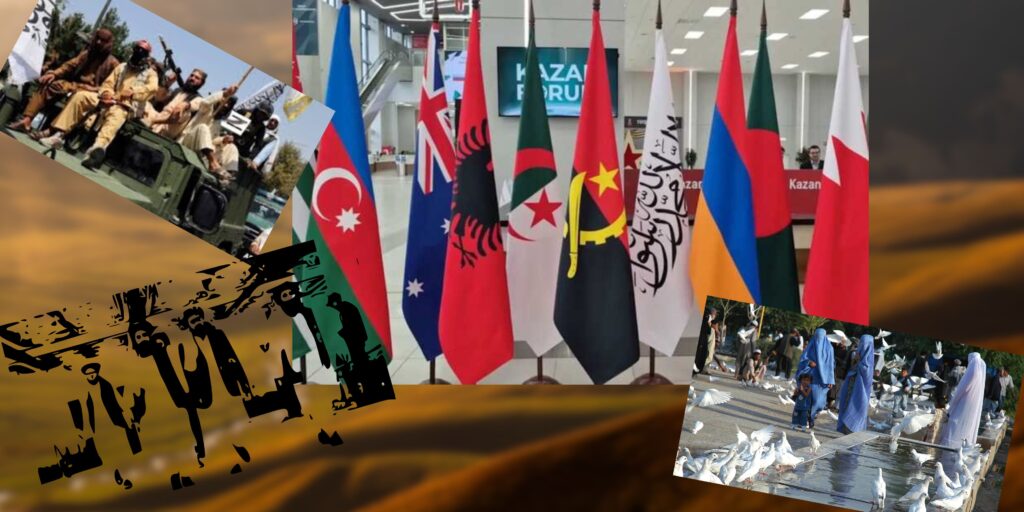
Diplomatic relations between Kazakhstan and Afghanistan began more than 30 years ago, on February 12, 1992. However, in April of that year, the republican regime in Kabul fell, and the country plunged into the abyss of civil war after becoming the Islamic State of Afghanistan. Such chaos had never been seen before. The first Taliban Emirate was established and then overthrown by the US-led coalition, after which the Islamic Republic of Afghanistan was proclaimed Politics Kazakhstan's first diplomatic mission in Kabul was opened in September 2002, less than a year after America launched Operation Enduring Freedom. In 2003, it was transformed into an embassy. From then on, the relationship between the countries became operational. The new starting point of the Kazakh-Afghan relationship was August 15, 2021, when the Taliban seized power in Kabul. Kazakhstan's foreign policy was put to a test, but Astana demonstrated foresight and pragmatism. The Kazakh embassy, unlike most other countries, was not evacuated, diplomats continued to work in the new conditions and began to establish the first contacts with the Taliban authorities. From the very beginning, Kazakhstan took a clear and understandable position and began to promote it at various levels. A month after the Taliban seized Kabul, Kazakhstan's President Kassym-Jomart Tokayev drew attention to the situation in Afghanistan at the SCO meeting in Dushanbe (September 17). As he stated, "Kazakhstan sees future Afghanistan as a truly independent and united state living in peace with itself and its neighbors. At this crucial historical moment, the multinational people of Afghanistan should not be left alone in the face of unprecedented difficulties". A few days later, on September 22, during the UN General Assembly, the Kazakh president detailed the position of his country and was one of the first politicians to point out the current problem of “inclusiveness.” Tokayev reaffirmed that Kazakhstan supports the UN Security Council's call for the formation through negotiations of a new government that would be inclusive and representative. In his words, “It is necessary to create a consensus-based system in which groups with different values or ethnic, religious and gender backgrounds can coexist in one country.” For a better understanding and retrospective assessment of Astana's actions on the “Afghan track,” it is worth citing other theses mentioned by the president in New York at a time when most of the world was still doubting the success of the Taliban campaign. "Afghanistan must continue to fulfill its international obligations and ensure that its territory does not become a springboard for terrorists, drug trafficking, and human traffickers. Regardless of our political or personal convictions, we must not abandon the people of Afghanistan to their fate now. The acute humanitarian situation must be our top priority. UN agencies and other humanitarian organizations must have immediate, safe, and unimpeded humanitarian access. Kazakhstan has provided for the temporary relocation of the UN Assistance Mission in Afghanistan (UNAMA) and other UN offices in Afghanistan. We are ready to provide a logistical platform for the delivery of humanitarian aid to Afghanistan...

Navigating Afghan-Pakistani Conflict: Central Asia’s Mediating Role in Regional Stability

Recently, there has been a significant increase in tensions between Afghanistan and Pakistan, with both sides regularly exchanging accusations. In addition to this, border conflicts have become more frequent, with border crossings periodically closed. According to Modern Diplomacy, both countries are in a state of quite severe political conflict, and distrust and hostility from the Afghan population towards Pakistan is growing even though the "victory of the Taliban and the reincarnation of the Islamic Emirate... should have been a victory for Pakistan and strengthened its position in the region.” The confrontation between the two neighbors in South Asia is a source of concern for other countries in the region, especially for the Central Asian republics, which are increasingly acquiring the status of independent players in their dealings with Afghanistan. Due to their proximity, these republics to varying degrees link their development with a stable Afghanistan designed to become a bridge to South Asia. Negative dynamics in Afghan-Pakistani relations are a cause of much wringing of hands. Pakistan was among the first states to recognize the independence of the former Soviet Central Asian republics and has dynamic ties with them. Pakistan's trade turnover with the region is roughly $500 million annually, most of which comes from imports to Pakistan. The nations are linked by the Quadrilateral Traffic in Transit Agreement (QTTA), the Turkmenistan-Afghanistan-Pakistan-India (TAPI) gas pipeline project, the CASA-1000 energy project, and the Uzbekistan–Afghanistan–Pakistan Railway Project. The majority of these projects use Afghanistan as a bridge between Central Asia and Pakistan. In this regard, the countries of Central Asia are interested in a political situation which excludes confrontational approaches; none of them are interested in further destabilization in Afghanistan. In the Central Asian republics, there is a well-established understanding of Pakistan's exceptional and particularly important role in Afghanistan’s stability. Pakistan has a defining influence on security in Afghanistan and has historically been the most integrated in Afghan issues at the level of political and multi-ethnic conflicts. Pakistan is linked to its neighbor by historical and socio-cultural ties. In reality, however, a different story is emerging. At both a global and regional level, active measures out of Islamabad set to discredit the de facto Taliban-led government of Afghanistan have been observed. Islamabad has undertaken a robust information campaign, which has put forward an entrenched narrative about Afghanistan being one of the world’s major sources of terrorism. In this information war, Islamabad, being a fully-fledged member of the international community, has clear advantages and has used all available tools, including access to global platforms. Islamabad also has access to specialized committees and departments of the UN, which regularly prepare reports on the situation in Afghanistan. Unsurprisingly, it has used these to include ideas favorable its' position on the world stage. Acting as a source of information, Islamabad has presented its point of view, which the international community has largely accepted as objective information. However, it does not provide specific data, such as the size of terrorist groups or the location of their training camps....