• KGS/USD = 0.01144 0%
  • KZT/USD = 0.00199 0%
  • TJS/USD = 0.10857 -0.18%
  • UZS/USD = 0.00008 0%
  • TMT/USD = 0.28571 0%
  • KGS/USD = 0.01144 0%
  • KZT/USD = 0.00199 0%
  • TJS/USD = 0.10857 -0.18%
  • UZS/USD = 0.00008 0%
  • TMT/USD = 0.28571 0%
  • KGS/USD = 0.01144 0%
  • KZT/USD = 0.00199 0%
  • TJS/USD = 0.10857 -0.18%
  • UZS/USD = 0.00008 0%
  • TMT/USD = 0.28571 0%
  • KGS/USD = 0.01144 0%
  • KZT/USD = 0.00199 0%
  • TJS/USD = 0.10857 -0.18%
  • UZS/USD = 0.00008 0%
  • TMT/USD = 0.28571 0%
  • KGS/USD = 0.01144 0%
  • KZT/USD = 0.00199 0%
  • TJS/USD = 0.10857 -0.18%
  • UZS/USD = 0.00008 0%
  • TMT/USD = 0.28571 0%
  • KGS/USD = 0.01144 0%
  • KZT/USD = 0.00199 0%
  • TJS/USD = 0.10857 -0.18%
  • UZS/USD = 0.00008 0%
  • TMT/USD = 0.28571 0%
  • KGS/USD = 0.01144 0%
  • KZT/USD = 0.00199 0%
  • TJS/USD = 0.10857 -0.18%
  • UZS/USD = 0.00008 0%
  • TMT/USD = 0.28571 0%
  • KGS/USD = 0.01144 0%
  • KZT/USD = 0.00199 0%
  • TJS/USD = 0.10857 -0.18%
  • UZS/USD = 0.00008 0%
  • TMT/USD = 0.28571 0%
05 December 2025

Viewing results 1 - 6 of 18

Kazakhstan–Uzbekistan Partnership Signals a New Era in Central Asia

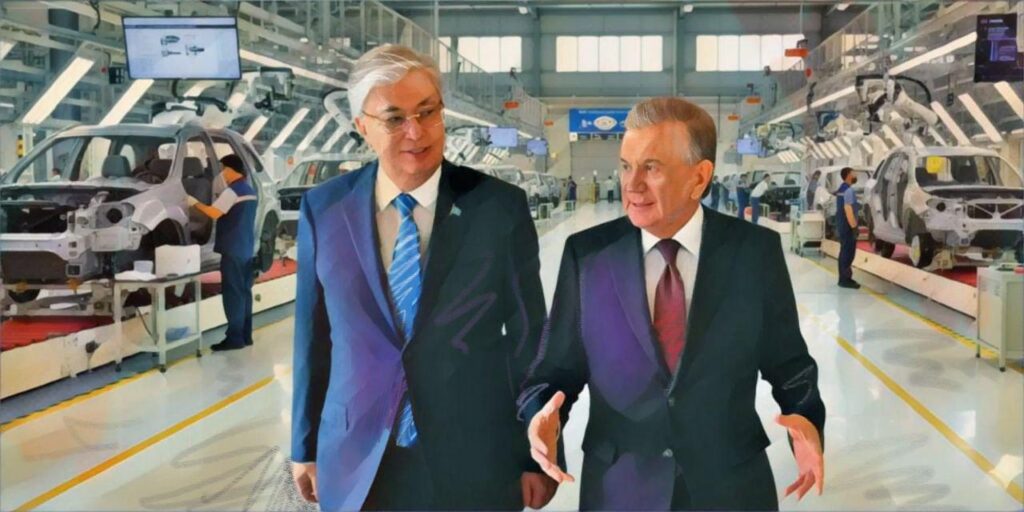
For many years, Kazakhstan and Uzbekistan were seen as regional rivals, with many analysts believing this long-standing competition impeded the realization of sustainable regional strategies. However, leadership changes and expanded cooperation frameworks in Central Asia have significantly shifted these dynamics. Today, countries in Central Asia are shaping policies at the intersection of Western, Chinese, and Russian interests, whilst looking even further afield. As Kazakhstan and Uzbekistan assert themselves more on the global stage, they are increasingly finding common ground. In part because of their geographic size and numbers, Kazakhstan and Uzbekistan are seen as the leading states in Central Asia. Kazakhstan has the largest territory by far, while Uzbekistan boasts the largest population, which stands in excess of 37 million. Both nations possess significant resources and development potential. While their current leadership has dismissed notions of rivalry, its roots stretched back for decades. Historical Competition Tensions between the two republics date to the Soviet era, when the rivalry was evident even to ordinary citizens. The influence of Dinmukhamed Kunaev, First Secretary of the Central Committee of the Communist Party of Kazakhstan, often clashed with that of his Uzbek counterpart, Sharaf Rashidov. Beyond personal rivalries between republican leaders, Soviet-era administrative borders were often drawn without regard for demographic realities or resource flows. Competition for Moscow’s attention and investment funding pushed union republics to emphasize different sectors - Kazakhstan’s development of virgin lands turned it into a major grain hub, while Uzbekistan long benefited from its cotton industry - creating distinct economic identities that later persisted into independence. These divergent economic structures shaped early regional competition and informed differing policy priorities in the 1990s and 2000s. Both republics had substantial industrial capacity, though analysts argue that Kazakhstan maintained an edge in economic growth. The Baikonur Cosmodrome, still operational today, was also a long-standing strategic asset within Kazakhstan’s borders. Following the collapse of the Soviet Union, this rivalry only intensified. Nursultan Nazarbayev and Islam Karimov, then presidents of Kazakhstan and Uzbekistan, were widely viewed as competing for regional leadership. While their economies were initially on par, Uzbekistan gradually turned inward, while Kazakhstan opened to foreign investment, particularly in the extractive sector. In the 2000s, despite successful border delimitation, disputes flared over boundaries, water, and natural resources. Some analysts contend that it was this lingering friction that hindered efforts to preserve the Aral Sea, once the world’s fourth-largest lake, which has now largely disappeared, at least in its southern section, causing dust storms so vast they are visible from space. In 2002, the border villages of Bagys and Khiyobon, inhabited by ethnic Kazakhs but situated in Uzbekistan, demanded to be recognized as part of Kazakhstan. These territories had been transferred to Uzbekistan in 1956. They were officially reincorporated into Kazakhstan only in 2021. Presidents Reject Rivalry Narrative Kazakh political scientist Gaziz Abishev maintains that there is no leadership struggle today between Kazakhstan and Uzbekistan. “An important point that was made is that there is no unhealthy rivalry between Kazakhstan and Uzbekistan, or between Kazakhs...
Opinion: Central Asia Is Consolidating Its Role as a Full-Fledged Actor in Global Processes

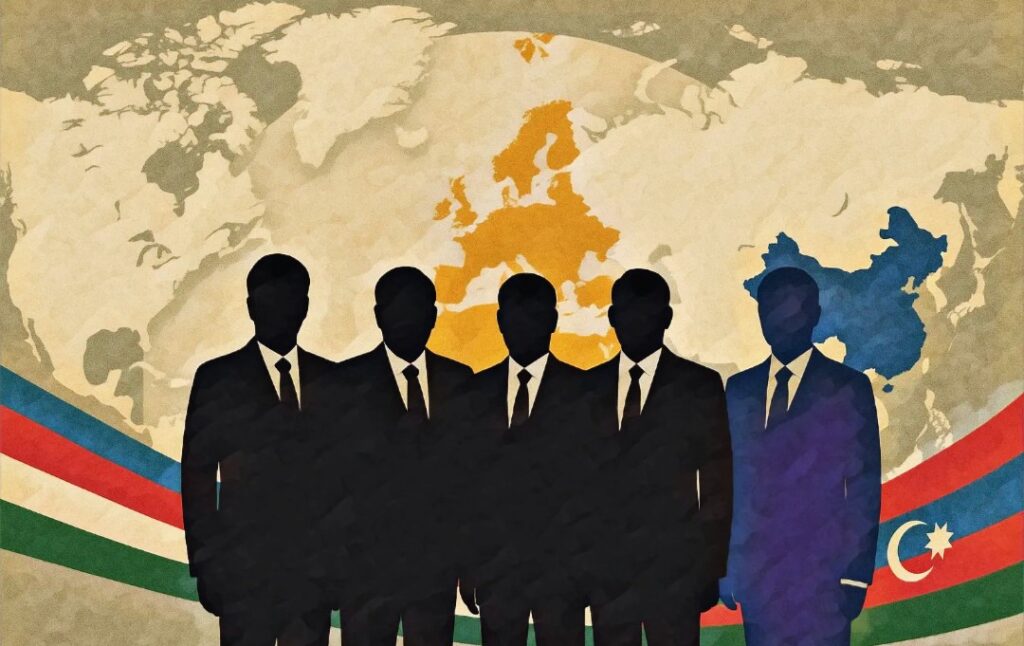
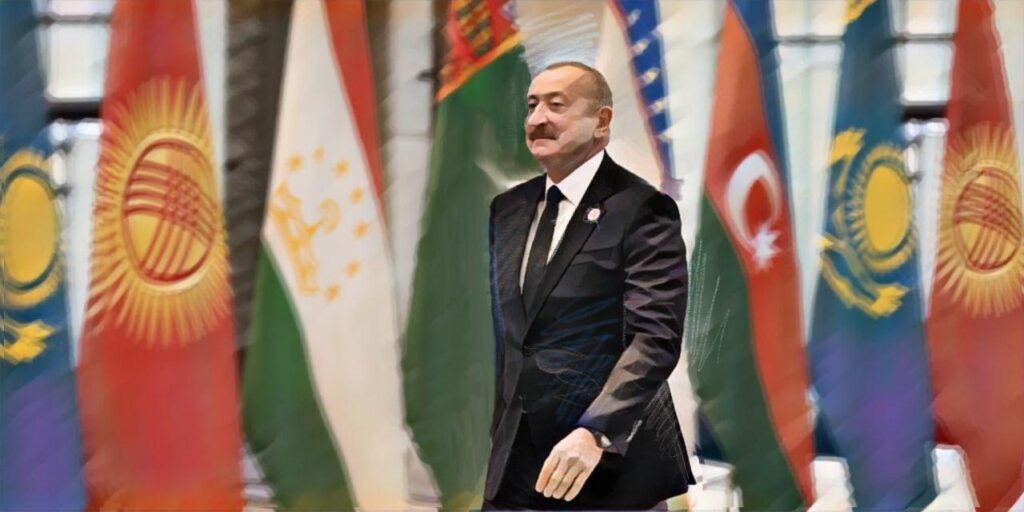
The seventh Consultative Meeting of the Heads of State of Central Asia, held in Tashkent, was far more than a routine regional gathering. It marked a pivotal moment with the potential to shape the political and economic architecture of the region for the next decade or two. President Shavkat Mirziyoyev’s keynote address stood out for articulating a forward-looking and comprehensive strategic vision. Notably, he proposed redefining the format itself from a loose “consultative mechanism” into a more cohesive and institutionalized “Central Asian Community.” At the summit, leaders endorsed several landmark documents: the Concept for Regional Security and Stability in Central Asia, the Catalogue of Threats to Central Asia’s Security and measures for their prevention for 2026-2028 and its implementation plan, a joint appeal supporting the Kyrgyz Republic’s candidacy for the UN Security Council, and the decision to admit Azerbaijan as a full-fledged participant. Taken together, these steps signal that Central Asia increasingly sees itself not as a passive bystander amid global geopolitical turbulence, but as an emerging regional actor capable of shaping its own trajectory. Two broader trends deserve special emphasis. First, the region is moving beyond reactive engagement with external initiatives and power blocs. Rather than relying solely on structures created by outside actors, Central Asia is beginning to develop its own institutions. This shift mirrors a global pattern: as the international order becomes more fragmented and unpredictable, regional communities are strengthening their internal mechanisms as a means of resilience. Second, the format envisioned in Tashkent diverges from “Brussels-style integration.” It does not require the transfer or dilution of sovereignty. Instead, it relies on soft integration, consultation, consensus-building, and phased convergence. As President Mirziyoyev noted, having a shared and realistic sense of “what we want our region to look like in 10-20 years” is essential. Without such a vision, Central Asia risks remaining the object of great-power competition rather than an autonomous participant in it. One of the summit’s most consequential developments was the decision to welcome Azerbaijan as a full-fledged member of the format. The emerging political and economic bridge between Central Asia and the South Caucasus is quickly becoming not only a transit nexus but also a cornerstone of a broader geopolitical space. The strengthening of Trans-Caspian corridors, the advancement of the “China – Kyrgyzstan – Uzbekistan” railway, the Trans-Afghan corridor, and the alignment of Caspian Sea transport routes will significantly expand the region’s strategic and economic potential. A further nuance is worth highlighting: Azerbaijan’s long-standing ties with the Western political and security architecture, through NATO partnership mechanisms and energy corridors, as well as its membership in the Organization of Turkic States, introduce new layers of connectivity. Its inclusion repositions the “Central Asian Community” from a post-Soviet platform into a wider geopolitical constellation spanning Eurasia, the South Caucasus, and the Middle East. For Central Asian states, this new configuration opens additional room for multi-vector diplomacy and reduces the risks of unilateral dependence.   The views expressed in this article are those of the author and do not...

Azerbaijan Joins Central Asia to Build a C6 Corridor Core

Central Asian leaders met in Tashkent on November 15–16 for the seventh Consultative Meeting of Heads of State. Azerbaijan attended as a guest with full rights, as it had done at the meetings last year and the year before. This time, the leaders agreed that Azerbaijan would sit as a full participant in future meetings, transforming the C5 into the C6. In his opening remarks, Uzbekistan’s President Shavkat Mirziyoyev proposed turning the loose consultative mechanism into a formal regional body under the working title, the “Community of Central Asia.” Mirziyoyev went further and suggested extending the mandate from economic integration to include security and environmental cooperation for the region as a whole. The Uzbek President called the decision to admit Azerbaijan “historic,” as the leaders framed the welcoming of Azerbaijan not as a courtesy to a neighbor but as part of a wider integration project that already runs across the Caspian and that is now seeking to bring a South Caucasus transit and energy hub directly into the frame. The consultative format is thus being asked to carry a heavier load than when it was created in 2018 as a careful space for political dialogue and security confidence-building. For governments and external partners, the practical question is whether this emerging “Central Asia plus Azerbaijan” geometry can evolve into a corridor community with its own regional rules, or whether it will remain largely declaratory while decisions continue to track external finance and great-power projects. Azerbaijan and Central Asia Begin to Co-Author the Agenda From the start, the consultative meetings of the Central Asian heads of state were conceived as a modest, leader-level forum to ease regional tensions and reopen direct dialogue after a decade of drift. The first gathering in Astana in March 2018 focused on borders, water management, and security issues that had festered since the 1990s, and that format’s agenda had mainly remained focused on political reconciliation and crisis management. The seventh meeting in Tashkent was different in kind. By bringing Azerbaijan formally into the room on a continuing rather than one-off basis, and by placing corridor and digital questions at the center of proceedings rather than on the margins, it reframed the forum from an inward-looking confidence-building device into a platform that aspires to shape external connectivity. Azerbaijan’s presence at earlier summits in 2023 and 2024 created a transitional phase in which Baku could test how far its own transit and energy agenda resonated with Central Asian priorities. In Tashkent, that ambiguity effectively ended. President Ilham Aliyev’s speech, delivered after the leaders had agreed that Azerbaijan would participate in future meetings as a full member, described Central Asia and Azerbaijan as forming “a single geopolitical and geo-economic region whose importance in the world is steadily growing.” He tied that claim to concrete developments along the Middle Corridor segment through Azerbaijan, the Alat port complex, upgraded customs procedures, and cross-Caspian energy and data links. For Kazakhstan, the Tashkent meeting offered a complementary opportunity. President Kassym-Jomart Tokayev used his speech...

Central Asian Leaders Welcome Azerbaijan’s Accession at Tashkent Summit

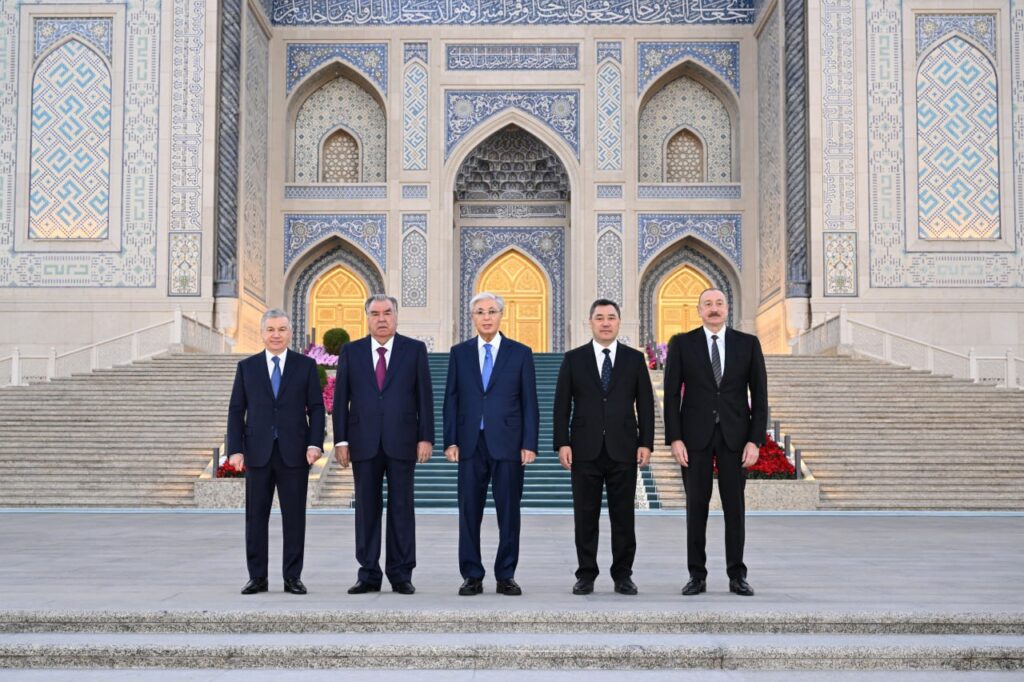
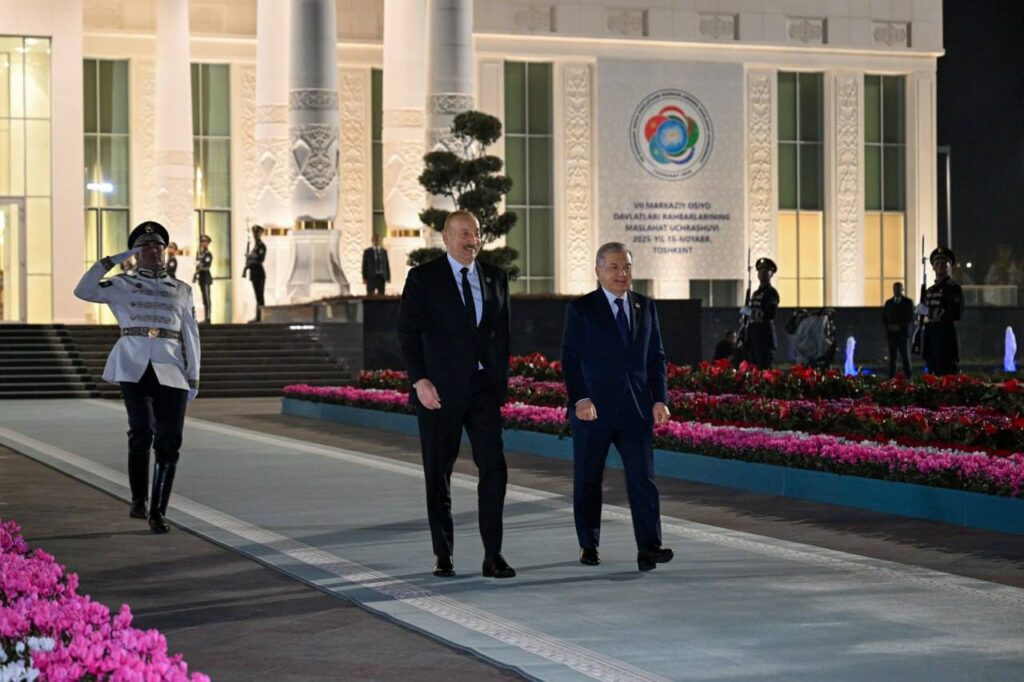
The leaders of Central Asia convened in Tashkent on November 16 for a high-level Consultative Meeting, marking a significant step toward deeper regional integration. The summit welcomed Azerbaijan as a full participant and endorsed a roadmap to formalize cooperation in trade, infrastructure, security, and water management. Hosted by Uzbekistan’s President Shavkat Mirziyoyev, the summit brought together the presidents of Kazakhstan, Kyrgyzstan, Tajikistan, Turkmenistan, and Azerbaijan, alongside a United Nations representative. Ahead of the meeting, Tashkent’s central streets were adorned with national flags and floral installations, underscoring the political and symbolic significance the Uzbek government placed on the event. Mirziyoyev hailed Azerbaijan’s accession as “a truly historic day,” as the country became a full member of the Consultative Meeting of the Heads of State of Central Asia. He proposed forming a “Community of Central Asia,” establishing a rotating Secretariat, appointing special presidential envoys for coordination, and creating a Council of Elders to promote cultural and humanitarian dialogue. [caption id="attachment_39410" align="aligncenter" width="1280"] Image: president.uz[/caption] Regional Economic and Connectivity Agenda Economic cooperation dominated the multilateral agenda. Leaders agreed to develop a Comprehensive Regional Program for Trade and Economic Cooperation through 2035 and to draft a Declaration on a Common Investment Space. “In essence, we will build a strong bridge between Central Asia and the South Caucasus and pave the way for the formation of a single space of cooperation, which will undoubtedly strengthen the strategic interconnectedness and stability of both regions,” said Mirziyoyev. Kazakhstan’s President Kassym-Jomart Tokayev also highlighted deepening bilateral ties with Uzbekistan. Trade between the two countries has reached $4 billion in 2025, with plans to increase it to $10 billion through expanded industrial cooperation and import substitution. Over 6,500 joint enterprises now operate between the two countries, with new projects worth more than $8 billion under development. Several initiatives, such as the Silkway Central Asia logistics center, new industrial facilities, and cultural programs, were launched in Tashkent during the visit. [caption id="attachment_39411" align="aligncenter" width="1280"] Image: president.uz[/caption] Tajikistan’s President Emomali Rahmon met with Mirziyoyev on the sidelines of the summit. The two leaders noted the steady growth in political dialogue and agreed to expand cooperation in energy, industry, agriculture, and innovation. Bilateral trade surpassed $440 million in the first nine months of 2025. They also discussed regional security, including collaboration against terrorism, extremism, cybercrime, and drug trafficking. Security, Water, and Cultural Cooperation To advance regional integration, Tashkent also hosted the first meeting of the Council of Ministers of Trade and Investment of Central Asian countries and Azerbaijan on November 13. Ministers discussed boosting trade, investment, and industrial cooperation, with the goal of increasing regional trade turnover to $20 billion. Plans were also made to develop joint production platforms under a “Made in Central Asia” label. Uzbekistan’s trade with Central Asian partners rose from $3.2 billion in 2017 to $6.9 billion in 2024, while trade with Azerbaijan has grown by 13% this year. Connectivity remained a focal point. Participants reaffirmed their commitment to the China-Kyrgyzstan-Uzbekistan railway and the Trans-Afghan corridor. Azerbaijan’s President...

With Shared Goals, Azerbaijan Draws Closer to Central Asia

Then there were six. The five Central Asian countries of Kazakhstan, Kyrgyzstan, Tajikistan, Turkmenistan, and Uzbekistan are widely thought of as a group, united by geography, their shared history as former Soviet republics, and growing collaboration in recent years. Now, Azerbaijan is emerging as a sixth member of the group, even though it is in the South Caucasus. At a summit on Sunday, Central Asian leaders supported Azerbaijan’s accession to the region’s Consultative Meeting format as a full participant, “forming a unified space for interaction between Central Asia and the South Caucasus,” Uzbekistan’s presidency said. The Consultative Meeting format is a vehicle for high-level collaboration among Central Asian countries, which have taken steps to resolve border disputes and other sources of tension between them over the years. The format addresses trade, security, and other issues. All five Central Asian leaders, as well as President Ilham Aliyev of Azerbaijan, attended the annual meeting in Tashkent on Sunday. In a speech, Aliyev noted that he had visited Central Asian countries 14 times in the last three years, and that Central Asian leaders had visited Azerbaijan a total of 23 times during the same period. He said Azerbaijan and Central Asia “today form a single geopolitical and geo-economic region, whose importance in the world is steadily growing.” Azerbaijan, which is also a former Soviet republic, shares the Turkic background of some of the Central Asian nations. While all the countries have distinct national identities, they covet the goal of more robust trade routes linking Asia and Europe, as well as regional solidarity in an uncertain geopolitical environment where China, Russia, and the United States are dominant powers. After Azerbaijan was admitted to the Central Asian talks format, Azerbaijani presidential adviser Hikmet Hajiyev posted on X: “From now on, Central Asia stands as 6.”

Made In Central Asia: Leaders Eye $20 Billion Trade Milestone as Regional Cooperation Deepens

The first meeting of trade and investment ministers from Central Asian countries, joined by Azerbaijan, has taken place in Tashkent, where participants agreed to nearly double mutual trade to $20 billion and discussed launching a regional brand, Made in Central Asia. Opening the session, Uzbekistan’s Minister of Investment, Industry, and Trade, Laziz Kudratov, highlighted the substantial potential for increased trade due to the complementarity of regional economies and growing business interest in joint initiatives According to Uzbek data, intra-regional trade doubled between 2017 and 2024, reaching approximately $11 billion. Kudratov proposed developing an action plan to raise trade turnover to $20 billion. The proposed strategy includes harmonizing customs procedures, implementing digital document management, mutually recognizing permits, and developing “single window” systems at borders. Additional measures under discussion include creating a regional electronic catalog of goods and producers and integrating the digital platforms of chambers of commerce, industry, and export agencies. Uzbekistan also proposed hosting the Central Asia and Azerbaijan Investment Forum in Samarkand in 2026, positioning it as a platform to launch the Made in Central Asia brand. Kazakhstan’s Minister of Trade and Integration, Arman Shakkaliev, urged countries to shift from a “buy-sell” model to an “invest-produce-sell” approach. He noted that Kazakhstan is entering a new investment cycle aimed at building export-oriented industries and sustainable value chains. Shakkaliev added that the upcoming industrial cooperation development program with Uzbekistan could be expanded to other Central Asian countries and Azerbaijan. Kazakhstan also supported the common branding initiative and proposed a pilot project using digital trading platforms. Tajikistan’s Minister of Economic Development and Trade, Zavki Zavkizoda, underscored the importance of digital technologies and cited examples of regional companies operating at an international level. Nazar Agakhanov, Turkmenistan’s Minister of Trade and Foreign Economic Relations, stressed that simplifying trade procedures and developing electronic platforms are essential to meeting shared goals. Ashgabat expressed its readiness to join the working group to be established following the meeting. Kyrgyzstan was represented by its ambassador to Uzbekistan, Duishonkul Chotonov, who noted that Bishkek views the format as a platform for collective decisions that advance regional economic development. Azerbaijan’s First Deputy Minister of Economy, Elnur Aliyev, reported that trade with Central Asian states grew by 58% in the first nine months of 2025, surpassing $1 billion. He said Azerbaijan is prepared to expand its transport infrastructure through new logistics hubs and the promotion of joint ventures. The meeting concluded with the signing of a joint communiqué expressing intentions to deepen economic ties, establish joint ventures, and develop new instruments for investment cooperation. The seventh Consultative Meeting of the Heads of State of Central Asia will be held in Tashkent on November 15-16. Azerbaijani President Ilham Aliyev is also expected to attend.