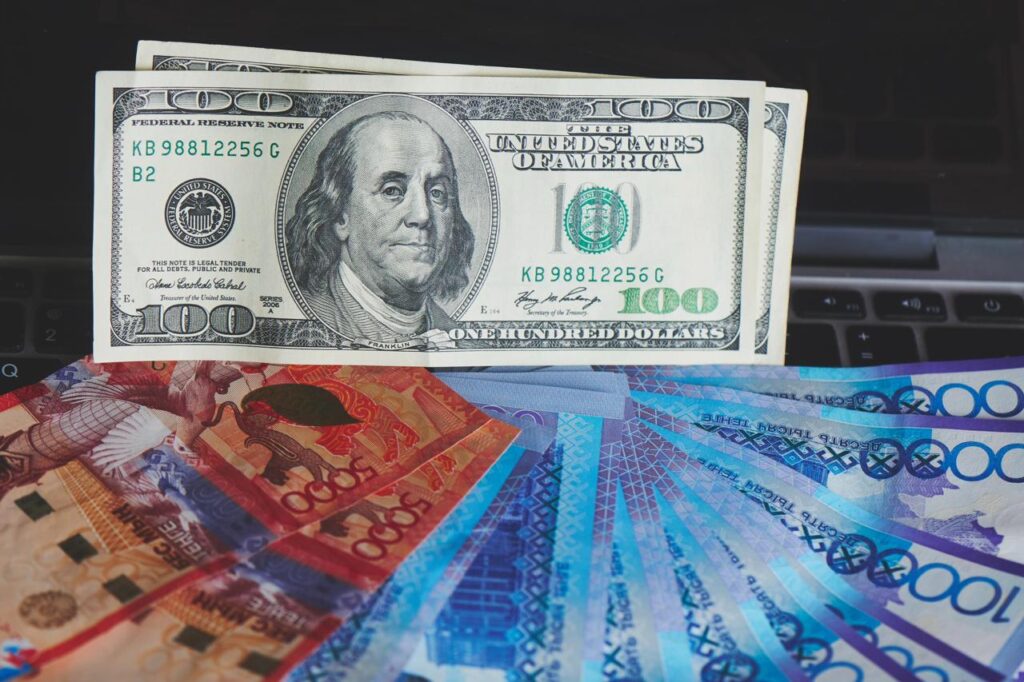
• KZT/USD = 0.00220
  • TJS/USD = 0.10820
  • UZS/USD = 0.00009
  • TMT/USD = 0.29850
  • KZT/USD = 0.00220
  • TJS/USD = 0.10820
  • UZS/USD = 0.00009
  • TMT/USD = 0.29850
  • KZT/USD = 0.00220
  • TJS/USD = 0.10820
  • UZS/USD = 0.00009
  • TMT/USD = 0.29850
  • KZT/USD = 0.00220
  • TJS/USD = 0.10820
  • UZS/USD = 0.00009
  • TMT/USD = 0.29850
  • KZT/USD = 0.00220
  • TJS/USD = 0.10820
  • UZS/USD = 0.00009
  • TMT/USD = 0.29850
  • KZT/USD = 0.00220
  • TJS/USD = 0.10820
  • UZS/USD = 0.00009
  • TMT/USD = 0.29850
  • KZT/USD = 0.00220
  • TJS/USD = 0.10820
  • UZS/USD = 0.00009
  • TMT/USD = 0.29850
  • KZT/USD = 0.00220
  • TJS/USD = 0.10820
  • UZS/USD = 0.00009
  • TMT/USD = 0.29850
08 September 2026

Viewing results 1 - 6 of 14

Are Kazakhstan’s Small Businesses Really Leaving Over Taxes?

As Kazakhstan prepares for tax reforms set to take effect in 2026, a new wave of panic has surfaced in the national discourse, one suggesting that small businesses are facing a stark choice: shut down or relocate to neighboring countries promising more favorable tax environments. This narrative has gained traction twice in the second half of 2025. The first wave came in mid-autumn, triggered by reports suggesting that Kazakhstani entrepreneurs were looking to move operations to Kyrgyzstan or Uzbekistan. These claims quickly spread across Kazakh social networks, particularly Threads. However, early signs indicated that the alarm was not being sounded by small businesses themselves, but by representatives of the B2B services sector, especially consultants and accountants. Media outlets amplified comments that stirred fear, reinforcing what increasingly appeared to be media-driven panic. One such moment came in late September when the Kazakhstan Association of Tax Consultants hosted a presentation by its chairman, Saken Karin, titled “Tax Reality 2026: Opportunities and Risks.” Karin warned that the proposed reforms would “tear apart the B2B and B2C sectors,” criticizing state approaches to tax administration. Even then, experts argued that large-scale relocation of Kazakhstani businesses made little practical sense. “Which Kazakhstani businesses can realistically relocate to Kyrgyzstan? Probably only IT companies, which are location-independent. Most SMEs in Almaty rely on the quasi-public sector or the domestic market, which is considerably larger and wealthier than that of our neighbors,” said financier Rassul Rysmambetov. The numbers back this up: in 2024, the economy of Almaty alone reached $60 billion, compared to Kyrgyzstan’s national GDP of approximately $17.5 billion. Despite this, a second wave of panic is now gaining momentum, this time shifting focus to Uzbekistan as a destination for potential business migration. Once again, social networks, particularly Threads, are amplifying the noise, citing interviews such as one with tax expert Maxim Baryshev, who praised the tax systems of Uzbekistan and Kyrgyzstan. Baryshev represents the professional accounting organization Uchet.kz. His colleague, Uchet.kz manager Timur Abiev, has previously spoken out against what he views as unfounded panic surrounding tax reform. Despite growing anxiety on social media, government officials have yet to launch a strong counter-narrative. This lack of response reinforces the idea that panic is being stoked by peripheral sectors rather than the business community itself. When Finance Minister Madi Takiev was asked about claims of a mass relocation of small businesses to neighboring countries, he dismissed them as unfounded. He argued that tax thresholds and turnover requirements in those countries are broadly comparable to Kazakhstan’s and noted that businesses relocating abroad would still be subject to domestic taxation if their economic center of interest remained in Kazakhstan, making such moves economically unviable. As for the accounting industry, its vocal opposition to reform may be tied to structural weaknesses. Kazakhstan’s accounting sector has been slow to adapt to changing demands and is struggling to train enough professionals to meet market needs. The number of established training institutions remains small. A recent government meeting focused on SME support included plans...
Most Kazakhstani Citizens Fear Decline in Living Standards Due to Tax Reform

A majority of Kazakhstanis expect a planned increase in value-added tax (VAT) to negatively impact their standard of living, triggering higher prices, rising unemployment, and increased pressure on businesses, according to a survey conducted by the DEMOSCOPE public opinion monitoring agency. The results show that 61.4% of respondents believe the VAT hike from 12% to 16% beginning January 1, 2026, will reduce their quality of life. Of those, 32.4% anticipate a significant decline, while 29% expect a slight deterioration. Meanwhile, 20.6% believe the change will have no impact, and just 9% believe it will improve their living standards. Government officials have framed the VAT increase as necessary to boost budget revenues, stabilize the economy, and finance social spending. However, respondents overwhelmingly believe the reform will primarily benefit the state (63.8%) and wealthy citizens (27.9%). In contrast, only 10.2% think businesses will benefit, while 3.3% expect gains for the middle class and just 2% for low-income citizens. Additionally, 19.2% said no one would benefit, and 2.4% believe everyone will benefit. Respondents also identified several expected negative outcomes. A majority, 65.5%, expect a rise in prices for goods and services. Another 27.3% predict a reduction in the number of small and medium-sized enterprises, 26.5% foresee rising unemployment, and 19.6% anticipate growth in the shadow economy and tax evasion. Among entrepreneurs, 70.5% view the reform negatively. The VAT hike is seen as particularly detrimental to small and medium-sized businesses: 63.6% believe it will harm the sector, 14.8% foresee no impact, and only 10.3% predict a positive outcome. Overall, 52.8% of respondents expressed a negative view of the reform, while 33.4% were neutral and just 7.8% were positive. Nevertheless, some respondents did see potential benefits: 18.2% believe the reform will increase tax revenues, and 9.4% think it will improve living standards. A further 12.6% said they expect no significant changes. The findings suggest that many Kazakhstani citizens view the tax reform as a policy that favors the government and affluent elites, while placing disproportionate pressure on businesses and vulnerable population groups. As previously reported by The Times of Central Asia, in early October, Finance Minister Mady Takiev stated that authorities had identified suspected underreporting of taxable income by more than 260,000 businesses across the country.

Kazakhstanis Face Drug Shortages and Soaring Prices

Kazakhstanis are paying significantly more for medicines than residents of many other countries, and often struggle to find essential drugs at all. According to the Agency for Protection and Development of Competition (APDC), rising prices, supply disruptions, and an inefficient procurement system are driving a worsening healthcare crisis. Price Hikes Kazakhstan’s medicine procurement system is complex. In principle, essential drugs should be available to patients free of charge under the guaranteed volume of medical care and mandatory social health insurance. In practice, many face shortages or receive lower-quality substitutes. As a result, patients are often forced to buy medicines themselves, an increasingly unaffordable burden. According to the APDC, inflated prices are caused by several factors. One is the lack of pricing transparency. Previously, drug prices were pegged to the highest prices in reference countries, figures submitted by suppliers without verification. As a result, generics sometimes cost nearly as much as original-brand drugs. Another issue is procurement through intermediaries. Up to 45% of state-purchased medicines are bought not from manufacturers but from local distributors, who add their own markups. Costs are also inflated by expensive inspections. To enter the market, companies must pay for production inspections, fees set independently by a state agency that can reach millions of tenge. These costs are passed on to consumers. To address these problems, the APDC has recommended switching to average reference-country prices, limiting inspections on products from countries with stringent regulations, and transferring inspection services to a state monopoly with controlled rates. It also urges more direct procurement from manufacturers and better verification of supplier costs. Tax Reforms Threaten Further Price Increases Despite already high prices, medicines will soon be subject to new taxes. Under Kazakhstan’s revised Tax Code, beginning in 2026, medical services and the sale of medicines and medical products will be subject to value-added tax (VAT), initially at 5%, rising to 10% from January 1, 2027. An exception will apply to medicines and services provided under the guaranteed medical care package and mandatory health insurance. However, as noted earlier, many patients struggle to access these programs in practice. Pharmaceutical companies warn that these VAT changes will drive prices even higher and lead to fresh shortages. Industry leaders also point to the planned 16% VAT on pharmaceutical raw materials, equipment, and components, calling it a distortion of tax policy and a threat to the sector’s stability. “The market is on the edge. Many drugs are already unprofitable and are being withdrawn. The introduction of VAT will accelerate the outflow. The number of registered medicines in Kazakhstan has already dropped from 12,000 to 6,900,” said Marina Durmanova, President of the Association for the Support and Development of Pharmaceutical Activity. “If no measures are taken, the country could face shortages of key drugs and further monopolization of the pharmacy sector,” she warned. Kazakhstan produces few essential medicines domestically, meaning prices continue to rise month by month. When Medicines Vanish, So Do Lives Price increases are only part of the crisis. Vital medicines frequently disappear...

Kyrgyzstan’s Jewelry Industry Emerges from the Shadows

The jewelry industry in Kyrgyzstan is experiencing rapid growth, marked by a surge in exports, an expanded geographic reach, and a significant rise in foreign trade operations, according to official statistics. According to the National Statistical Committee, Kyrgyz jewelers quadrupled the volume of foreign trade in jewelry made from precious metals during the first four months of 2025. This figure encompasses both exports and imports. Approximately 100 kilograms of jewelry, valued at around $600,000, were exported. Export revenues increased fourfold compared to the same period in 2024. Meanwhile, imports reached 15.6 tons, worth $5.8 million, more than double the previous year’s figures. Russia and Italy were the primary destinations for Kyrgyz jewelry exports. Business Legalization and Tax Incentives Stalbek Akmatov, president of the Kyrgyz Jewelers' Union, told The Times of Central Asia that this growth was driven by the industry’s formalization, which allowed jewelers to operate legally, pay taxes, and submit accurate reports. "First of all, I would like to thank our authorities, the Jogorku Kenesh and the Cabinet of Ministers," Akmatov said. "Recently, significant changes were introduced to the Tax Code and legislation concerning precious metals. Instead of three separate taxes, VAT, sales tax, and income tax, a single tax of 0.25% has now been implemented." Akmatov noted that the new tax policy has provided a substantial boost to production and exports, while significantly reducing the size of the shadow economy, which previously accounted for over 90% of the sector. Experts estimate that less than half the industry now remains informal. Entry into the Kazakh Market Kyrgyz jewelers are also exploring new markets. Akmatov highlighted that one company has already exhibited twice at a jewelry fair in Almaty and has begun selling products featuring national designs. "The current volume of exports to Kazakhstan is small, just a few kilograms, but it's only the beginning. The potential in this direction is enormous," he told TCA. Persistent Challenges: Scrap Gold and Regulation Despite these advancements, challenges remain. One major issue is the high cost of scrap gold for local producers. As was the case five years ago, scrap gold is sold with a 5% markup over the London gold price, even though Kyrgyzstan annually produces several dozen tons of gold and even more silver. Akmatov also pointed to restrictive regulations on the circulation of precious metals. "If gold could be traded freely like a currency, our sales would increase significantly," he stated. The Jewellers' Union is currently in talks with the Ministry of Economy and Commerce on liberalizing precious metals circulation within the country.

Kazakhstan’s Lower House Passes Controversial New Tax Code Amid Public Backlash

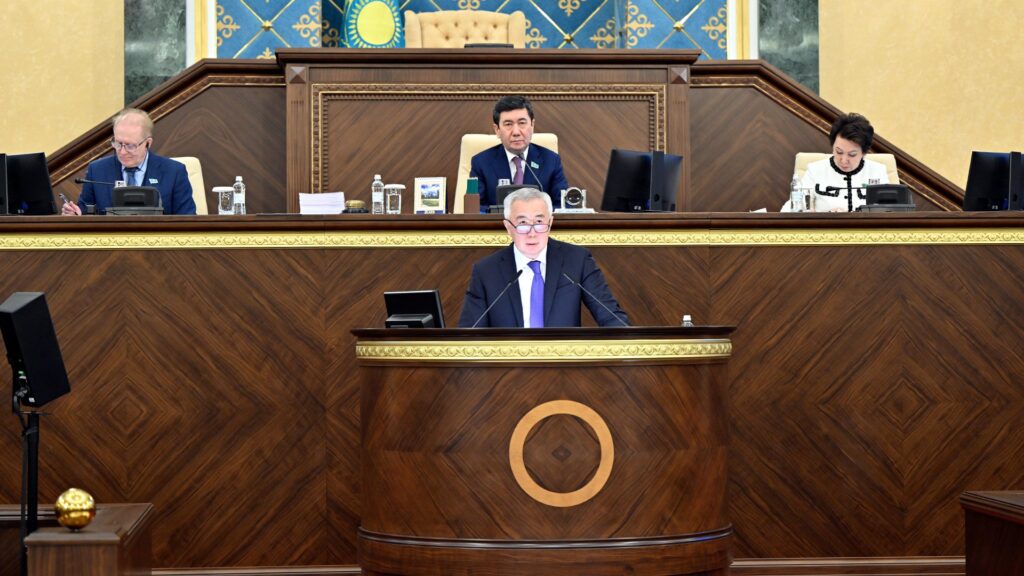
On April 30, the Mazhilis, the lower house of Kazakhstan’s parliament, approved a new Tax Code by majority vote. The draft law, part of President Kassym-Jomart Tokayev’s broader economic reforms, has triggered intense public and political debate. While proponents highlight its emphasis on modernization and fairness, critics warn of increased pressure on businesses and potential inflation. The final decision now rests with the president, following Senate review. Key Reforms and Adjustments According to Berik Beisengaliyev, head of the Mazhilis working group, the final version of the Tax Code diverges significantly from the original draft submitted in August 2024. One of the major changes concerns VAT (value-added tax). The government’s initial proposal to raise the VAT rate to 20% was scaled back to 16%. The threshold for mandatory VAT registration has been raised from 15 million to 40 million tenge. Reduced VAT rates are set for medical services and medicines, 5% from 2026 and 10% from 2027. Goods and services tied to guaranteed free medical care, compulsory health insurance, and treatment of orphan and socially significant diseases will be VAT-exempt. Additionally, the VAT exemption will extend to socially significant food items, books published domestically, and related publishing services. Agricultural producers will benefit from a higher VAT offset, increased from 70% to 80%. Other reforms include a shift from a permissive to a prohibitive activity list, with a unified 4% tax rate that regional maslikhats can adjust by ±50%. Special tax regimes for business-to-business transactions are also being expanded. Corporate income tax (CIT) has been reduced to 5% from 2026 and 10% from 2027 for social sector organizations. The social tax deduction for people with disabilities has increased to 5,000 MCI (19.6 million tenge in 2025). Meanwhile, the CIT rate for banks and the gambling industry has been raised to 25%, though a 20% rate remains on banks’ business lending income. A progressive income tax scale will be introduced: 10% on annual wages up to 8,500 MCI (33.5 million tenge or roughly $65,000), and 15% on income above that threshold. For dividends, the rate will be 5% on income up to 230,000 MCI (1 billion tenge, or $2 million), and 15% thereafter. The code also proposes higher excise taxes on alcohol, tobacco, and heated tobacco products, along with a new excise on energy drinks as part of a health initiative. Land use provisions have been amended to penalize inefficient use of agricultural land, with payment rates increasing up to 100-fold. Mineral resource usage rates will vary based on license duration and the number of plots held. Political Dissent and Criticism The Ak Zhol party opposed the code in both readings, citing disproportionate fiscal burdens on SMEs while sparing large extractive firms. The party also criticized the VAT hike as inflationary and warned about the opaque nature of the risk management system (RMS), which they say allows for discretionary actions by tax authorities. “The code is bloated with over 100 new articles, making it more difficult for entrepreneurs to navigate. This is not...

Opinion: Kazakhstan’s Tax Reform May Come as an Unpleasant Surprise

Kazakhstan's tax reform has reached a critical juncture. This week, the Mazhilis, the lower house of parliament, approved the draft of the new Tax Code in its first reading. The sweeping document, comprising 822 articles, proposes the repeal of the current Tax Code along with the accompanying implementation law. While the reform fulfils directives issued by President Kassym-Jomart Tokayev in his 2022 and 2023 state-of-the-nation addresses, skepticism abounds. Experts and business leaders have voiced concerns, and lawmakers themselves have offered mixed reviews, with many adopting a critical stance. Concerns About Scope and Timing Though tax professionals broadly agree on the need for tax reform, some warn that the current version may be the most stringent in over two decades. Critics argue that without addressing structural inefficiencies in government spending, raising taxes alone will not yield the desired outcomes. They emphasize the need for a balanced approach that supports both fiscal sustainability and economic resilience. Adding to the unease is the timing. Kazakhstan, like many economies, faces mounting global pressures. The threat of a financial downturn, exacerbated by falling energy prices and international tariff disputes, has prompted urgent consultations at the highest level. Tokayev recently convened a closed-door meeting with the prime minister and the head of the National Bank, instructing them to finalize a government action plan to mitigate potential economic fallout and maintain investment flows. A Mixed Bag of Reactions Some analysts acknowledge that the existing Tax Code, adopted in 2008, is outdated. They argue that reforms are essential to address digitalization, evolving business models, and new global challenges. Calls for improved tax administration, especially the simplification of procedures and adoption of risk-based oversight, aim to ease pressure on law-abiding businesses while better targeting the informal sector. The draft law also seeks to limit inefficient tax exemptions and make incentives more focused and transparent. These changes are framed as part of Tokayev's broader economic transformation agenda, which prioritizes fair taxation, industrial processing, and innovation. Nonetheless, many entrepreneurs remain uneasy. Economic instability, lingering post-pandemic effects, geopolitical risks, and sanctions-related supply disruptions have left businesses vulnerable. Critics worry that introducing a more demanding tax regime now may fuel uncertainty and discourage investment. Additional concerns center on governance. Persistent issues of corruption, selective enforcement, and administrative overreach have eroded public trust. Without parallel reforms in public administration, experts argue that changes to tax policy alone may fall short. Divided Political Reception The draft Tax Code’s passage through its first reading does not guarantee smooth sailing. Even the ruling Amanat party, while supporting the bill, has voiced reservations. Its members have called for safeguarding small and medium-sized enterprises and enhancing investment incentives. The opposition Ak Zhol party has been the most vocal critic. Its leader, Azat Peruashev, characterized the proposal as a fiscal crackdown rather than genuine reform. The faction demands greater transparency, public consultations, and a reconsideration of proposed VAT hikes and lower registration thresholds. Meanwhile, the pro-business Respublica party supports the reform in principle but insists on greater simplification in business-tax...