
• KGS/USD = 0.01144 0%
  • KZT/USD = 0.00199 0%
  • TJS/USD = 0.10857 -0.18%
  • UZS/USD = 0.00008 0%
  • TMT/USD = 0.28571 0%
  • KGS/USD = 0.01144 0%
  • KZT/USD = 0.00199 0%
  • TJS/USD = 0.10857 -0.18%
  • UZS/USD = 0.00008 0%
  • TMT/USD = 0.28571 0%
  • KGS/USD = 0.01144 0%
  • KZT/USD = 0.00199 0%
  • TJS/USD = 0.10857 -0.18%
  • UZS/USD = 0.00008 0%
  • TMT/USD = 0.28571 0%
  • KGS/USD = 0.01144 0%
  • KZT/USD = 0.00199 0%
  • TJS/USD = 0.10857 -0.18%
  • UZS/USD = 0.00008 0%
  • TMT/USD = 0.28571 0%
  • KGS/USD = 0.01144 0%
  • KZT/USD = 0.00199 0%
  • TJS/USD = 0.10857 -0.18%
  • UZS/USD = 0.00008 0%
  • TMT/USD = 0.28571 0%
  • KGS/USD = 0.01144 0%
  • KZT/USD = 0.00199 0%
  • TJS/USD = 0.10857 -0.18%
  • UZS/USD = 0.00008 0%
  • TMT/USD = 0.28571 0%
  • KGS/USD = 0.01144 0%
  • KZT/USD = 0.00199 0%
  • TJS/USD = 0.10857 -0.18%
  • UZS/USD = 0.00008 0%
  • TMT/USD = 0.28571 0%
  • KGS/USD = 0.01144 0%
  • KZT/USD = 0.00199 0%
  • TJS/USD = 0.10857 -0.18%
  • UZS/USD = 0.00008 0%
  • TMT/USD = 0.28571 0%
05 December 2025

Viewing results 1 - 6 of 6

Made In Central Asia: Leaders Eye $20 Billion Trade Milestone as Regional Cooperation Deepens

The first meeting of trade and investment ministers from Central Asian countries, joined by Azerbaijan, has taken place in Tashkent, where participants agreed to nearly double mutual trade to $20 billion and discussed launching a regional brand, Made in Central Asia. Opening the session, Uzbekistan’s Minister of Investment, Industry, and Trade, Laziz Kudratov, highlighted the substantial potential for increased trade due to the complementarity of regional economies and growing business interest in joint initiatives According to Uzbek data, intra-regional trade doubled between 2017 and 2024, reaching approximately $11 billion. Kudratov proposed developing an action plan to raise trade turnover to $20 billion. The proposed strategy includes harmonizing customs procedures, implementing digital document management, mutually recognizing permits, and developing “single window” systems at borders. Additional measures under discussion include creating a regional electronic catalog of goods and producers and integrating the digital platforms of chambers of commerce, industry, and export agencies. Uzbekistan also proposed hosting the Central Asia and Azerbaijan Investment Forum in Samarkand in 2026, positioning it as a platform to launch the Made in Central Asia brand. Kazakhstan’s Minister of Trade and Integration, Arman Shakkaliev, urged countries to shift from a “buy-sell” model to an “invest-produce-sell” approach. He noted that Kazakhstan is entering a new investment cycle aimed at building export-oriented industries and sustainable value chains. Shakkaliev added that the upcoming industrial cooperation development program with Uzbekistan could be expanded to other Central Asian countries and Azerbaijan. Kazakhstan also supported the common branding initiative and proposed a pilot project using digital trading platforms. Tajikistan’s Minister of Economic Development and Trade, Zavki Zavkizoda, underscored the importance of digital technologies and cited examples of regional companies operating at an international level. Nazar Agakhanov, Turkmenistan’s Minister of Trade and Foreign Economic Relations, stressed that simplifying trade procedures and developing electronic platforms are essential to meeting shared goals. Ashgabat expressed its readiness to join the working group to be established following the meeting. Kyrgyzstan was represented by its ambassador to Uzbekistan, Duishonkul Chotonov, who noted that Bishkek views the format as a platform for collective decisions that advance regional economic development. Azerbaijan’s First Deputy Minister of Economy, Elnur Aliyev, reported that trade with Central Asian states grew by 58% in the first nine months of 2025, surpassing $1 billion. He said Azerbaijan is prepared to expand its transport infrastructure through new logistics hubs and the promotion of joint ventures. The meeting concluded with the signing of a joint communiqué expressing intentions to deepen economic ties, establish joint ventures, and develop new instruments for investment cooperation. The seventh Consultative Meeting of the Heads of State of Central Asia will be held in Tashkent on November 15-16. Azerbaijani President Ilham Aliyev is also expected to attend.
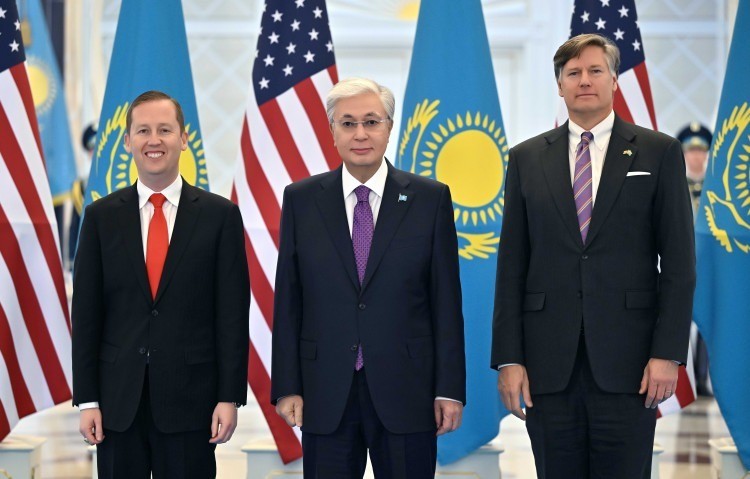

U.S. Envoys Hail Stronger Kazakhstan Partnership Ahead of C5+1 Summit

On October 29, Unites States Special Envoy for South and Central Asia Sergio Gor and Deputy Secretary of State Christopher Landau concluded their visit to Kazakhstan ahead of the upcoming C5+1 summit in Washington. During their trip, the U.S. envoys met with President Kassym-Jomart Tokayev and held discussions with representatives of Kazakhstan’s government and business community, which they described as highly productive. “We are concluding a memorable trip to Kazakhstan in the beautiful capital, Astana, which did not even exist 30 years ago and now boasts a population of more than 1.5 million,” Landau posted on social media. He also stated that bilateral relations between the U.S. and Kazakhstan “have never been so strong” and expressed gratitude for the hospitality.  Gor and Landau held talks with Prime Minister Olzhas Bektenov and key cabinet members, including Minister of Trade and Integration Arman Shakkaliev, Minister of Energy Yerlan Akkenzhenov, Minister of Transport Nurlan Sauranbayev, and Deputy Prime Minister and Minister of National Economy Serik Zhumangarin, to discuss Kazakhstan’s economic priorities and areas for expanding bilateral cooperation. According to the Kazakh government, the talks focused on expanding trade and investment cooperation between the two countries. Priority areas included transport and logistics, energy, agriculture, the digital economy, and artificial intelligence. During their visit, the U.S. envoys also met with Deputy Prime Minister Murat Nurtleu, who reaffirmed Kazakhstan’s readiness to cooperate on sustainable development and energy security. The meetings demonstrated Kazakhstan’s active engagement with the United States in the lead-up to the upcoming Central Asia–U.S. summit. Deputy Prime Minister and Minister of National Economy Serik Zhumangarin, who highlighted Kazakhstan’s economic strengths during talks with Gor and Landau, had recently returned from a high-level visit to the United States. His delegation, which included Deputy Head of the Presidential Administration Erbolat Dossaev and Chairperson of the Agency for Regulation and Development of the Financial Market Madina Abylkasymova, held meetings in New York and Washington with American business leaders and members of Congress. During the visit, the Kazakh delegation presented the country’s economic growth strategy, highlighted ongoing GDP expansion, and discussed the potential listing of government securities on the New York Stock Exchange. They also raised the possible repeal of the Jackson–Vanik Amendment, a long-standing priority for Kazakhstan’s diplomatic agenda. Against this backdrop, the White House’s decision to convene a summit between President Donald Trump and the leaders of the Central Asian republics may partly reflect Kazakhstan’s sustained diplomatic outreach. In that context, Gor and Landau’s remarks of appreciation as they departed Astana underscored recognition of Kazakhstan’s role in shaping this evolving partnership.