• KGS/USD = 0.01143 0%
  • KZT/USD = 0.00205 0%
  • TJS/USD = 0.10787 0%
  • UZS/USD = 0.00008 0%
  • TMT/USD = 0.28571 0%
  • KGS/USD = 0.01143 0%
  • KZT/USD = 0.00205 0%
  • TJS/USD = 0.10787 0%
  • UZS/USD = 0.00008 0%
  • TMT/USD = 0.28571 0%
  • KGS/USD = 0.01143 0%
  • KZT/USD = 0.00205 0%
  • TJS/USD = 0.10787 0%
  • UZS/USD = 0.00008 0%
  • TMT/USD = 0.28571 0%
  • KGS/USD = 0.01143 0%
  • KZT/USD = 0.00205 0%
  • TJS/USD = 0.10787 0%
  • UZS/USD = 0.00008 0%
  • TMT/USD = 0.28571 0%
  • KGS/USD = 0.01143 0%
  • KZT/USD = 0.00205 0%
  • TJS/USD = 0.10787 0%
  • UZS/USD = 0.00008 0%
  • TMT/USD = 0.28571 0%
  • KGS/USD = 0.01143 0%
  • KZT/USD = 0.00205 0%
  • TJS/USD = 0.10787 0%
  • UZS/USD = 0.00008 0%
  • TMT/USD = 0.28571 0%
  • KGS/USD = 0.01143 0%
  • KZT/USD = 0.00205 0%
  • TJS/USD = 0.10787 0%
  • UZS/USD = 0.00008 0%
  • TMT/USD = 0.28571 0%
  • KGS/USD = 0.01143 0%
  • KZT/USD = 0.00205 0%
  • TJS/USD = 0.10787 0%
  • UZS/USD = 0.00008 0%
  • TMT/USD = 0.28571 0%

Viewing results 1 - 6 of 631

Kazakh-Chinese Container Terminal Launches in Almaty

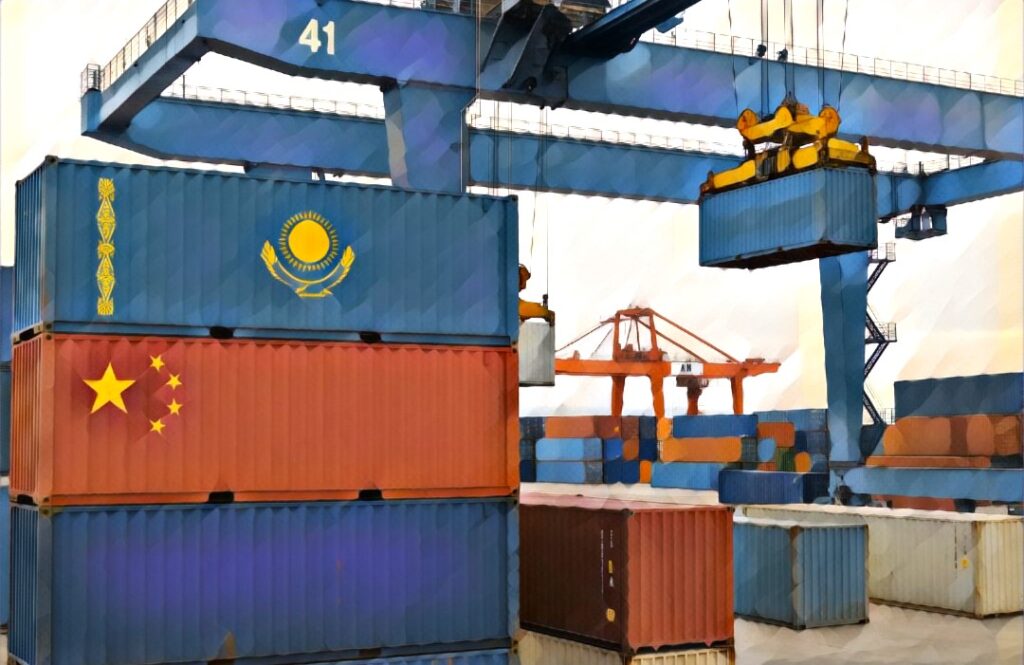
The Zhetysu container terminal, a new logistics hub jointly developed by Kazakhstan and China, officially opened in Almaty on June 10, marking a significant step in regional freight infrastructure development. The project is a partnership between Kazakhstan’s national railway operator, Kazakhstan Temir Zholy (KTZ), and Xi’an Free Trade Port Construction and Operation Co., Ltd. of China. Designed to handle up to 115,000 twenty-foot equivalent units (TEU) annually, the Zhetysu terminal is expected to serve as a strategic center for consolidating and distributing Chinese goods transported via rail and road. Situated at the intersection of key international transit corridors, the terminal is positioned to become Kazakhstan’s largest import hub and a vital link along the Trans-Caspian International Transport Route (TITR), a growing trade pathway connecting China and Europe through Central Asia. The facility spans 9.8 hectares. Its container yard covers 9,200 square meters and can store up to 1,101 TEU at a time. It also features 23,400 square meters of warehouse space and an 8,900-square-meter parking area for commercial vehicles. The terminal’s launch was marked by the arrival of the first container train from Xi’an, home to the Kazakh-Chinese cargo terminal that began operations in February 2024. Yuan Xiaojun, General Director of Xi’an Free Trade Port Construction and Operation, described the new Almaty terminal as both a symbol of China-Kazakhstan cooperation under the Belt and Road Initiative and a catalyst for greater regional economic integration. “This international logistics hub will help ensure sustainable growth in economic cooperation between China, Kazakhstan, and the broader Eurasian region,” Yuan said.

Zhetysu Terminal in Almaty to Welcome First China-Europe Freight Train

Kazakhstan’s national railway company, Kazakhstan Temir Zholy (KTZ), has announced that the new Zhetysu container terminal in Almaty will receive its first container train on June 10. The train departed from the joint Kazakh-Chinese cargo terminal in Xi’an, China, on June 1. The Zhetysu terminal is set to become Almaty’s largest container hub for the consolidation and distribution of Chinese goods, handling cargo transported by both rail and road. It will offer comprehensive logistics services, including warehousing, customs clearance, and door-to-door delivery on a "first and last mile" basis. Strategically located at the intersection of major international transport routes, Zhetysu is expected to play a key role in facilitating cargo movement along the Trans-Caspian International Transport Route (TITR), a growing trade corridor connecting China and Europe via Kazakhstan. Strategic Synergy with Xi’an Terminal The terminal will operate in coordination with the Kazakh-Chinese terminal in Xi’an, which became operational in February 2024. That facility has an annual handling capacity of 133,000 twenty-foot equivalent units (TEUs), significantly boosting bilateral trade and transit freight volumes. In related news, KTZ reported that the 100,000th container, measured in TEU, has now departed from Xi’an along the TITR. The train, comprising 50 containers, is carrying electronics, furniture, and consumer goods bound for European markets.

Kazakhstan to Launch First International Outlet Center

An agreement to establish Kazakhstan’s first international outlet center has been signed at the Astana International Forum. According to the Ministry of Trade and Integration, the large-scale project will be located in the Almaty region and developed by QSM Group in partnership with Austria’s Ekazent Management GmbH, a leading player in the European commercial real estate market. Ekazent will oversee the entire planning and operational framework for the outlet center. This includes conducting a marketing study to determine the optimal location, defining the architectural and functional concept, developing a long-term management strategy, and managing day-to-day operations after the center opens. The Austrian firm will also be responsible for attracting international brands and tenants to the retail spaces. The future outlet center will span between 80,000 and 120,000 square meters and will include shopping galleries, hotels, restaurants, playgrounds, and other leisure facilities. Kazakhstan’s Minister of Trade and Integration, Arman Shakkaliyev, hailed the project as a milestone for the country’s retail sector. “Today, there are no Western-style outlet centers in Central Asia, which creates a unique competitive advantage. Kazakhstani consumers show consistent interest in branded goods and lifestyle-oriented shopping,” Shakkaliyev said. He also emphasized the strategic value of the Almaty region’s location, noting its proximity to the capitals of Uzbekistan and Kyrgyzstan and well-established transport corridors from China, Turkey, the UAE, and Russia. The outlet is expected to become a major attraction for both residents and international visitors. Globally, the outlet retail market exceeds $100 billion and continues to grow at an annual rate of 5-7%, with the fastest expansion occurring in Asia. The announcement coincided with the broader discussions at the Astana International Forum, which brought together leaders from several countries to address key global issues such as energy security, geopolitical cooperation, trade, and sustainable development.

Uzbekistan to Establish Free Trade Zones Near Kyrgyz Border

Uzbekistan is preparing to establish new trade and industrial zones near its border with Kyrgyzstan, President Shavkat Mirziyoyev announced during a government meeting on April 16. The Andijan region currently exports approximately $200 million in goods to Kyrgyzstan each year. To boost trade further, Mirziyoyev proposed the development of industrial zones in Kurgan-Tepe and Khojaabad, modeled after similar projects on the Afghan border. He directed officials to engage with local businesses and select one of the two sites to begin detailed planning. Addressing Border Bottlenecks Concerns were raised during the meeting over logistical challenges at the “Dostlik” checkpoint in Khojaabad. Residents and freight operators have expressed frustration with persistent delays. Railway Project to Transform Regional Trade Mirziyoyev also highlighted the strategic importance of the planned Uzbekistan-Kyrgyzstan-China railway. Once completed, the railway is expected to reduce shipping times by up to a week and shorten the overall route by 1,000 kilometers. Cargo volumes could increase tenfold, he noted. The agreement to build the railway was signed on June 6, 2024, in Beijing. The 523-kilometer route will connect Kashgar in China to Andijan in Uzbekistan, passing through Kyrgyz cities including Torugart and Jalal-Abad. The project includes the construction of modern logistics hubs, warehouses, and terminals, and is intended to significantly strengthen transport links between Central and East Asia.

Unpacking the Effects of Trump’s Tariffs on Central Asia

Trade analysts across Central Asia generally agree that the immediate impact of the United States' tariff policy on the export dynamics of their nations will likely be minimal, as observed in past experiences, except for Kazakhstan. However, there is a palpable concern regarding potential unforeseen consequences arising from a broader global trade conflict. Notably, the timing of the Trump administration's announcement regarding global tariffs on imports coincides with a period when Central Asian countries are actively working to enhance their regional trade relationships. This new tariff policy raises significant doubts about the authenticity of recent U.S. efforts to promote increased trade and investment in the region. The mixed signals coming from Washington may lead Central Asian leaders to re-evaluate their current trade partnerships, especially as they consider the benefits of strengthening ties with China and Russia against the attractiveness of expanding commerce with the United States. Similarly, the European Union may find an opportunity to improve its position, while India could leverage the Chabahar route (a multi-modal transportation route connecting India, Iran, Afghanistan, and potentially Central Asia and Europe). It is worth noting that the market is primarily situated in Asia, and this alternative could have adverse long-term effects on the United States. Kazakhstan, acknowledged as the United States’ largest trading partner in Central Asia, is poised to face significant repercussions from introducing new tariffs set at 27%. In 2024, trade relations between the U.S. and Kazakhstan reached an impressive total of $3.4 billion, with $1.1 billion in U.S. exports to Kazakhstan and $2.3 billion in imports from Kazakhstan to the U.S. However, a statement from the Kazakh Trade Ministry indicates that exports to the U.S. primarily consist of crude oil, uranium, silver, and other raw materials, all exempt from these tariffs. In 2024, Kazakhstan exported only $95.2 million worth of goods, which will now incur surcharges – a relatively modest figure compared to the country’s overall foreign trade turnover of $141.4 billion. Trade analysts suggest that Kazakhstan has little cause for concern, viewing this situation more as a psychological impact than a serious economic threat. Resource-driven Central Asian economies, such as Kazakhstan, may even find enhanced opportunities in the expanding Asian market. Trade dynamics in Central Asia reveal a complex landscape, especially concerning the United States. In 2024, Uzbekistan managed to export a modest $42.4 million worth of goods to the US, a small fraction considering its total foreign trade turnover, which reached an impressive $66 billion for that year. This stark contrast highlights the limited engagement of Uzbekistan in the American market. With its total trade turnover of $16 billion in 2024, Kyrgyzstan similarly struggled with exports to the US, which amounted to merely $16.7 million. This reflects a broader trend where Central Asian economies exhibit low volume exports to the US, suggesting significant barriers or challenges in establishing a foothold in this lucrative market. Tajikistan's economic performance presented an even more sobering picture. Recording a total trade turnover of $8.9 billion, the country achieved only $4.6 million...

Uzbekistan and Pakistan Agree to Increase Trade Volume by $2 Billion

Uzbekistan and Pakistan have agreed to expand trade, transport, and cultural cooperation, following talks between Uzbek President Shavkat Mirziyoyev and Pakistani Prime Minister Shehbaz Sharif in Tashkent on February 26. During the meeting, both leaders expressed satisfaction with the growing bilateral relationship. In 2024, trade volume between the two countries exceeded $400 million, and the number of joint ventures reached 130. Additionally, direct flights between Tashkent and Lahore have been resumed. The two sides discussed plans to boost trade to $2 billion and simplify customs procedures under a recently adopted roadmap. Key areas of cooperation include pharmaceuticals, agriculture, mining, and textiles. Transport connectivity was a major focus of the discussions. Freight traffic through the Uzbekistan-Afghanistan-Pakistan corridor has increased fivefold in recent years, and the two countries agreed to establish a joint transport and logistics company. They also pledged to advance the Trans-Afghanistan railway project, which aims to enhance regional trade routes. The two governments also committed to expanding cultural and educational exchanges. Agreements were reached on mutual cultural weeks, tourism development, and cooperation in science, technology, youth policy, and security. To strengthen long-term cooperation, Uzbekistan and Pakistan will establish a High Council for Strategic Partnership, with its first meeting scheduled for next year.