
• KGS/USD = 0.01144 0%
  • KZT/USD = 0.00211 0%
  • TJS/USD = 0.10803 0%
  • UZS/USD = 0.00008 0%
  • TMT/USD = 0.28571 0%
  • KGS/USD = 0.01144 0%
  • KZT/USD = 0.00211 0%
  • TJS/USD = 0.10803 0%
  • UZS/USD = 0.00008 0%
  • TMT/USD = 0.28571 0%
  • KGS/USD = 0.01144 0%
  • KZT/USD = 0.00211 0%
  • TJS/USD = 0.10803 0%
  • UZS/USD = 0.00008 0%
  • TMT/USD = 0.28571 0%
  • KGS/USD = 0.01144 0%
  • KZT/USD = 0.00211 0%
  • TJS/USD = 0.10803 0%
  • UZS/USD = 0.00008 0%
  • TMT/USD = 0.28571 0%
  • KGS/USD = 0.01144 0%
  • KZT/USD = 0.00211 0%
  • TJS/USD = 0.10803 0%
  • UZS/USD = 0.00008 0%
  • TMT/USD = 0.28571 0%
  • KGS/USD = 0.01144 0%
  • KZT/USD = 0.00211 0%
  • TJS/USD = 0.10803 0%
  • UZS/USD = 0.00008 0%
  • TMT/USD = 0.28571 0%
  • KGS/USD = 0.01144 0%
  • KZT/USD = 0.00211 0%
  • TJS/USD = 0.10803 0%
  • UZS/USD = 0.00008 0%
  • TMT/USD = 0.28571 0%
  • KGS/USD = 0.01144 0%
  • KZT/USD = 0.00211 0%
  • TJS/USD = 0.10803 0%
  • UZS/USD = 0.00008 0%
  • TMT/USD = 0.28571 0%

Viewing results 1 - 6 of 9

Kazakhstan to Develop Maritime Component of Trans-Caspian Transport Route

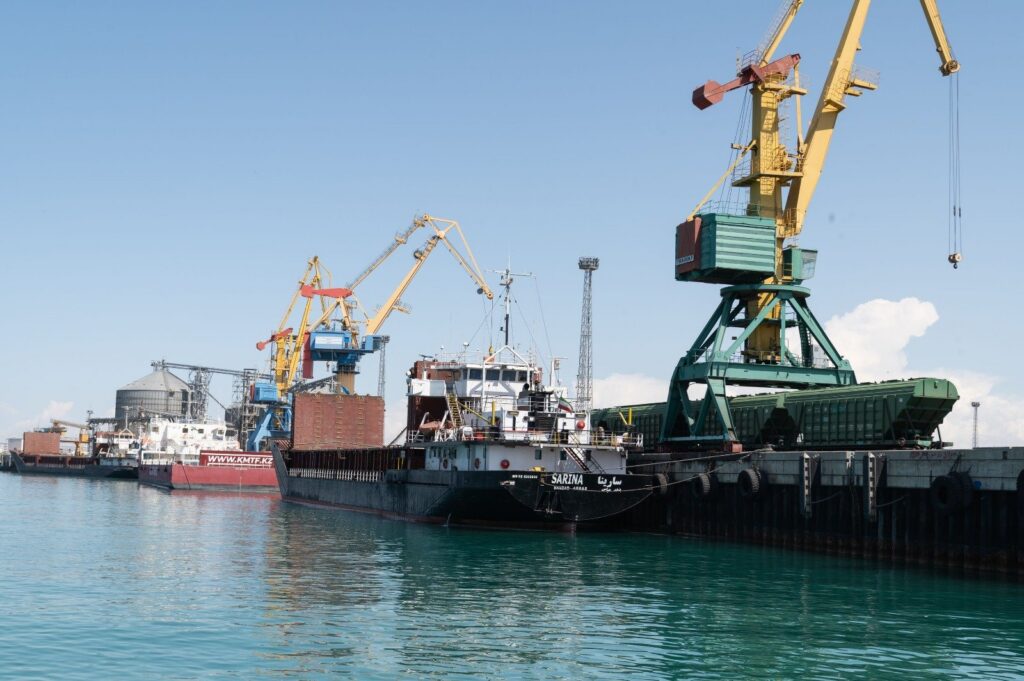
Kazakhstan’s national railway operator, Kazakhstan Temir Zholy (KTZ), is moving to build its own maritime fleet to expand the Trans-Caspian International Transport Route (TITR). Also known as the Middle Corridor, the TITR is a multimodal transport corridor linking China and Europe through Central Asia and the South Caucasus, offering an alternative to routes that pass through Russia. KTZ Express Shipping, a subsidiary of KTZ, has signed contracts for the construction of six general-purpose dry cargo container ships. Agreements have been concluded with China’s Jiangsu Haizhongzhou Shipping Industry Co., Ltd. for the construction of four vessels and with Azerbaijan’s Baku Shipyard for the construction of two. The vessels will be river-sea ships with a deadweight of up to 9,900 tons and a capacity of up to 537 TEUs, adapted for operations on both the Caspian and Black Sea routes. This is expected to support the integration of the maritime segment into the TITR’s multimodal logistics chain. The ships will be equipped with modern navigation systems in line with international requirements and environmental standards. Their safety, reliability, and environmental performance are expected to enhance their suitability for international routes and increase confidence among global shippers. The project is intended to give Kazakhstan a larger role in the TITR by establishing a sustainable maritime component of the route. Kazakhstan’s maritime transport sector has recorded steady growth in recent years. In 2025, maritime cargo volumes reached 8 million tons, a 7% increase compared to 2024. Container traffic through Kazakh seaports rose by 29% to 90,637 TEUs, while cargo volumes transported along the TITR increased by 36%. Under the country’s comprehensive maritime infrastructure development plan for 2024-2028, Kazakhstan intends to establish a major transport and logistics cluster based on the ports of Aktau and Kuryk. The plan includes expanding container handling capacity, developing cargo terminals and international shipping logistics, and reducing administrative barriers. By 2028, total cargo throughput at the ports is expected to increase by 50%, while container handling volumes are projected to triple. Plans are also in place to increase container traffic along the TITR, including the transit of 600 container trains from China through Kazakhstan this year. As previously reported by The Times of Central Asia, freight volumes transported along the Middle Corridor through Kazakhstan have grown more than five times over the past seven years, increasing from 0.8 million tonnes to 4.5 million tonnes annually.

Middle Corridor Countries Approve 2026 Plan, Focus on Digitalization and Container Growth

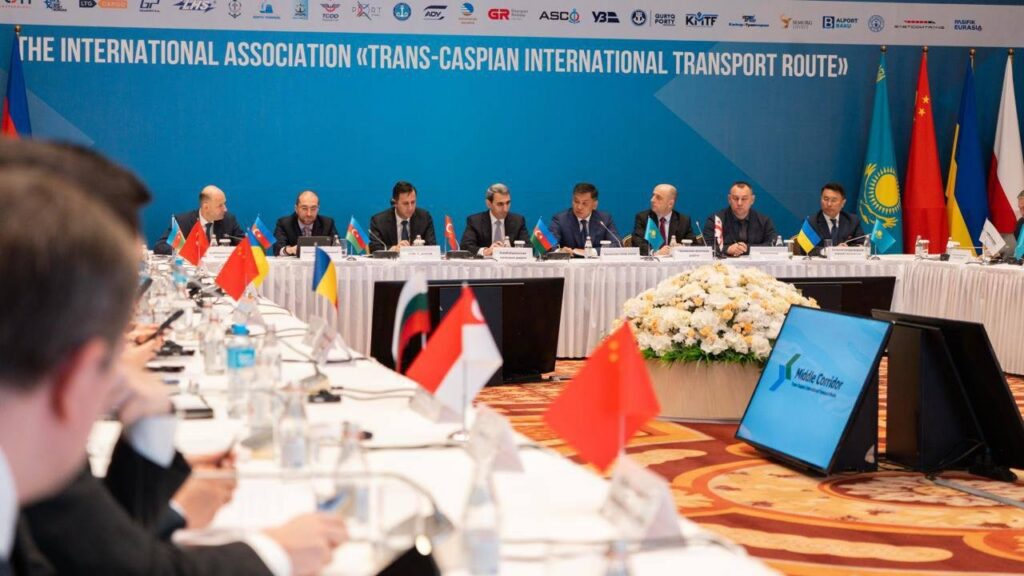
On April 24, Astana hosted a meeting of the Board and General Assembly of the international association “Trans-Caspian International Transport Route.” The Trans-Caspian International Transport Route (TITR), also known as the Middle Corridor, is a multimodal transport corridor linking China and Europe through Central Asia and the South Caucasus, offering an alternative to routes that pass through Russia. The meetings were attended by representatives of TITR member countries, Kazakhstan, China, Azerbaijan, Georgia, and Turkey, as well as participants from several European countries, including Ukraine, Bulgaria, and Romania, and international partners such as Singapore. The participating countries approved a detailed work plan for 2026, with a key focus on the digitalization of transport processes. Participants agreed to implement electronic document management using digital signatures and to establish direct data exchange between customs authorities and other stakeholders involved in cargo transportation. According to Kazakhstan's national rail company, Kazakhstan Temir Zholy (KTZ), these measures are expected to reduce transit times and improve transparency along the route. The plan also envisages an increase in container traffic, including the transit of 600 container trains from China through Kazakhstan this year. Coordination between ports and terminals on the Caspian Sea will also be strengthened. Overall, the plan is aimed at reinforcing the TITR as a key transit corridor between Asia and Europe. In the first quarter of 2026, Kazakhstan recorded a significant increase in container train traffic along the TITR, underscoring the country’s growing role in Eurasian logistics. A total of 125 container trains transited through Kazakhstan via the corridor, marking a 34.4% increase compared to the same period in 2025. As previously reported by The Times of Central Asia, freight volumes transported along the Middle Corridor through Kazakhstan have grown more than fivefold over the past seven years, increasing from 0.8 million tonnes to 4.5 million tonnes annually.

Istanbul Strait Rail Project to Boost Trade Along Trans-Caspian Transport Route

On March 31, the World Bank approved a $2 billion loan for the Istanbul North Rail Crossing Project (INRAIL), aimed at strengthening railway connectivity across the Istanbul Strait (Bosphorus) and reinforcing Türkiye’s role as a key logistics hub linking Europe, Asia, and the Middle East. With the Baku-Tbilisi-Kars railway, Turkey serves as a key node in the Trans-Caspian International Transport Route (TITR), also known as the Middle Corridor. The route connects China and Europe via Kazakhstan, the Caspian Sea, the South Caucasus, and Turkey. Turkey's major rail corridors passing through Istanbul, including the Middle Corridor, the Iraq Development Road, and the Turkey-EU corridor, are essential for international trade but currently face a significant bottleneck at the Bosphorus. INRAIL will involve the construction of a 127-kilometer electrified, high-capacity railway line providing a new overland rail crossing of the strait. The project will utilize the rail-ready Yavuz Sultan Selim Bridge and bypass central Istanbul, increasing both freight and passenger capacity while reducing logistics costs and improving reliability across national and intercontinental transport corridors, including the TITR. Once operational, rail freight capacity across the Bosphorus is expected to increase from approximately 3 million tons per year to as much as 50 million tons, significantly improving transit times, reliability, and predictability for freight operators. “By removing a critical rail bottleneck at the Istanbul Strait and enhancing the resilience and efficiency of rail infrastructure, Turkey is boosting its competitiveness and reinforcing its role as a logistics hub,” said Humberto Lopez, World Bank Country Director for Turkey. “INRAIL will also generate benefits for the wider region by connecting to international corridors such as the Middle Corridor and the Development Road, facilitating trade between Europe, Central Asia, and the Gulf.” The project aligns with Kazakhstan and Türkiye’s broader efforts to develop the Middle Corridor. In July 2025, Kazakhstan’s national railway operator, Kazakhstan Temir Zholy (KTZ), and TCDD Taşımacılık A.Ş. signed a cooperation agreement to enhance freight transportation along the TITR. The agreement aims to improve the route’s efficiency and competitiveness by launching regular rail services between Kazakhstan and Turkey, increasing freight volumes along the Baku-Tbilisi-Kars railway, and expanding cargo flows between China and Europe. KTZ has also held discussions with Mersin International Port, part of PSA International, on expanding cooperation to strengthen the Middle Corridor and develop more efficient multimodal logistics links between Asia and Europe. KTZ Chairman Talgat Aldybergenov reaffirmed both sides’ commitment to ensuring stable freight volumes and highlighted Mersin’s role as a strategic transshipment hub for the corridor. To further strengthen the logistics chain, Kazakhstan has proposed leveraging the potential of KPMC, a joint venture between KTZ and PSA International, which is already involved in developing multimodal services along the Xi’an-Istanbul route.