Kazakhstan’s national railway operator, Kazakhstan Temir Zholy (KTZ), is moving to build its own maritime fleet to expand the Trans-Caspian International Transport Route (TITR).
Also known as the Middle Corridor, the TITR is a multimodal transport corridor linking China and Europe through Central Asia and the South Caucasus, offering an alternative to routes that pass through Russia.
KTZ Express Shipping, a subsidiary of KTZ, has signed contracts for the construction of six general-purpose dry cargo container ships. Agreements have been concluded with China’s Jiangsu Haizhongzhou Shipping Industry Co., Ltd. for the construction of four vessels and with Azerbaijan’s Baku Shipyard for the construction of two.
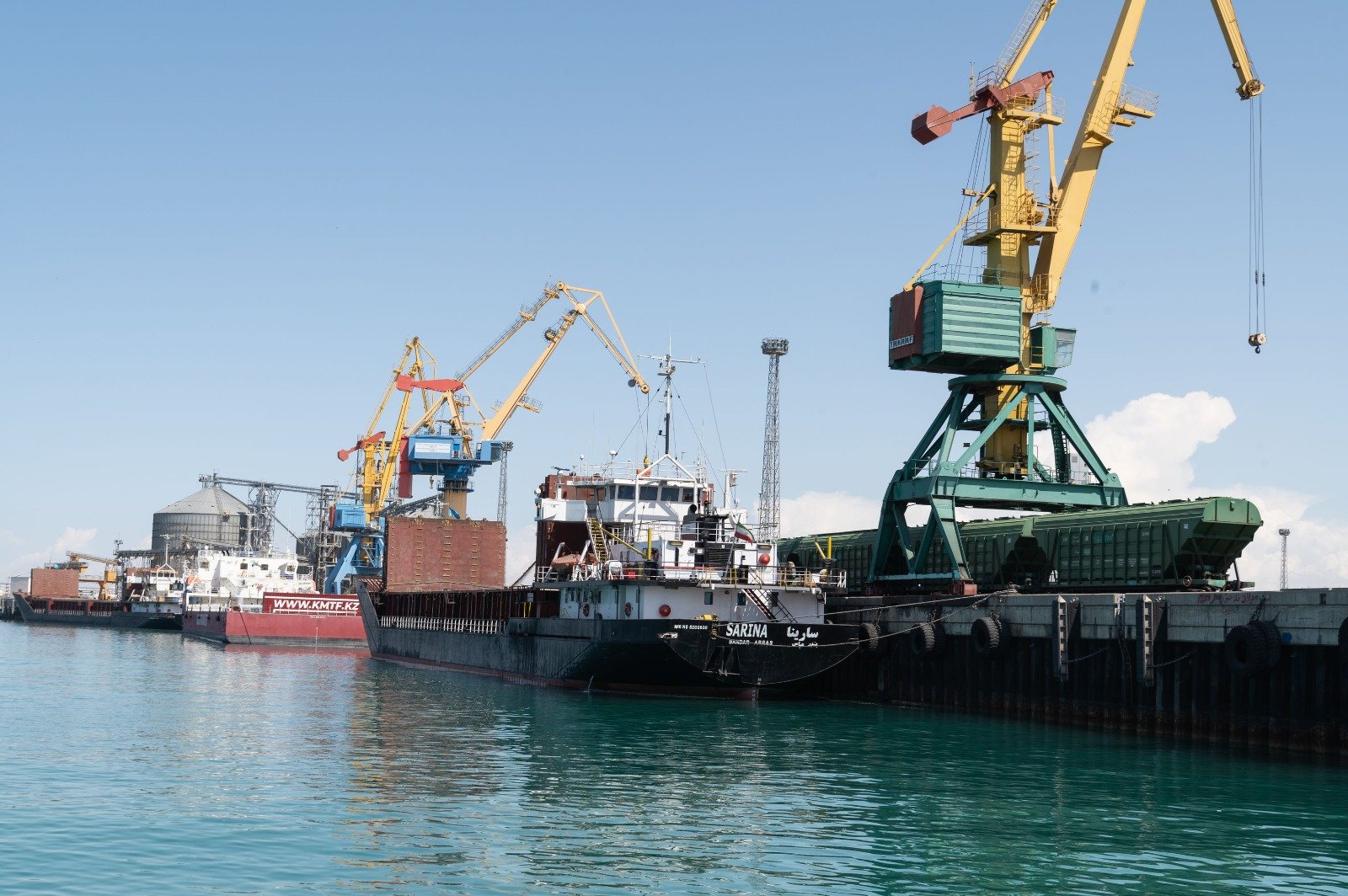
The vessels will be river-sea ships with a deadweight of up to 9,900 tons and a capacity of up to 537 TEUs, adapted for operations on both the Caspian and Black Sea routes. This is expected to support the integration of the maritime segment into the TITR’s multimodal logistics chain.
The ships will be equipped with modern navigation systems in line with international requirements and environmental standards. Their safety, reliability, and environmental performance are expected to enhance their suitability for international routes and increase confidence among global shippers.
The project is intended to give Kazakhstan a larger role in the TITR by establishing a sustainable maritime component of the route.
Kazakhstan’s maritime transport sector has recorded steady growth in recent years. In 2025, maritime cargo volumes reached 8 million tons, a 7% increase compared to 2024. Container traffic through Kazakh seaports rose by 29% to 90,637 TEUs, while cargo volumes transported along the TITR increased by 36%.
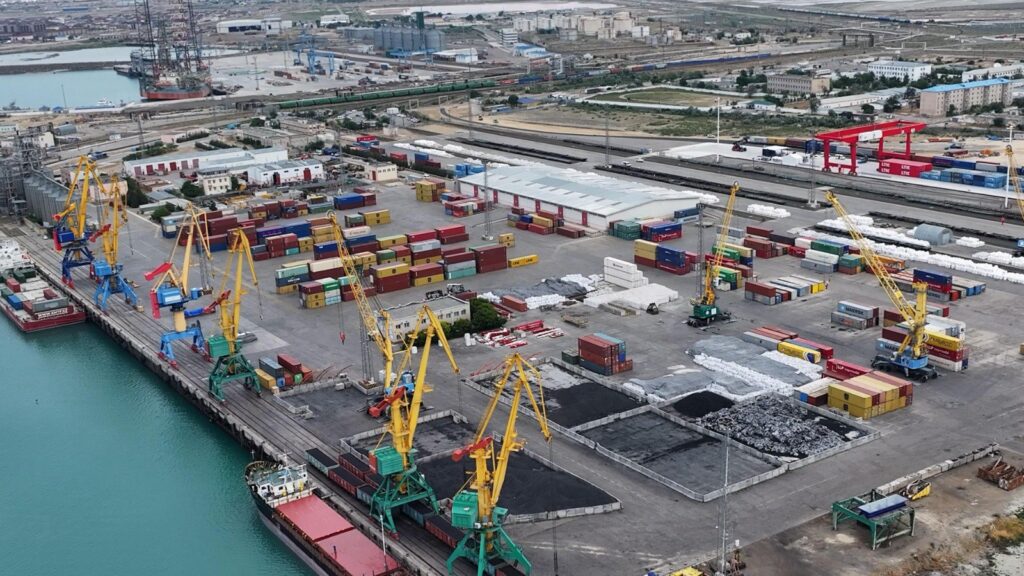
Under the country’s comprehensive maritime infrastructure development plan for 2024-2028, Kazakhstan intends to establish a major transport and logistics cluster based on the ports of Aktau and Kuryk. The plan includes expanding container handling capacity, developing cargo terminals and international shipping logistics, and reducing administrative barriers. By 2028, total cargo throughput at the ports is expected to increase by 50%, while container handling volumes are projected to triple.
Plans are also in place to increase container traffic along the TITR, including the transit of 600 container trains from China through Kazakhstan this year.
As previously reported by The Times of Central Asia, freight volumes transported along the Middle Corridor through Kazakhstan have grown more than five times over the past seven years, increasing from 0.8 million tonnes to 4.5 million tonnes annually.