• KZT/USD = 0.00218
  • TJS/USD = 0.10810
  • UZS/USD = 0.00009
  • TMT/USD = 0.29760
  • KZT/USD = 0.00218
  • TJS/USD = 0.10810
  • UZS/USD = 0.00009
  • TMT/USD = 0.29760
  • KZT/USD = 0.00218
  • TJS/USD = 0.10810
  • UZS/USD = 0.00009
  • TMT/USD = 0.29760
  • KZT/USD = 0.00218
  • TJS/USD = 0.10810
  • UZS/USD = 0.00009
  • TMT/USD = 0.29760
  • KZT/USD = 0.00218
  • TJS/USD = 0.10810
  • UZS/USD = 0.00009
  • TMT/USD = 0.29760
  • KZT/USD = 0.00218
  • TJS/USD = 0.10810
  • UZS/USD = 0.00009
  • TMT/USD = 0.29760
  • KZT/USD = 0.00218
  • TJS/USD = 0.10810
  • UZS/USD = 0.00009
  • TMT/USD = 0.29760
  • KZT/USD = 0.00218
  • TJS/USD = 0.10810
  • UZS/USD = 0.00009
  • TMT/USD = 0.29760
22 August 2026

Viewing results 1 - 6 of 519

Astana’s Long-Awaited LRT Project Set to Launch Next Year

Zhenis Kassymbek, the Akim (governor) of Kazakhstan’s capital Astana, has announced that the city’s first light rail transit (LRT) line will launch by the end of next year, marking a significant milestone in a 13-year-long construction project fraught with delays and controversies. The LRT project, envisioned as a high-speed transport system running on elevated tracks to bypass traffic, began construction in 2011. Initially, the line was slated for completion by 2017 to coincide with the EXPO international exhibition. It was intended to connect the Astana-Nurly Zhol railway station with the capital’s airport. While the railway station opened on time, the LRT project was halted in 2013 due to high costs and concerns over its financial viability. The project was revived in 2015 when Astana’s Akimat signed a construction deal with a consortium of Chinese companies, China Railway International Group Limited and Beijing State-Owned Assets Management Co., Ltd. However, further delays occurred when funds — amounting to over 80 billion tenge ($200 million at the time) — were frozen in the accounts of the now-defunct Bank of Astana. Construction began with the installation of support pillars, but the Chinese contractors abandoned the project due to funding issues. In 2019, Kazakhstan’s investigative authorities intervened. Talgat Ardan, the former head of Astana LRT, and Kanat Sultanbekov, an ex-deputy mayor of Astana, were accused of embezzling nearly 30 billion tenge. This included inflating project costs and awarding overpriced contracts. Both were sentenced in absentia to seven years in prison in May 2023. Despite initial skepticism from President Kassym-Jomart Tokayev, who questioned the project’s ridership potential given its 22-kilometer length and route, the decision was made to proceed. Former Akim Altay Kulginov argued that dismantling the incomplete infrastructure would cost more than completing it. Under Kassymbek, construction has progressed. “The first LRT trains will arrive in August or September next year. We expect to have 15 trains operational by fall, with technical testing by the end of 2024 and full service in early 2026,” Kassymbek stated during a briefing. The elevated tracks are nearing completion, with rail-laying in progress. Signal installation is set to begin in spring. The Akimat anticipates the line will serve approximately 20,000 passengers daily. The fare for LRT rides has yet to be finalized. Kassymbek announced that the pricing would remain affordable. However, he stopped short of providing specifics. In 2017, the proposed fare was 300 tenge per ride, three times the cost of a bus ticket at that time. Current bus fares in Astana range from 110 tenge for regular routes to 250 tenge for express routes. Given the LRT’s total project cost of $1.88 billion, fares significantly higher than bus rates may be needed to achieve profitability. Despite this, the LRT could address pressing issues, such as Astana’s daily traffic jams. Currently, buses are the only public transport option in the city. “We aim to expand roads, increase bridges, and enhance public transport to encourage residents to switch from private vehicles,” Kassymbek said. He also suggested that Turkestan and...
Transforming Kazakhstan’s Railways: Strategic Infrastructure for Regional and Global Connectivity

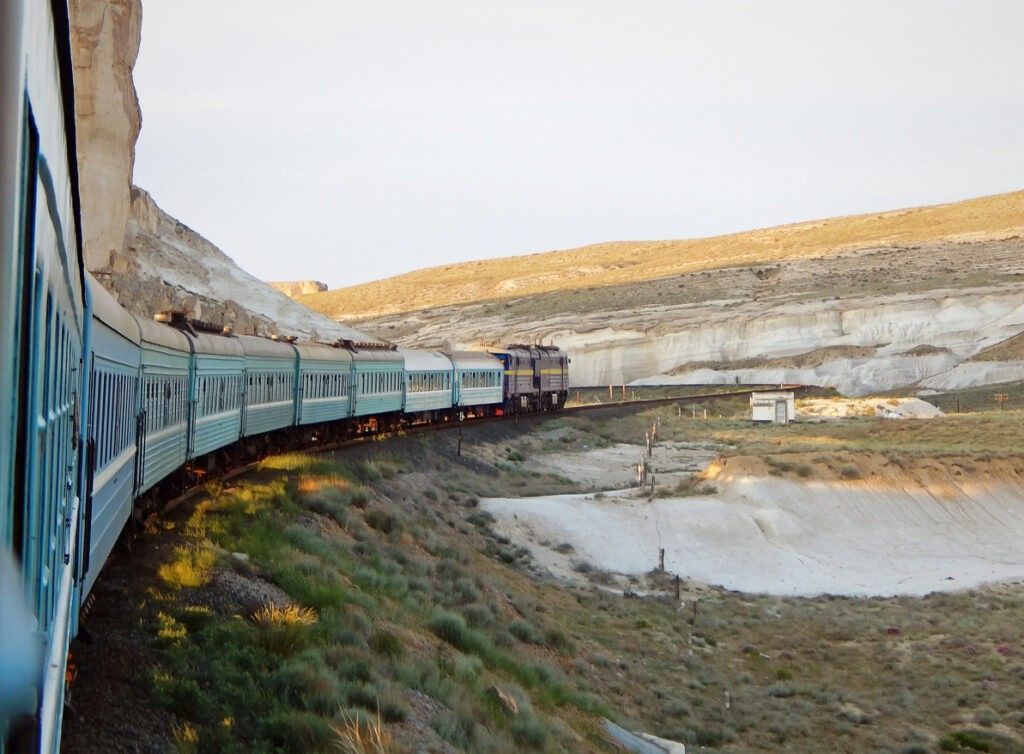
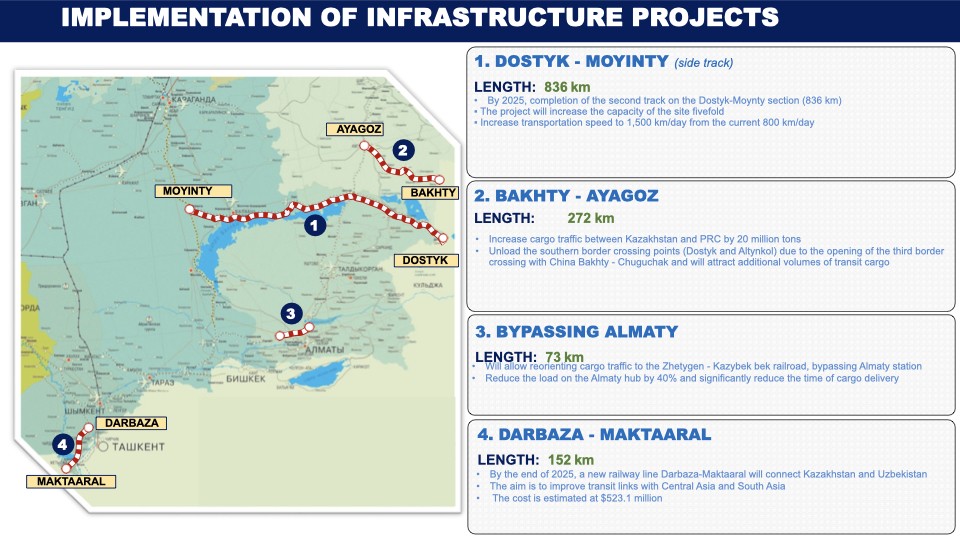
Kazakhstan’s rail network is a strategic national asset, vital for a country of its vast size and landlocked geography. Without direct access to the world’s oceans, railways serve as critical arteries for trade and transit. Under new geopolitical and logistical conditions, the importance of modernizing and expanding this network has become increasingly urgent. Spanning 21,000 kilometers, Kazakhstan’s railroads form the backbone of its transportation infrastructure. By 2030, the country plans to modernize 11,000 kilometers of highways and construct over 5,000 kilometers of new railways. Among these ambitious projects are the construction of second tracks on the Dostyk-Moyinty railway section, a bypass railway line around Almaty, and two new lines: Darbaza-Maktaaral and Bakhty-Ayagoz. Expanding Trade with China: Increased Cargo Traffic The Dostyk border station has become a key hub for exports to China and a vital transit point for East-West trade. In recent years, growing cargo volumes and limited capacity have placed immense pressure on its infrastructure. The Dostyk-Alashankou junction point, with a current capacity of 20 million tons annually, handled 15.2 million tons in the first 10 months of this year alone - a 15% increase compared to the same period last year. To address these challenges, construction of second railroad tracks on the Dostyk-Moyinty section began in November 2022. Part of the National Project: Strong Regions - Driver of the Country's Development, this project aims to increase the section’s capacity fivefold, from 12 to 60 train pairs per day. Transportation speeds between China and Europe are also set to improve significantly, from the current 800 kilometers per day to 1,500 kilometers per day. Official data indicates that 635 kilometers of the planned 836 kilometers have already been completed. The project involves 62 bridges, 242 pipelines, and a workforce of 24 construction companies and over 440 units of equipment. Completion is expected by late 2025. Private Investments Driving New Railway Lines Kazakhstan’s second major rail crossing with China, Altynkol station, has also reached its maximum capacity. Together with Dostyk, the two stations handle 28 million tons annually. This makes the development of the new 272-kilometer Bakhty-Ayagoz railway line essential. Connecting the border to the Semey-Aktogay section and the China-Europe corridor, the new line is expected to boost goods transportation to and from China by an additional 20 million tons. This project, realized under a public-private partnership model, will feature the construction of 11 stations, 47 bridges, 23 railroad overpasses, and eight highway overpasses. It will also include five pedestrian bridges and 16 observation structures, utilizing over 500,000 locally manufactured sleepers and 36,000 rails. Approximately 1,700 jobs will be created during the construction phase, with priority given to local residents. Alleviating Traffic in Almaty: A New Bypass Line The 73-kilometer bypass railway line around Almaty is set to increase cargo capacity by 17 million tons annually. By redirecting traffic to the Zhetygen-Kazybek Bey line, this project will reduce congestion at the Almaty junction by 40%. Faster delivery times for goods and passengers - up to 24 hours shorter - are among...

China to Transport Lithium-Ion Batteries Along TITR via Kazakhstan

This month marks a significant milestone in Kazakhstan-China transport cooperation with the test shipment of lithium-ion batteries from China via the Trans-Caspian International Transport Route (TITR). This major trade corridor links China to Europe through Kazakhstan and the Caucasus. The decision was announced following a meeting between Kazakhstan’s Minister of Transport Marat Karabayev and China’s Transport Minister Liu Wei in Beijing on December 5. Strengthening TITR Cooperation The two ministers agreed on initiatives to further develop the TITR, including the creation of a permanent working group to facilitate the seamless flow of goods. They also highlighted advancements in the digitization of transport operations. Truckers can now receive permit forms within an hour through a newly implemented digital platform, streamlining international road transportation. The TITR is seeing rapidly growing freight traffic. According to Kazakhstan’s Ministry of Transport, road freight volumes with China have more than doubled annually. Before 2023, Kazakh truckers made approximately 50,000 trips per year. In 2024, this figure is projected to reach 230,000 trips. Expanding Multimodal Transport The meeting also explored the potential for developing cargo transportation via transboundary rivers between the two nations. Both ministers noted a surge in rail and road freight volumes, as well as transit transportation through the Middle Corridor (another name for the TITR). From January to October 2024, rail freight between Kazakhstan and China increased by 13%, reaching 26.6 million tons. Road freight volumes soared by 60% in the third quarter alone, amounting to 1.9 million tons. Meanwhile, cargo transportation from China to Europe via the TITR has experienced explosive growth. In 2024, the volume surpassed 27,000 twenty-foot containers, a 25-fold increase compared to the same period in 2023.

Kyrgyzstan’s Airlines Could Be Removed from EU Blacklist in 2025

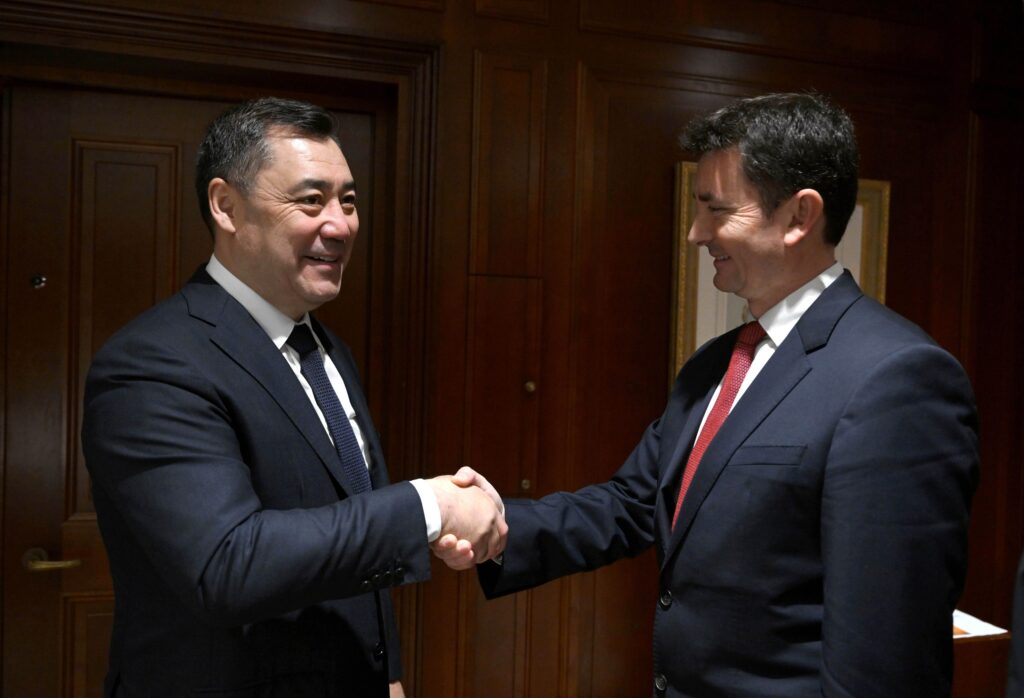
Kyrgyzstan’s airlines may soon achieve a significant milestone by being removed from the European Union’s Air Safety List, which currently bans them from operating flights to Europe. Kyrgyz President Sadyr Japarov made this announcement on November 27 during a meeting in Berlin with Johan Pelissier, the head of Airbus Europe, where they discussed the future of Kyrgyzstan’s aviation sector. Japarov emphasized the government’s concerted efforts to enhance aviation safety, implement international standards, and modernize infrastructure. He expressed optimism that these measures have significantly improved the likelihood of lifting restrictions on Kyrgyz airlines. As part of these developments, Japarov highlighted the government’s support for the national carrier, Asman Airlines. Under an initial agreement with Airbus, the airline plans to lease two A320 or A321 aircraft to establish direct routes to Europe, including destinations such as Paris, Berlin, and London. This initiative marks a critical step toward integrating Kyrgyzstan into the global aviation network. Looking ahead, Kyrgyzstan aims to expand its fleet and deepen cooperation with Airbus, fostering stronger connections with the international aviation community. At the conclusion of the meeting, Japarov extended an invitation to Pelissier to visit Kyrgyzstan for further discussions with local aviation representatives. Background: A Longstanding Ban Kyrgyz airlines was added to the EU’s Air Safety List in 2006 after failing to meet international safety standards. This decision, based on assessments that the country’s legal framework did not adequately ensure flight safety, has prohibited Kyrgyz airlines from flying to EU destinations for over 18 years. The ban has had a profound impact on the aviation sector, limiting its operational scope and market reach. Efforts to address these shortcomings represent a turning point, with the potential removal from the blacklist signaling a new chapter for Kyrgyz aviation. If successful, this move could open up significant opportunities for growth and international collaboration.

Kazakhstan and Russia Strengthen Cooperation on North-South Transport Corridor

Kazakhstan Temir Zholy (KTZ), the country’s national railway company, and Russian Railways have signed a landmark agreement aimed at modernizing railway infrastructure at nine border stations, increasing capacity, and developing a unified digital system for transportation and cross-border operations. The agreement was signed on November 27 during Russian President Vladimir Putin's state visit to Kazakhstan. Enhancing Key Trade Corridors This cooperation seeks to boost the efficiency of trans-Eurasian transport corridors, with a particular focus on increasing cargo volumes along the East-West and North-South routes. The North-South corridor, connecting Kazakhstan, Russia, Turkmenistan, and Iran, has an annual capacity of 10 million tons of cargo. So far, 1.8 million tons have been transported along this route in 2024, and plans are underway to double its capacity to 20 million tons annually. On November 26, Kazakhstan’s Minister of Transport, Marat Karabayev, emphasized the strategic importance of the North-South corridor. In July, Kazakhstan agreed on a roadmap with Iran, Turkmenistan, and Russia for the synchronized development of this corridor. To attract cargo flow, Kazakhstan has introduced special transit tariff discounts of 50%. New Agreements and Digital Connectivity During Putin’s visit, another significant agreement was signed between KTZ, Xi'an Free Trade Port Construction and Operation Co., Ltd. (China), and JSC Slavtrans-Service (Russia). The deal focuses on constructing the CRK Terminal, a transport and logistics hub at the Selyatino railway station in the Moscow region. Additionally, the three parties agreed to jointly use the Unified Digital Platform along the Xi'an (China) - Dostyk/Altynkol (Kazakhstan) - Selyatino (Russia) route. The CRK Terminal and Digital Platform are expected to enhance cargo transportation efficiency and e-commerce between China, Kazakhstan, and Russia. Boosting Regional Logistics Kazakhstan Temir Zholy also signed a memorandum with the Russian transport and logistics group FinInvest LLC to construct a multimodal transport and logistics center in Astana. This center aims to increase the transit of Russian goods through Kazakhstan, further solidifying the country’s position as a regional logistics hub.

The Geopolitical Battle for Control Over Transportation Routes in Central Asia

Russia and Kazakhstan may be nominal allies, but their geoeconomic interests are not always aligned. As Astana seeks to develop the Middle Corridor – a transportation link connecting China and Europe through Kazakhstan, the Caspian Sea, Azerbaijan, and Georgia, bypassing Russia – Moscow reportedly aims to build a trade and logistics route that would connect Russia and Kyrgyzstan, thereby circumventing Kazakhstan.  While various regional actors and international institutions actively invest in the Middle Corridor, also known as the Trans-Caspian International Transportation Route (TITR), a potential route linking Russia and Kyrgyzstan, through Uzbekistan and Turkmenistan, remains merely an idea. From the geopolitical perspective, the TITR is seen as an alternative to reach European and international markets and bypass Russia. But what is the primary goal of the Russia-Kyrgyzstan route? Although both Kyrgyzstan and Kazakhstan are members of the Russian-led Eurasian Economic Union, queues of trucks at the Kyrgyz-Kazakh state border seem to have become a norm. Bishkek accuses Kazakhstan of “artificially creating obstacles at the border to weaken competition from Kyrgyzstan”, while the Kazakh authorities claim that Kyrgyz truckers are “unwilling to comply with Astana’s requirements and submit fraudulent documents for cargo.” Since Kyrgyzstan’s main connection with Russia – the major market for its agricultural products – goes through Kazakhstan, it is Astana that has the upper hand over Bishkek. From a purely economic perspective, a new route, including sea transport across the Caspian Sea, would enable faster delivery of vegetables, fruits, as well as other goods from Kyrgyzstan to Russia. However, it remains highly uncertain if Uzbekistan and Turkmenistan, as transit countries, are genuinely interested in this project. “Both nations are far more interested in East-West trade, actual supply chain relocations into the region, and new gas contracts with the West,” Samuel Doveri Vesterbye, Managing Director of the European Neighborhood Council, told The Times of Central Asia. In his view, a Kyrgyzstan-Russia corridor would offer a limited amount of trade, due to the sanctions the West imposed on Moscow over its actions in Ukraine. But in spite of that, Kyrgyzstan, like all countries, tries to be part of any connectivity corridor. “There is a lot of ‘corridor competition’ at the moment. Most of it is bluff. It is important to look at which projects are being built and how much investments is going into them. The Russia-Kyrgyzstan corridor, at present, is more hot air than reality. There is no funding from the United States, the European Union, China or Turkey. Also, major players like the European Bank for Reconstruction and Development (EBRD) and the European Investment Bank (EIB) do not seem interested in funding the construction of this route. Therefore, its lifespan and potential look rather limited,” Vesterbye stressed. European institutions seem interested in further development of the Trans-Caspian International Transportation Route. From the European Union’s perspective, Russia’s invasion of Ukraine has increased the need to find alternative, reliable, safe and efficient trade routes between Europe and Asia. That is why Brussels is reportedly willing to invest €10 billion ($10.5...