• KGS/USD = 0.01144 0%
  • KZT/USD = 0.00202 0%
  • TJS/USD = 0.10399 -0.29%
  • UZS/USD = 0.00008 0%
  • TMT/USD = 0.28490 0%
  • KGS/USD = 0.01144 0%
  • KZT/USD = 0.00202 0%
  • TJS/USD = 0.10399 -0.29%
  • UZS/USD = 0.00008 0%
  • TMT/USD = 0.28490 0%
  • KGS/USD = 0.01144 0%
  • KZT/USD = 0.00202 0%
  • TJS/USD = 0.10399 -0.29%
  • UZS/USD = 0.00008 0%
  • TMT/USD = 0.28490 0%
  • KGS/USD = 0.01144 0%
  • KZT/USD = 0.00202 0%
  • TJS/USD = 0.10399 -0.29%
  • UZS/USD = 0.00008 0%
  • TMT/USD = 0.28490 0%
  • KGS/USD = 0.01144 0%
  • KZT/USD = 0.00202 0%
  • TJS/USD = 0.10399 -0.29%
  • UZS/USD = 0.00008 0%
  • TMT/USD = 0.28490 0%
  • KGS/USD = 0.01144 0%
  • KZT/USD = 0.00202 0%
  • TJS/USD = 0.10399 -0.29%
  • UZS/USD = 0.00008 0%
  • TMT/USD = 0.28490 0%
  • KGS/USD = 0.01144 0%
  • KZT/USD = 0.00202 0%
  • TJS/USD = 0.10399 -0.29%
  • UZS/USD = 0.00008 0%
  • TMT/USD = 0.28490 0%
  • KGS/USD = 0.01144 0%
  • KZT/USD = 0.00202 0%
  • TJS/USD = 0.10399 -0.29%
  • UZS/USD = 0.00008 0%
  • TMT/USD = 0.28490 0%

Viewing results 1 - 6 of 12

Opinion: Mirziyoyev in Washington – New Deals Expected Amidst Peace Diplomacy

The President of Uzbekistan, Shavkat Mirziyoyev, has arrived on a working visit to Washington to participate in the inaugural meeting of President Trump’s Board of Peace on February 19, 2026, alongside the Presidents of Kazakhstan, Azerbaijan, and other heads of state. Against a backdrop of deep geopolitical tensions and raging conflicts across the world, Mirziyoyev’s second visit to the White House in less than four months suggests that U.S.-Uzbekistan relations are at their strongest in decades. Mirziyoyev will be joined by Uzbekistan’s Foreign Minister, Minister of Investments, Industry and Trade, and other high-ranking officials. Uzbek Ambassador to the U.S. Sidikov and his team have been working around-the-clock for over two weeks, gearing up for the Trump–Mirziyoyev meeting. President Mirziyoyev’s objective will be to elevate U.S.-Uzbek relations from a constructive relationship to a fully functional, deal-oriented partnership with a focus on capital flows and bilateral trade.  In addition to his desire for regional stability in West Asia, his signing up for the Board of Peace should be understood as indicating his desire to advance trade and investment and flows into Uzbekistan. The Uzbeks are keen to nail down new money and capital guarantees to fund infrastructure along the U.S.-brokered “Trump Route for International Peace and Prosperity,” aka, the Zangezur Corridor between Armenia and Azerbaijan (TRIPP) – a roughly 27-mile-long piece of land that links Europe to Central Asia and beyond through the Caucasus. TRIPP matters to Trump because it advances two goals at once: stabilizing the South Caucasus while more fully integrating U.S. trade with Uzbekistan and the Trans-Caspian International Transport Route (TITR)—a multimodal, 4,000 km transport network connecting China and East Asia with Europe via Kazakhstan, the Caspian Sea, Azerbaijan, Georgia, and Turkey. Apart from the issues on the Board of Peace agenda, Mirziyoyev will push for ironclad U.S. commitments and cold, hard cash for transport corridors and their downstream beneficiaries. Two big reasons driving Mirziyoyev ‘s thinking: first, Uzbekistan is one of only two double-landlocked countries in the world, the other being Liechtenstein—and second, Trump’s desire to nail down a peace agreement between Armenia and Azerbaijan, thereby resolving a long-standing territorial dispute that has taken thousands of lives. Mirziyoyev knows that Trump sees TRIPP as a path to lasting peace and regional prosperity across the broader region, which fits into the Board of Peace narrative. Trump has referenced TRIPP repeatedly over the past year, and Mirziyoyev is well aware of this.  At UNGA last September 23, 2025, Trump said: "President Mirziyoyev is a terrific leader, and with this TRIPP corridor, Uzbekistan is going to see massive trade flowing through – it's going to connect them directly to new markets without all the old hassles." And as Trump said on November 7, 2025, at the C5+1 Summit in Washington: "I've got great respect for President Mirziyoyev – he's doing amazing things in Uzbekistan. The Trump Route, i.e., the TRIPP, is perfect for them; it's going to cut transit times and costs, making Uzbekistan a powerhouse in regional trade." Mirziyoyev is paying...

TRIPP and the Middle Corridor After Vance

U.S. Vice President J.D. Vance’s Armenia and Azerbaijan tour is being sold as a “peace dividend” for the South Caucasus, but for Central Asia, the significance is the infrastructure potential of the Trump Route for International Peace and Prosperity (TRIPP). Vance’s trip is another move in positioning the new Caucasus transit route for the Middle Corridor. His visit necessarily focuses on the Armenia–Azerbaijan fix, but recent diplomatic context makes clear that it is at least equally a Central Asia to Europe proposition. Current constraints on Trans-Caspian connectivity have been the shortage of dependable shipping capacity across the Caspian, port access, and border processing times. As the European Commission pointed out last week, traffic has surged since 2022, but the next jump depends on targeted investment and practical fixes along the route. The Middle Corridor’s Central Asian Axis through Kazakhstan and Uzbekistan Kazakhstan’s recent moves treat the bottlenecks as practical engineering and scheduling problems. The dredging project at Kuryk aims to deepen the port approach channel to five meters to support year-round navigation. Work is scheduled for early 2026 and backed by ERSAI Caspian Contractor LLC, a joint venture between Saipem and the Kazakhstan-based business group ERC Holdings. ERSAI is a major industrial port and fabrication yard operator specializing in offshore construction, logistics, and port services in the Caspian Sea. The dredging project is tied to broader terminal and shipyard expansion designed to create a key industrial hub. Shipping capacity is the other half of that story. A plan reported late last year envisages six ferries on the Kuryk–Alat line, with the first two entering service in the first half of 2026 and additional vessels added through 2028. Even if timelines slip, the point is to create a predictable schedule. Uzbekistan’s connectivity push has been running on two tracks at once: east to west via the Caspian, and southward toward ports beyond Central Asia. In Washington, a delegation from Tashkent, led by Foreign Minister Bakhtiyor Saidov, a week ago signed a memorandum with the United States on critical minerals and rare earths. This move treats extraction and processing as a supply-chain partnership rather than a one-off investment pitch. At the same time, Uzbekistan has been pushing rule-making with corridor partners, not waiting for outsiders to do it. On February 10, Azerbaijan, Turkmenistan, Uzbekistan, and Georgia signed a protocol covering digitalization and freight development along the Middle Corridor, including shared methods for tracking delays and pinch points. This is in line with the necessary streamlining of paperwork. TRIPP as the South Caucasus Link for Central Asia TRIPP is meant to make the Caucasus segment less fragile by adding a second path, other than the recently renovated and expanded Baku–Tbilisi–Kars railway route. The U.S-backing and institutional presence are meant to create confidence and reliability. Armenia’s own published implementation framework describes a TRIPP Development Company with an initial 49-year development term and a proposed 74% U.S. share, while stating that Armenian sovereignty, law enforcement, customs, and taxation authority remain intact. This satisfies domestic Armenian...

B5+1 in Bishkek: Business at the Center of Regional Integration Strategy

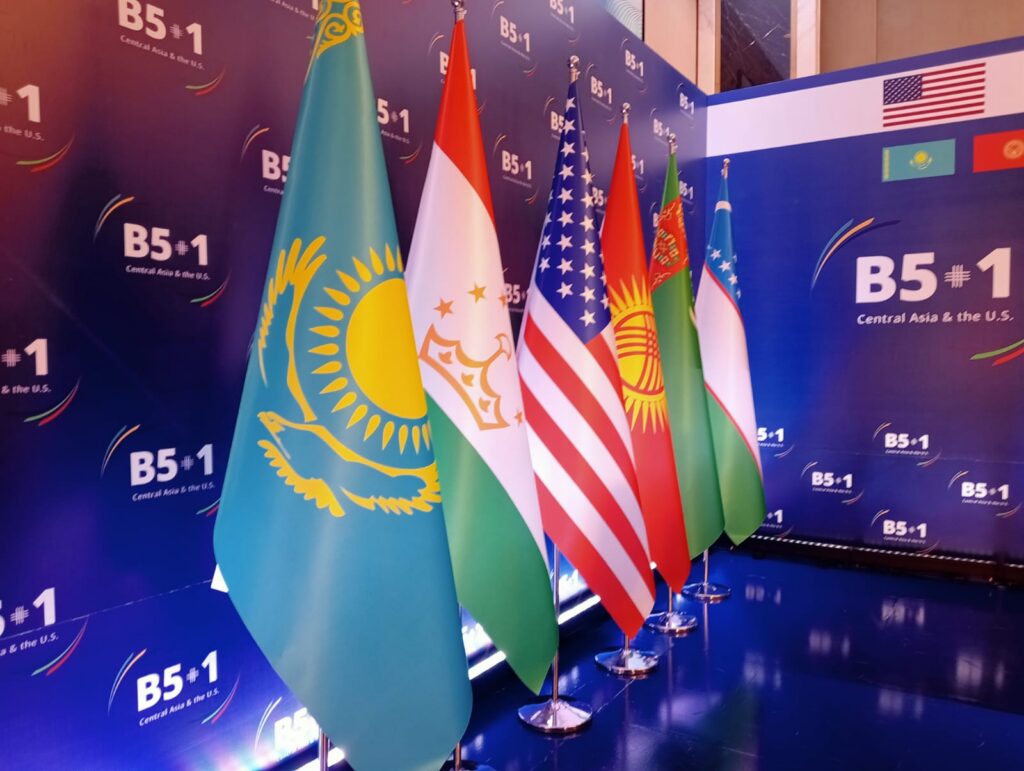
A two-day B5+1 business forum is underway in Bishkek, bringing together government officials from Central Asian countries, regional business leaders, and a U.S. delegation. Once viewed as a business extension of the C5+1 diplomatic dialogue, participants now describe the format as evolving into an independent and pragmatic economic platform. The forum is organized by the Center for International Private Enterprise (CIPE), in cooperation with the Cabinet of Ministers of Kyrgyzstan, under the IBECA program supported by the U.S. Department of State. A defining feature of this year’s forum is the size and prominence of the U.S. business delegation. More than 50 representatives from major corporations, which, according to official documents, include Boeing, GE Healthcare, Nasdaq, Abbott, Pfizer, Honeywell, Coca-Cola Company, Mastercard, FedEx, Apple, Wabtec, and Franklin Templeton, have convened in Bishkek. Discussions are structured around panel sessions and working groups focusing on key sectors: transport and logistics, agriculture, e-commerce, information technology, and critical mineral extraction. U.S. Special Envoy for South and Central Asia Sergio Gor stated he has arrived in Bishkek with a “clear message from Donald Trump.” He emphasized that Central Asia is among the top foreign policy priorities of the current U.S. administration. At a press conference, Gor underlined a strategic shift away from traditional intergovernmental agreements toward support for private enterprise and the development of commercially viable projects. “The U.S. government is ready to expand its tools for supporting investment cooperation, and today's discussion is only the first step toward further joint development,” he said. Focus on Regional Connectivity Transport infrastructure and regional connectivity were major themes on the opening day of the forum. Gor highlighted the U.S.-backed TRIPP initiative, which aims to establish a transport corridor through the South Caucasus linking Central Asia to Western markets. He argued that expanding alternative trade routes would support deeper economic integration within the region and boost its position in global trade networks. Forum participants echoed this sentiment, stressing that major international investors are increasingly evaluating Central Asia not as isolated national markets but as a single economic space. Representatives from Central Asian governments noted that the region’s aggregated potential, in logistics, natural resources, and consumer demand, is what attracts large multinationals. Kazakhstan’s Minister of Industry, Yersayin Nagaspayev, said over 600 American companies are currently operating in Kazakhstan, with many managing regional operations from within the country. “Our shared goal is to position Central Asia as a reliable, competitive, and attractive region for long-term business cooperation,” he stated. Redefining the Role of Business in Governance Kyrgyzstan’s Minister of Economy, Bakyt Sydykov, emphasized that the B5+1 platform is reshaping the nature of business-state interaction. “Today, business is not just a participant in the process, but a full-fledged co-author of economic reforms,” he said. He noted that the working groups had proposed recommendations in line with Kyrgyzstan’s ongoing reform agenda. These include reducing administrative barriers, digitizing public services, and improving access to finance for small and medium-sized enterprises. Toward a New Geopolitical Self-Image The forum in Bishkek also reflected a broader regional...

Kazakhstan, Uzbekistan, and Azerbaijan Join Trump-Initiated Board of Peace

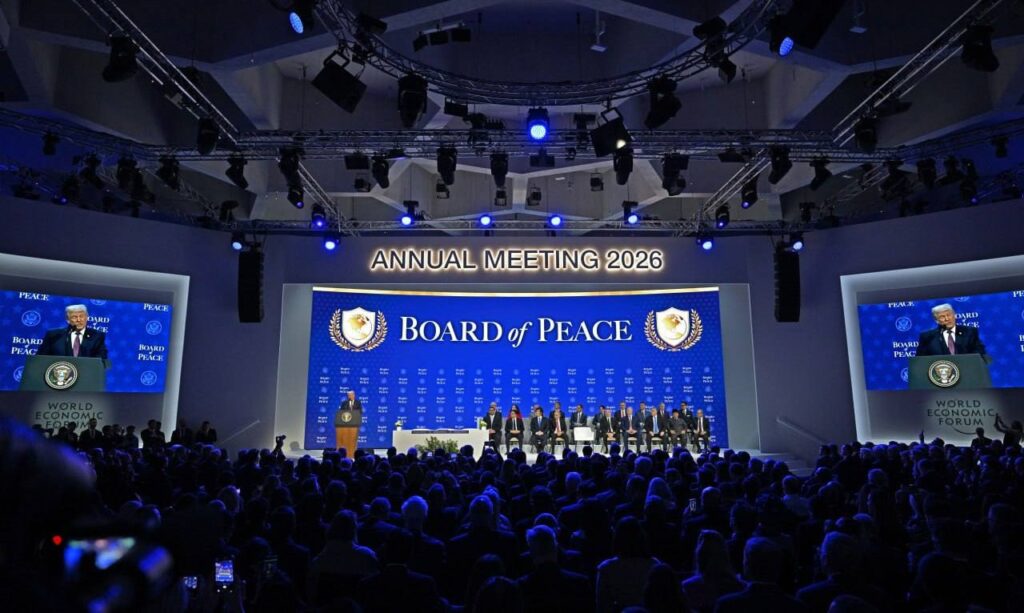
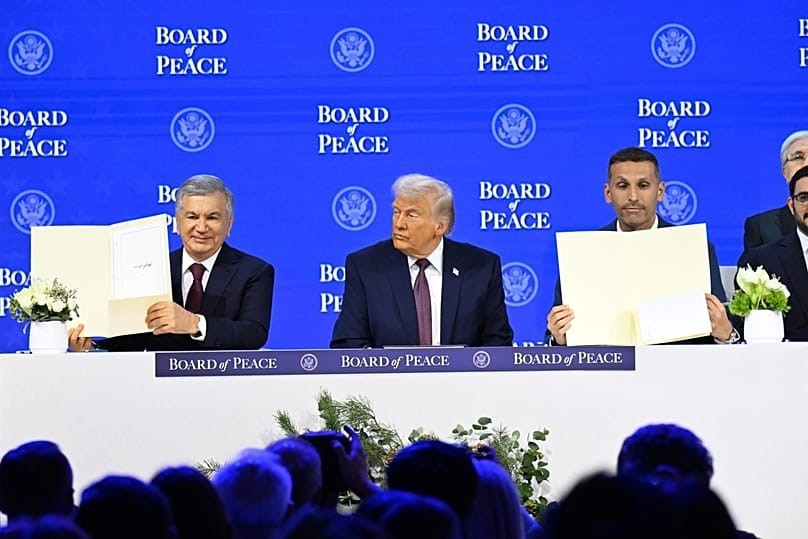
A new international organization, the Board of Peace, was formally established yesterday on the initiative of U.S. President Donald Trump. The charter for the board was signed on the sidelines of the World Economic Forum in Davos by representatives from 19 countries. Joining Kazakhstan and Uzbekistan as founding signatories, the other parties are Argentina, Armenia, Azerbaijan, Bahrain, Bulgaria, Hungary, Indonesia, Jordan, Qatar, Saudi Arabia, Turkey, the United Arab Emirates, Morocco, Mongolia, Pakistan, Kosovo, and Vietnam. The United States is not counted among the 19 signatories, acting instead as the initiative’s convener and chair. The Board of Peace is designed as a consultative platform rather than a treaty-based organization, with no enforcement powers and voluntary participation by member states. Following the signing, a comprehensive development plan for the Gaza Strip was unveiled, which envisions transforming the enclave into a regional economic hub by 2035, with a projected GDP of over $10 billion under the proposal. The plan includes restoring water, electricity, sewage systems, and hospitals, creating jobs, and developing coastal tourism. The concept was presented by entrepreneur Jared Kushner, Trump’s son-in-law. Kushner will serve on the Board of Peace’s executive board, alongside U.S. Secretary of State Marco Rubio, Special Envoy Steve Witkoff, World Bank President Ajay Banga, and former British Prime Minister Tony Blair, among others. The inclusion of Kazakhstan and Uzbekistan, the two largest economies in Central Asia, as founding members underscores their growing role in global diplomacy. Azerbaijan, which has recently expressed interest in joining the Central Asia-focused C5 regional format, also signed the charter. Separately, observers have begun referring to the growing cooperation between Central Asia and Azerbaijan as the “C6,” which could pave the way for greater collaboration on the development of the Trans-Caspian International Transport Route, including the Zangezur Corridor through Armenia. [caption id="attachment_42672" align="aligncenter" width="1280"] Image: president.uz[/caption] Uzbekistan’s participation reflects Tashkent’s increasingly active multi-vector foreign policy under President Shavkat Mirziyoyev, which has sought to expand the country’s diplomatic footprint beyond its immediate neighborhood. In recent years, Uzbekistan has stepped up engagement with the United States, the European Union, and the Middle East, while positioning itself as a pragmatic regional actor on development, connectivity, and post-conflict reconstruction initiatives. During the signing ceremony, President Kassym-Jomart Tokayev of Kazakhstan and Trump reportedly had a brief but cordial exchange. In a statement to the press, Ruslan Zheldibay, spokesperson for the Kazakh president, said Tokayev pointed out that Kazakhstan’s accession to the Abraham Accords was listed as item 177 in a document titled 365 Victories of President Donald Trump in 365 Days, distributed at the Davos Forum. Tokayev also wished Trump success in pursuing a “common sense” domestic policy. Trump, in turn, thanked Tokayev for supporting the Board of Peace initiative. [caption id="attachment_42673" align="aligncenter" width="2560"] Image: Akorda.kz[/caption] The press service of Akorda, the presidential residence of Kazakhstan, later clarified that joining the Board of Peace is based on a sovereign decision and entails a standard three-year term. Participation does not require a financial contribution, though the charter allows member states...