• KGS/USD = 0.01144 0%
  • KZT/USD = 0.00202 0%
  • TJS/USD = 0.10618 -0.28%
  • UZS/USD = 0.00008 0%
  • TMT/USD = 0.28571 0%
  • KGS/USD = 0.01144 0%
  • KZT/USD = 0.00202 0%
  • TJS/USD = 0.10618 -0.28%
  • UZS/USD = 0.00008 0%
  • TMT/USD = 0.28571 0%
  • KGS/USD = 0.01144 0%
  • KZT/USD = 0.00202 0%
  • TJS/USD = 0.10618 -0.28%
  • UZS/USD = 0.00008 0%
  • TMT/USD = 0.28571 0%
  • KGS/USD = 0.01144 0%
  • KZT/USD = 0.00202 0%
  • TJS/USD = 0.10618 -0.28%
  • UZS/USD = 0.00008 0%
  • TMT/USD = 0.28571 0%
  • KGS/USD = 0.01144 0%
  • KZT/USD = 0.00202 0%
  • TJS/USD = 0.10618 -0.28%
  • UZS/USD = 0.00008 0%
  • TMT/USD = 0.28571 0%
  • KGS/USD = 0.01144 0%
  • KZT/USD = 0.00202 0%
  • TJS/USD = 0.10618 -0.28%
  • UZS/USD = 0.00008 0%
  • TMT/USD = 0.28571 0%
  • KGS/USD = 0.01144 0%
  • KZT/USD = 0.00202 0%
  • TJS/USD = 0.10618 -0.28%
  • UZS/USD = 0.00008 0%
  • TMT/USD = 0.28571 0%
  • KGS/USD = 0.01144 0%
  • KZT/USD = 0.00202 0%
  • TJS/USD = 0.10618 -0.28%
  • UZS/USD = 0.00008 0%
  • TMT/USD = 0.28571 0%
12 February 2026

Viewing results 1 - 6 of 16

Breaking into Project Vault: A U.S. Role for Central Asia’s Strategic Minerals

The Trump Administration has decided to go head-to-head with Beijing to secure an independent supply chain for critical minerals and insulate U.S. industries from supply shocks. Among many initiatives, the United States launched Project Vault on February 2 to establish a U.S. Strategic Critical Minerals Reserve. The public-private stockpile is expected to secure essential minerals and metals for U.S. national security purposes and high-technology industries. The effort formalizes the U.S. strategy to diversify critical mineral supply chains away from rival China and, in the process, harness broader global capacity. As part of this effort, mineral-rich Central Asia is already factoring heavily in U.S. foreign and economic policy thinking. Participating in the front row of the 2026 Critical Minerals Summit, Kazakhstan and Uzbekistan were invited to engage in Washington’s global effort to build resilient global supply chains. But Project Vault is a critical and separate component of the administration’s focus. Formally approved by the Export-Import Bank of the United States (EXIM) on February 2, Project Vault will be backed with up to $10 billion in long-term financing and an additional $2 billion in private sector participation. In sites across the country, the initiative will establish stores of critical minerals and rare earth elements essential for aerospace, defense, semiconductors, advanced manufacturing, renewables, and electric vehicles. The stockpile’s structure will be operated as a public-private partnership that enables manufacturers, trading firms, and private capital providers to jointly participate. Rare earths, copper, lithium, titanium, scandium, gallium, and germanium are all key minerals highlighted by the U.S. Department of the Interior that underpin modern technologies and demonstrate U.S. vulnerability to supply chain disruptions. Why a Strategic Mineral Reserve? The initiative is a direct response to perceived risks posed by China’s relative control of global critical mineral supply chains and markets, as well as Beijing’s use of trade restrictions, protectionism, and the weaponization of access to certain critical minerals. China controls a commanding share of the mining, refining, and processing of rare earths and related materials. Due to years of strategic planning and investment, Beijing has leveraged state subsidies and pricing controls to develop and secure between 80%-100% of rare earth processing capacities that have dominated international markets and disincentivized competitors for decades. Past export controls and export-license restrictions imposed by Beijing have underscored how critical mineral supply can become a tool of geopolitical leverage. China has at times restricted rare earth exports to Japan, Sweden and the United States in what is defined by many as supply-chain protectionism. Such actions can disrupt U.S. production for industries that rely on stable supplies to manufacture semiconductors, defense systems, and clean energy technologies. Project Vault is, therefore, conceived not merely as a reserve but as a mechanism to stabilize U.S. markets, to reduce reliance on China, and to signal a long-term commitment to diversified supply chains. Much like the U.S. Strategic Petroleum Reserve acts to cushion energy price shocks, the mineral reserve is expected to serve as a similar buffer. Operational and Financial Dimensions Project Vault’s financing model expects a...

What the U.S. Really Wants in Central Asia: Behind the B5+1 Forums

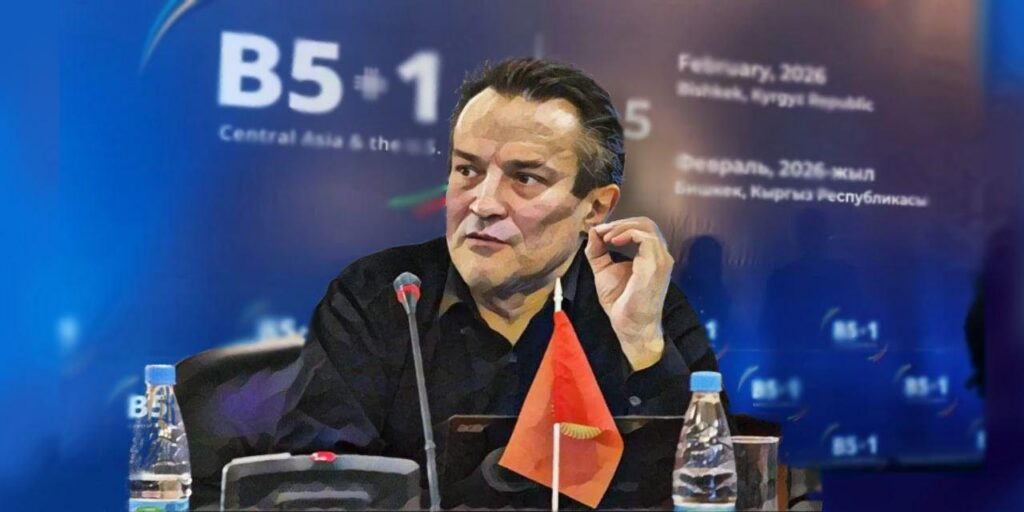
The B5+1 business forum continued in Kyrgyzstan’s capital on February 5, as government officials, regional business leaders, and a sizable U.S. delegation met to discuss trade, investment, and regulatory barriers shaping economic ties between Central Asia and the United States. As Washington signals a more pragmatic, commercially driven approach to the region, questions persist over why U.S. investment has lagged behind political engagement and which markets are truly seen as priorities. The Times of Central Asia spoke with Dmitry Orlov, director of the Strategy: East–West analytical center, about the structural obstacles deterring American capital, the shift in U.S. policy thinking, and how Central Asian states are positioned within Washington’s evolving economic calculus. TCA: What serious U.S. capital investments in Central Asia can we talk about today? ORLOV: It is important to understand the main point. Talk of large investments, the arrival of American business, and long-term economic cooperation only makes sense in one case: if the U.S. repeals the Jackson-Vanik amendment, which was adopted back in the 1970s and extended to all former Soviet republics after the collapse of the USSR. Today, it remains a formal and, in many ways, psychological obstacle to a fully-fledged business partnership. At the same time, it is necessary to establish contacts at a business level right now. This is because if the amendment is repealed - and such statements are regularly heard in Washington - it is difficult to predict which countries in the region will receive investment flows and in what volumes. Recent international forums, including Davos, have shown that Kazakhstan and Uzbekistan are of the greatest interest to the U.S. in Central Asia. Their economies are developing more dynamically, and they can offer large-scale projects and a clear export base. The other countries in the region, Kyrgyzstan, Tajikistan, and Turkmenistan, are still perceived by investors as lower priorities. TCA: Previously, the U.S. actively promoted a political agenda in the region, including human rights and freedom of speech. Now these are rarely mentioned. Why do you think this is the case? ORLOV: The approach has become more pragmatic. The history of U.S. foreign policy shows that strategic and economic interests have always taken precedence. If a territory is attractive in terms of resources or transit routes, a format for cooperation will be found. In Europe, relatively speaking, the rule of law prevails. In Asia, the situation is different, and the Americans understand this perfectly well. Issues of ideology and human rights can move to the background if economic expediency comes first. This is especially true in Central Asia, where many issues are resolved through personal agreements and informal connections. Washington understands this. TCA: What exactly can Central Asia offer the U.S.? ORLOV: In terms of individual countries, Kazakhstan and Uzbekistan are again in the lead. They offer oil, gas, and, no less importantly, control over transit routes. There is currently a lot of discussion about rare earths and critical minerals, but their development is always long and expensive. As a result, interest in...

B5+1 Forum Opens as U.S. Companies Expand Economic Footprint in Central Asia

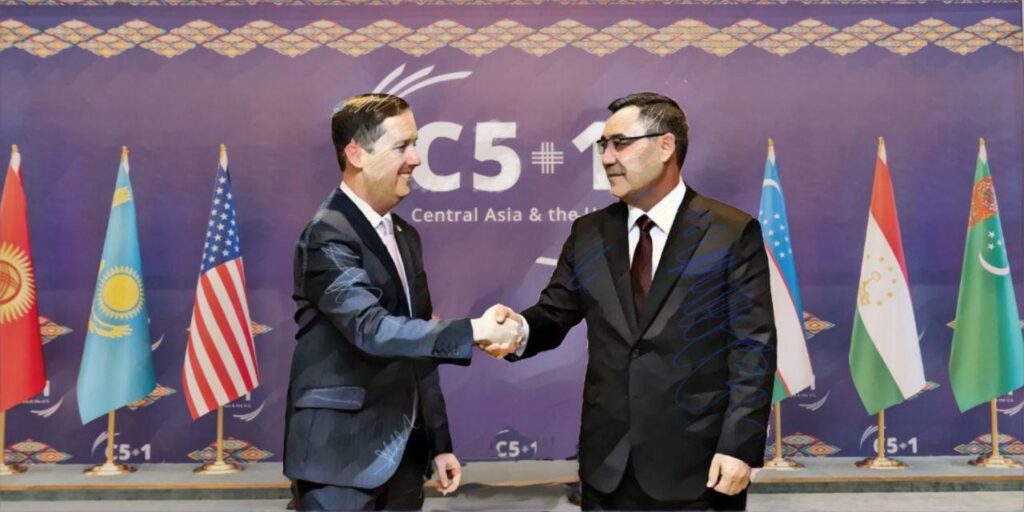
Business leaders and government officials from Central Asia and the United States gathered in Kyrgyzstan’s capital on February 4 for the start of the second B5+1 Business Forum. Co-organized by the Kyrgyz government and the Center for International Private Enterprise (CIPE), the event is intended to bring together private companies, business associations, officials, and experts interested in expanding U.S.–Central Asia commercial ties. More than 50 U.S. companies are participating in the event. The B5+1 is the business-track counterpart to the C5+1 diplomatic format that links the United States with Kazakhstan, Kyrgyzstan, Tajikistan, Turkmenistan, and Uzbekistan. The B5+1 brings companies and policymakers together to identify barriers to investment and propose cross-border regulatory changes. This week’s meeting in Bishkek follows the inaugural B5+1 forum held in Almaty on March 14–15, 2024, which drew more than 250 stakeholders from across Central Asia and the United States. It produced 21 private-sector recommendations aimed at easing trade, improving regulations, and building regional economic integration. The Bishkek agenda is built around reviewing progress on those recommendations and setting priorities for the next phase of work. Central Asian officials have used the event to signal interest in region-wide coordination rather than country-by-country deals. In comments made in Bishkek, Kazakhstan’s Minister of Industry and Construction, Ersaiyn Nagaspaev, emphasized that foreign investors increasingly assess Central Asia as a single market, reflecting a push to align regulations and investment conditions across borders. Nagaspaev noted that more than 600 U.S. companies currently operate in Kazakhstan. Kyrgyzstan, meanwhile, used the forum to highlight domestic economic performance within that regional context. In a speech at the forum, Kyrgyzstan’s First Deputy Chairman of the Cabinet of Ministers, Daniyar Amangeldiev, said Kyrgyzstan’s economy grew by 11.1% in 2025, which he described as one of the highest growth rates in the region. Addressing the forum, U.S. Special Envoy for South and Central Asia Sergio Gor stated that the United States intends to expand its economic engagement with Central Asia. “The private sector, not intergovernmental agreements, will become the key instrument of interaction," he told those in attendance, identifying electronic commerce, artificial intelligence, critical minerals, agriculture, and transport infrastructure as priority areas. Gor noted that the American companies present at the forum represent the largest and most comprehensive U.S. commercial delegation ever to visit Central Asia. The U.S. recognizes the importance of Central Asia in global trade and connectivity, he stated. "The United States is open for business. We're open for peace. We're opening to strengthen our ties around the world. So that’s why it's fitting that the first C5 event in 2026 is this B5 + 1 forum,” Gor said, linking the Bishkek discussions to economic commitments made at the C5+1 summit in Washington in November 2025. “The Transport Corridor for Peace and Prosperity will provide reliable connectivity from Central Asia through the South Caucasus to global markets,” Gor said. “This is a historic opportunity to strengthen economic integration and long-term prosperity across the region.” During his visit to Bishkek, Gor also met with Kyrgyz President...

B5+1 in Bishkek: Business at the Center of Regional Integration Strategy

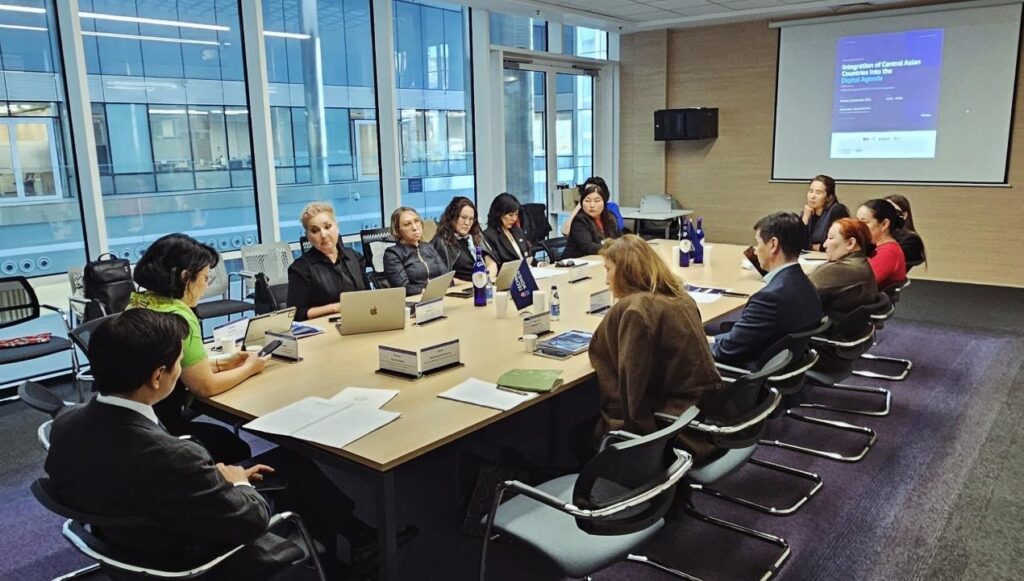
A two-day B5+1 business forum is underway in Bishkek, bringing together government officials from Central Asian countries, regional business leaders, and a U.S. delegation. Once viewed as a business extension of the C5+1 diplomatic dialogue, participants now describe the format as evolving into an independent and pragmatic economic platform. The forum is organized by the Center for International Private Enterprise (CIPE), in cooperation with the Cabinet of Ministers of Kyrgyzstan, under the IBECA program supported by the U.S. Department of State. A defining feature of this year’s forum is the size and prominence of the U.S. business delegation. More than 50 representatives from major corporations, which, according to official documents, include Boeing, GE Healthcare, Nasdaq, Abbott, Pfizer, Honeywell, Coca-Cola Company, Mastercard, FedEx, Apple, Wabtec, and Franklin Templeton, have convened in Bishkek. Discussions are structured around panel sessions and working groups focusing on key sectors: transport and logistics, agriculture, e-commerce, information technology, and critical mineral extraction. U.S. Special Envoy for South and Central Asia Sergio Gor stated he has arrived in Bishkek with a “clear message from Donald Trump.” He emphasized that Central Asia is among the top foreign policy priorities of the current U.S. administration. At a press conference, Gor underlined a strategic shift away from traditional intergovernmental agreements toward support for private enterprise and the development of commercially viable projects. “The U.S. government is ready to expand its tools for supporting investment cooperation, and today's discussion is only the first step toward further joint development,” he said. Focus on Regional Connectivity Transport infrastructure and regional connectivity were major themes on the opening day of the forum. Gor highlighted the U.S.-backed TRIPP initiative, which aims to establish a transport corridor through the South Caucasus linking Central Asia to Western markets. He argued that expanding alternative trade routes would support deeper economic integration within the region and boost its position in global trade networks. Forum participants echoed this sentiment, stressing that major international investors are increasingly evaluating Central Asia not as isolated national markets but as a single economic space. Representatives from Central Asian governments noted that the region’s aggregated potential, in logistics, natural resources, and consumer demand, is what attracts large multinationals. Kazakhstan’s Minister of Industry, Yersayin Nagaspayev, said over 600 American companies are currently operating in Kazakhstan, with many managing regional operations from within the country. “Our shared goal is to position Central Asia as a reliable, competitive, and attractive region for long-term business cooperation,” he stated. Redefining the Role of Business in Governance Kyrgyzstan’s Minister of Economy, Bakyt Sydykov, emphasized that the B5+1 platform is reshaping the nature of business-state interaction. “Today, business is not just a participant in the process, but a full-fledged co-author of economic reforms,” he said. He noted that the working groups had proposed recommendations in line with Kyrgyzstan’s ongoing reform agenda. These include reducing administrative barriers, digitizing public services, and improving access to finance for small and medium-sized enterprises. Toward a New Geopolitical Self-Image The forum in Bishkek also reflected a broader regional...

Bishkek to Host Second B5+1 Forum of Central Asia and the U.S.

Kyrgyzstan is preparing to host the second B5+1 Forum of Central Asia and the United States, scheduled for February 4-5, 2026, in Bishkek. On December 12, Kyrgyzstan’s Ministry of Foreign Affairs and Ministry of Economy and Commerce held a joint briefing for ambassadors from Central Asian countries and the United States to outline preparations for the event. The B5+1 platform serves as the business counterpart to the C5+1 diplomatic initiative, which unites the five countries of Central Asia – Kazakhstan, Kyrgyzstan, Tajikistan, Turkmenistan, and Uzbekistan – with the United States. Launched by the Center for International Private Enterprise (CIPE) under its Improving the Business Environment in Central Asia (IBECA) program, B5+1 is supported by the U.S. Department of State and aims to foster high-level engagement between business leaders and policymakers. The upcoming forum in Bishkek builds on the outcomes of the C5+1 Summit held in Washington on November 6 this year. Its objective is to deepen U.S.-Central Asia economic cooperation and highlight the private sector’s pivotal role in advancing economic reform across the region. The event is co-hosted by CIPE and the Kyrgyz government. According to organizers, the forum’s agenda will focus on key sectors including agriculture, e-commerce, information technology, transport and logistics, tourism, banking, and critical minerals. These thematic areas reflect emerging regional priorities and shared interests in enhancing sustainable growth and economic resilience. The B5+1 Forum aims to create a platform for sustained dialogue between governments and private sector actors, encouraging the development of long-term partnerships and policy coordination. The inaugural B5+1 Forum was held in Almaty in March 2024, and brought together over 250 stakeholders from all five Central Asian countries and the United States. The first event centered on regional cooperation and connectivity, with a strong emphasis on empowering the private sector to support the objectives of the C5+1 Economic and Energy Corridors.

Russia’s FM: U.S. Interest in Central Asia’s Economy Could Harm Russia’s Development

Russia’s Foreign Minister Sergei Lavrov, during a question-and-answer session with students at Moscow’s MGIMO University in early September, noted that “a growing number of extra-regional actors,” including the United States, have taken an interest in fostering trade via the so-called Middle Corridor -- a route connecting Asia to Europe via Central Asia, bypassing Russia. Lavrov’s speech suggests that the U.S. interest in the economic future of Central Asia will negatively impact Russia's development. Lavrov noted that Russia maintains “warm and allied” relations with Central Asian nations, which are bound to Russia economically and strategically via several agreements, including the Collective Security Treaty Organization, the Eurasian Economic Union, and the Commonwealth of Independent States. He added that Russia “cannot prevent anyone from establishing deeper ties with other partners.” Lavrov couldn’t resist lashing out at the United States, saying the motives of American officials in Central Asia aren’t magnanimous. “When our partners and allies in Central Asia expand their relations with the West, I do not have the slightest doubt that they understand perfectly well that apart from pursuing its noble and transparent objectives, the West also seeks to undermine the Russian Federation’s influence there,” he said. The U.S. engages with Central Asia through the B5+1 process, which promotes Western investment by encouraging reforms to reduce trade barriers and streamline customs. Recently, Central Asian countries have signed agreements to improve trade regulation, and the U.S. has helped some countries upgrade their infrastructure. U.S. Ambassador to Kazakhstan Daniel Rosenblum has said in a statement: “In August ... the United States provided Kazakhstan’s Customs Service with advanced Dell Technologies Inc. servers to help make border procedures more efficient. “Adopting innovative technologies will streamline processes, enhance accuracy, improve transparency, and foster a business-friendly environment, attracting more investors and boosting economic growth,” Russia's war in Ukraine has weakened the Kremlin’s ability to pressure Central Asian states to follow its wishes. Russia depends on covert trade through Central Asia to bypass sanctions and get goods for its war. Meanwhile, China is supplying dual-use technologies to Russia and has overtaken Russia as the leading trade partner for Central Asian countries. In his remarks, Lavrov called China “a reliable partner” but didn’t mention it in the context of Central Asia’s growing trade dynamics.