• KGS/USD = 0.01144 0%
  • KZT/USD = 0.00202 0%
  • TJS/USD = 0.10448 -0.19%
  • UZS/USD = 0.00008 0%
  • TMT/USD = 0.28490 0%
  • KGS/USD = 0.01144 0%
  • KZT/USD = 0.00202 0%
  • TJS/USD = 0.10448 -0.19%
  • UZS/USD = 0.00008 0%
  • TMT/USD = 0.28490 0%
  • KGS/USD = 0.01144 0%
  • KZT/USD = 0.00202 0%
  • TJS/USD = 0.10448 -0.19%
  • UZS/USD = 0.00008 0%
  • TMT/USD = 0.28490 0%
  • KGS/USD = 0.01144 0%
  • KZT/USD = 0.00202 0%
  • TJS/USD = 0.10448 -0.19%
  • UZS/USD = 0.00008 0%
  • TMT/USD = 0.28490 0%
  • KGS/USD = 0.01144 0%
  • KZT/USD = 0.00202 0%
  • TJS/USD = 0.10448 -0.19%
  • UZS/USD = 0.00008 0%
  • TMT/USD = 0.28490 0%
  • KGS/USD = 0.01144 0%
  • KZT/USD = 0.00202 0%
  • TJS/USD = 0.10448 -0.19%
  • UZS/USD = 0.00008 0%
  • TMT/USD = 0.28490 0%
  • KGS/USD = 0.01144 0%
  • KZT/USD = 0.00202 0%
  • TJS/USD = 0.10448 -0.19%
  • UZS/USD = 0.00008 0%
  • TMT/USD = 0.28490 0%
  • KGS/USD = 0.01144 0%
  • KZT/USD = 0.00202 0%
  • TJS/USD = 0.10448 -0.19%
  • UZS/USD = 0.00008 0%
  • TMT/USD = 0.28490 0%

Viewing results 1 - 6 of 182

Trump Confirms New U.S. Tariffs on Kazakhstan Starting August 1

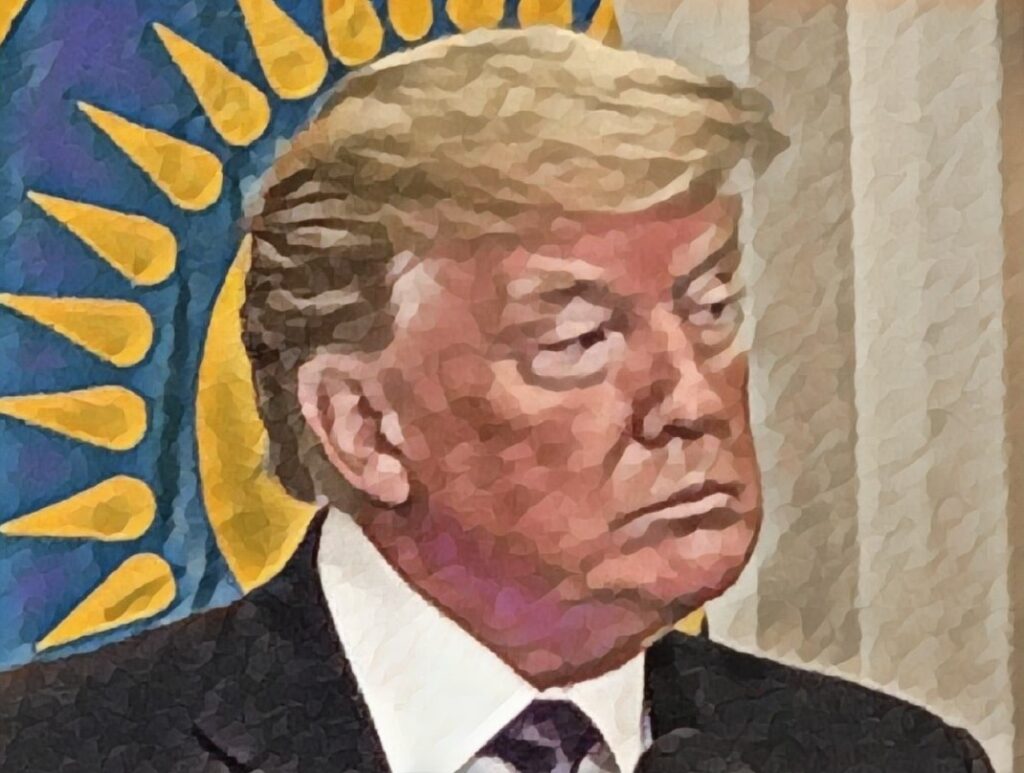
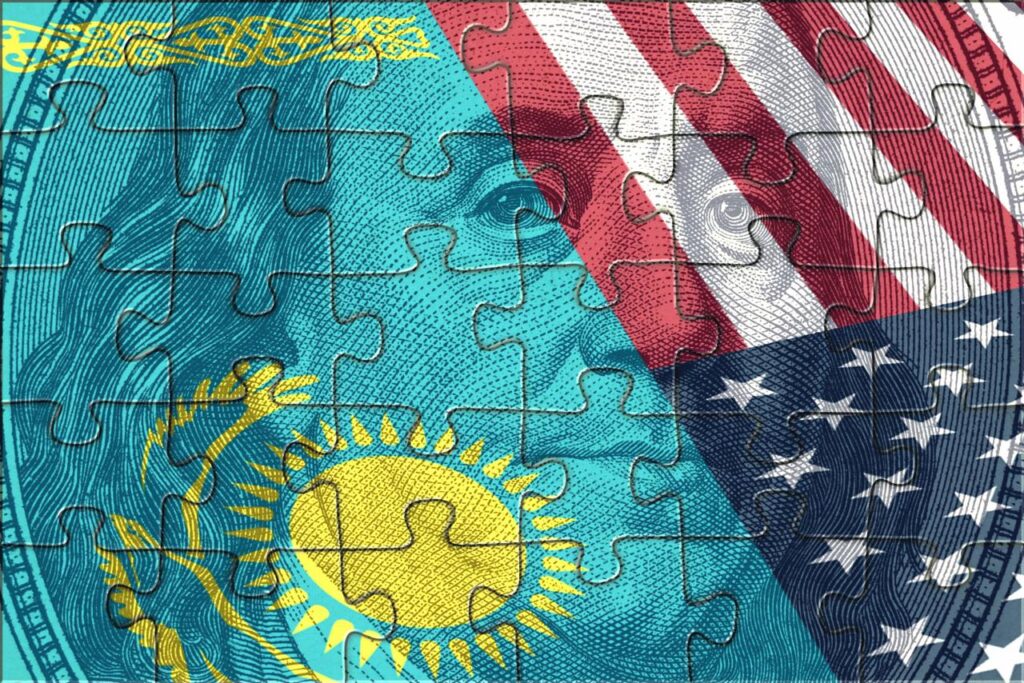
Starting August 1, 2025, the United States will impose a 25 percent customs duty on exports from Kazakhstan. The decision was announced by U.S. Secretary of Commerce Wilbur Ross and later confirmed in an official letter from President Donald Trump to Kazakh President Kassym-Jomart Tokayev. The move has prompted mixed reactions, although analysts say the actual economic impact is likely to be limited. Tariffs and Diplomacy In a letter published on Truth Social, President Trump stated that the United States was “forced to correct years of distortions caused by Kazakhstan’s tariff and non-tariff policies.” He added that the 25 percent tariff remains “significantly less than what is needed” to address the ongoing trade imbalance between the two countries. Commerce Secretary Wilbur Ross clarified that the tariffs were originally scheduled to take effect on July 9 but have been postponed to August 1. Official notifications are already being sent to affected countries, with Kazakhstan’s notice  scheduled for delivery on July 7 at 12 p.m. Eastern Time. President Trump also outlined a possible exemption: Kazakhstani companies that relocate production to the United States would not be subject to the new tariffs. Impact on Kazakhstan Earlier this year, Washington announced a 27% tariff on Kazakhstani goods, which was quickly suspended for 90 days pending negotiations. The revised 25% duty now stands as the highest imposed on any Central Asian country. Despite this, Kazakh political analyst Gaziz Abishev points out that the overwhelming majority of Kazakhstan’s exports to the U.S., including oil, uranium, ferroalloys, and silver, are excluded from the new measures. “These commodities represent more than 95% of total shipments and are included in the list of exemptions,” he said. As a result, the tariffs are unlikely to significantly impact trade volumes or foreign investment. Economist Eldar Shamsutdinov added that similar letters were sent to other nations, including Vietnam (40%), Malaysia (25%), Myanmar (40%), and South Africa (30%), framing the move as a continuation of existing trade policy rather than a new set of sanctions. Geopolitical Context The tariffs are part of a sweeping review of trade agreements under Trump’s administration. In April 2025, tariffs were applied to goods from 185 countries, and formal notices began rolling out in July. The administration has prioritized correcting what it deems “unfair trade imbalances.” In 2024, Kazakhstan exported $2.3 billion worth of goods to the U.S., while U.S. exports to Kazakhstan totaled $1.1 billion. Trump has cited this trade deficit as justification for the increased duties. Countries receiving similar letters include Japan, South Korea, Laos, Serbia, Tunisia, Bangladesh, and Indonesia, with tariffs reaching as high as 40%, underscoring the strategic and systematic nature of the U.S. policy shift. Kazakhstan’s Response Kazakhstan’s Ministry of Trade and Integration has announced plans to issue an official response but ruled out reciprocal measures. “In connection with the introduction of a 25% duty on goods from Kazakhstan by the U.S., the Ministry of Trade and Integration is preparing an official response. There is no question of retaliatory measures,” the ministry stated....
Kyrgyzstan Seeks Clarity from U.S. on Possible Travel Restrictions

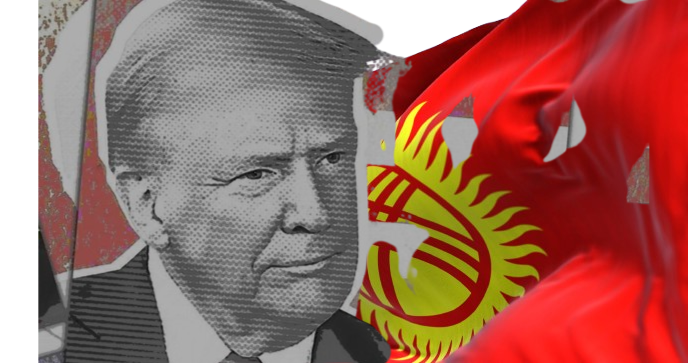
Kyrgyzstan’s Ministry of Foreign Affairs says it plans to summon the top diplomat at the U.S. Embassy to clarify whether and on what grounds the United States will impose restrictions on Kyrgyz nationals seeking to enter the country. In a statement released on Sunday, the ministry responded to a U.S. media report that Kyrgyzstan might be in a group of countries whose citizens could be subject to restrictions and bans similar to those imposed on Turkmenistan and other nations earlier this month. “Today, the United States continues to review immigration laws aimed at ensuring security and regulating the entry of foreign citizens into the country. At present, there has been no official information from the United States regarding the introduction of any restrictions on citizens of the Kyrgyz Republic,” the ministry said. “According to information published in The Washington Post, it remains unclear to the Kyrgyz Republic what criteria will be used to compile the list of countries whose citizens may be subject to restrictions,” it said. On Saturday, The Washington Post reported that the U.S. “is considering restricting entry to citizens of an additional 36 countries in what would be a significant expansion of the travel ban announced by the Trump administration early this month,” which had affected 19 countries, including Turkmenistan. The newspaper cited a State Department memo that it said set a 60-day deadline for the targeted countries to meet “certain requirements” or face a full or partial entry ban. Countries might be added to the restricted list for failing to meet U.S. benchmarks on identity documentation, government cooperation, visa overstays, or for issues like fraud, citizenship-for-investment programs, or other security and cooperation concerns. “Among the new list of countries that could face visa bans or other restrictions are 25 African countries, including significant U.S. partners such as Egypt and Djibouti, plus countries in the Caribbean, Central Asia, and several Pacific Island nations,” the newspaper reported. Kyrgyzstan said it plans to summon the chief U.S. diplomat in Bishkek “to provide an official explanation on these issues.” Lesslie Viguerie, a career diplomat and former deputy assistant secretary of state for Central Asia and Pakistan affairs, is the U.S. ambassador in Kyrgyzstan. Turkmenistan is among seven countries whose citizens face partial restrictions on travel to the United States, such as not being able to move permanently to the U.S. or get tourist and student visas. Nationals from another 12 countries face a full travel ban, subject to case-by-case waivers and other exceptions. The U.S. measures are part of the Trump administration's broader policy to address immigration and manage the entry of foreign nationals. Trump emphasized immigration policies during his campaign for a second presidential term, stating that stricter measures were aimed at enhancing national security. These policies have faced legal challenges and public criticism, with some cities experiencing protests following actions by agents conducting immigration enforcement operations.

Turkmenistan Among Nations Targeted in New U.S. Travel Restrictions and Bans

Citizens from Turkmenistan face restrictions on travel to the United States under an order signed by President Donald Trump that bans or curbs the entry of nationals from 19 countries. Trump said in a statement released by the White House on Wednesday that the order, which takes effect on June 9, aims to protect national security and prevent people from overstaying their visas in the United States. The measure resembles an effort in Trump’s first term as president to tighten control of the influx of foreign nationals, prompting court challenges and criticism that such sweeping policies are discriminatory. “Many of these countries have also taken advantage of the United States in their exploitation of our visa system and their historic failure to accept back their removable nationals,” said Trump, who has cracked down on immigration since his second term began in January. A full travel ban, subject to case-by-case waivers and other exceptions, will go into effect for nationals from Afghanistan, Myanmar, Chad, the Republic of Congo, Equatorial Guinea, Eritrea, Haiti, Iran, Libya, Somalia, Sudan and Yemen. Turkmenistan is among seven countries whose citizens face partial restrictions, such as not being able to move permanently to the U.S. or get tourist and student visas. The other countries are Burundi, Cuba, Laos, Sierra Leone, Togo, and Venezuela. “According to the Overstay Report, Turkmenistan had a B-1/B-2 visa overstay rate of 15.35 percent and an F, M, and J visa overstay rate of 21.74 percent,” the Trump administration’s order said. “The entry into the United States of nationals of Turkmenistan as immigrants, and as nonimmigrants on B-1, B-2, B-1/B-2, F, M, and J visas is hereby suspended.” B-1 (business) and B-2 (tourism) refer to non-immigrant visas for people who want to stay temporarily in the U.S. F, M, and J visas are for non-immigrant visas used by students and other visitors enrolled in exchange programs. Turkmenistan tightly controls its population and it is difficult to get independent information about the country. Despite Turkmenistan’s vast energy resources, some of its nationals attempt to seek opportunities abroad.

Opinion: How the Emerging Trump Doctrine Played at Astana International Forum

With His Riyadh Allocution, Trump Ripped Up the Foreign Policy Playbook The May 29–30 Astana International Forum (AIF) in Kazakhstan drew thousands of attendees — heads of state, senior diplomats, and entrepreneurs — eager for insights into Central Asia’s rising global significance. Topics ranged from foreign policy and water management to energy, trade, and economic integration. A key message from the organizers was that Middle Powers — Kazakhstan, Indonesia, Türkiye, South Africa, Argentina, and others — should serve as bridges to peace and solidarity amid growing global polarization and Great Power conflict. Unsurprisingly, lots of folk were trying to horn in on business opportunities – mainly agriculture, mining, and metals, of which there is an abundance in the region. Yet the real buzz in the hallways and cafés wasn’t about panel discussions, raw materials, or the next sound bite for the press. What had international policy mavens all atwitter was President Trump’s unexpected speech in Saudi Arabia – which might well prove to be the Trump Doctrine: global crises, he said, are better resolved through diplomacy and mutually beneficial business partnerships, not bayonets, diktat, and moral sermonizing. That message, coming from the President of the United States, landed with force. During the three days I spent in Astana, I noticed that many delegates who normally spoke in well-rehearsed sound bites designed not to offend, suddenly spoke more bluntly, even going off-script. They dropped the cautious language and the standard foreign policy group-speak. What was going on?  Was this the Trump effect? My guess is that Trump’s Riyadh allocution was intended to rip up the decades-old foreign policy playbook of Brussels, London, and prior U.S. administrations. Instead of promoting the globalist/woke agenda, which had been de rigueur at international diplomatic clambakes of the Astana sort, Trump called for détente and reciprocity – more the realism of Nixon and Kissinger (leavened with a pinch of Ronald Reagan) than the idealism of Wilson and FDR. He wanted to deliver on his promise to the American people to make America great again (including boosting domestic manufacturing) rather than squander precious resources beating down any country that looks at us cross-eyed. Trump’s Riyadh speech — like his inaugural address — called for a peaceable foreign policy.  That message reverberated in Astana: “Before our eyes, a new generation of leaders is transcending the ancient conflicts and tired divisions of the past and forging a future where the Middle East is defined by commerce, not chaos; where it exports technology, not terrorism; and where people of different nations, religions, and creeds are building cities together — not bombing each other out of existence.” Perhaps most cutting was Trump’s indictment of interventionist dogma: “This great transformation has not come from Western interventionists giving you lectures... The gleaming marvels of Riyadh and Abu Dhabi were not built by 'nation-builders,' 'neo-cons,' or 'liberal non-profits'... Instead, the birth of a modern Middle East has been brought about by the people of the region themselves – pursuing their own visions and charting...

Central Asian Students Face Uncertainty at U.S. Universities Under Trump Administration Policies

The situation for students from Central Asia studying in the United States has grown increasingly precarious following a controversial move by the Trump administration to restrict foreign student admissions at Harvard University, a decision that has sparked legal and diplomatic reactions. Administrative Ban Targets Foreign Students On May 23, U.S. Secretary of Homeland Security Kirstjen Nielsen ordered the termination of Harvard University's certification for its student and exchange visitor program. The Department of Homeland Security (DHS) cited Harvard’s alleged refusal to submit records on the conduct of its foreign students, requested the previous month. “Harvard can no longer accept foreign students, and existing foreign students must transfer or lose their legal status,” the DHS said in a statement. The university is currently challenging the decision in court. The administration attributes the crackdown to ideological concerns. Officials have cited a determination to confront anti-Semitic rhetoric amid campus protests related to the war between Israel and Hamas. They also oppose Diversity, Equity, and Inclusion (DEI) initiatives, which the administration has condemned as “illegal and immoral discrimination.” Harvard representatives reported that 6,793 international students were enrolled in the 2024-2025 academic year, comprising 27.2% of the student body. The loss of international students, they argue, could jeopardize not only Harvard’s standing but also the broader U.S. academic landscape. Beyond Harvard, the administration has intensified scrutiny of foreign students' social media activity, suspended hundreds of millions of dollars in funding to universities, revoked thousands of student visas, and initiated deportations. In response, Harvard filed a lawsuit, and on May 30, a federal court in Boston temporarily blocked the enforcement of the ban, according to Bloomberg. Nonetheless, the outlook remains uncertain. Kazakhstan Responds with Contingency Planning According to Kazakhstan’s Ministry of Science and Higher Education, seven students are currently studying at Harvard under the state-funded Bolashak program. Additional students may be enrolled privately or through other sponsorships. Minister of Science and Higher Education Sayasat Nurbek described the situation as "difficult" and stated that the ministry is awaiting the final court decision. In the event of an unfavorable outcome, Bolashak students would be offered transfer opportunities to other Ivy League institutions, all of which maintain partnerships with the scholarship program. Bolashak Program: Opportunity and Criticism Founded in 1993, the Bolashak (Future) program offers state-funded scholarships for international education in priority sectors of Kazakhstan’s economy. In return, graduates are required to work in Kazakhstan for a specified period. Despite its aims, the program has faced criticism for alleged elitism. Critics claim it disproportionately benefits children of influential families and that many graduates fail to fulfill their service obligations or remain abroad. Among its alumni is former Minister of National Economy Kuandyk Bishimbayev, who was educated in the U.S. under Bolashak and later served as chairman of the Bolashak Association. He was subsequently convicted twice, first for corruption, and later for the murder of his common-law wife, Saltanat Nukenova, in a case that attracted international attention. Nevertheless, official statistics indicate that more than 13,000 individuals have benefited from the...

U.S. Offers $1,000 Incentive for Voluntary Self-Deportation

The U.S. Department of Homeland Security (DHS) has launched a new program offering financial and travel assistance to undocumented immigrants who voluntarily leave the United States. Announced on May 5, the initiative provides a $1,000 stipend and covers airfare for eligible individuals who arrange their departure through the CBP Home mobile app.  DHS Secretary Kristi Noem described the program as a "historic opportunity" that is safer, more orderly, and more cost-effective than traditional deportation methods. According to DHS estimates, the average cost of arresting, detaining, and deporting an individual is approximately $17,121. The self-deportation program is projected to reduce these costs by about 70%.  Participants are required to submit an "Intent to Depart" via the CBP Home app, formerly known as CBP One. Upon confirmation of their return to their home country through the app, they will receive the stipend. DHS noted that individuals who engage with the program and demonstrate progress toward departure will be deprioritized for detention and removal.  The first reported participant, a Honduran national, utilized the program to return from Chicago to Honduras. Additional departures are scheduled in the coming weeks.  The Embassy of Kazakhstan in the United States has advised its citizens residing illegally in the U.S. to consider this program to avoid legal consequences and potentially preserve the option for future legal entry. This initiative aligns with President Donald Trump's broader immigration policy, which emphasizes strict enforcement and cost-efficiency. Since taking office in January, the administration has deported approximately 152,000 individuals.  Critics argue that the program may mislead participants regarding the possibility of future legal re-entry, as no specific pathways have been outlined. Immigration advocates caution that individuals considering this option should consult legal counsel to understand the potential implications for their immigration status.