• KGS/USD = 0.01144 0%
  • KZT/USD = 0.00203 0%
  • TJS/USD = 0.10448 -0.19%
  • UZS/USD = 0.00008 0%
  • TMT/USD = 0.28490 0%
  • KGS/USD = 0.01144 0%
  • KZT/USD = 0.00203 0%
  • TJS/USD = 0.10448 -0.19%
  • UZS/USD = 0.00008 0%
  • TMT/USD = 0.28490 0%
  • KGS/USD = 0.01144 0%
  • KZT/USD = 0.00203 0%
  • TJS/USD = 0.10448 -0.19%
  • UZS/USD = 0.00008 0%
  • TMT/USD = 0.28490 0%
  • KGS/USD = 0.01144 0%
  • KZT/USD = 0.00203 0%
  • TJS/USD = 0.10448 -0.19%
  • UZS/USD = 0.00008 0%
  • TMT/USD = 0.28490 0%
  • KGS/USD = 0.01144 0%
  • KZT/USD = 0.00203 0%
  • TJS/USD = 0.10448 -0.19%
  • UZS/USD = 0.00008 0%
  • TMT/USD = 0.28490 0%
  • KGS/USD = 0.01144 0%
  • KZT/USD = 0.00203 0%
  • TJS/USD = 0.10448 -0.19%
  • UZS/USD = 0.00008 0%
  • TMT/USD = 0.28490 0%
  • KGS/USD = 0.01144 0%
  • KZT/USD = 0.00203 0%
  • TJS/USD = 0.10448 -0.19%
  • UZS/USD = 0.00008 0%
  • TMT/USD = 0.28490 0%
  • KGS/USD = 0.01144 0%
  • KZT/USD = 0.00203 0%
  • TJS/USD = 0.10448 -0.19%
  • UZS/USD = 0.00008 0%
  • TMT/USD = 0.28490 0%

Viewing results 1 - 6 of 182

After New York, a Shake-Up in Astana: Tokayev Resets His Foreign Policy Team

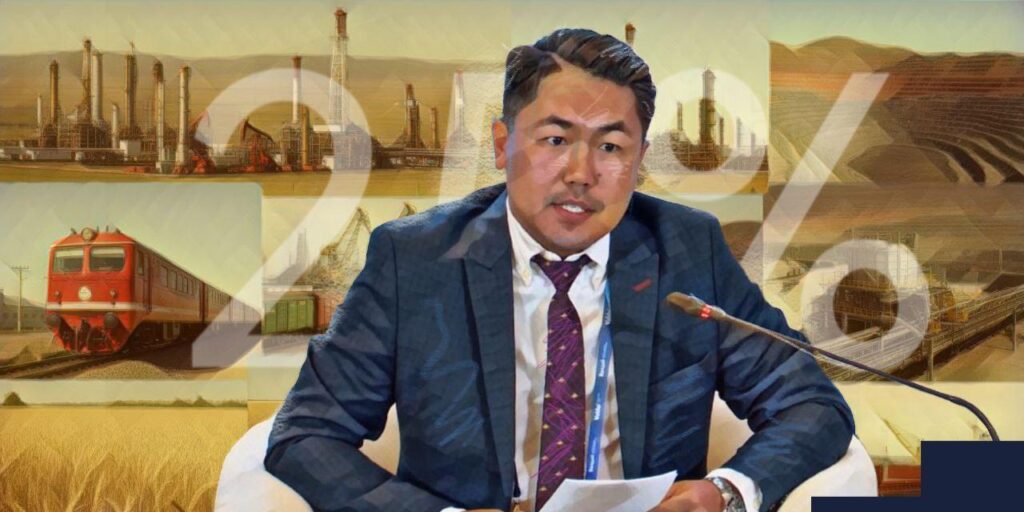
At the end of last week, the most talked-about news in Kazakhstan was the latest reshuffle in the upper echelons of government. Just one day after returning from New York, where he participated in the UN General Assembly, President Kassym-Jomart Tokayev began issuing personnel decrees resulting in the dismissals and appointments of high-level foreign and trade policy officials. Murat Nurtleu left his position of Deputy Prime Minister and Minister of Foreign Affairs and was reassigned as Assistant to the President for International Investment and Trade Cooperation. Nurtleu navigated a turbulent regional environment marked by the Russia–Ukraine war, which destabilized trade routes and supply chains, and emphasized building broader alliances with China while balancing ties with Russia, the U.S., and other partners. In his new post, the president has tasked Nurtleu with advancing Kazakhstan’s foreign investment and trade cooperation, refocusing his mandate squarely on securing economic gains from diplomacy. Yermek Kosherbayev was appointed as the incoming Foreign Minister. He was most recently Deputy Prime Minister and is a career diplomat and administrator, having also held senior posts in the Foreign Affairs and Agriculture ministries. President Tokayev has tasked him with reinforcing a balanced foreign policy, expanding economic diplomacy, deepening multilateral engagement, and strengthening the protection of citizens abroad. The former Assistant to the President for International Affairs, Yerzhan Kazykhan, was reappointed as Kazakhstan’s Permanent Representative to the UN in Geneva. A seasoned diplomat and ex–foreign minister, Kazykhan coordinated Tokayev’s international outreach with the U.S., EU, and OSCE. His posting to Geneva - where debates on human rights, trade, and security are shaped - signals Astana’s trust in a heavyweight envoy. He succeeds Yerlan Alimbayev, who has been in the post since 2022. Yerzhan Ashikbayev was recalled as Ambassador to the United States after more than four years in Washington. His tenure was defined by efforts to deepen political and economic ties, including advancing the U.S.–Kazakhstan Enhanced Strategic Partnership Dialogue, supporting the first C5+1 leaders’ summit and Critical Minerals Dialogue, and expanding cooperation through the U.S.–Kazakhstan Strategic Energy Dialogue. Beyond the personnel changes themselves, observers quickly began parsing what the reshuffle reveals about Tokayev’s foreign policy priorities. As is customary in Kazakhstan, no official comments were offered on the reshuffle in Akorda. Nevertheless, speculation quickly spread across social media, with journalists and bloggers debating the implications throughout the weekend. Political scientist Gaziz Abishev framed Murat Nurtleu’s reassignment as shifting him from foreign policy towards the execution of the investment–trade agenda. Abishev noted that the “additional responsibilities for working with the investment bloc… which Nurtleu held as deputy prime minister, will go with him to the Presidential Administration,” narrowing his focus to delivery rather than strategy. This interpretation was later reinforced in more formal terms by the Presidential Administration’s spokesman, who explained that in his new post, Nurtleu “will develop contacts with representatives of foreign states at the highest level, as well as heads of major foreign companies, in order to accelerate the promotion of international investment and trade cooperation.” Analyst Andrei Chebotarev suggested...

Trump Reengages Central Asia Amid Tariffs and Rising Competition

In a bid that signals renewed U.S. interest in Central Asia, U.S. President Donald Trump on September 7, 2025, held what he described as a “great conversation” with Kazakhstan’s President Kassym-Jomart Tokayev. Earlier in the week, Trump also spoke over the phone with Uzbek President Shavkat Mirziyoyev, with both sides highlighting plans to expand their strategic partnership. Commentators have noted that Trump’s rhetoric and transactional approach to foreign policy in his second term create both challenges and opportunities for sustained U.S. engagement in the region. “Great Conversation” With Tokayev As he departed the White House for the U.S. Open men’s final, President Trump told reporters, “We had a great conversation,” though he offered no further details on the substance of the discussion. On Kazakhstan’s side, President Tokayev had reached out in July, expressing his openness to constructive trade talks following Trump’s imposition of 25% U.S. tariffs on Kazakh goods. In that July letter, Tokayev committed to “developing fair, predictable, and mutually beneficial trade relations.” He also emphasized his readiness for “constructive dialogue aimed at finding a rational solution.” The exchange reflects the broader importance of the U.S.–Kazakhstan relationship, which extends far beyond tariffs. Since 2017, the two nations have maintained an “enhanced strategic partnership,” covering trade, security, and energy cooperation. Kazakhstan is the world’s largest uranium producer and a leading supplier to U.S. nuclear power plants, while American firms such as Chevron and ExxonMobil are deeply invested in the country’s vast oil fields. Strategically located between Russia, China, and Europe, Kazakhstan offers Washington a critical partner in promoting regional stability and developing alternative trade corridors traditionally reliant on Russian land. By engaging closely with Astana, the U.S. strengthens its foothold in Central Asia while securing vital resources and supporting Kazakhstan’s multi-vector diplomacy. Strategic Outreach to Uzbekistan Earlier the same week, Trump and Uzbekistan’s Mirziyoyev agreed to broaden their strategic partnership across economic, security, and cultural domains, the Uzbekistan press office reported. According to the office, Trump praised Uzbekistan’s “irreversible reforms” aimed at modernizing its economy and improving living standards, while Mirziyoyev lauded what he termed the “impressive results of the domestic and foreign policy” of the U.S. administration. This extension of engagement to Tashkent comes against a backdrop of longstanding U.S. involvement in Uzbekistan, including trade under bilateral agreements since the mid-1990s and cooperation on border control and counter-terrorism programs. In late 2024, shortly before Trump’s second term began, Washington reaffirmed its support for Uzbekistan’s bid to join the World Trade Organization, with U.S. Trade Representative Katherine Tai announcing the completion of bilateral market-access negotiations. That same year, U.S. officials also underscored opportunities in critical minerals cooperation with Tashkent through the C5+1 diplomatic framework. Beyond trade and security, Uzbekistan is strategically important as Central Asia’s most populous nation and a key transit hub between China, Russia, and South Asia. Closer U.S.–Uzbek ties complement Washington’s regional engagement with Kazakhstan, creating overlapping partnerships that strengthen American influence, promote economic diversification, and reinforce stability across Central Asia. Why Now? Geopolitics, Tariffs, and Regional...

U.S. Deports 39 Uzbek Nationals, Thanks Uzbekistan for Cooperation

Several dozen citizens of Uzbekistan who didn’t have legal authorization to remain in the United States were deported from the U.S. to their home country over the weekend, the U.S. Embassy in Tashkent said.  The embassy said the operation to return the 39 nationals concluded on Sunday and it thanked Uzbekistan’s government “for its close cooperation in facilitating U.S. deportation operations.” Uzbekistan has collaborated with the United States on previous deportations of its citizens this year, funding a similar flight in April though it later said that its repatriated citizens should pay for their travel.  In a sign of improving relations, U.S. President Donald Trump and President Shavkat Mirziyoyev of Uzbekistan spoke about working together on trade, security and other issues in a telephone conversation on Friday. The Trump administration has conducted numerous deportation flights, many of them to Central America, as part of what it describes as an effort to secure U.S. borders. Critics describe the U.S. immigration crackdown as heavy-handed. Last week, hundreds of South Korean workers were arrested at a factory in the U.S. state of Georgia and the South Korean government said it would bring them home on a charter flight.   

Opinion: Washington Meeting and the Shifting Geopolitics of the Caspian

The Washington meeting between Armenia and Azerbaijan, hosted by President Donald Trump on August 8, 2025, may go down as a pivotal moment in the geopolitics of the Caspian and the wider Eurasian space. While on the surface the talks aimed to normalize relations between the two South Caucasus neighbors, the ripple effects extend far beyond bilateral reconciliation. For Azerbaijan, the meeting is not only about ending three decades of conflict with Armenia but also about positioning itself as a central bridge linking the Caspian Basin, Central Asia, and even Europe. The Caspian region has always been a security crossroads, where energy interests, military presence, and trade routes overlap. Russia’s war in Ukraine, the Iran-Israel conflict, and shifting Western engagement have made the region more volatile. In this context, a potential Armenia-Azerbaijan settlement offers a chance to stabilize the South Caucasus - the natural gateway between the Caspian and Europe. For Azerbaijan, peace with Armenia would solidify its position in the region where Baku has promoted several important transregional projects such as the Baku-Tbilisi-Ceyhan oil pipeline, the Southern Gas Corridor, and the Baku-Tbilisi-Kars railway. Azerbaijan is heavily investing in the development of the Caspian trade routes, energy infrastructure, and regional connectivity projects such as the Middle Corridor. Stability in the South Caucasus also makes it harder for external actors to exploit divisions - an especially significant factor given the previous attempt to exploit Armenia against Azerbaijan and Türkiye. That strategy brought no tangible results to Armenia, which remained regionally isolated and dependent on Russia. After the military defeats in 2020 and 2023, the Armenian leadership realized that peace and respect for the principle of territorial integrity is a much greater opportunity for the country rather than an irredentist project, which Prime Minister Nikol Pashinyan dubbed “mythical.” At the same time, a peace framework reduces the risk of military escalation spilling into the Caspian region. Naval modernization efforts by Russia and Iran in recent years have heightened anxieties. In short, normalization indirectly enhances Azerbaijan’s capacity to act as a stabilizing actor within the Caspian basin. Increasingly, Iran has also spoken about peace and cooperation, especially with Azerbaijan. Relations were tense a few years ago, but the incumbent President, Masud Pezeshkian, questioned the strategy employed previously by the Iranian clerics regarding Azerbaijan, which failed to gain any benefits. Perhaps the most significant geopolitical dividend for Azerbaijan lies eastward, across the Caspian. The Central Asian states - Kazakhstan, Uzbekistan, Turkmenistan, Kyrgyzstan, and Tajikistan - have long sought secure, diversified links to Europe. Russia’s war has made northern routes through its territory unreliable, while instability in the Red Sea undermines the traditional supply route. That leaves the Trans-Caspian link through Azerbaijan as promising. The Washington meeting, by promoting the peace agenda, reassures Central Asian partners that Baku is a reliable hub. Azerbaijan, Kazakhstan, and Uzbekistan signed an MOU about the transfer of alternative energy sources to Europe through another potential project – a Black Sea electricity cable from Georgia to Romania and Hungary. Azerbaijan...

Kazakhstan–U.S. Tariff Question Indexes a Broader Geopolitical Pattern

When the United States announced a 25% tariff on selected imports from Kazakhstan, effective August 1, it offered little explanation beyond a vague appeal to restoring the trade balance. At first glance, this seemed routine, indeed almost perfunctory. However, the timing, context, and symbolic weight of the move suggest otherwise. Kazakhstan’s exports to the U.S. are modest, and key commodities are unaffected, yet the signal was received clearly in Astana.   What the Tariff Means in the Broader Picture In the current phase of the international system's evolution, tariffs no longer function solely as instruments of commercial redress. They have become vectors of strategic pressure, deployed to influence positions in a broader geopolitical context. From this perspective, Kazakhstan appears less as a trade partner than as a node within a larger and shifting strategic-connectivity network. To interpret the tariff imposed by the United States on Kazakhstan as a bilateral irritant would be to miss its deeper significance. The target may be marginal in economic scale, but the symbolism is central. What is at stake is not merely the movement of goods, but the movement of expectations. What is at issue is how middle powers such as Kazakhstan read global cues and signal their response. The tariff is a point of entry into an evolving geoeconomic pattern. Kazakhstan's answer to the American move thus becomes an exercise in managing uncertainty under shifting rules. Astana has moved quickly by dispatching a delegation, issuing public reassurances, and subtly shifting its narrative. This is not a crisis for Kazakhstan, but it is not something that can be ignored either. What seems to have triggered the tariff is not the trade volume, but the context. Kazakhstan’s longstanding ties with both Russia and China have complicated its attempts to preserve its autonomous balance in a tightening global field. The U.S. move may be part of a wider American effort to pressure states seen as too hesitant or too exposed. Kazakhstan's early response is thus less a tactical correction than a move to preempt misunderstanding. Background: A Cascade of Tariff Announcements The tariff targeting Kazakhstan came at the end of a months-long sequence of trade announcements that began to accelerate in early 2025; it was not an isolated action. On April 2, under the now-familiar slogan of restoring reciprocity, the Trump administration unveiled a broad tariff package affecting more than 180 countries at a base level of 10%. Russia and Belarus were notably untouched, but Kazakhstan was singled out for a rate of 27%. No one could quite justify why, and Washington did not seem interested in explaining the move. On July 7, Astana received a second notice: a revised tariff, now fixed at 25%, would take effect on August 1. This replaced the earlier measure and applied to a more specific set of goods. Without mentioning Kazakhstan by name, President Trump followed with a comment on social media about restoring “balanced flows” and correcting “distortions.” More than twenty other countries — an eclectic list including Brazil,...

Trump’s Tariffs May Hurt Kazakhstan’s Economy, Expert Warns

On July 7, U.S. President Donald Trump informed Kazakh President Kassym-Jomart Tokayev that Washington will impose a 25% tariff on goods from Kazakhstan, effective August 1, 2025. Tokayev responded on July 10, affirming Kazakhstan’s commitment to "developing fair, predictable, and mutually beneficial trade relations" with the United States. He emphasized Kazakhstan’s readiness for “constructive dialogue aimed at finding a rational solution to trade issues,” expressing his hope that a compromise will be reached. While officials and analysts in Kazakhstan have downplayed the potential economic impact, citing limited trade volume and the exclusion of key exports such as oil and metals, economist Olzhas Baidildinov has challenged this optimism. In an interview with The Times of Central Asia, he outlines the potential long-term damage to Kazakhstan's economy and investment climate. TCA: What is the situation following the announcement of the increased tariffs? Baidildinov: The immediate damage is minimal, which is why many in the media and expert circles remain optimistic. Kazakhstan exports about $2 billion in goods to the U.S., of which $1.8 billion are raw materials, oil, metals, rare earth elements, silver, and precious metals, all previously exempt from duties. The remaining $200 million, mostly manufactured goods and agricultural products, will now be subject to the 25% tariff. Though small in macroeconomic terms, this is a significant blow to exporters and a deterrent for future investors. TCA: What are the broader implications of these tariffs for Kazakhstan? Baidildinov: The most serious consequence will be on investment. Domestic experts often lack a long-term view, rarely looking beyond a few months. But consider this: if you were an investor planning to produce in Kazakhstan and export to the U.S., would you proceed under these conditions? A 25% tariff today could become 50% or 100% tomorrow. This unpredictability will scare off potential investors. Trump’s message is clear: produce in the U.S. or face penalties. For Kazakhstan, there is little upside. The country’s oil and gas sector has made strides in localizing production of goods that could replace Western imports, but these products will now face higher entry barriers into the U.S. market. American companies may also become more cautious about engaging with Kazakh suppliers. More broadly, this signals that the U.S. does not regard Kazakhstan as a partner in high-tech manufacturing. Even American firms considering setting up production in Kazakhstan to benefit from low costs would now find the economics less favorable. Other countries, including EU members, may follow the U.S. example, reinforcing the perception of Kazakhstan as merely a source of raw materials. TCA: Do you expect further pressure from the U.S. or its allies? Baidildinov: This marks the beginning of a global tariff war. Other countries will likely adopt similar protectionist policies to defend their industries, especially in light of escalating U.S.-China trade tensions. European manufacturers, for example, may pressure their governments to implement similar tariffs. This trend could shape global trade for years to come, with Kazakhstan potentially caught in the crossfire. TCA: In your opinion, is the U.S. tariff increase...