
• KGS/USD = 0.01143 0%
  • KZT/USD = 0.00207 0%
  • TJS/USD = 0.10465 0.1%
  • UZS/USD = 0.00008 0%
  • TMT/USD = 0.28571 0.28%
  • KGS/USD = 0.01143 0%
  • KZT/USD = 0.00207 0%
  • TJS/USD = 0.10465 0.1%
  • UZS/USD = 0.00008 0%
  • TMT/USD = 0.28571 0.28%
  • KGS/USD = 0.01143 0%
  • KZT/USD = 0.00207 0%
  • TJS/USD = 0.10465 0.1%
  • UZS/USD = 0.00008 0%
  • TMT/USD = 0.28571 0.28%
  • KGS/USD = 0.01143 0%
  • KZT/USD = 0.00207 0%
  • TJS/USD = 0.10465 0.1%
  • UZS/USD = 0.00008 0%
  • TMT/USD = 0.28571 0.28%
  • KGS/USD = 0.01143 0%
  • KZT/USD = 0.00207 0%
  • TJS/USD = 0.10465 0.1%
  • UZS/USD = 0.00008 0%
  • TMT/USD = 0.28571 0.28%
  • KGS/USD = 0.01143 0%
  • KZT/USD = 0.00207 0%
  • TJS/USD = 0.10465 0.1%
  • UZS/USD = 0.00008 0%
  • TMT/USD = 0.28571 0.28%
  • KGS/USD = 0.01143 0%
  • KZT/USD = 0.00207 0%
  • TJS/USD = 0.10465 0.1%
  • UZS/USD = 0.00008 0%
  • TMT/USD = 0.28571 0.28%
  • KGS/USD = 0.01143 0%
  • KZT/USD = 0.00207 0%
  • TJS/USD = 0.10465 0.1%
  • UZS/USD = 0.00008 0%
  • TMT/USD = 0.28571 0.28%

Viewing results 1 - 6 of 7

Uzbek Scholar Proposes Unified Writing System for Turkic Languages

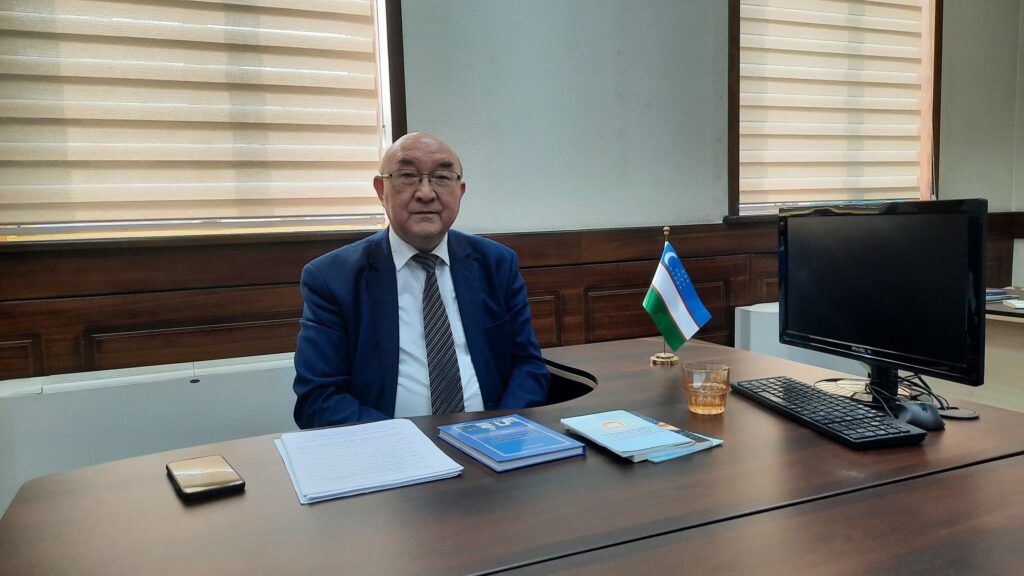
Across the Turkic-speaking world, debates over language policy and writing systems are gaining renewed importance. More than 300 million people across Eurasia speak Turkic languages, yet they use different scripts, Cyrillic, Latin, and Arabic. Uzbek scholar Bakhtiyor Karimov argues that this diversity of alphabets weakens cultural and intellectual connections among Turkic societies. Karimov, a linguist and professor who helped develop the pan-Turkic auxiliary language Ortaturk, is an academician of the Turon Academy of Sciences and director of its Ortaturk Language Research Institute. Together with Shoahmad Mutalov, he developed the concept of the Ortaturk language. In this interview, he discusses the challenges posed by alphabet diversity, his proposal for a new writing model, and his view that language policy is closely linked to political and geopolitical developments. A fragmented writing landscape Karimov describes alphabet diversity as one of the most serious challenges facing Turkic-speaking communities. “Roughly thirty Turkic languages exist,” he said. “About twenty use the Cyrillic alphabet, three use the Latin alphabet, two are transitioning toward Latin, and many communities still rely on the Arabic script. In numerical terms, around 100 million Turkic speakers use Arabic, another 100 million use Latin, and another 100 million use Cyrillic.” The situation has deep historical roots. Over the past century, shifting political systems and state policies have shaped the writing traditions of Turkic languages. As a result, speakers of closely related languages often find it difficult to read each other’s texts. For example, Uyghurs in China write using the Arabic script, while Uzbeks in Afghanistan also rely on Arabic-based writing. In Uzbekistan, both Cyrillic and Latin scripts are used. Azerbaijani communities in Iran use the Arabic script, whereas Azerbaijan employs a Latin-based alphabet. Most Turkic languages within Russia continue to use Cyrillic. Karimov also notes legal constraints. He points to Russian legislation requiring languages used in official contexts to employ the Cyrillic alphabet, arguing that this limits the ability of Turkic-speaking communities in Russia to adopt Latin scripts even if they wish to do so. “About twenty Turkic peoples living in Russia are effectively restricted to Cyrillic,” he said. Meanwhile, Turkey, Azerbaijan, and Turkmenistan have fully adopted Latin alphabets. Uzbekistan and Kazakhstan are gradually transitioning, although the process has been uneven. Kyrgyzstan continues to rely primarily on Cyrillic. “All of this means that the Turkic world is linguistically connected but graphically divided,” Karimov said. Efforts toward a common alphabet Recognizing this challenge, the Organization of Turkic States established a working group of linguists to explore the creation of a unified Turkic alphabet. Experts from Uzbekistan, Azerbaijan, Kazakhstan, Kyrgyzstan, Turkmenistan, and Turkey participated in the initiative. “They worked together for about two years and produced a draft proposal,” Karimov said. “However, the project remains under discussion and has not yet been formally adopted. Ultimately, political leaders must reach a consensus.” Karimov believes the draft proposal contains technical shortcomings, particularly in how certain sounds are represented. “In some cases, a single phoneme is represented by more than one graphic symbol,” he said. “From a computational...

Leaders of Turkic States Meet in Azerbaijan

The 12th Summit of the Heads of State of the Organization of Turkic States (OTS) convened in Gabala, Azerbaijan, bringing together leaders from Azerbaijan, Kazakhstan, Kyrgyzstan, Turkey, Uzbekistan, Hungary, Turkmenistan, and the Turkish Republic of Northern Cyprus. Discussions focused on regional stability, economic integration, and strengthening fraternal ties among Turkic nations. Aliyev: The OTS Is Becoming a Major Geopolitical Center Opening the summit, Azerbajani President Ilham Aliyev welcomed participants to Gabala and thanked Kyrgyzstan for its prior chairmanship. “Today, the Organization of Turkic States is not merely a platform for cooperation; it is forming as one of the serious geopolitical centers,” Aliyev said. He announced Azerbaijan’s $2 million contribution to support OTS activities and emphasized shared historical roots and cultural values across Turkic nations. Addressing peace and security, Aliyev added, “In light of modern geopolitical challenges, it is crucial that Turkic states act as a unified center of power,” and proposed hosting joint military exercises of OTS member states in 2026. South Caucasus Peace and Economic Connectivity Aliyev highlighted the recent peace agreement initialed between Azerbaijan and Armenia in Washington as a breakthrough for the South Caucasus: “This will turn the region into a space of peace.” He also noted Azerbaijan’s growing role in regional logistics: “Since 2022, cargo volumes along the Middle Corridor have increased by nearly 90%. Our Caspian fleet, the Alat Port, the Baku-Tbilisi-Kars railway, and nine international airports have made Azerbaijan a leading transport hub.” He stressed the importance of the Zangezur Corridor, intended to connect Azerbaijan with Nakhchivan and Central Asia, and cited Azerbaijan’s energy diversification, exporting natural gas to 14 countries and a projected 40% share of renewables in its energy mix by 2030. Unity and Vision from the Turkic Leaders Kyrgyz President Sadyr Japarov praised the summit location and the symbolic timing: “Gabala is an ancient city with a 2,000-year history, and it is no coincidence we gathered here.” He called the joint peace declaration with Armenia a historic step toward trust in the South Caucasus. Kazakh President Kassym-Jomart Tokayev echoed support: “This historic document has ended a conflict that had remained unresolved for more than 30 years.” He quoted poet Bakhtiyar Vagabzade: “A Turk has no right to be hostile to another Turk.” Turkish President Recep Tayyip Erdoğan called for developing a “Common Turkic Language Model” to protect cultural heritage and advance artificial intelligence research. “We once again demonstrate that the Turkic states, driven by solidarity, mutual respect, and brotherhood, are confidently looking to the future,” he said. Uzbek President Shavkat Mirziyoyev credited Aliyev’s leadership: “This peace declaration became possible thanks to your political will and is a common achievement of the Turkic world.” Turkmenistan and Hungary on Brotherhood and Energy Gurbanguly Berdimuhamedov, Chairman of Turkmenistan’s Halk Maslahaty, described the OTS as a unifying platform for brotherly nations with shared culture and language, committed to promoting cooperation at regional and international levels. Hungarian Prime Minister Viktor Orbán underscored Azerbaijan’s value to Europe: “Your incredible achievements, economic development, and investments in renewable energy...

Turkey Proposes Turkmenistan Join the Parliamentary Assembly of Turkic-Speaking Countries

Turkey has proposed that Turkmenistan join the Parliamentary Assembly of Turkic-Speaking Countries (TURKPA). The initiative was put forward by Turkish Parliament Speaker Numan Kurtulmuş during a meeting with a Turkmen parliamentary delegation in Ankara. During the talks, both sides discussed inter-parliamentary cooperation and ways to strengthen bilateral ties. One of the key topics was Turkmenistan’s initiative to declare 2025 the International Year of Peace and Trust, which was previously approved by the United Nations General Assembly. The Turkmen delegation expressed gratitude to Turkey for its support of this initiative. Following the discussions, the delegations held a press conference, where they emphasized the importance of their accumulated experience in cooperation and the potential for deepening diplomatic relations. As part of their visit, the Turkmen delegation toured several historical sites in Ankara. The cultural program included visits to Turkey’s first parliament building and museum, the Ankara Fortress, and the Hamamönü district. They also participated in a flower-laying ceremony at Anıtkabir, the mausoleum of Mustafa Kemal Atatürk, the first President of Turkey. TURKPA is a parliamentary organization that aims to strengthen inter-parliamentary ties among Turkic-speaking states. Its objectives include harmonizing political positions, facilitating the exchange of information and experience, and implementing joint projects in politics, economics, and culture. Turkmenistan has so far remained outside of TURKPA, but its potential membership could further strengthen cooperation among Turkic-speaking nations.
