
• KZT/USD = 0.00215
  • TJS/USD = 0.10810
  • UZS/USD = 0.00009
  • TMT/USD = 0.29760
  • KZT/USD = 0.00215
  • TJS/USD = 0.10810
  • UZS/USD = 0.00009
  • TMT/USD = 0.29760
  • KZT/USD = 0.00215
  • TJS/USD = 0.10810
  • UZS/USD = 0.00009
  • TMT/USD = 0.29760
  • KZT/USD = 0.00215
  • TJS/USD = 0.10810
  • UZS/USD = 0.00009
  • TMT/USD = 0.29760
  • KZT/USD = 0.00215
  • TJS/USD = 0.10810
  • UZS/USD = 0.00009
  • TMT/USD = 0.29760
  • KZT/USD = 0.00215
  • TJS/USD = 0.10810
  • UZS/USD = 0.00009
  • TMT/USD = 0.29760
  • KZT/USD = 0.00215
  • TJS/USD = 0.10810
  • UZS/USD = 0.00009
  • TMT/USD = 0.29760
  • KZT/USD = 0.00215
  • TJS/USD = 0.10810
  • UZS/USD = 0.00009
  • TMT/USD = 0.29760
31 August 2026

Viewing results 1 - 6 of 2

Central Asian Music Takes the Stage in Berlin

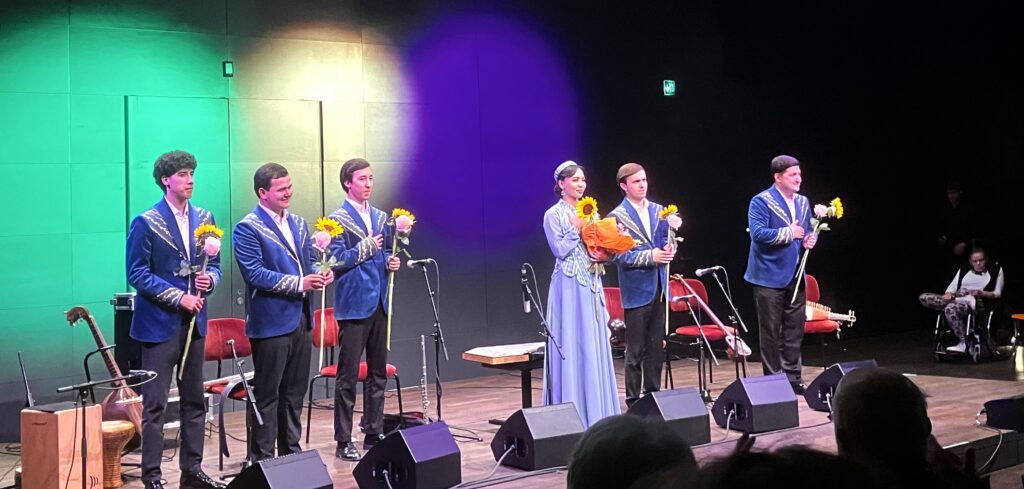
Young Central Asian musicians have featured at the ongoing Young Euro Classic festival in Berlin. Since its beginnings in 2000, the festival has brought youth orchestras from around the world to the German capital, while the later addition of the Future Now series as a “festival within the festival” opened it to smaller experimental ensembles. It was not the first time that orchestras and smaller groups from Central Asia had performed at Young Euro Classic. Kazakh musicians had appeared before, including at the 2024 festival. Turkmen musicians also performed in Berlin later that year as part of the separate FUTURE NOW – Central Asia festival. However, this year’s performances introduced two new groups to Young Euro Classic audiences. On August 1, Mohiron from Dushanbe opened the Future Now series. The six Tajik musicians played traditional Tajik melodies, their own compositions, and arrangements of Western music at their sold-out concert. Their interpretations of Vivaldi’s “Escala Palladio” and Zequinha de Abreu’s “Tico-Tico” drew particularly enthusiastic responses from the audience. On August 9, the Youth Symphony Orchestra of Turkmenistan made its Young Euro Classic debut in Berlin. The orchestra traces its roots to a chamber ensemble founded by conductor Rasul Klychev in 2007, which had previously performed elsewhere in Germany. Klychev and his musicians introduced the audience to Turkmen orchestral classics alongside contemporary works by American composer Aidan Gold and French composer Pierre Thilloy, both receiving German premieres. Highlights included the demanding piano concerto by Turkmen composer Chary Nurymov, performed by the young pianist Shaislam Komildjanov, and the final “Danzón No. 2” by Mexican composer Arturo Márquez. The audience gave the performance a standing ovation. As much of Central Asia remains relatively unfamiliar to many German audiences, the concerts offered a chance to introduce the region and its musical traditions. The appearances may also create further opportunities for the musicians to represent their countries elsewhere in Germany and Europe.

From the Central Asian Steppe to Manhattan: A Turkmen Bard in New York

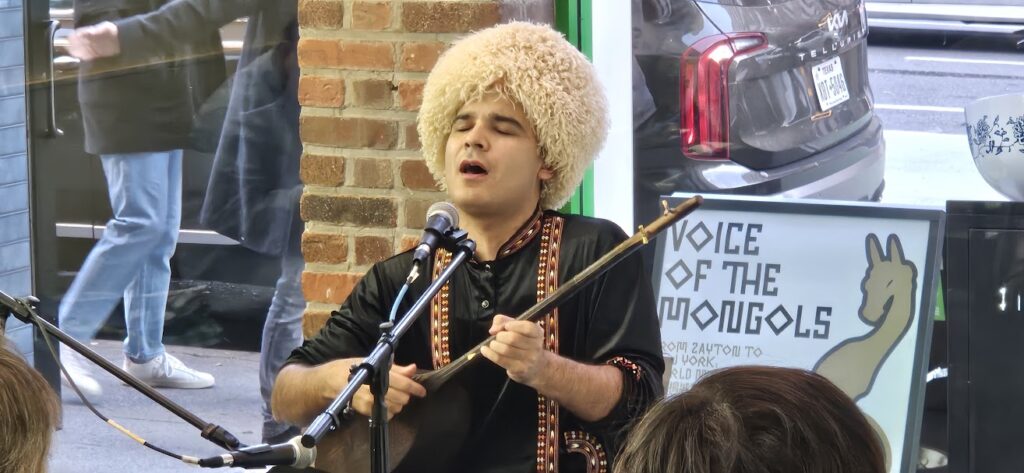
A halal Chinese Muslim restaurant in New York City is an unlikely setting for a concert by a highly acclaimed bard of the Turkmen tradition. Yet on a Saturday afternoon in Manhattan’s Kips Bay neighborhood, before an audience of attentive listeners and curious onlookers peering through the window, the multi-award-winning Mohammad Geldi Geldi Nejad filled Beef Up Noodle with sustained melodic phrases and guttural embellishments. At times, his dexterous strumming of the dutar, a two-stringed long-necked lute, deliberately mimicked the rhythm of galloping horse hooves central to the Turkmen bardic style. Mohammad was raised in the Turkmen community of Gonbad-e Kavus in northeastern Iran. At age ten, he became only the second musician ever to receive the honorary title Oghlan Bakhshi, meaning Child Bard. His musical education in Turkmen bardic traditions began in early childhood, before more formal training in Turkmenistan’s capital, Ashgabat. Turkmen culture, shaped by a nomadic heritage, extends across Turkmenistan, Iran, Afghanistan, Uzbekistan, and Kazakhstan, with smaller populations in Turkey, Iraq, and the North Caucasus. It draws on nomadic traditions where performance serves as a primary vehicle of cultural expression. Central Asian music and culture, carried by diasporic communities from these regions, has found a growing audience in the United States. Turkmen traditions, however, given the minuscule size of the Turkmen population in the U.S., remain largely unfamiliar to most audiences. [video width="848" height="478" mp4="https://timesca.com/wp-content/uploads/2025/12/WhatsApp-Video-2025-12-17-at-18.16.28.mp4"][/video] Even so, Mohammad has brought his music to audiences beyond Turkmenistan and Iran, performing in parts of Europe and the U.S., including recent concerts at the Lowell Folk Festival in Massachusetts and at Roulette in Brooklyn. At the latter, he offered Western listeners rare access to a musical lineage sustained within a family across generations. Performing under his honorific alias Oghlan Bakhshi, he appeared alongside his father, the gyjak, or spike fiddle, master Abdolghaffar Geldinejad, and his wife and regular musical collaborator, Zyyada Jumayeva, a dutar player who represents the female bardic tradition of Turkmenistan. His album Journey Across the Steppes is the first international release of Turkmen folk music in 30 years. His work has also been documented in a book series, The Music of Central Asia. At Beef Up Noodle, Mohammad’s performance, titled Songs of the Bakhshi: Turkmen Bardic Heritage, formed part of a broader curatorial landscape shaped by ethnomusicologist Mu Qian, whose work spans scholarship, publishing, and community-based music making. From Zayton to New York is the concert series he curates, exploring how music travels through histories of migration and exchange. Mohammad’s appearance opened a Central Asian trilogy within the series, to be followed by programs devoted to Kyrgyz and Kazakh musical traditions in early 2026. This trilogy represents one strand of Mu Qian’s wider mission, developed through the See & Sea Cultural Foundation, to support minority musicians and bring underrepresented musical cultures from across Asia into conversation with audiences beyond their places of origin. [caption id="attachment_41154" align="aligncenter" width="1283"] Mu Qian with Mohammad Geldi Geldi Nejad; image: Paul Adams[/caption] British expat Margaret Murray, an audience member whose chance meeting...