Young Central Asian musicians have featured at the ongoing Young Euro Classic festival in Berlin. Since its beginnings in 2000, the festival has brought youth orchestras from around the world to the German capital, while the later addition of the Future Now series as a “festival within the festival” opened it to smaller experimental ensembles.
It was not the first time that orchestras and smaller groups from Central Asia had performed at Young Euro Classic. Kazakh musicians had appeared before, including at the 2024 festival. Turkmen musicians also performed in Berlin later that year as part of the separate FUTURE NOW – Central Asia festival. However, this year’s performances introduced two new groups to Young Euro Classic audiences.
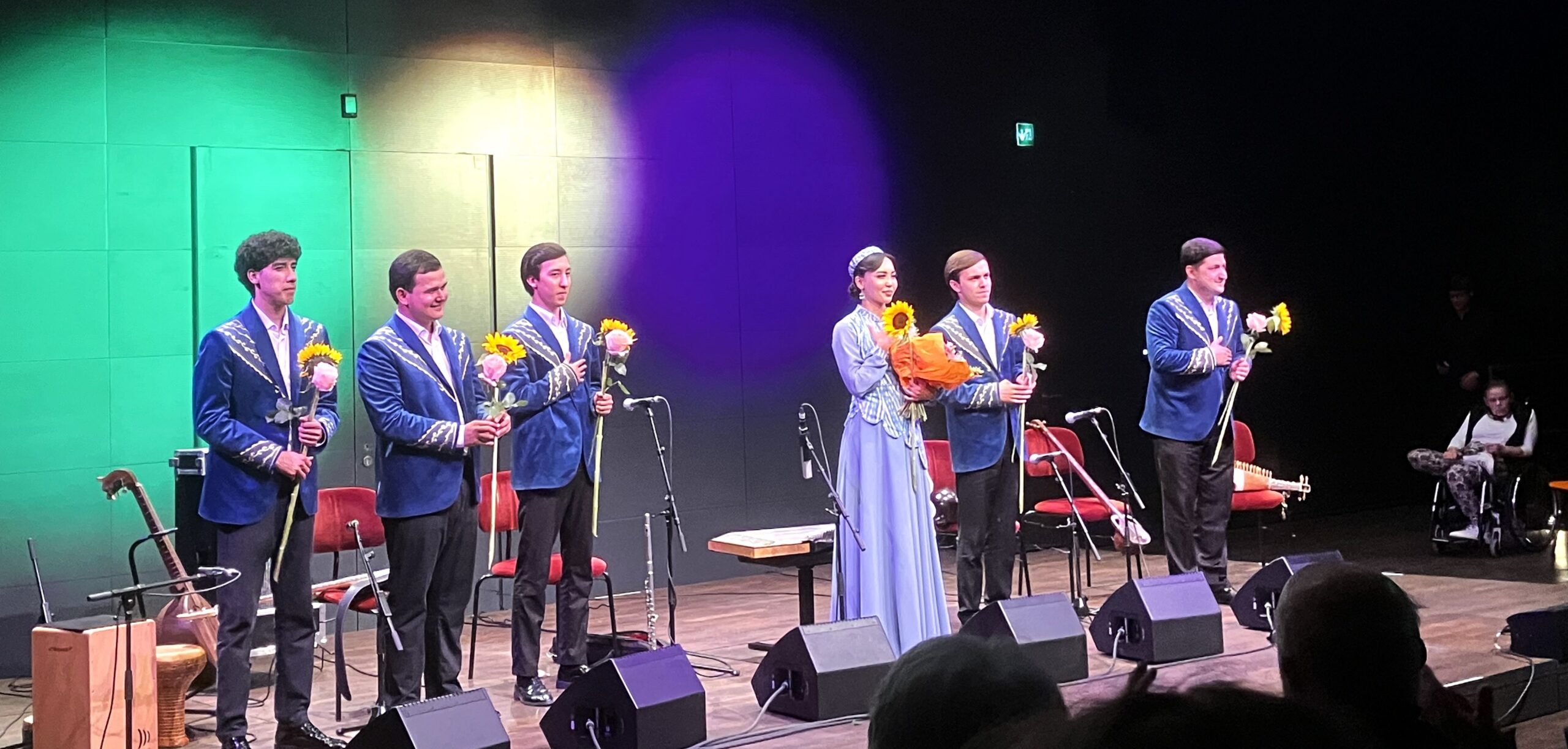
On August 1, Mohiron from Dushanbe opened the Future Now series. The six Tajik musicians played traditional Tajik melodies, their own compositions, and arrangements of Western music at their sold-out concert. Their interpretations of Vivaldi’s “Escala Palladio” and Zequinha de Abreu’s “Tico-Tico” drew particularly enthusiastic responses from the audience.
On August 9, the Youth Symphony Orchestra of Turkmenistan made its Young Euro Classic debut in Berlin. The orchestra traces its roots to a chamber ensemble founded by conductor Rasul Klychev in 2007, which had previously performed elsewhere in Germany. Klychev and his musicians introduced the audience to Turkmen orchestral classics alongside contemporary works by American composer Aidan Gold and French composer Pierre Thilloy, both receiving German premieres. Highlights included the demanding piano concerto by Turkmen composer Chary Nurymov, performed by the young pianist Shaislam Komildjanov, and the final “Danzón No. 2” by Mexican composer Arturo Márquez. The audience gave the performance a standing ovation.
As much of Central Asia remains relatively unfamiliar to many German audiences, the concerts offered a chance to introduce the region and its musical traditions. The appearances may also create further opportunities for the musicians to represent their countries elsewhere in Germany and Europe.