
• KZT/USD = 0.00213
  • TJS/USD = 0.10810
  • UZS/USD = 0.00008
  • TMT/USD = 0.29850
  • KZT/USD = 0.00213
  • TJS/USD = 0.10810
  • UZS/USD = 0.00008
  • TMT/USD = 0.29850
  • KZT/USD = 0.00213
  • TJS/USD = 0.10810
  • UZS/USD = 0.00008
  • TMT/USD = 0.29850
  • KZT/USD = 0.00213
  • TJS/USD = 0.10810
  • UZS/USD = 0.00008
  • TMT/USD = 0.29850
  • KZT/USD = 0.00213
  • TJS/USD = 0.10810
  • UZS/USD = 0.00008
  • TMT/USD = 0.29850
  • KZT/USD = 0.00213
  • TJS/USD = 0.10810
  • UZS/USD = 0.00008
  • TMT/USD = 0.29850
  • KZT/USD = 0.00213
  • TJS/USD = 0.10810
  • UZS/USD = 0.00008
  • TMT/USD = 0.29850
  • KZT/USD = 0.00213
  • TJS/USD = 0.10810
  • UZS/USD = 0.00008
  • TMT/USD = 0.29850

Viewing results 1 - 6 of 3

Iran Says Trains Resume After Reported Strike on Railway Bridge to Turkmenistan

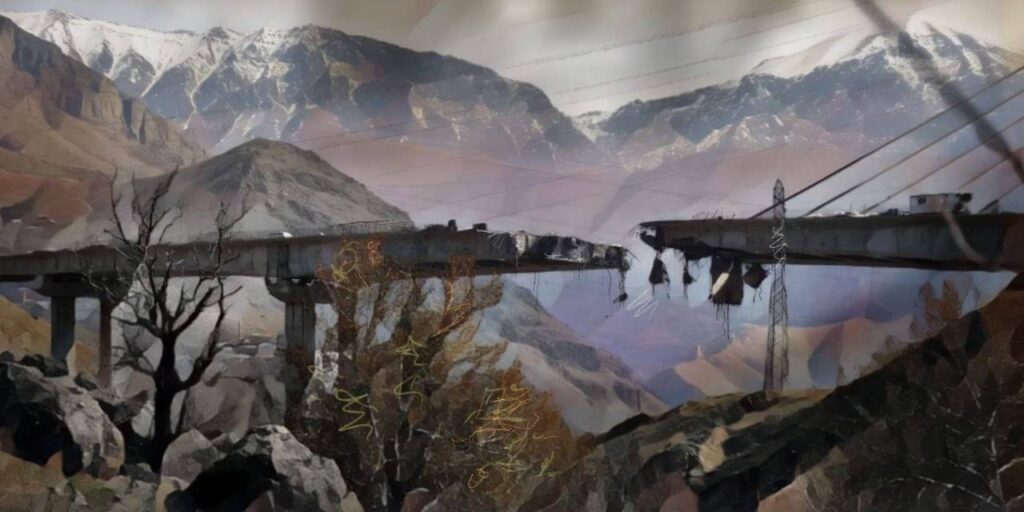
An alleged U.S. strike on a railway bridge on a northern Iranian line crossing into Turkmenistan highlighted concerns about Central Asian trade routes in the region. Iran, however, says it has repaired the tracks and trains are running again. The reported attack on the Aq Tekeh Khan bridge near Aqqala city in Golestan province on July 9 was part of a wave of U.S. military action against Iran after tensions over the disputed Strait of Hormuz, whose shipping lanes are key to global commerce, and the collapse of a shaky ceasefire. U.S. strikes were ongoing on Friday, while Iran has carried out drone strikes on U.S. allies in the Gulf region. There were no casualties in the strike on the bridge in Golestan, according to Iranian state-affiliated media that published photographs of what appeared to be an impact crater and twisted railway tracks. The Mehr news agency cited an Islamic Revolutionary Guards Corps statement that cruise missiles hit the bridge. Reconstruction began immediately and the railway was ready for traffic less than 24 hours after the attack, the chn.ir news site and other Iranian outlets reported. Washington has not publicly commented on reports of the attack on the Aq Tekeh Khan bridge, which is part of a railway line that crosses into Turkmenistan at the Iranian border city of Incheh Borun and is a key corridor for Iranian trade with Central Asia, Russia and China. An analysis by London-based Iran International said Iran, which is under pressure from economic sanctions as well as attacks on its maritime infrastructure, relies on the route for “military logistics, civilian trade, sanctions resilience and alternative transit routes.” The reported attack on the bridge is also significant for Turkmenistan, Kazakhstan and other Central Asian countries, according to the analysis. “These countries have invested in diversified transit routes through Iran to reach Gulf ports and global markets while reducing dependence on Russian or Chinese-controlled corridors,” Iran International said. “If Iranian routes are viewed as vulnerable during conflict, governments and commercial operators may reassess their reliability.” East of the Incheh Borun railway line, another railway line between Iran and Turkmenistan crosses at the Iranian border town of Sarakhs. Iran has also been developing railway infrastructure at the border city of Loftabad, which lies between the Incheh Borun and Sarakhs lines. Shortly before Israel and the United States launched air strikes on Iran on Feb. 28, initiating the ongoing war, top railway officials from Iran and Turkmenistan met in Sarakhs to discuss ways to strengthen their cross-border railway routes. The talks were part of Iran’s effort to build “its position as a land bridge linking Central Asia to open waters,” the Tehran Times reported.
U.S. Strikes on Iranian Rail and Coastal Infrastructure Put Central Asia’s Southern Routes Under Pressure

U.S. strikes on Iranian rail and coastal infrastructure have put Central Asia's southern transport plans under new pressure. Kazakhstan and Turkmenistan have spent years building routes through Iran to reach the Persian Gulf, the Gulf of Oman, and markets beyond Russia. Public statements so far do not show a confirmed halt in Central Asian freight, but bridge damage near Iran's border with Turkmenistan and strikes along Iran's southern coast have made the security picture more concrete. Reports and a video posted on July 9 showed damage to the Aq Taqeh Khan railway bridge, on Iran's rail link to Turkmenistan and Kazakhstan, after overnight U.S. strikes. Reuters said it verified the location by matching the bridge, riverbank, road, fields, and nearby town with satellite imagery, and found no earlier versions of the video online. Iran's Revolutionary Guard-linked Neynava Corps in Golestan said the area around the Aq Taqeh Khan railway bridge in Aq Qala County was targeted by U.S. cruise missiles early on July 9, with no casualties reported. The bridge sits on the Gorgan-Incheh Borun railway line, which reaches the Incheh Borun border crossing with Turkmenistan and links onward to Kazakhstan. Head of the Islamic Republic of Iran Railways, Jabar-Ali Zakeri, said engineers had rebuilt one damaged track on the Mashhad route and returned it to service in less than 15 hours, according to Fars News Agency. He said work on a second damaged line was continuing and was expected to finish within hours. That statement concerned the Mashhad route, however, and does not confirm the status of the Gorgan-Incheh Borun line. The route sits inside a wider transport effort that Kazakhstan, Turkmenistan, Iran, China, and Russia have all tried to expand. TCA has previously reported on a 2024 test container train on the China-Kazakhstan-Turkmenistan-Iran route, which ran from Xi'an to Tehran. It carried 45 forty-foot containers loaded with auto parts and cut the China-Iran delivery time to 15 days. The Gorgan-Incheh Borun railroad was inaugurated in December 2014, linking Iran to Turkmenistan and Kazakhstan along the eastern side of the Caspian Sea. The wider Uzen-Bereket-Gorgan route runs for more than 900 kilometers from western Kazakhstan through Turkmenistan into northern Iran. It connects Kazakhstan and Turkmenistan’s rail networks to Iran’s system and onward to the Persian Gulf and Asian markets. The U.S. military has framed the latest strikes as a response to Iranian attacks on commercial shipping. U.S. Central Command said on July 8 that its forces had struck about 90 Iranian military targets, including air defense systems, coastal surveillance assets, missile and drone storage sites, naval capabilities, and military logistics infrastructure along Iran's coastline. CENTCOM said the operation was designed “to further degrade Iran's ability to attack commercial shipping and innocent civilian mariners in the Strait of Hormuz.” The coastal security picture also impacts Kazakhstan through Shahid Rajaee Port in Bandar Abbas. On June 28, Kazakhstan and Iran signed a 27-year Build-Operate-Transfer agreement for a Kazakh transport and logistics terminal there. The Kazakh embassy in Tehran said the deal...

CIS Official Warns Middle East Crisis Could Increase Migration Pressure on Turkmenistan

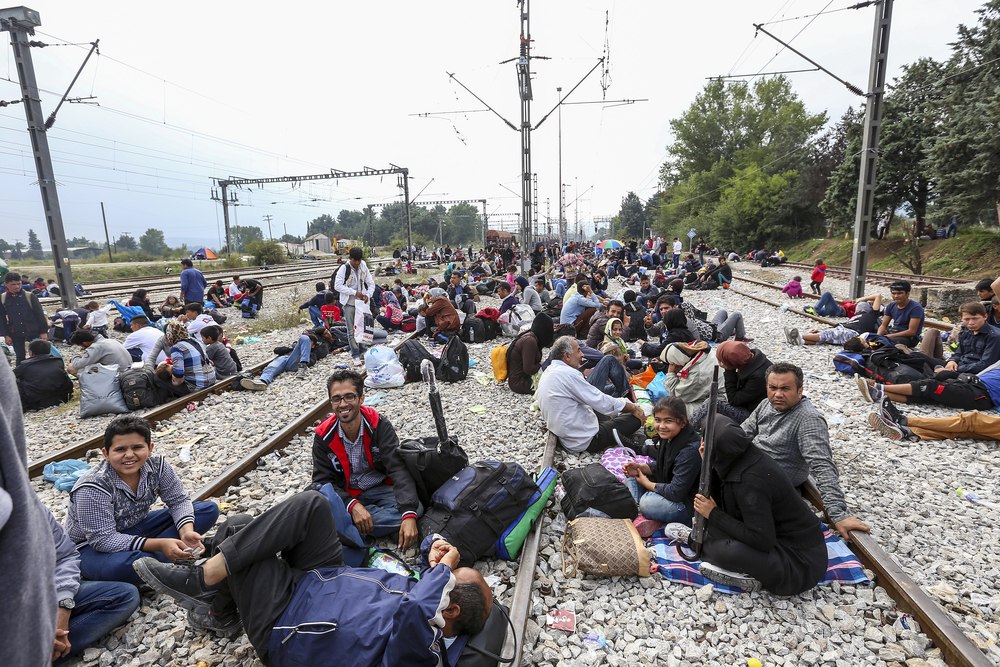
Growing instability in the Middle East could trigger large-scale migration flows that may affect countries bordering Iran, including Turkmenistan, according to a senior security official from the Commonwealth of Independent States (CIS). The warning was issued by Evgeny Sysoev, head of the CIS Anti-Terrorism Center, during a meeting of the heads of competent authorities of CIS member states, according to the Azerbaijani newspaper Bakinskiy Rabochiy. Sysoev said the worsening international situation, particularly developments in the Middle East, had created conditions that could lead to significant migration movements and a humanitarian crisis similar to those seen during conflicts in Libya and Iraq. While all CIS countries could face consequences from such a scenario, he said the greatest pressure would likely fall on states sharing borders with Iran, specifically Armenia, Azerbaijan, and Turkmenistan. The comments come as regional governments closely monitor the wider effects of instability in the Middle East. Turkmenistan, which shares a 1,148-kilometer border with Iran, is one of the countries most directly exposed to any potential population movements resulting from a prolonged crisis. Reuters has previously reported that Turkmenistan’s border with northeastern Iran has been used as an evacuation route for foreign nationals leaving Iran during periods of heightened instability. Sysoev also highlighted ongoing counterterrorism cooperation among CIS member states. According to his figures, security agencies across the bloc prevented more than 2,500 terrorist and extremist crimes in 2025, including more than 300 attempted terrorist attacks. He said authorities disrupted more than 200 terrorist and extremist cells, shut down nearly 900 sources and 300 channels of terrorist financing, and blocked almost 19,000 online resources containing radical content. More than 2,300 criminal cases related to terrorism and extremism were opened, while more than 1,500 people were prosecuted. Authorities also persuaded more than 100 terrorists and more than 2,000 extremists to abandon destructive activities, he added. The warning follows recent signs that developments in neighboring Iran are already having an economic impact on Turkmenistan. As previously reported by The Times of Central Asia, disruptions to trade routes and supplies from Iran have contributed to rising prices for food, household goods, construction materials, and cigarettes across the country.
