
• KGS/USD = 0.01144 0%
  • KZT/USD = 0.00202 0%
  • TJS/USD = 0.10672 -0.09%
  • UZS/USD = 0.00008 0%
  • TMT/USD = 0.28530 0%
  • KGS/USD = 0.01144 0%
  • KZT/USD = 0.00202 0%
  • TJS/USD = 0.10672 -0.09%
  • UZS/USD = 0.00008 0%
  • TMT/USD = 0.28530 0%
  • KGS/USD = 0.01144 0%
  • KZT/USD = 0.00202 0%
  • TJS/USD = 0.10672 -0.09%
  • UZS/USD = 0.00008 0%
  • TMT/USD = 0.28530 0%
  • KGS/USD = 0.01144 0%
  • KZT/USD = 0.00202 0%
  • TJS/USD = 0.10672 -0.09%
  • UZS/USD = 0.00008 0%
  • TMT/USD = 0.28530 0%
  • KGS/USD = 0.01144 0%
  • KZT/USD = 0.00202 0%
  • TJS/USD = 0.10672 -0.09%
  • UZS/USD = 0.00008 0%
  • TMT/USD = 0.28530 0%
  • KGS/USD = 0.01144 0%
  • KZT/USD = 0.00202 0%
  • TJS/USD = 0.10672 -0.09%
  • UZS/USD = 0.00008 0%
  • TMT/USD = 0.28530 0%
  • KGS/USD = 0.01144 0%
  • KZT/USD = 0.00202 0%
  • TJS/USD = 0.10672 -0.09%
  • UZS/USD = 0.00008 0%
  • TMT/USD = 0.28530 0%
  • KGS/USD = 0.01144 0%
  • KZT/USD = 0.00202 0%
  • TJS/USD = 0.10672 -0.09%
  • UZS/USD = 0.00008 0%
  • TMT/USD = 0.28530 0%
06 February 2026

Viewing results 1 - 6 of 7

New U.S. Ambassador to Kazakhstan to Build “Momentum” on Trade, Diplomacy

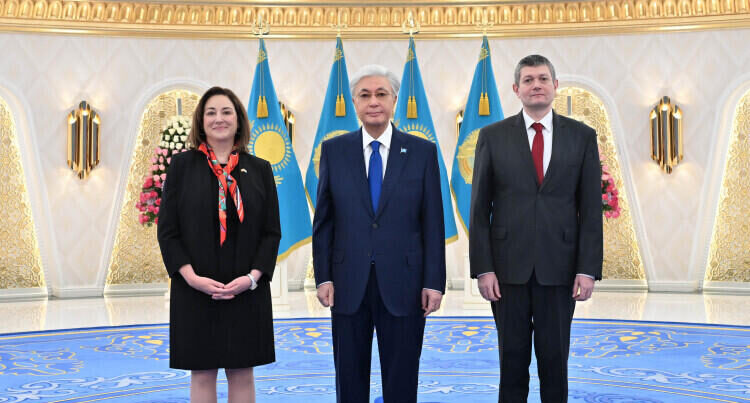
Julie Stufft, the new U.S. ambassador to Kazakhstan, is a career diplomat who has said her goal is to ensure that U.S. companies in the Central Asian country have not just an “even playing field” but are also “the partners of choice” in a region where Russia and China are the dominant trading partners. Stufft, who made those remarks during her confirmation hearing in the U.S. Congress in July, presented her credentials to President Kassym-Jomart Tokayev of Kazakhstan in Astana on Friday. She has previously worked on COVID-19 travel policies and U.S. visa processing worldwide and was most recently deputy assistant to the president and executive secretary of the National Security Council. Stufft has served as deputy chief of mission in the U.S. Embassies in Moldova and Djibouti, and was also a diplomat in Russia, Ethiopia, and Poland. One of Stufft’s daughters, Nora, is a student at the U.S. Air Force Academy in Colorado. After the credentials ceremony in Astana, Stufft said Tokayev and U.S. President Donald Trump have a “very close relationship” and that there was impetus for further collaboration between Kazakhstan and the United States. “We have so much momentum from President Tokayev´s recent visit to Washington that we have to build on this,” Stufft said in reference to a November summit hosted by Trump and attended by the leaders of Kazakhstan, Kyrgyzstan, Tajikistan, Turkmenistan, and Uzbekistan. The meeting focused on securing big trade deals as well as U.S access to minerals in Central Asia that are critical to energy and other industries. Another U.S. goal is to counter the longstanding influence of Russia and China in Central Asian countries, whose leaders seek to balance their relationships with the big powers. Last month, in another round of diplomatic outreach, Trump invited Tokayev and President Shavkat Mirziyoyev of Uzbekistan to attend the G20 summit in Miami later this year. In addition to holding large reserves of critical minerals, Kazakhstan is a top uranium producer and a major oil exporter. China and Russia are its biggest overall trading partners. While U.S. trade with Kazakhstan is relatively small in comparison, the relationship is growing. “My goal as ambassador, if confirmed, would be to make sure that U.S. companies have an even playing field so that they can do investment in Kazakhstan, and also that U.S. companies are the partners of choice in Kazakhstan, instead of Chinese or other companies,” Stufft said in her confirmation hearing last year. The previous U.S. ambassador to Kazakhstan, Daniel Rosenblum, resigned from the post in January 2025.
U.S. Senate Confirms Julie Stufft as Ambassador to Kazakhstan

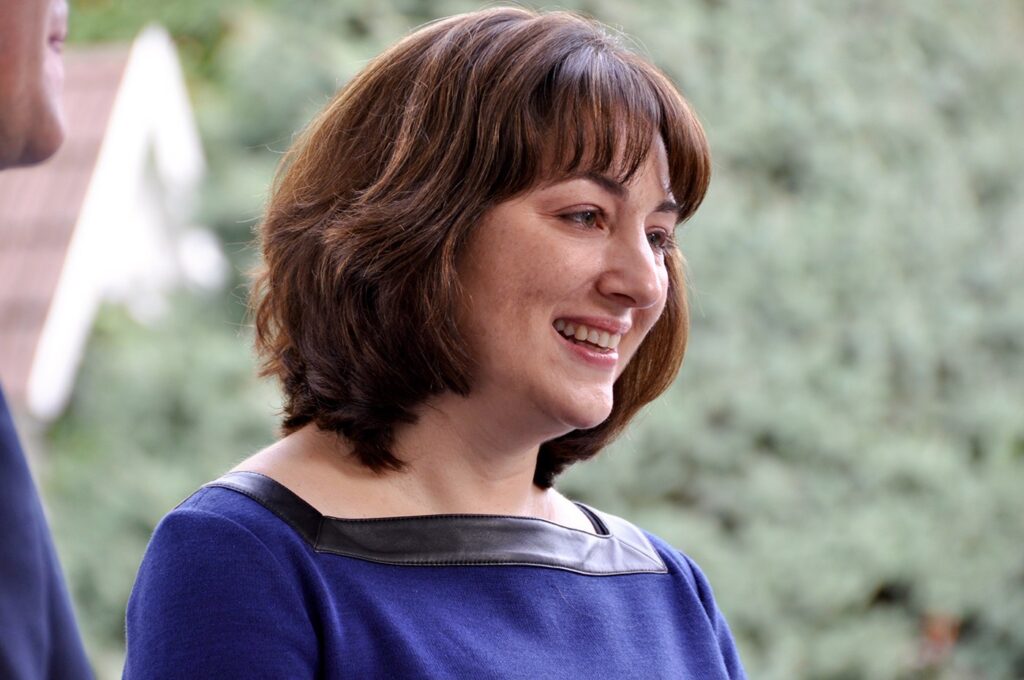
On October 7, the United States Senate confirmed Julie Stufft as the new U.S. Ambassador to Kazakhstan, approving her nomination by a vote of 51 to 47, and marking the first new U.S. envoy to Astana under President Donald Trump. A career diplomat and Senior Foreign Service Minister-Counselor, Stufft previously served as Deputy Assistant Secretary for Visa Services. During her July 2025 confirmation hearing, Stufft outlined her priorities, citing the security of U.S. citizens, energy cooperation, and critical minerals partnerships as top priorities. “If confirmed, my primary task will be to ensure the safety of all Americans in Kazakhstan, including my embassy and consulate staff,” she said. Stufft emphasized Kazakhstan’s strategic importance as a key U.S. partner in Central Asia, highlighting opportunities for expanded economic cooperation, particularly in energy and critical minerals. “Today, we stand on the threshold of a new era of trade and energy cooperation with Kazakhstan, a world leader in uranium production, a major oil exporter, and a holder of vast reserves of critical minerals,” she said. Stufft added that she intends to collaborate with the Bureau of Economic, Energy, and Business Affairs, the U.S. International Development Finance Corporation, the Export-Import Bank, and the private sector to deepen bilateral economic ties and promote U.S. prosperity. Stufft’s confirmation received some bipartisan support, with Senators Jeanne Shaheen (D-NH) and Steve Daines (R-MT) praising her professional experience and diplomatic capabilities. She succeeds Daniel Rosenblum, who retired in December 2024 after 28 years of service in the State Department. Her nomination was formally submitted by the White House and approved by President Donald Trump in the summer of 2025. Stufft is a career diplomat and a member of the Senior Foreign Service. Before her appointment, she served at the Bureau of Consular Affairs. Her previous overseas postings include assignments in Russia, Poland, Ethiopia, Moldova, and Djibouti. She also served on the National Security Council, coordinating efforts to protect Americans during the COVID-19 pandemic. Stufft holds degrees from Case Western Reserve University and Duke University. She speaks Russian, Romanian, French, and Polish. In 2023, she received the Presidential Award for Distinguished Service and has earned seven State Department awards over her career. “We must actively oppose violence against women and girls,” she said, underscoring her commitment to gender equality as part of U.S. foreign policy. Stufft is a fellow of the International Women's Forum (2021-2022) and participated in the MIT Center for International Studies’ Seminar XXI program (2014-2015).

Opinion: Ex-U.S. Ambassador Warns Washington Has Ceded Information Space in Central Asia

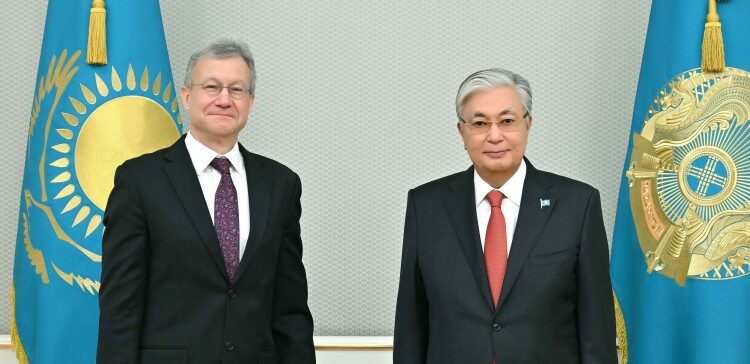
Former U.S. Ambassador to Uzbekistan and Kazakhstan, Daniel Rosenblum, has warned that Washington has “surrendered” its influence in Central Asia’s information sphere, allowing Russia and China to dominate the narrative. His remarks were reported by the Yale Daily News following a lecture at Yale University on September 15. Rosenblum, who served as U.S. ambassador to Uzbekistan from 2019 to 2022 and to Kazakhstan from 2022 to 2025, delivered a speech titled “Battling the Firehose of Falsehood: Confronting Russian Disinformation in Central Asia.” He described how Russian disinformation campaigns frequently portrayed U.S. diplomats as destabilizing actors. In one example from 2023, Russian outlets falsely claimed a NATO base had opened in Kazakhstan. “While it is easy to joke about such an absurd idea,” Rosenblum said, “the intent behind such Russian information operations is deadly serious.” Rosenblum noted that U.S. embassies attempted to counteract these narratives by highlighting tangible achievements, including COVID-19 health initiatives, agricultural partnerships, and academic exchange programs. However, he argued that much of this work has unraveled since 2023, citing the dismissal of over 1,300 State Department personnel, the elimination of USAID programs in the region, and recent cuts to Voice of America and Radio Free Europe/Radio Liberty. “Eight months into the second Trump administration, it seems clear that the information war is over in Central Asia, not because the Russians won. We have simply surrendered,” he said. Rosenblum also emphasized China’s expanding influence through the Belt and Road Initiative, observing that Beijing “was doing a pretty good job of winning friends and influencing people” via infrastructure investment and cultural outreach. In a post-lecture interview, Rosenblum underscored that the challenge is now largely domestic. “The biggest challenge today is ourselves,” he said. “We have to decide as a country, do we want to be engaged in the world or not? If we cut ourselves off from the world, we will ultimately be less secure and less prosperous.” This concern was echoed in earlier analysis for The Times of Central Asia by Arman Amini, a term member of the Council on Foreign Relations and an Atlantic Council Millennium Fellow. “Over the past decade, China has steadily expanded its presence in Central Asia, not through military force, but by building roads, trade corridors, and digital infrastructure,” Amini noted. “As the United States scaled back its regional footprint following its withdrawal from Afghanistan, Beijing moved quickly to fill the void. Today, China has positioned itself as the region’s dominant external power, while the U.S. risks being left on the sidelines.” The lecture was attended by approximately 80 people in person and online. It was organized by the Central Asia Initiative of the MacMillan Center, the Edward J. and Dorothy Clarke Memorial Fund, and Asian Crossroads, a student group dedicated to raising awareness of Central Asia.
