• KGS/USD = 0.01144 0%
  • KZT/USD = 0.00190 -0%
  • TJS/USD = 0.10837 0.37%
  • UZS/USD = 0.00008 0%
  • TMT/USD = 0.28571 0%
  • KGS/USD = 0.01144 0%
  • KZT/USD = 0.00190 -0%
  • TJS/USD = 0.10837 0.37%
  • UZS/USD = 0.00008 0%
  • TMT/USD = 0.28571 0%
  • KGS/USD = 0.01144 0%
  • KZT/USD = 0.00190 -0%
  • TJS/USD = 0.10837 0.37%
  • UZS/USD = 0.00008 0%
  • TMT/USD = 0.28571 0%
  • KGS/USD = 0.01144 0%
  • KZT/USD = 0.00190 -0%
  • TJS/USD = 0.10837 0.37%
  • UZS/USD = 0.00008 0%
  • TMT/USD = 0.28571 0%
  • KGS/USD = 0.01144 0%
  • KZT/USD = 0.00190 -0%
  • TJS/USD = 0.10837 0.37%
  • UZS/USD = 0.00008 0%
  • TMT/USD = 0.28571 0%
  • KGS/USD = 0.01144 0%
  • KZT/USD = 0.00190 -0%
  • TJS/USD = 0.10837 0.37%
  • UZS/USD = 0.00008 0%
  • TMT/USD = 0.28571 0%
  • KGS/USD = 0.01144 0%
  • KZT/USD = 0.00190 -0%
  • TJS/USD = 0.10837 0.37%
  • UZS/USD = 0.00008 0%
  • TMT/USD = 0.28571 0%
  • KGS/USD = 0.01144 0%
  • KZT/USD = 0.00190 -0%
  • TJS/USD = 0.10837 0.37%
  • UZS/USD = 0.00008 0%
  • TMT/USD = 0.28571 0%
06 November 2025

Viewing results 1 - 6 of 9

Russia Seeks to Reassert Role at Central Asia Summit, but Kazakhstan and Uzbekistan Push Their Own Agendas

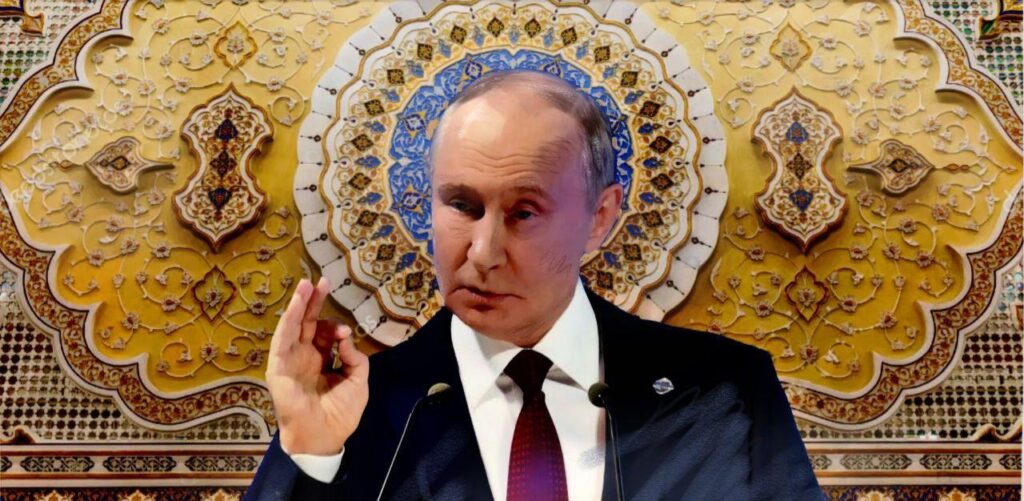
The second Central Asia-Russia summit, held ahead of the Commonwealth of Independent States (CIS) leaders’ meeting, reaffirmed the Kremlin’s continued intent to assert influence over the region. Russian President Vladimir Putin used the platform not only to signal discontent with the pace of economic integration but also to critique the Central Asian republics for what he portrayed as insufficient engagement in bilateral trade. Despite growing ties between Central Asian states and external partners, exemplified by the “C5+1” dialogue format that includes major powers such as the U.S. and China, Putin made clear that Russia does not view its influence in the region as diminished. Opening the summit, Putin took a veiled swipe at the “C5+1” initiative, which has gained traction in recent years. “I am in constant contact with each of the Central Asian presidents,” he said, before adding, “But I am sure that this multilateral format of communication is also very useful and has its obvious ‘added value’, so to speak.” By “added value,” the Russian leader appeared to suggest that multilateral engagement enables Central Asian states to present a more unified front in foreign negotiations, an approach that complicates Moscow’s ability to exert influence through bilateral channels. Putin also expressed dissatisfaction with the current levels of mutual trade and Russian investment in the region. While acknowledging that trade between Russia and Central Asia had surpassed $45 billion, he pointedly compared this figure to trade with Belarus, which exceeds $50 billion despite its far smaller population. “Our trade turnover with Belarus exceeds $50 billion. Let me remind you that Belarus has a population of 10 million. Uzbekistan already has nearly 40 million, Tajikistan over 10 million, and Kazakhstan more than 20 million. Can you imagine what a colossal resource this is?” Putin said. “This means there are strong prospects for expanding our economic relations.” Putin described Russia’s current $20 billion in regional investments as inadequate and called for increased engagement, but also tempered expectations surrounding major infrastructure and logistics projects championed by Astana and Tashkent, while positioning Russia as a central player in their development. He proposed integrating existing North-South and East-West corridors into a unified Eurasian logistics network supported by digital and transport services. “This will allow us to significantly increase international transport volumes through our common region,” Putin said. Kazakh President Kassym-Jomart Tokayev responded directly, updating figures presented by Putin and reaffirming Kazakhstan’s commitment to regional integration. He noted that Russia’s total trade with Central Asia exceeded $50 billion in 2024, with $28 billion in trade between Russia and Kazakhstan alone. Tokayev emphasized the strategic importance of transport cooperation with Russia, stating that “Russia is a key gateway for the region’s countries to global markets. Therefore, cooperation in the transport and logistics sector is a matter of heightened strategic importance.” [caption id="attachment_37343" align="aligncenter" width="1600"] Image: Akorda.kz[/caption] Tokayev outlined Kazakhstan’s existing transport infrastructure, eleven international corridors, including five rail and six road routes, that carry about 85% of land freight between Asia and Europe. Over 15 years, Kazakhstan has...
Opinion: Ex-U.S. Ambassador Warns Washington Has Ceded Information Space in Central Asia

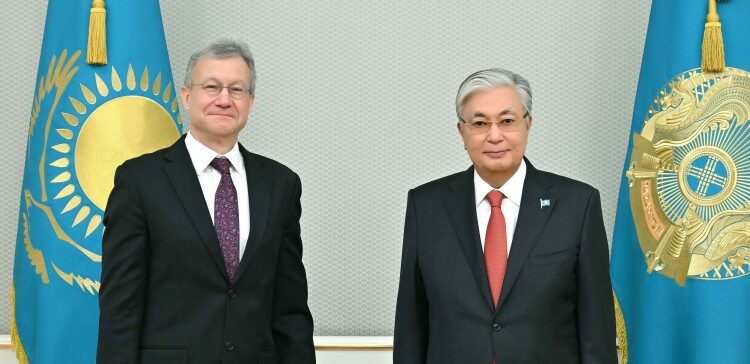
Former U.S. Ambassador to Uzbekistan and Kazakhstan, Daniel Rosenblum, has warned that Washington has “surrendered” its influence in Central Asia’s information sphere, allowing Russia and China to dominate the narrative. His remarks were reported by the Yale Daily News following a lecture at Yale University on September 15. Rosenblum, who served as U.S. ambassador to Uzbekistan from 2019 to 2022 and to Kazakhstan from 2022 to 2025, delivered a speech titled “Battling the Firehose of Falsehood: Confronting Russian Disinformation in Central Asia.” He described how Russian disinformation campaigns frequently portrayed U.S. diplomats as destabilizing actors. In one example from 2023, Russian outlets falsely claimed a NATO base had opened in Kazakhstan. “While it is easy to joke about such an absurd idea,” Rosenblum said, “the intent behind such Russian information operations is deadly serious.” Rosenblum noted that U.S. embassies attempted to counteract these narratives by highlighting tangible achievements, including COVID-19 health initiatives, agricultural partnerships, and academic exchange programs. However, he argued that much of this work has unraveled since 2023, citing the dismissal of over 1,300 State Department personnel, the elimination of USAID programs in the region, and recent cuts to Voice of America and Radio Free Europe/Radio Liberty. “Eight months into the second Trump administration, it seems clear that the information war is over in Central Asia, not because the Russians won. We have simply surrendered,” he said. Rosenblum also emphasized China’s expanding influence through the Belt and Road Initiative, observing that Beijing “was doing a pretty good job of winning friends and influencing people” via infrastructure investment and cultural outreach. In a post-lecture interview, Rosenblum underscored that the challenge is now largely domestic. “The biggest challenge today is ourselves,” he said. “We have to decide as a country, do we want to be engaged in the world or not? If we cut ourselves off from the world, we will ultimately be less secure and less prosperous.” This concern was echoed in earlier analysis for The Times of Central Asia by Arman Amini, a term member of the Council on Foreign Relations and an Atlantic Council Millennium Fellow. “Over the past decade, China has steadily expanded its presence in Central Asia, not through military force, but by building roads, trade corridors, and digital infrastructure,” Amini noted. “As the United States scaled back its regional footprint following its withdrawal from Afghanistan, Beijing moved quickly to fill the void. Today, China has positioned itself as the region’s dominant external power, while the U.S. risks being left on the sidelines.” The lecture was attended by approximately 80 people in person and online. It was organized by the Central Asia Initiative of the MacMillan Center, the Edward J. and Dorothy Clarke Memorial Fund, and Asian Crossroads, a student group dedicated to raising awareness of Central Asia.

Trump Reengages Central Asia Amid Tariffs and Rising Competition

In a bid that signals renewed U.S. interest in Central Asia, U.S. President Donald Trump on September 7, 2025, held what he described as a “great conversation” with Kazakhstan’s President Kassym-Jomart Tokayev. Earlier in the week, Trump also spoke over the phone with Uzbek President Shavkat Mirziyoyev, with both sides highlighting plans to expand their strategic partnership. Commentators have noted that Trump’s rhetoric and transactional approach to foreign policy in his second term create both challenges and opportunities for sustained U.S. engagement in the region. “Great Conversation” With Tokayev As he departed the White House for the U.S. Open men’s final, President Trump told reporters, “We had a great conversation,” though he offered no further details on the substance of the discussion. On Kazakhstan’s side, President Tokayev had reached out in July, expressing his openness to constructive trade talks following Trump’s imposition of 25% U.S. tariffs on Kazakh goods. In that July letter, Tokayev committed to “developing fair, predictable, and mutually beneficial trade relations.” He also emphasized his readiness for “constructive dialogue aimed at finding a rational solution.” The exchange reflects the broader importance of the U.S.–Kazakhstan relationship, which extends far beyond tariffs. Since 2017, the two nations have maintained an “enhanced strategic partnership,” covering trade, security, and energy cooperation. Kazakhstan is the world’s largest uranium producer and a leading supplier to U.S. nuclear power plants, while American firms such as Chevron and ExxonMobil are deeply invested in the country’s vast oil fields. Strategically located between Russia, China, and Europe, Kazakhstan offers Washington a critical partner in promoting regional stability and developing alternative trade corridors traditionally reliant on Russian land. By engaging closely with Astana, the U.S. strengthens its foothold in Central Asia while securing vital resources and supporting Kazakhstan’s multi-vector diplomacy. Strategic Outreach to Uzbekistan Earlier the same week, Trump and Uzbekistan’s Mirziyoyev agreed to broaden their strategic partnership across economic, security, and cultural domains, the Uzbekistan press office reported. According to the office, Trump praised Uzbekistan’s “irreversible reforms” aimed at modernizing its economy and improving living standards, while Mirziyoyev lauded what he termed the “impressive results of the domestic and foreign policy” of the U.S. administration. This extension of engagement to Tashkent comes against a backdrop of longstanding U.S. involvement in Uzbekistan, including trade under bilateral agreements since the mid-1990s and cooperation on border control and counter-terrorism programs. In late 2024, shortly before Trump’s second term began, Washington reaffirmed its support for Uzbekistan’s bid to join the World Trade Organization, with U.S. Trade Representative Katherine Tai announcing the completion of bilateral market-access negotiations. That same year, U.S. officials also underscored opportunities in critical minerals cooperation with Tashkent through the C5+1 diplomatic framework. Beyond trade and security, Uzbekistan is strategically important as Central Asia’s most populous nation and a key transit hub between China, Russia, and South Asia. Closer U.S.–Uzbek ties complement Washington’s regional engagement with Kazakhstan, creating overlapping partnerships that strengthen American influence, promote economic diversification, and reinforce stability across Central Asia. Why Now? Geopolitics, Tariffs, and Regional...

Iran–Israel War Highlights Central Asia as Zone of Strategic Stability

The explosive conflict between Iran and Israel, including coordinated U.S. strikes on Iranian nuclear infrastructure, has drawn global attention to the Persian Gulf and Levant. The escalatory spectacle, however, has blinded most observers to a quieter structural shift. This is the rising indispensability of Central Asia, including its linkages with the South Caucasus. Unaligned in rhetoric and untouched by spillover, Central Asia's very stability quietly threw into relief its increasing centrality to Eurasian energy and logistics calculations. As maritime chokepoints came into question and ideological rhetoric became more inflamed, Central Asia offers a reminder that the most valuable nodes in a network are the ones that continue operating silently and without disruption. Neither Israel nor Iran has real operational depth in Central Asia, and this has made a difference. Unlike Lebanon, Iraq, or Yemen — where proxy networks or ideological leverage allowed Tehran to externalize confrontation — no such mechanisms exist east of the Caspian Sea. Iran’s efforts in Tajikistan, grounded in shared linguistic heritage and periodic religious diplomacy, today remain cultural and informational rather than sectarian and clientelist. The influence of Iran's Islamic Revolutionary Guard Corps (IRGC) in Central Asia is minimal; Israeli presence, while diplomatically steady in places like Kazakhstan and Uzbekistan, is neither controversial nor militarized. There are no significant arms flows or dual-use infrastructure for either side to use. As a result, Central Asia has remained untouched by the conflict. Although the Iran–Israel conflict is relatively geographically localized, it has shed light on global systems far beyond the immediate zone of combat. Although not so far from the missile trajectories and nuclear facilities, Central Asia and the South Caucasus are remarkably insulated from their effects. Rather than becoming another theater of contestation, they have demonstrated their value as stabilizing elements at a time of heightened geostrategic volatility. It is no longer optional to take into account the Central Asian space, which geoeconomically includes Azerbaijan, now a permanent fixture at the region's summits. As the war now produces a phase of reactive adaptation in international geoeconomics and diplomacy, the region has become a control parameter of the international system rather than a fluctuating variable dependent upon it. The Iran–Israel conflict has drawn new attention to the vulnerability of maritime energy corridors, especially the Strait of Hormuz, through which a fifth of the world’s oil passes. While contingency planning has focused on naval logistics and airpower deterrents in the Gulf, the Eurasian interior has remained materially unaffected, reflecting its structural indispensability. Central Asia and the South Caucasus, particularly Kazakhstan and Azerbaijan, offer existing and potential overland alternatives that bypass maritime chokepoints entirely. Kazakhstan’s oil continues to flow via the Caspian Pipeline Consortium (CPC) pipeline to the Black Sea, while Azerbaijan’s infrastructure, anchored by the Baku–Tbilisi–Ceyhan (BTC) corridor, links Caspian energy to Mediterranean terminals. These routes are not replacements for Persian Gulf volumes, but, as redundancies, they acquire significance as stabilizing arteries as well as increased relevance in moments of system stress. The war has thus sharpened a fact...

A New Great Game: Multipolar Competition in Central Asia

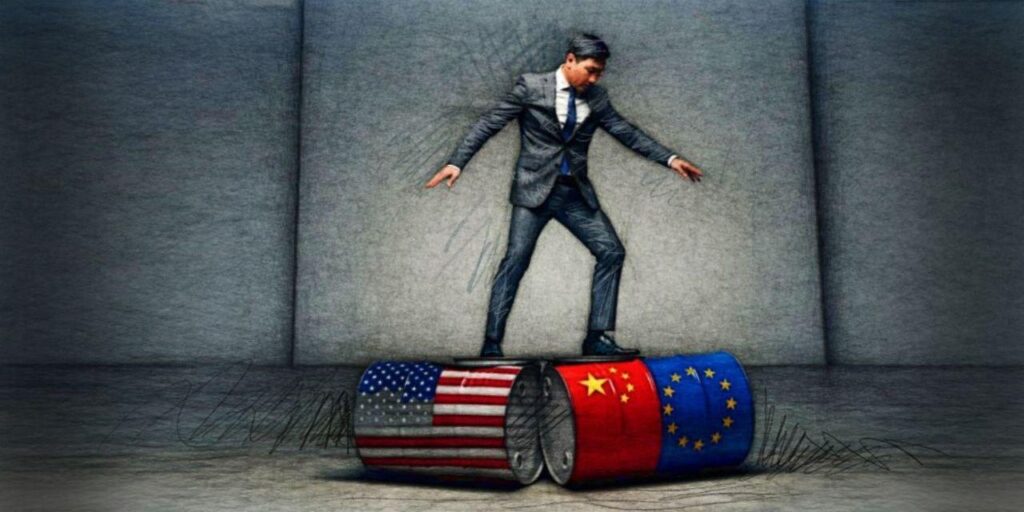
At a time when the European Union, China, and Turkey are seeking to strengthen their presence in Central Asia, the United States administration is consumed with bilaterally implementing a seismic shift in its trade policy with the entire world. Although this region of post-Soviet space is widely seen as a new front of rivalry between Washington and Beijing, in many aspects, American influence in Kazakhstan, Kyrgyzstan, Uzbekistan, Tajikistan, and Turkmenistan lags far behind that of other actors. Culture (soft power) has always played an important role in the foreign policy of every great power. The Soviet Union was no exception. As a result, even today, Russian, rather than English, is still the lingua franca in Central Asia, although Moscow, following its invasion of Ukraine, has had a hard time preserving remnants of its former dominance in the region. Russian cinema, however, maintains a notable presence in most, if not all, Central Asian states. While Hollywood movies have a strong global presence, Russian films in Central Asia often act as a link between Western content and the region's cultural traditions. Millions of Central Asian migrants working in Russia also serve as a bridge between their nations and the Russian Federation, facilitating cultural exchange, economic ties, and the spread of the Russian language. However, Russia’s fiasco in Ukraine has created space for the EU to assert its influence in a region that has traditionally been in Moscow’s geopolitical orbit. Nevertheless, although Kazakhstan, Kyrgyzstan, are Tajikistan are members of the Russian-led Collective Security Treaty Organization, they have remained neutral in the Ukraine conflict. For Central Asian nations, the EU serves as a counterweight they can use to balance their relations with Moscow. The EU, however, faces strong economic competition from China. With a trade volume of $94.8 billion with Central Asian states, Beijing is positioning itself as the major economic power operating in the five regional nations. Although the European Union’s influence in Central Asia is expected to continue to grow in the coming years, if investment trends from recent years persist, the balance in the region will likely tilt towards China, which will increase its presence and influence at the expense of Russia. But where does the United States fit into this dynamic? Even though the U.S. is the largest economy in the world, with which almost everyone wants to engage, American bilateral trade with the region has never been particularly strong, with the exception of Kazakhstan. Interestingly enough, it is Astana that is expected to suffer the most among Central Asian actors due to U.S. President Donald Trump’s decision to impose tariffs – 27% on Kazakhstan compared to 10% on all other nations in the region. Exceptions may be made for Kazakhstan’s critical minerals, however, which are now the third largest in the world based on a recent discovery, with reports suggesting that some goods, including “certain minerals that are not available in the United States,” as well as energy, will not be subject to the tariffs. According to Kazakhstan’s Ministry...

Mixed Picture: Perceptions of China in Central Asia

China’s growing presence in Central Asia is seen as an economic opportunity by many in the region, but is also viewed with concern by others who fear so-called debt traps and land grabs. A new report on those perceptions of China stresses that there is no overarching Central Asian viewpoint and points to nuance in attitudes among the different countries. The study by the Central Asia Barometer, a polling group that has said it will suspend operations on December 1 because of insecurity and other obstacles to carrying out its work, is significant because a lot of news about China and Central Asia focuses on official pronouncements by governments and business groups. Assessing public opinion can be more of a challenge in countries with a top-down tradition of leadership. “Favorability towards China varies widely across countries, with younger generations in Kazakhstan and Kyrgyzstan generally viewing China’s involvement more positively, particularly in areas like technology and investment,” the Central Asia Barometer said. “Older generations in these countries tend to be more skeptical, though. In Turkmenistan, the older population is more optimistic about China’s role, especially with regard to Chinese workers and investment.” The non-governmental group also noted “a decline or even negative favorability” in perceptions of China among people in Uzbekistan. The study, titled “Beyond the Silk Road” and released on Friday, is based on multiple surveys of opinions of China between 2017 and 2023 in four Central Asian states -Kazakhstan,  Kyrgyzstan, Turkmenistan, and  Uzbekistan. There was no data from Tajikistan. Perceptions of China depended on demographic factors such as ethnicity, age and gender, as well as the impact of specific Chinese infrastructure projects, and sources of information. Content on social media, for example, tended to improve attitudes toward Chinese business ventures. As of 2024, China has surpassed Russia as the top trading partner for most countries in Central Asia and is a major source of foreign investment and loans, a potential windfall that is tempered by concern about a lack of transparency in Chinese business practices. A Caspian Policy Institute analysis that was published in August explored negative perceptions of China. In July, Chinese leader Xi Jinping, architect of the Belt and Road economic initiative, traveled to Kazakhstan for a meeting of the Shanghai Cooperation Organization, a security group whose founding members include several Central Asian countries. There, Xi celebrated Chinese collaboration with President Vladimir Putin of Russia, the region’s other traditional power. Then he visited Tajikistan, a security partner that borders China and Afghanistan. The Central Asia Barometer said its data indicated a decline among some Central Asian populations in favorable views of Russia, coinciding with a change in feelings about China. “In 2022, after the Russian invasion of Ukraine, an upward shift in favorability toward China in Kazakhstan was observed while at the same time a pronounced drop in Russia’s favorability was noted,” it noted. Even so, China is not expected to supplant Russia’s longstanding influence in Central Asia. A commentary published by the Royal United Services Institute in early...