• KZT/USD = 0.00221
  • TJS/USD = 0.10820
  • UZS/USD = 0.00008
  • TMT/USD = 0.29850
  • KZT/USD = 0.00221
  • TJS/USD = 0.10820
  • UZS/USD = 0.00008
  • TMT/USD = 0.29850
  • KZT/USD = 0.00221
  • TJS/USD = 0.10820
  • UZS/USD = 0.00008
  • TMT/USD = 0.29850
  • KZT/USD = 0.00221
  • TJS/USD = 0.10820
  • UZS/USD = 0.00008
  • TMT/USD = 0.29850
  • KZT/USD = 0.00221
  • TJS/USD = 0.10820
  • UZS/USD = 0.00008
  • TMT/USD = 0.29850
  • KZT/USD = 0.00221
  • TJS/USD = 0.10820
  • UZS/USD = 0.00008
  • TMT/USD = 0.29850
  • KZT/USD = 0.00221
  • TJS/USD = 0.10820
  • UZS/USD = 0.00008
  • TMT/USD = 0.29850
  • KZT/USD = 0.00221
  • TJS/USD = 0.10820
  • UZS/USD = 0.00008
  • TMT/USD = 0.29850
14 October 2026

Viewing results 1 - 6 of 13

How U.S. and EU Sanctions Are Rippling Through Central Asia

Russia’s economy has faced renewed pressure following a fresh round of sanctions imposed this past week by both the European Union and the United States. After abruptly canceling a planned meeting with Vladimir Putin in Budapest, President Donald Trump shifted to a more hardline stance, announcing new sanctions. While these sanctions may not cripple Moscow, they are already having secondary effects on Central Asia, particularly on Kazakhstan’s banking and energy sectors. The EU's 19th sanctions package, adopted on October 22, introduces a phased ban on Russian liquefied natural gas (LNG). According to Reuters, short-term contracts will be terminated within six months, while long-term contracts are to expire by January 1, 2027. The package also includes a total ban on transactions with Russian oil giants Rosneft and Gazprom Neft, an expanded blacklist of so-called "shadow fleet" vessels, and sanctions against 45 companies in Russia and third countries supplying military-related technologies. Of growing concern in Central Asia is the inclusion of several regional financial institutions in the EU's sanctions list. These include the Kazakh branch of Russia’s VTB Bank, Kyrgyz banks Tolubai and Eurasian Savings Bank, and Tajik banks Dushanbe City Bank, Kommertsbank of Tajikistan, and Spitamen. These restrictions are scheduled to take effect between November and December 2025. Both Kyrgyzstan’s President Sadyr Japarov and the nation's Foreign Ministry have publicly expressed dismay over the sanctions, with Japarov urging Western leaders to stop “politicizing the economy.” In his speech at the UN General Assembly in New York in September, Japarov criticized the impact of unilateral sanctions, while the Foreign Ministry has stated that the country adheres to its international obligations and maintains an open dialogue with the EU to prevent risks associated with possible sanctions circumvention. The ministry has proposed launching an independent, internationally recognized audit and forming a joint “Kyrgyzstan-European Union” technical working group to facilitate data exchange, transaction monitoring, and risk assessments. In Kazakhstan, the National Bank downplayed the impact of sanctions against VTB. Deputy Chairman Yerulan Zhamaubayev noted that the bank had already been under nominal restrictions, and handles few transactions. “VTB does not affect the country’s financial stability, and we do not expect serious risks for the economy,” Zhamaubayev stated. However, the latest U.S. sanctions may prove more consequential for Kazakhstan, particularly amid efforts to strengthen bilateral trade with the United States, including through the repeal of the Jackson-Vanik amendment. The U.S. Treasury Department has sanctioned Russian oil majors Rosneft and Lukoil. The latter has deep economic ties with Kazakhstan. Just days before the announcement, on October 14, President Kassym-Jomart Tokayev personally attended the 30th anniversary of Lukoil’s operations in Kazakhstan, awarding CEO Vagit Alekperov the Order of Barys, first class. Oil and gas journalist Oleg Chervinsky reported that the joint venture Kalamkas-Khazar Operating LLP, co-owned by Lukoil and KazMunayGas, is directly affected. “Only the Tengiz and CPC projects, which Lukoil operates with American partners, have been exempted from the sanctions,” Chervinsky noted. A final investment decision for Kalamkas-Khazar was expected in December 2025. Yerkanat Abeni, a member of...

Trump’s 100% Tariffs May Target Kazakhstan and Kyrgyzstan

U.S. President Donald Trump has signaled a new wave of sanctions against Russia, including the potential imposition of 100% tariffs on its trading partners, which could affect Kazakhstan, Kyrgyzstan, and other former Soviet states. Who Could Be Affected? On July 15, President Trump announced an escalation in U.S. arms deliveries to Ukraine and warned of intensified sanctions against Russia. If no progress is made in resolving the conflict within 50 days, the U.S. will implement additional measures, including secondary tariffs of up to 100% on countries trading with Russia. Experts warn that Kazakhstan, Kyrgyzstan, and Azerbaijan may be particularly vulnerable. Although not among Russia’s largest trading partners, these countries maintain extensive commercial ties with Moscow. According to the Centre for Research on Energy and Clean Air (CREA), China, India, and Turkey accounted for 74 percent of Russia's fossil fuel revenue in 2024. Oil exports totaled €104 billion, petroleum products €75 billion, gas €40 billion, and coal €23 billion. Despite multiple sanctions packages, the European Union continues to import Russian energy. In 2024, the EU spent €21.9 billion on Russian oil and gas, just 1% less than in 2023. Over the same period, EU financial assistance to Ukraine amounted to €18.7 billion, according to the Kiel Institute for the World Economy. Yet Trump may spare Russia’s largest trading partners. In recent months, he has taken steps to impose severe tariffs on the European Union and China, only to reverse course under pressure from business groups and concerns about global trade disruptions. Nevertheless, Kazakhstan received formal notification from the U.S. on July 7 that a 25% tariff on its goods will take effect from August 1, 2025. This raises the possibility that smaller economies in Russia’s orbit may become targets of U.S. economic retaliation. Already in the Crosshairs Kazakh analyst Olzhas Baidildinov noted that trade between Kazakhstan and Russia totaled $27.8 billion in 2024, with $18.2 billion in exports from Russia and $9.5 billion from Kazakhstan. "Such figures certainly cannot escape the attention of OFAC,” Baidildinov wrote, referring to the U.S. Treasury’s Office of Foreign Assets Control. “European sanctions apply only within Europe. However, Kazakhstan continues to import Russian oil, gas, and petroleum products. Secondary sanctions, as I’ve previously warned, are merely a matter of minor adjustments to existing measures,” he added. Trump’s administration may also be overlooking Kazakhstan’s unique geographic and economic ties to Russia. The two countries share the world’s longest continuous land border, over 7,500 kilometers, and are closely connected through pipelines, energy infrastructure, and raw materials trade. Azerbaijan and Kyrgyzstan Also Vulnerable Azerbaijan’s trade with Russia reached approximately $4.8 billion in 2024, an increase of 10.1 percent. Russia ranks as Azerbaijan’s third-largest trading partner, after Italy and Turkey. Exports to Russia totaled $1.178 billion, accounting for 4.4 percent of Azerbaijan’s total exports. Notably, Russia is the largest buyer of Azerbaijan’s non-oil products, with a 34.6 percent share. Imports from Russia include foodstuffs, machinery, and metals, while Azerbaijan supplies gas, textiles, and agricultural goods. Kyrgyzstan is also at risk....

Kazakh Machine Builders Face Payment Hurdles in Russia Trade

Azat Peruashev, head of the Ak Zhol party's parliamentary faction, which represents Kazakhstani business interests, has appealed to Prime Minister Olzhas Bektenov and National Bank Chairman Timur Suleimenov to address payment difficulties faced by machine-building enterprises exporting to Russia. According to the Majilis deputy, these challenges stem from within Kazakhstan itself. Peruashev explained that machine-building enterprises have approached his party, reporting that Kazakhstani banks are refusing them credit. Additionally, second-tier banks (BVUs) are declining to process payments for companies engaged in business with Russian partners. “These actions by financial institutions are driven by concerns that exported products could be added to U.S. and EU sanctions lists, which, in turn, could expose the banks to secondary sanctions,” Peruashev said. As a result, commercial banks in Kazakhstan have begun demanding that local factories provide guarantees that they will not export products to Russia - under threat of having their credit lines revoked. This is happening despite assurances from David O'Sullivan, the European Union’s sanctions envoy, who recently visited Kazakhstan. O'Sullivan stated that the European Commission would not impose sanctions on goods manufactured in Kazakhstan and exported to Russia. “The EU’s only concern is to prevent the re-export of sanctioned European products through Kazakhstan,” Peruashev said. “However, representatives of Kazakhstan’s largest banks find these assurances unconvincing. In their view, the decisive factor is not whether a product is re-exported or locally manufactured, but whether it appears on a sanctions list. This creates the risk of secondary sanctions, not necessarily from the EU, but from the U.S., including the potential disconnection from the SWIFT international banking system.” According to Ak Zhol, Kazakhstani exports of machine-building products and components to Russia fell by 15% last year. The banks’ refusal to process payments is not based on any official government restrictions. Last summer, seven Kazakh companies faced U.S. secondary sanctions for cooperating with Russian partners. In October, the list expanded to include Kazstanex, a company involved in supplying machine tools and components. As The Times of Central Asia previously reported, during his visit to Astana in January, David O'Sullivan stated that the EU had sanctioned two Kazakh companies so far but did not rule out further additions to the list.

U.S. Urges Tajikistan to Enforce Sanctions on Russian Firms Amid Ongoing Compliance Review

The Tajik government has received an official letter from the United States requesting compliance with sanctions against several Russian companies operating in the country, Chairman of the State Committee on Investment and State Property Management Sulton Rakhimzoda announced at a press conference on February 11. According to Rakhimzoda, the U.S. has requested clarification on what measures Tajik authorities plan to take regarding the sanctions. “This is a sensitive topic, and it is currently under consideration,” he stated. He added that sanctions against Russian companies are not a new phenomenon and that businesses affected by the restrictions should already have mechanisms in place to adapt. “It is clear that sanctions impact companies to varying degrees. However, as far as I know, they have already developed strategies to operate under these conditions. These issues are also being discussed in negotiations with the government,” Rakhimzoda said. He noted that the Investment Committee does not oversee this sector directly, but that the relevant government agencies are handling the matter. Following the start of the conflict in Ukraine, the U.S. and the European Union imposed strict sanctions on several Russian enterprises. In January 2025, the U.S. Department of the Treasury sanctioned Gazpromneft Tajikistan along with its parent company, Gazprom Neft. Tajik authorities have stated that the sanctions will not affect oil product imports into the country. However, experts warn that the restrictions could eventually impact other companies cooperating with Gazpromneft Tajikistan.

Kyrgyzstan’s Keremet Bank Restricts Use of Visa Cards Following U.S. Sanctions

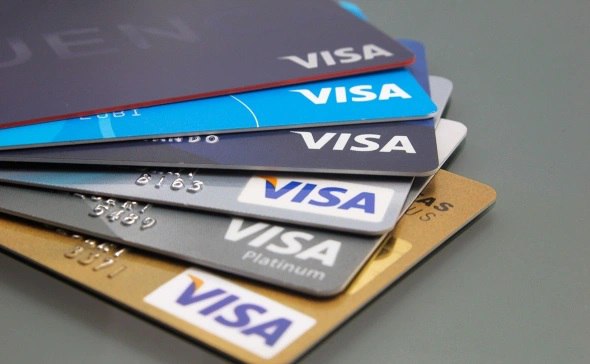
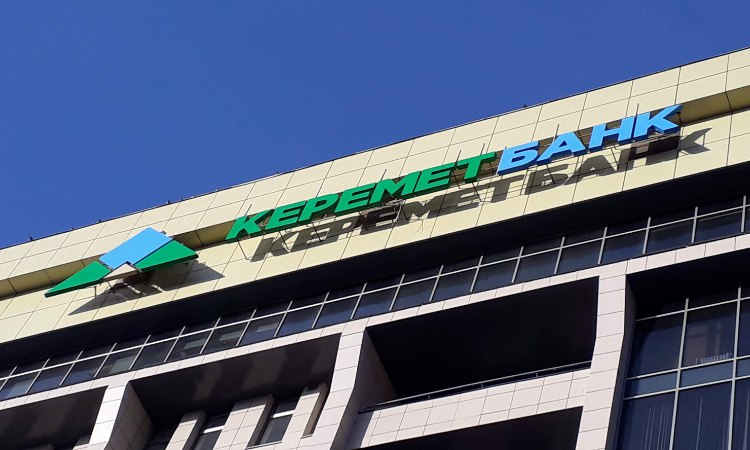
Keremet Bank, a commercial bank in Kyrgyzstan recently subjected to U.S. sanctions, has announced new restrictions on the use of its Visa cards. The announcement was issued through the bank’s press service. As per the official statement, Visa cards issued by Keremet Bank can now only be used at the bank's ATMs, POS terminals, and other payment devices. To provide customers with an alternative, the bank is offering free issuance of cards under the national payment system, Elkart. The process for obtaining an Elkart card will take up to five working days in Bishkek and up to ten days in other regions. The bank reassured its clients that their funds remain secure. Customers can withdraw money at the nearest branch by presenting a valid passport or transferring funds through the mobile application to Elkart cards or settlement accounts. The U.S. Treasury Department imposed sanctions on Keremet Bank, citing alleged ties to Russian authorities and collaboration with Promsvyazbank, a Russian financial institution that has been under U.S. restrictions since 2022.

Kyrgyz Bank Hit by U.S. Treasury Department Sanctions

The U.S. Treasury Department has uncovered a secret channel allegedly used to re-export dual-use goods and imposed sanctions on Kyrgyz commercial bank Keremet for its involvement in circumventing economic restrictions against Russia, according to a statement on the department’s website. U.S. officials allege that since the summer of 2024, Keremet Bank facilitated cross-border transactions for Russian financial institutions, including Promsvyazbank, which has been under U.S. sanctions since early 2022. Promsvyazbank, nationalized by Russian authorities in 2018, was sanctioned for its role in financing Russia's defense sector and supporting major defense contracts. The U.S. Treasury reports that the bank has provided billions of dollars in financial support to Russia’s military-industrial complex. The Treasury Department’s report also claims that the Kyrgyz Ministry of Finance sold a controlling stake in Keremet Bank in 2024 to a firm closely linked to a Russian oligarch with ties to the Kremlin. According to the U.S., the acquisition aimed to create a financial hub to evade sanctions, enabling payments for imports and exports. Further allegations suggest that Moldovan opposition politician Ilan Shor, who is himself under U.S. sanctions, discussed a sanctions evasion scheme involving Keremet Bank with Russian representatives. Keremet Bank has denied these claims, stating that it has already appealed to the U.S. Treasury’s Office of Foreign Assets Control (OFAC) to have the sanctions lifted. “The bank operates in accordance with national legislation and international law, adhering to the principles of transparency and responsibility,” the bank said in its response, published on its official website. Keremet further emphasized that the sanctions will not impact its operations and expressed readiness to undergo an international audit to clarify the situation.