
• KGS/USD = 0.01144 0%
  • KZT/USD = 0.00202 0%
  • TJS/USD = 0.10399 -0.29%
  • UZS/USD = 0.00008 0%
  • TMT/USD = 0.28490 0%
  • KGS/USD = 0.01144 0%
  • KZT/USD = 0.00202 0%
  • TJS/USD = 0.10399 -0.29%
  • UZS/USD = 0.00008 0%
  • TMT/USD = 0.28490 0%
  • KGS/USD = 0.01144 0%
  • KZT/USD = 0.00202 0%
  • TJS/USD = 0.10399 -0.29%
  • UZS/USD = 0.00008 0%
  • TMT/USD = 0.28490 0%
  • KGS/USD = 0.01144 0%
  • KZT/USD = 0.00202 0%
  • TJS/USD = 0.10399 -0.29%
  • UZS/USD = 0.00008 0%
  • TMT/USD = 0.28490 0%
  • KGS/USD = 0.01144 0%
  • KZT/USD = 0.00202 0%
  • TJS/USD = 0.10399 -0.29%
  • UZS/USD = 0.00008 0%
  • TMT/USD = 0.28490 0%
  • KGS/USD = 0.01144 0%
  • KZT/USD = 0.00202 0%
  • TJS/USD = 0.10399 -0.29%
  • UZS/USD = 0.00008 0%
  • TMT/USD = 0.28490 0%
  • KGS/USD = 0.01144 0%
  • KZT/USD = 0.00202 0%
  • TJS/USD = 0.10399 -0.29%
  • UZS/USD = 0.00008 0%
  • TMT/USD = 0.28490 0%
  • KGS/USD = 0.01144 0%
  • KZT/USD = 0.00202 0%
  • TJS/USD = 0.10399 -0.29%
  • UZS/USD = 0.00008 0%
  • TMT/USD = 0.28490 0%

Viewing results 1 - 6 of 9

A New Great Game: Multipolar Competition in Central Asia

At a time when the European Union, China, and Turkey are seeking to strengthen their presence in Central Asia, the United States administration is consumed with bilaterally implementing a seismic shift in its trade policy with the entire world. Although this region of post-Soviet space is widely seen as a new front of rivalry between Washington and Beijing, in many aspects, American influence in Kazakhstan, Kyrgyzstan, Uzbekistan, Tajikistan, and Turkmenistan lags far behind that of other actors. Culture (soft power) has always played an important role in the foreign policy of every great power. The Soviet Union was no exception. As a result, even today, Russian, rather than English, is still the lingua franca in Central Asia, although Moscow, following its invasion of Ukraine, has had a hard time preserving remnants of its former dominance in the region. Russian cinema, however, maintains a notable presence in most, if not all, Central Asian states. While Hollywood movies have a strong global presence, Russian films in Central Asia often act as a link between Western content and the region's cultural traditions. Millions of Central Asian migrants working in Russia also serve as a bridge between their nations and the Russian Federation, facilitating cultural exchange, economic ties, and the spread of the Russian language. However, Russia’s fiasco in Ukraine has created space for the EU to assert its influence in a region that has traditionally been in Moscow’s geopolitical orbit. Nevertheless, although Kazakhstan, Kyrgyzstan, are Tajikistan are members of the Russian-led Collective Security Treaty Organization, they have remained neutral in the Ukraine conflict. For Central Asian nations, the EU serves as a counterweight they can use to balance their relations with Moscow. The EU, however, faces strong economic competition from China. With a trade volume of $94.8 billion with Central Asian states, Beijing is positioning itself as the major economic power operating in the five regional nations. Although the European Union’s influence in Central Asia is expected to continue to grow in the coming years, if investment trends from recent years persist, the balance in the region will likely tilt towards China, which will increase its presence and influence at the expense of Russia. But where does the United States fit into this dynamic? Even though the U.S. is the largest economy in the world, with which almost everyone wants to engage, American bilateral trade with the region has never been particularly strong, with the exception of Kazakhstan. Interestingly enough, it is Astana that is expected to suffer the most among Central Asian actors due to U.S. President Donald Trump’s decision to impose tariffs – 27% on Kazakhstan compared to 10% on all other nations in the region. Exceptions may be made for Kazakhstan’s critical minerals, however, which are now the third largest in the world based on a recent discovery, with reports suggesting that some goods, including “certain minerals that are not available in the United States,” as well as energy, will not be subject to the tariffs. According to Kazakhstan’s Ministry...
Trump’s Tariff Blitz Targets Global Imports, Kazakhstan Faces Harshest Impact in Central Asia

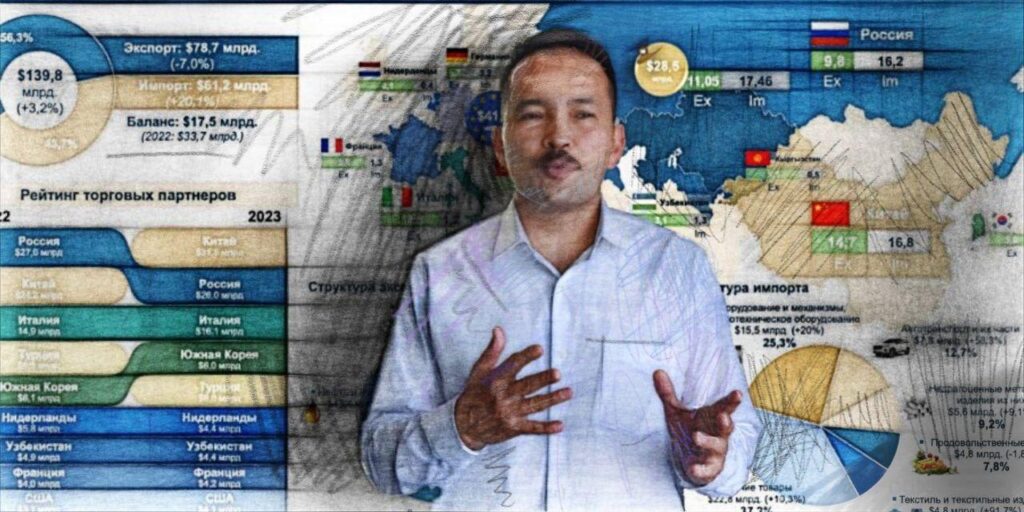
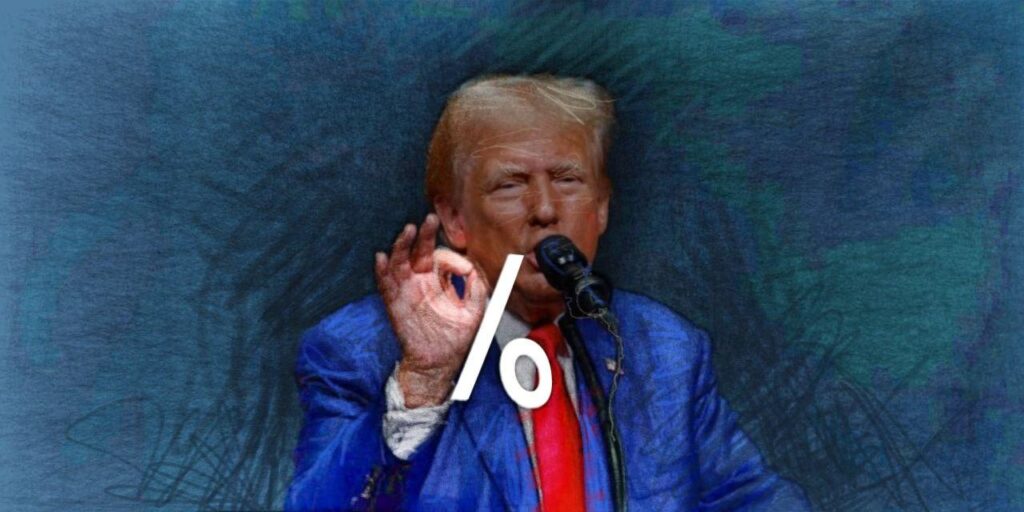
U.S. President Donald Trump has announced sweeping new tariffs on all goods imported into the United States, citing the need to protect American industry and jobs. Speaking at a White House press conference, Trump outlined a base tariff rate of 10% that will apply to 185 countries. However, several nations and blocs face significantly higher rates: China will see a 34% tariff, the European Union 20%, Switzerland 31%, and Israel 17%. The steepest tariffs were imposed on Vietnam (46%), Cambodia (49%), and Laos (48%). Notably absent from the list are Russia, Belarus, Mexico, Iran, Canada, and Belarus. Ukraine, however, will face the base 10% rate. Kazakhstan Hit with 27% Tariff The new U.S. duties also target Central Asian nations. According to a comparative chart published by the White House, Uzbekistan, Turkmenistan, Tajikistan, and Kyrgyzstan will face 10% tariffs on their exports to the U.S. Meanwhile, Kazakhstani goods will be subject to a much higher rate of 27%. The White House document notes that Kazakhstani imports currently face a 54% tariff in Kazakhstan, figures that surprised local analysts, who have questioned the methodology behind the calculations. The rationale for the elevated rate on Kazakhstan remains unclear. However, the country's Ministry of Trade and Integration has initiated consultations with his U.S. counterparts to explore options for exempting certain goods. According to a preliminary analysis, many of Kazakhstan’s key exports fall under exceptions outlined in U.S. regulations. “In 2024, trade turnover between Kazakhstan and the United States amounted to $4.2 billion,” the ministry stated. “Kazakhstan's primary exports to the U.S. - crude oil, uranium, silver, and ferroalloys - constitute 92% of total exports and are included in the exemption list under the U.S. President’s decree on reciprocal tariffs.” Turning Tariffs Into Opportunities Despite the steep new tariffs, some experts believe the impact on Kazakhstan will be limited. Financial analyst Rasul Rysmambetov argues that Kazakhstan’s marginal role in global trade dynamics shields it from major economic fallout. “The real battle is between the U.S. and the world’s largest economies, China and the EU,” Rysmambetov wrote on his Telegram channel. “Our trade with the U.S. accounts for less than 1% of Kazakhstan’s total foreign trade. Even with a 27% tariff, the effect will be negligible.” Rysmambetov noted that Kazakhstan exported over $2 billion worth of goods to the U.S. in 2024, while imports totaled $1 billion, maintaining a trade surplus for the tenth consecutive year. “We’re on the tariff list, but it’s mostly symbolic,” he added, emphasizing that Kazakhstan’s exports largely consist of strategic materials. Rysmambetov also sees potential upsides: countries facing new duties may seek alternative markets, possibly offering Kazakhstan better terms on imports such as equipment, metals, vehicles, and construction materials. “Global trade tensions can open windows of opportunity, for strategic borrowing, better equipment deals, and expanded exports. But quick action is key,” he concluded. International Backlash The U.S. move drew swift condemnation from European Commission President Ursula von der Leyen, who called the policy a “severe blow to the global economy.” “Uncertainty will...

Kazakhstan Faces Big U.S. Tariffs, but Minerals Could be Exempted

Kazakhstan will be hit with the largest U.S. tariffs among Central Asian states after President Donald Trump announced duties on goods from global trading partners, vowing to end what he calls unfair treatment of the United States even as concerns grow that a vast trade war carries grave risks for economies around the world. According to a White House list released on Wednesday, Kazakhstan charges 54% tariffs on American goods and its own products will therefore be subject to duties of 27% when they arrive in the United States. A minimum baseline of 10% tariffs will also be applied to goods from Kyrgyzstan, Uzbekistan, Tajikistan, and Turkmenistan. However, Kazakhstan has large reserves of minerals that could have applications in energy and other industries and might be exempted under terms of the Trump administration’s plan. The measure against Kazakhstan reflects what the White House calls “an individualized reciprocal higher tariff” on countries with which the United States has its biggest trade deficits. The U.S. says its tariffs on nations around the world, which are to take effect in the coming days, can be increased if trading partners retaliate or can go down if those partners collaborate with Washington on economic and security matters. The fallout from the Trump administration’s move remains to be seen, with many economists and other analysts warning that falling markets and the threat of higher prices, including in the United States, are a sign of the economic upheaval to come. But a possible loophole for some Central Asian countries lies in the U.S. statement that some goods will not be subject to the tariffs. They include copper, pharmaceuticals, semiconductors, lumber, bullion, and “energy and other certain minerals that are not available in the United States.” Kazakhstan said this week that it had discovered a huge rare earth metals deposit in the central region of Karaganda. By some estimates, the deposit could contain roughly 20 million tons of the coveted materials and is among the larger of more than a dozen similar deposits found in the country. “The identified rare earth deposits and promising areas, if further confirmed, could position Kazakhstan as a global leader in rare earth element reserves and enable the rapid development of a high-tech rare earth metals industry,” the Ministry of Industry and Construction said, according to the Orda news organization. Those natural resources are of interest to the United States. On March 12, U.S. Secretary of State Marco Rubio spoke with Kazakh Foreign Minister Murat Nurtleu and the U.S. “looks forward to working with Kazakhstan to deepen economic ties in the energy, telecommunications, and critical minerals sectors,” the U.S. State Department said. U.S. tariffs and Central Asian resources are also likely to be discussed at a meeting of regional and European Union leaders in Samarkand, Uzbekistan, on Friday. The EU is seeking to expand trade ties with Central Asia as its longtime alliance with the United States unravels over trade and security matters. More on this breaking story will follow.
