
• KGS/USD = 0.01144 0%
  • KZT/USD = 0.00200 0%
  • TJS/USD = 0.10549 -0.28%
  • UZS/USD = 0.00008 0%
  • TMT/USD = 0.28571 0%
  • KGS/USD = 0.01144 0%
  • KZT/USD = 0.00200 0%
  • TJS/USD = 0.10549 -0.28%
  • UZS/USD = 0.00008 0%
  • TMT/USD = 0.28571 0%
  • KGS/USD = 0.01144 0%
  • KZT/USD = 0.00200 0%
  • TJS/USD = 0.10549 -0.28%
  • UZS/USD = 0.00008 0%
  • TMT/USD = 0.28571 0%
  • KGS/USD = 0.01144 0%
  • KZT/USD = 0.00200 0%
  • TJS/USD = 0.10549 -0.28%
  • UZS/USD = 0.00008 0%
  • TMT/USD = 0.28571 0%
  • KGS/USD = 0.01144 0%
  • KZT/USD = 0.00200 0%
  • TJS/USD = 0.10549 -0.28%
  • UZS/USD = 0.00008 0%
  • TMT/USD = 0.28571 0%
  • KGS/USD = 0.01144 0%
  • KZT/USD = 0.00200 0%
  • TJS/USD = 0.10549 -0.28%
  • UZS/USD = 0.00008 0%
  • TMT/USD = 0.28571 0%
  • KGS/USD = 0.01144 0%
  • KZT/USD = 0.00200 0%
  • TJS/USD = 0.10549 -0.28%
  • UZS/USD = 0.00008 0%
  • TMT/USD = 0.28571 0%
  • KGS/USD = 0.01144 0%
  • KZT/USD = 0.00200 0%
  • TJS/USD = 0.10549 -0.28%
  • UZS/USD = 0.00008 0%
  • TMT/USD = 0.28571 0%
24 February 2026

Viewing results 1 - 6 of 6

Modernization Without Dependence: Why Uzbekistan Is Deepening Ties with Washington

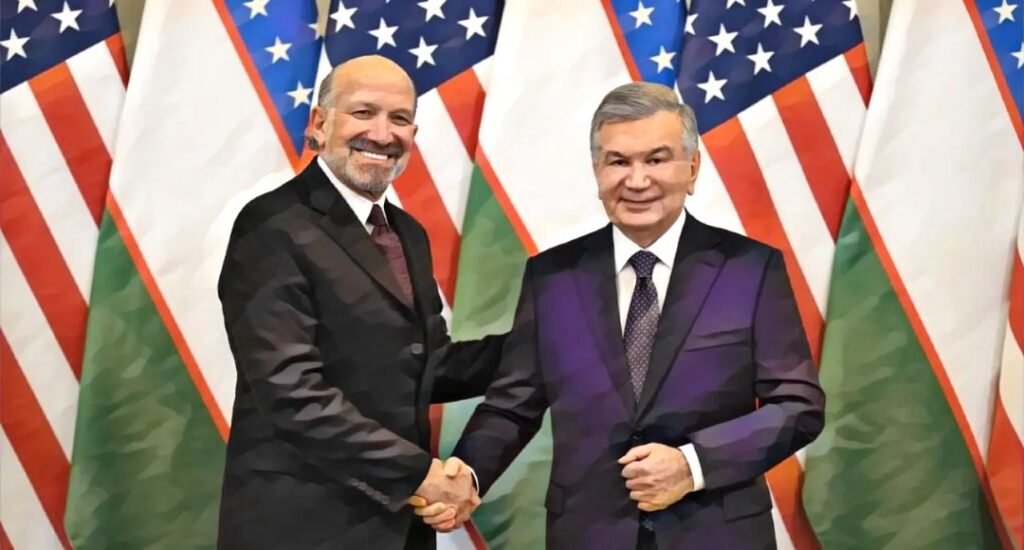
The recent rise in Uzbekistan-U.S. engagement is often framed as a sudden diplomatic turn, and much of the commentary has focused on what Washington hopes to gain from deeper involvement in Central Asia. Far less attention, however, has been given to what Tashkent is seeking from this relationship. From Uzbekistan’s perspective, this engagement is part of a broader national strategy to expand the country’s foreign policy options at a time when all of the major powers are competing for influence in Central Asia. In November 2025, President Shavkat Mirziyoyev joined the other C5 leaders in Washington for a White House summit focused on economic cooperation, critical minerals, energy, and trade. By February 2026, the relationship had moved beyond talks and into financing and project design, with new agreements involving the U.S. International Development Finance Corporation and EXIM, alongside a new critical minerals framework. From Uzbekistan’s side, the core objective is straightforward. Tashkent wants to modernize rapidly without risking becoming overdependent on any single external investor. That means using U.S. interest as leverage and in tandem with, not as a replacement for ties with Russia or China. Washington is courting the region because it wants access to minerals and supply chains that reduce reliance on China and limit exposure to sanctioned or geopolitically sensitive suppliers. Uzbekistan is well aware of this and is using that demand to strengthen its bargaining position for financing, technology, and industrial upgrading. In other words, Uzbekistan is positioning itself as a strategic production and transit partner. The direction of cooperation is revealing. The February 2026 U.S.-Uzbekistan critical minerals pact prioritizes the full-value chain from exploration and extraction to processing, and even proposes a joint investment holding company. This signals that Tashkent is aiming beyond raw-material exports. It wants to break from the post-Soviet pattern of shipping resources while others capture refining, technology, and margins. If it can secure processing capacity, infrastructure, and long-term financing, the deal becomes an instrument of industrial policy. The second objective is finance and implementation capacity. President Mirziyoyev also held separate bilateral meetings with the U.S. Secretary of Commerce, Howard Lutnick, and other senior U.S. trade officials. The meetings focused on an investment platform, business council coordination, and support for large industrial and infrastructure projects. EXIM also publicly described the new framework as a way to convert earlier commitments into financing solutions for energy, aviation, critical minerals, and advanced technologies. The third objective is trade normalization and market access. A bipartisan Senate effort has introduced legislation to repeal Jackson-Vanik restrictions for Central Asian states, and President Mirziyoyev raised U.S. support for Uzbekistan’s WTO accession and stronger cooperation under the U.S.–Central Asia Trade and Investment Framework Agreement (TIFA). These measures shape the legal and trade environment that ultimately determines investor confidence. Uzbekistan is trying to make the relationship durable by embedding it in institutions. The move also serves a domestic political economy logic. President Mirziyoyev’s government has spent years presenting itself as reformist, investment-friendly, and open for business. Deeper engagement with the United...

Uzbekistan Joins a U.S. Critical Minerals Implementation Track

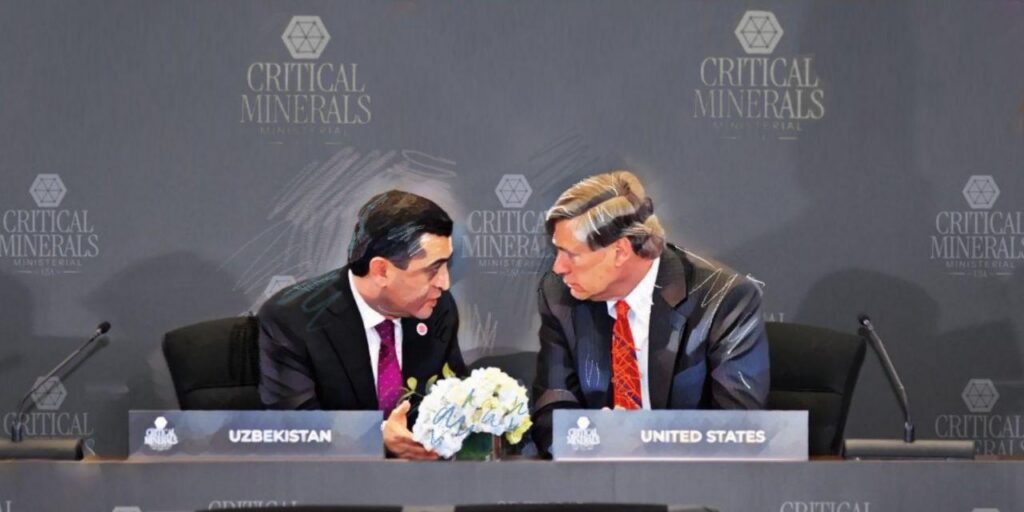
On February 4, 2026, in Washington, D.C., Uzbekistan’s Foreign Minister Bakhtiyor Saidov and U.S. Deputy Secretary of State Christopher Landau signed an intergovernmental Memorandum of Understanding (MoU) on securing supply chains for critical minerals and rare earth elements, spanning both mining and processing. A further agreement signed on February 19 brought implementation and financing to the foreground. The U.S. International Development Finance Corporation (DFC) signed “heads of terms” (i.e., commercial principles and essential terms of a proposed future agreement) for a Joint Investment Framework and outlined a proposed joint holding company. An agreement to establish an “investment platform” was exchanged in the presence of Uzbekistan’s President Shavkat Mirziyoyev. These agreements are not a single mining deal. They combine a political instrument with a financing-and-structuring track that is intended to yield a small set of projects that can be financed and built, and they treat processing capacity and supporting infrastructure not as optional add-ons but as core deliverables. They also provide a path for early projects to full review and financing while connecting them to longer-term offtake structures that match Washington’s newer supply-shock tools, including “Project Vault.” What the MoU Changes The MoU’s immediate purpose is to align government priorities for critical minerals across the value chain while setting expectations that will later shape which financing and partners are feasible. The press agency of Uzbekistan’s foreign ministry emphasized “responsible partnership” and “long-term development” as part of the public framing, placing governance and reputational risk on the same plane as the geological givens. The MoU also leaves several items deliberately unresolved in public form. These include project annexes, deposit designations, and operational timelines. That document design-choice pushes the next phase of bilateral cooperation into working-level scoping and sequencing, where only a small number of candidate projects can be advanced into full review. At the ministerial-level meeting, Washington clarified why it was framed as supply-chain security rather than commodity trade. Secretary of State Marco Rubio noted that critical minerals are inputs for infrastructure, industry, and defense, while Vice President J.D. Vance stressed the expansion of production across partner networks. As previously reported by The Times of Central Asia, this framing is part of a broader repositioning of U.S. engagement in Central Asia, where diplomatic formats are increasingly paired with mechanisms intended to generate trackable transactions and private-sector follow-through. For Uzbekistan, what is attractive about this cooperation is the potential to convert resource endowment into a lever for industrial development, rather than treating extraction as the endpoint. President Shavkat Mirziyoyev has publicly valued the country’s underground wealth at roughly $3 trillion. He has linked rising global demand for technological minerals to the case for higher value-added activity around strategic reserves, including lithium and tungsten. The same logic supports a commercially open posture. For Tashkent’s other investors, buyers, and processing partners, Uzbekistan’s diversification toward U.S.-linked capital signals non-exclusivity. Turning the MoU Into Projects The next phase is practical. A candidate project will advance only if investors and public lenders can transparently evaluate its licensing and...