• KGS/USD = 0.01144 0%
  • KZT/USD = 0.00213 0%
  • TJS/USD = 0.10818 0%
  • UZS/USD = 0.00008 0%
  • TMT/USD = 0.28490 0%
  • KGS/USD = 0.01144 0%
  • KZT/USD = 0.00213 0%
  • TJS/USD = 0.10818 0%
  • UZS/USD = 0.00008 0%
  • TMT/USD = 0.28490 0%
  • KGS/USD = 0.01144 0%
  • KZT/USD = 0.00213 0%
  • TJS/USD = 0.10818 0%
  • UZS/USD = 0.00008 0%
  • TMT/USD = 0.28490 0%
  • KGS/USD = 0.01144 0%
  • KZT/USD = 0.00213 0%
  • TJS/USD = 0.10818 0%
  • UZS/USD = 0.00008 0%
  • TMT/USD = 0.28490 0%
  • KGS/USD = 0.01144 0%
  • KZT/USD = 0.00213 0%
  • TJS/USD = 0.10818 0%
  • UZS/USD = 0.00008 0%
  • TMT/USD = 0.28490 0%
  • KGS/USD = 0.01144 0%
  • KZT/USD = 0.00213 0%
  • TJS/USD = 0.10818 0%
  • UZS/USD = 0.00008 0%
  • TMT/USD = 0.28490 0%
  • KGS/USD = 0.01144 0%
  • KZT/USD = 0.00213 0%
  • TJS/USD = 0.10818 0%
  • UZS/USD = 0.00008 0%
  • TMT/USD = 0.28490 0%
  • KGS/USD = 0.01144 0%
  • KZT/USD = 0.00213 0%
  • TJS/USD = 0.10818 0%
  • UZS/USD = 0.00008 0%
  • TMT/USD = 0.28490 0%

Viewing results 1 - 6 of 6

UKTMP Eyes Expanded U.S. Presence as Kazakhstan’s Titanium Champion Seeks New Markets

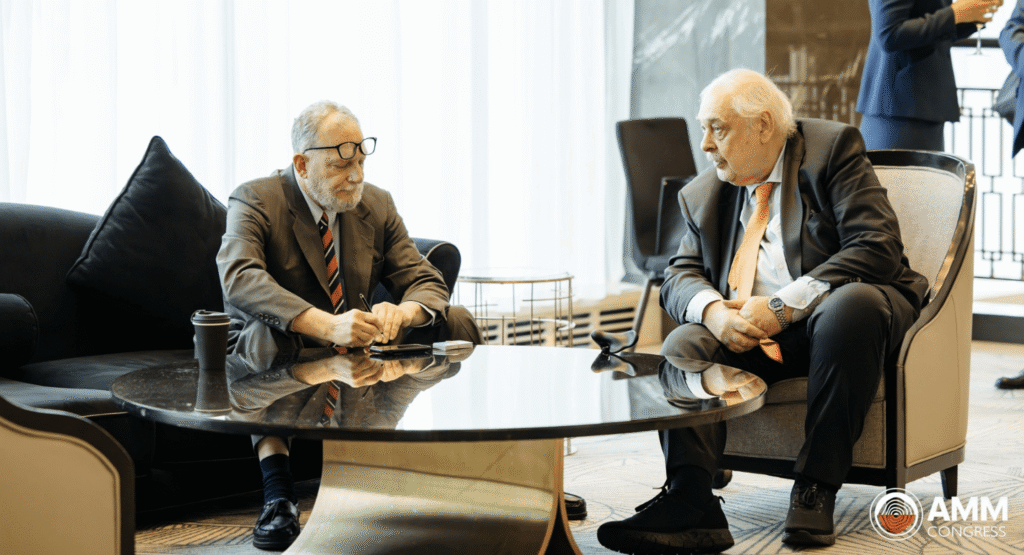
ASTANA — On June 11, Sylvain Gehler, Chairman of the Board of the Ust-Kamenogorsk Titanium and Magnesium Plant (UKTMP), and Assem Mamutova, the company’s CEO, spoke with The Times of Central Asia during the Astana Mining and Metallurgy Congress (AMM). He outlined their plans to strengthen the company’s international footprint, with the United States emerging as a priority market. During the meeting, Gehler highlighted UKTMP’s ambition to further solidify its position as a leading aerospace-grade titanium supplier, building on six decades of operations and what Kazakh officials describe as roughly one-fifth of the global aerospace titanium market. “The combination of Kazakhstan’s resource base, UKTMP’s decades of experience, and the increasing importance of secure supply chains creates a strong platform for future growth. We are committed to remaining a trusted partner for aerospace customers around the world,” Gehler said. UKTMP, based in eastern Kazakhstan, is among the world’s largest vertically integrated titanium producers, controlling the entire production chain from raw materials to finished products. The company’s products are used in aviation, medicine, shipbuilding, petrochemicals, and nuclear industries. Among its international partners are Boeing, Airbus, Safran, General Electric, and other leading manufacturers. [caption id="attachment_50948" align="aligncenter" width="708"] UKTMP -Titanium sponge at the end of the distillation process[/caption] Gehler emphasized that “delivering consistent, high-quality titanium products reflects our commitment to rigorous standards and positions us to meet rising demand for resilient, transparent supply chains while expanding in key markets.” The company’s long-term development plans and initiatives aim at reinforcing Kazakhstan’s standing in the global titanium industry. According to Gehler, “UKTMP’s investment program through 2033 includes 25 projects worth more than $520 million, including construction of a new titanium sponge facility that would significantly expand production capacity.” Currently, UKTMP has 30 types of titanium alloys. Titanium and its alloys combine a high melting point, high electrical resistivity, exceptional strength-to-weight ratio, corrosion resistance in air and seawater, and non-magnetic behavior. It is also lightweight—its specific gravity is approximately 56% that of steel—biologically inert, and readily formed under pressure, making titanium a versatile structural material widely used in advanced industries. United States Demand for Titanium The American aerospace and defense sectors rely heavily on titanium, while disruptions to traditional supply chains following sanctions on Russia have heightened interest in alternative suppliers. Kazakhstan has emerged as one of the countries helping fill that gap. [caption id="attachment_50961" align="aligncenter" width="1447"] Source: USGS[/caption] Industry analysts note that the United States currently lacks domestic titanium sponge production and remains dependent on imports. In 2025 through July, Japan supplied 73% of U.S. titanium sponge imports, while Kazakhstan and Saudi Arabia each supplied 13%. This strategic reliance underpins the favorable treatment the U.S. currently gives to Kazakh titanium, since heavy supply restrictions would adversely impact the U.S. aerospace and defense industries. This has not always been the case. For UKTMP, deeper access to the U.S. market represents not only a commercial opportunity but the makings of a strategic partnership. Increasing sales to American customers would further anchor Kazakhstan within Western aerospace and other supply...

Uzbekistan Agrees Tariff Cuts for U.S. Goods as Moody’s Raises Sovereign Rating

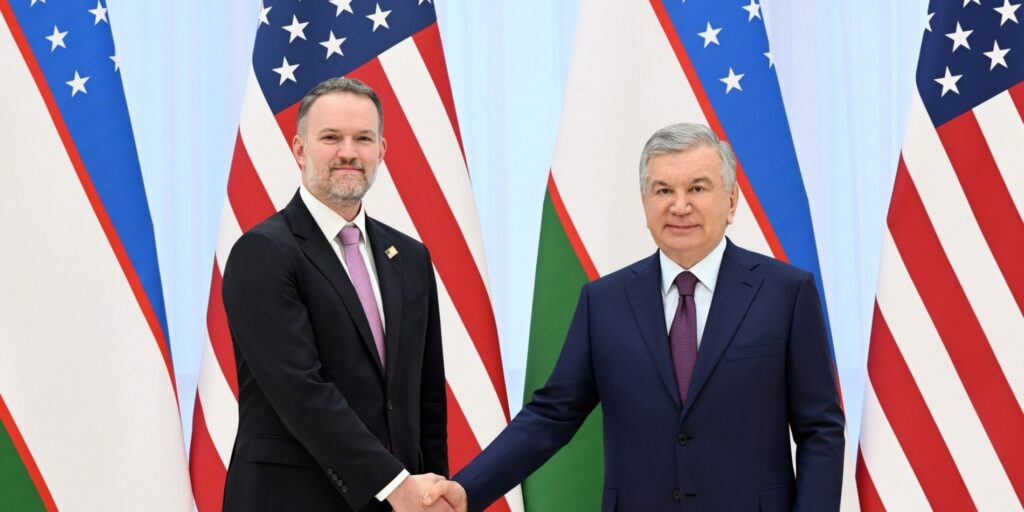
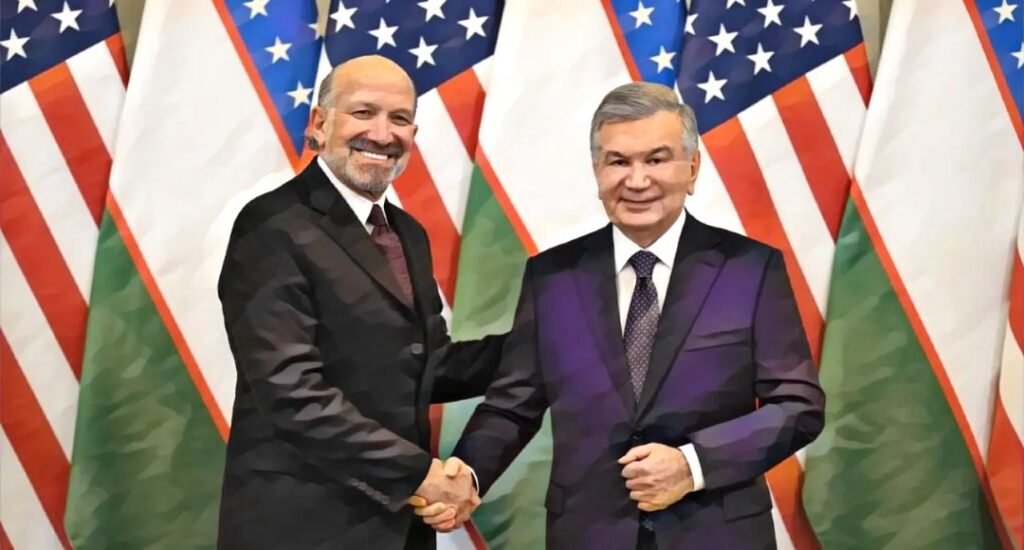
Uzbekistan and the United States announced a new package of trade commitments on June 25. Moody’s raised Uzbekistan’s sovereign rating by one notch the same day. The two decisions strengthen Tashkent’s case that economic reforms are producing practical gains. Under the “early harvest” announced in Tashkent, Uzbekistan will eliminate or reduce tariffs on a wide range of U.S. industrial and agricultural goods. Washington offered favorable consideration for Uzbek products in future tariff actions, where U.S. law allows, though that language does not guarantee automatic tariff cuts for Uzbek exports. The two governments will put the commitments in writing in the coming weeks. They also agreed to speed up negotiations on an Agreement on Reciprocal Trade and Investment. President Shavkat Mirziyoyev discussed the package with U.S. Trade Representative Jamieson Greer during talks in Tashkent. The announcement gives a political lift to a relationship which is still small in terms of trade. U.S. goods trade with Uzbekistan reached over $1 billion in 2025. American exports rose 24.5% to $473.9 million, while imports from Uzbekistan climbed to $574.4 million, turning a $338.3 million U.S. surplus in 2024 into a $100.5 million deficit. The latest agreement builds on $32 billion in commercial deals announced in 2025. That figure includes an $8.5 billion Boeing agreement and planned activity in mining, energy, finance, and technology. Tashkent has also built new channels to move projects toward financing. A U.S.-Uzbekistan Business and Investment Council began work in April. A joint investment platform followed in June, with energy, infrastructure, critical minerals, and manufacturing among its target sectors. The Tashkent business forum drew 193 U.S. company representatives. Saida Mirziyoyeva, head of Uzbekistan’s presidential administration, set a clear standard at the council’s launch. “We are no longer at the stage where we speak about potential,” she said. “We are at the stage where we must deliver.” That goal extends to Uzbekistan’s long WTO accession process. The country applied to join in 1994, but negotiations stalled for years. Tashkent resumed active work in 2020 and completed bilateral market-access negotiations with the United States in December 2024. The U.S. agreement settled terms for trade in goods and services between the two countries. It did not complete Uzbekistan’s accession. Tashkent still needs an agreed multilateral package and approval from WTO members. Uzbek officials now aim to secure full membership by the end of 2026. The timetable has already moved beyond an earlier target linked to the WTO ministerial conference in March. Negotiations cover tariffs and market access, but also reach domestic rules on subsidies, state-owned companies, product standards, and intellectual property. Some industries may receive time to adjust. Chief WTO negotiator Azizbek Urunov said that transition periods of three to eight years had been discussed for some sectors. “Overall, tariffs will be reduced,” he said. “However, there are sectors that are sensitive for us.” WTO membership would place Uzbekistan’s trade policy under a common set of rules and give exporters access to the organization’s dispute system. It would also limit some forms of state...

Washington and Tashkent Deepen Economic Ties at TIIF

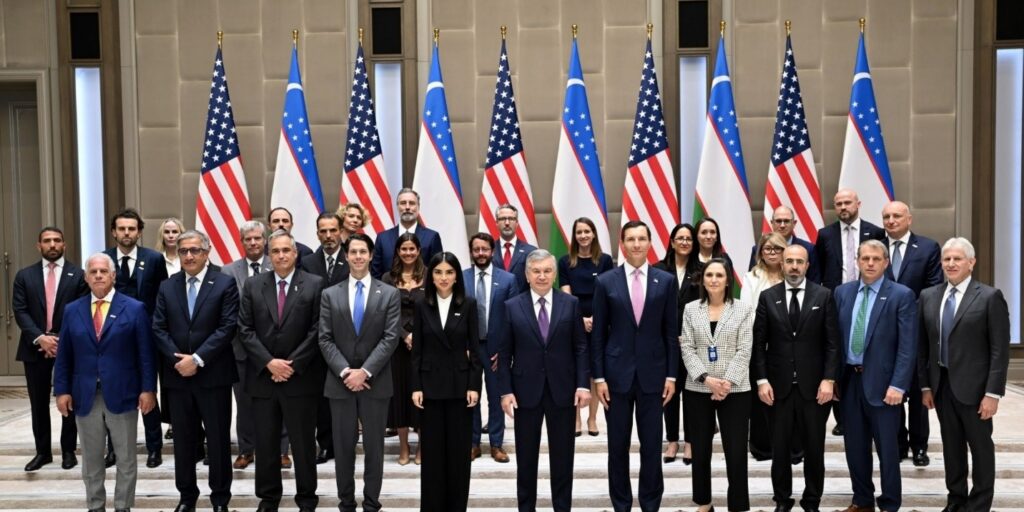
Uzbekistan and the United States launched a joint investment platform in Tashkent on June 16 as senior U.S. officials and corporate executives gathered for the fifth Tashkent International Investment Forum, advancing cooperation in energy, infrastructure, critical minerals, and advanced manufacturing. On the eve of the forum, Mirziyoyev hosted a delegation of leading U.S. companies and government financing institutions, a gathering he described as continuing a "good tradition" that reflects the growing appetite of U.S. businesses for a larger footprint in Uzbekistan. Among those present were John Jovanovic, president and chairman of the Export-Import Bank of the United States (EXIM), and Ben Black, chief executive officer of the U.S. International Development Finance Corporation (DFC), two officials whose institutions are emerging as principal channels for U.S. financing and investment support in the country. They were joined by Carolyn Lamm, chair of the American-Uzbekistan Chamber of Commerce, alongside executives representing Air Products, Cove Capital, Templeton Global Investments, Boeing, 77 Construction, BlackRock, Visa, JPMorgan, and Meta, among others, a roster spanning aerospace, finance, technology, and industrial sectors that underscores the breadth of U.S. commercial interest in the country. [caption id="attachment_50624" align="aligncenter" width="1943"] Black (DFC), Jovanovic (EXIM), Minister Laziz (MIIT), and Shukhrat Vafayev, Executive Director (UFRD); image: president.uz[/caption] President Mirziyoyev told the delegation that the economic agenda remains one of the key pillars of the strategic partnership between Uzbekistan and the United States, and laid out priority areas for deepening trade and economic cooperation. Particular emphasis was placed on projects in the development and processing of critical minerals, along with opportunities in energy, metallurgy, finance, artificial intelligence, and digital technologies. In response, the visiting executives thanked the president for the investment climate Uzbekistan has cultivated and outlined their proposals in a roundtable that culminated in a ceremony to exchange bilateral documents with participating U.S. companies. This broader engagement builds on a relationship Washington and Tashkent have been steadily formalizing over the past several years, as Uzbekistan has positioned itself as a more open and stable partner for foreign capital amid wider efforts to reform its economy and integrate more closely with global markets. The country's reserves of critical minerals, resources considered essential to U.S. technology, defense, and energy industries, have become a strategic priority for Washington, while Tashkent has sought to leverage U.S. expertise and financing to modernize sectors from energy to healthcare. That convergence of interests has increasingly framed Uzbekistan not merely as a bilateral partner but as a node in a larger U.S. strategy toward Central Asia. At the U.S.-Uzbekistan Business Forum in Tashkent on June 16, 2026, a curtain-raiser to the broader Tashkent International Investment Forum, panelists Ben Black, John Jovanovic, and Laziz Kudratov, Uzbekistan's minister of investment, industry, and trade, discussed Tashkent's proposal for a special economic zone tailored to U.S. companies. Minerals, fertilizer production, pharmaceuticals, and textiles were identified as the four priority sectors for deeper bilateral cooperation, alongside a new U.S.-Uzbekistan Joint Investment Platform building on earlier preliminary agreements. The forum drew the largest U.S. business delegation in the...

Uzbekistan’s $4.2 Billion Critical Minerals Plan Aims to Turn Raw Materials Into Industry

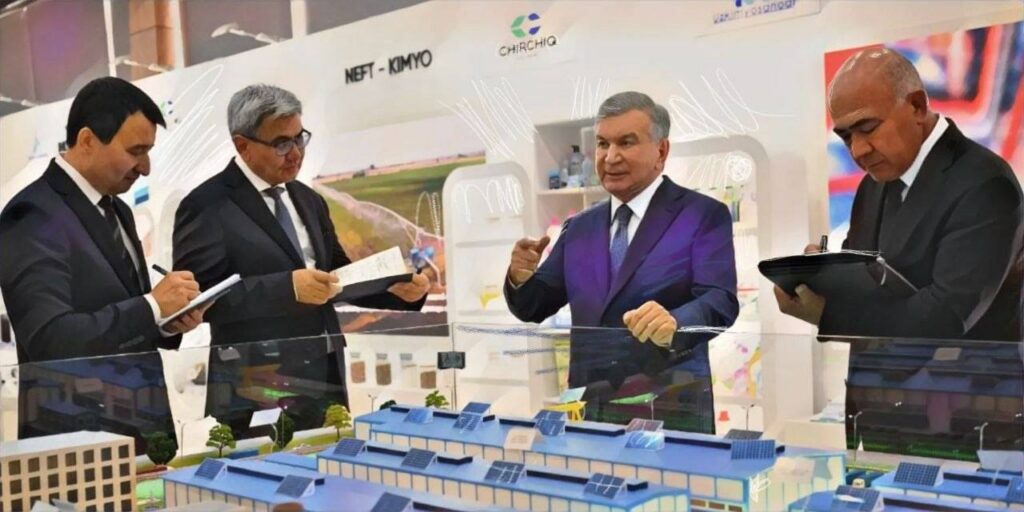
Uzbekistan has placed a $4.2 billion critical minerals program at the center of its industrial policy, as Tashkent seeks to turn Soviet-era mining strengths into higher-value production for modern supply chains. The country has long sold metals and minerals, but the program reviewed by President Shavkat Mirziyoyev on June 15 puts more emphasis on refining, laboratory work, skilled workers, and finished industrial goods. The new 2026-2030 program, which sets out 120 projects, aims to lift critical minerals output to $1 billion by 2028 and $2 billion by 2030. The first tranche, planned for this year, covers 12 projects worth $166 million and production of high-purity selenium, tellurium, and rhenium. It also includes 21 import-substituting products, including powder metallurgy auto parts and sulfuric acid. The plan landed as investors gathered in Tashkent for the Fifth Tashkent International Investment Forum. Mirziyoyev used the forum to make a broader reform pitch. “We are always open to investors interested in cooperating with Uzbekistan and ready for an equal and mutually beneficial partnership,” he said in his opening speech. He also announced plans for a Tashkent International Financial Center with zero rates for profit tax, value-added tax, property tax, and customs duties. Critical minerals give that investment pitch a clearer focus. Global buyers are looking for supplies that do not depend on a handful of processing hubs, while resource-rich countries want more of the value to stay at home. Uzbekistan is trying to move into that field with metals it already produces, especially tungsten and molybdenum, and with smaller but valuable materials used in electronics, aerospace, energy equipment, and advanced manufacturing. The Uzbekistan Technological Metals Complex, known as TMK or UzTMK, is the state vehicle for much of this work. The company says its portfolio includes tungsten, molybdenum, rhenium, graphite, selenium, tellurium, lithium, nickel, and cobalt. Its stated model is “mine-metal-market,” meaning a chain from extraction to metal products and buyers. The June 15 package adds practical details. Uzbekistan wants more than concentrates and semi-finished goods. The presidential briefing listed metal powders, alloys, rods, wire, industrial parts, and finished products. For tungsten and molybdenum, that means deeper processing inside Uzbekistan rather than sending value abroad. Chirchik, east of Tashkent, is set to play a larger role. The government plans to expand the Metals of the Future technopark and build up an R&D center there. The site is designed to support start-ups, commercialize applied research, and produce high-purity metals. A planned nano-analysis laboratory would process up to 1,000 samples a day once fully operational. Officials say it could replace $6.5 million in imported analytical services and generate $4 million through service exports. The lab is one of the more practical parts of the program. Mining projects need more than deposits and investment pledges. They need reliable samples, resource estimates that meet international standards, steady power, and proven processing methods. A credible laboratory in Chirchik would not remove all those risks, but it would make it easier to move from geological data to financed projects. Global demand...

Modernization Without Dependence: Why Uzbekistan Is Deepening Ties with Washington

The recent rise in Uzbekistan-U.S. engagement is often framed as a sudden diplomatic turn, and much of the commentary has focused on what Washington hopes to gain from deeper involvement in Central Asia. Far less attention, however, has been given to what Tashkent is seeking from this relationship. From Uzbekistan’s perspective, this engagement is part of a broader national strategy to expand the country’s foreign policy options at a time when all of the major powers are competing for influence in Central Asia. In November 2025, President Shavkat Mirziyoyev joined the other C5 leaders in Washington for a White House summit focused on economic cooperation, critical minerals, energy, and trade. By February 2026, the relationship had moved beyond talks and into financing and project design, with new agreements involving the U.S. International Development Finance Corporation and EXIM, alongside a new critical minerals framework. From Uzbekistan’s side, the core objective is straightforward. Tashkent wants to modernize rapidly without risking becoming overdependent on any single external investor. That means using U.S. interest as leverage and in tandem with, not as a replacement for ties with Russia or China. Washington is courting the region because it wants access to minerals and supply chains that reduce reliance on China and limit exposure to sanctioned or geopolitically sensitive suppliers. Uzbekistan is well aware of this and is using that demand to strengthen its bargaining position for financing, technology, and industrial upgrading. In other words, Uzbekistan is positioning itself as a strategic production and transit partner. The direction of cooperation is revealing. The February 2026 U.S.-Uzbekistan critical minerals pact prioritizes the full-value chain from exploration and extraction to processing, and even proposes a joint investment holding company. This signals that Tashkent is aiming beyond raw-material exports. It wants to break from the post-Soviet pattern of shipping resources while others capture refining, technology, and margins. If it can secure processing capacity, infrastructure, and long-term financing, the deal becomes an instrument of industrial policy. The second objective is finance and implementation capacity. President Mirziyoyev also held separate bilateral meetings with the U.S. Secretary of Commerce, Howard Lutnick, and other senior U.S. trade officials. The meetings focused on an investment platform, business council coordination, and support for large industrial and infrastructure projects. EXIM also publicly described the new framework as a way to convert earlier commitments into financing solutions for energy, aviation, critical minerals, and advanced technologies. The third objective is trade normalization and market access. A bipartisan Senate effort has introduced legislation to repeal Jackson-Vanik restrictions for Central Asian states, and President Mirziyoyev raised U.S. support for Uzbekistan’s WTO accession and stronger cooperation under the U.S.–Central Asia Trade and Investment Framework Agreement (TIFA). These measures shape the legal and trade environment that ultimately determines investor confidence. Uzbekistan is trying to make the relationship durable by embedding it in institutions. The move also serves a domestic political economy logic. President Mirziyoyev’s government has spent years presenting itself as reformist, investment-friendly, and open for business. Deeper engagement with the United...

Uzbekistan Joins a U.S. Critical Minerals Implementation Track

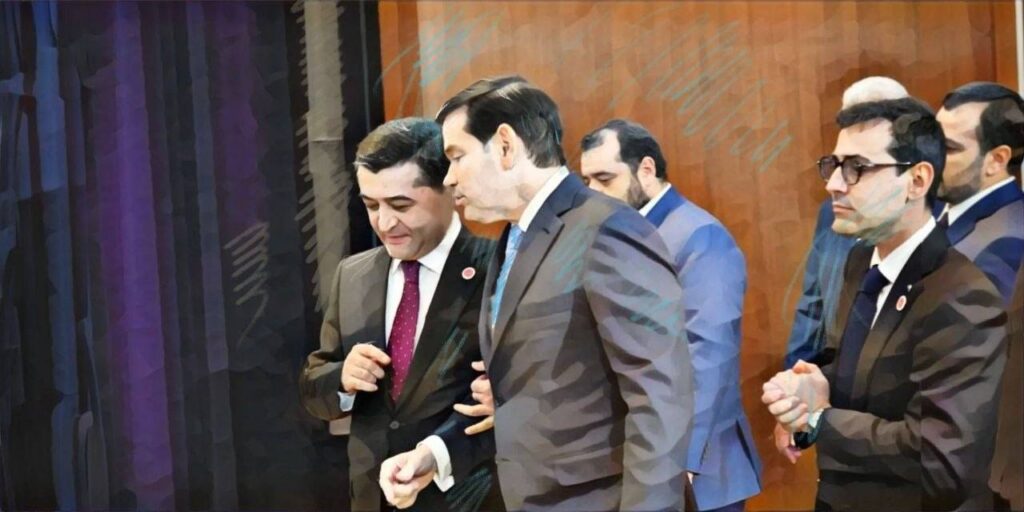
On February 4, 2026, in Washington, D.C., Uzbekistan’s Foreign Minister Bakhtiyor Saidov and U.S. Deputy Secretary of State Christopher Landau signed an intergovernmental Memorandum of Understanding (MoU) on securing supply chains for critical minerals and rare earth elements, spanning both mining and processing. A further agreement signed on February 19 brought implementation and financing to the foreground. The U.S. International Development Finance Corporation (DFC) signed “heads of terms” (i.e., commercial principles and essential terms of a proposed future agreement) for a Joint Investment Framework and outlined a proposed joint holding company. An agreement to establish an “investment platform” was exchanged in the presence of Uzbekistan’s President Shavkat Mirziyoyev. These agreements are not a single mining deal. They combine a political instrument with a financing-and-structuring track that is intended to yield a small set of projects that can be financed and built, and they treat processing capacity and supporting infrastructure not as optional add-ons but as core deliverables. They also provide a path for early projects to full review and financing while connecting them to longer-term offtake structures that match Washington’s newer supply-shock tools, including “Project Vault.” What the MoU Changes The MoU’s immediate purpose is to align government priorities for critical minerals across the value chain while setting expectations that will later shape which financing and partners are feasible. The press agency of Uzbekistan’s foreign ministry emphasized “responsible partnership” and “long-term development” as part of the public framing, placing governance and reputational risk on the same plane as the geological givens. The MoU also leaves several items deliberately unresolved in public form. These include project annexes, deposit designations, and operational timelines. That document design-choice pushes the next phase of bilateral cooperation into working-level scoping and sequencing, where only a small number of candidate projects can be advanced into full review. At the ministerial-level meeting, Washington clarified why it was framed as supply-chain security rather than commodity trade. Secretary of State Marco Rubio noted that critical minerals are inputs for infrastructure, industry, and defense, while Vice President J.D. Vance stressed the expansion of production across partner networks. As previously reported by The Times of Central Asia, this framing is part of a broader repositioning of U.S. engagement in Central Asia, where diplomatic formats are increasingly paired with mechanisms intended to generate trackable transactions and private-sector follow-through. For Uzbekistan, what is attractive about this cooperation is the potential to convert resource endowment into a lever for industrial development, rather than treating extraction as the endpoint. President Shavkat Mirziyoyev has publicly valued the country’s underground wealth at roughly $3 trillion. He has linked rising global demand for technological minerals to the case for higher value-added activity around strategic reserves, including lithium and tungsten. The same logic supports a commercially open posture. For Tashkent’s other investors, buyers, and processing partners, Uzbekistan’s diversification toward U.S.-linked capital signals non-exclusivity. Turning the MoU Into Projects The next phase is practical. A candidate project will advance only if investors and public lenders can transparently evaluate its licensing and...