
• KZT/USD = 0.00219
  • TJS/USD = 0.10860
  • UZS/USD = 0.00008
  • TMT/USD = 0.29850
  • KZT/USD = 0.00219
  • TJS/USD = 0.10860
  • UZS/USD = 0.00008
  • TMT/USD = 0.29850
  • KZT/USD = 0.00219
  • TJS/USD = 0.10860
  • UZS/USD = 0.00008
  • TMT/USD = 0.29850
  • KZT/USD = 0.00219
  • TJS/USD = 0.10860
  • UZS/USD = 0.00008
  • TMT/USD = 0.29850
  • KZT/USD = 0.00219
  • TJS/USD = 0.10860
  • UZS/USD = 0.00008
  • TMT/USD = 0.29850
  • KZT/USD = 0.00219
  • TJS/USD = 0.10860
  • UZS/USD = 0.00008
  • TMT/USD = 0.29850
  • KZT/USD = 0.00219
  • TJS/USD = 0.10860
  • UZS/USD = 0.00008
  • TMT/USD = 0.29850
  • KZT/USD = 0.00219
  • TJS/USD = 0.10860
  • UZS/USD = 0.00008
  • TMT/USD = 0.29850
22 November 2026

Viewing results 1 - 6 of 2

Kazakhstan’s Top Three Universities Slip in QS Asia Rankings

Kazakhstan remained the only Central Asian country with universities in the top 100 of the latest Asian rankings from higher education analysts Quacquarelli Symonds (QS), although all three of its leading institutions fell. In the QS World University Rankings: Asia 2027, released on November 3, Al-Farabi Kazakh National University fell from 38th to 46th, L.N. Gumilyov Eurasian National University slipped from 61st to 62nd, and Satbayev University dropped from 79th to 89th. Kazakhstan’s representation rose from 44 to 51 universities, putting it 10th in Asia by number of institutions listed. The rankings covered 1,722 universities from 26 countries and territories, with the University of Hong Kong retaining the top spot. Of the 44 universities in Kazakhstan listed in both editions, 24 fell, 14 rose, and six held their positions. QS told Forbes Kazakhstan that 33 had improved their overall scores, explaining that universities can fall in the rankings when competitors make bigger gains. Sarsen Amanzholov East Kazakhstan University made the biggest gain among the country’s institutions, climbing 64 places to 618th. Nazarbayev University rose 62 places to tie for 139th. QS evaluates universities using 11 indicators, including academic reputation, employer reputation, research performance, and student exchanges. Kazakhstan’s Ministry of Science and Higher Education said the country’s universities scored above the Asian average on seven of those indicators. However, their average score for citations per paper, a measure of research impact, was just 3.8 points, compared with 35.2 across Asia, QS noted. The ministry said more than 30 foreign university branch campuses had opened in Kazakhstan, expanding opportunities for student exchanges and academic cooperation. Kazakhstan accounted for eight of the top 10 universities in QS’s Central Asia table, with its three leading institutions taking the top spots. Uzbekistan’s Tashkent Institute of Irrigation and Agricultural Mechanization Engineers National Research University placed fourth, and the National University of Uzbekistan named after Mirzo Ulugbek placed ninth. In the same regional table, Kyrgyz-Turkish Manas University was Kyrgyzstan’s highest-ranked institution, placing 14th, followed by the American University of Central Asia in 15th. Tajik National University ranked 43rd. The separate QS World University Rankings 2027 included 18 universities from Kazakhstan. Al-Farabi Kazakh National University was the country’s highest-ranked institution, tying for 177th.
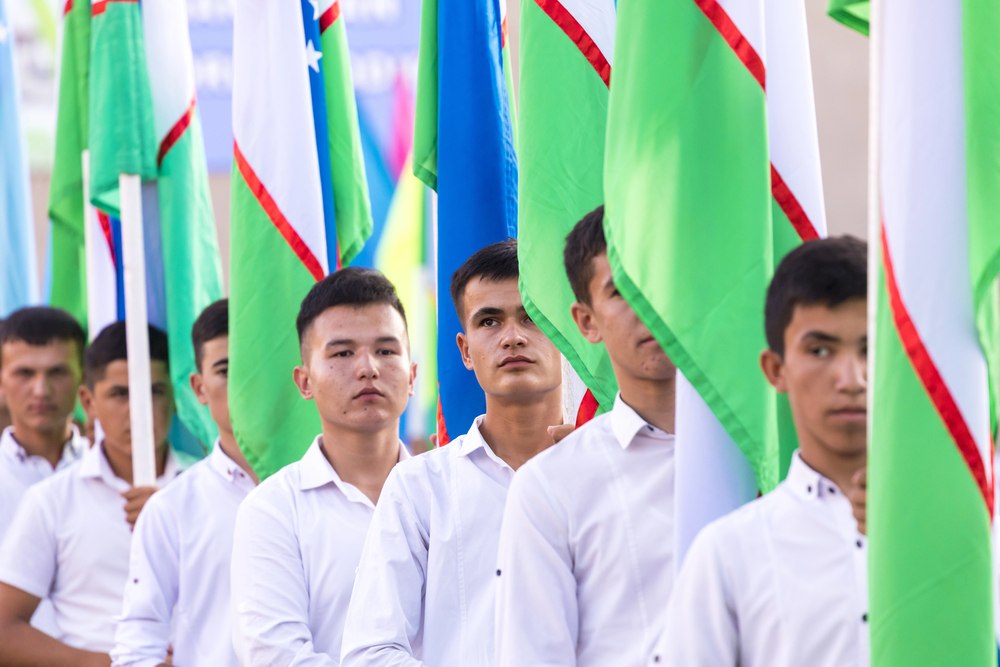

Uzbekistan’s Universities Climb Sustainability Rankings as Afghan Training Program Expands

Fifty higher education institutions from Uzbekistan have been included in the Times Higher Education (THE) Sustainability Impact Ratings 2026, marking another year of strong international recognition for the country’s universities. The results were announced on June 24 during the Global Sustainable Development Congress in Jakarta, Indonesia, while separate education initiatives in southern Uzbekistan are also extending training opportunities to hundreds of Afghan citizens. The THE Sustainability Impact Ratings assess how universities contribute to the United Nations Sustainable Development Goals (SDGs), evaluating performance across education, research, governance, social responsibility, environmental sustainability, and international cooperation. According to the ranking results, 24 Uzbek universities placed among the world’s top 1,000 institutions, reflecting the country’s growing emphasis on integrating sustainable development principles into higher education. Two universities recorded Uzbekistan’s highest overall positions, both ranking in the 101-200 band: Tashkent State University of Uzbek Language and Literature and Tashkent State University of Economics. They were followed by the National University of Uzbekistan and the National Research University “TIIAME” in the 201-300 group. Uzbekistan's universities also achieved notable results in individual Sustainable Development Goals. Alisher Navoi Tashkent State University of Uzbek Language and Literature ranked eighth in the world for Gender Equality, while Tashkent State Technical University placed fifth globally for Affordable and Clean Energy. Fergana Polytechnic Institute ranked sixth in the same category, and two medical universities from Samarkand and Tashkent secured places among the world’s top institutions for Good Health and Well-being. The country’s presence in the rankings has expanded significantly in recent years. Uzbekistan was represented by 12 universities in 2021, rising to 30 in 2022, 47 in 2023, 53 in 2024, 59 in 2025, and 50 institutions in the 2026 edition. At the same time, Uzbekistan is continuing to position itself as a regional education hub. UzA reported that more than 600 Afghan citizens have completed free technical and vocational training courses at the Educational Center for Afghan Citizens in Termez District, Surkhandarya Region. The training formed part of the $2 million European Union-funded project, implemented in partnership with the United Nations Development Programme, aimed at expanding educational opportunities and supporting the socio-economic integration of Afghan citizens. In addition to vocational training, the project covered tuition fees and scholarships for 136 Afghan students enrolled in higher education institutions. Thirty graduates with the strongest business proposals were awarded $2,000 vouchers to launch small businesses, while 39 participants received grants of up to $4,000 to purchase equipment and expand production or service-based enterprises. The project also upgraded the training center with new computer equipment, servers, a conference hall, a co-working space, and a 29-seat bus.