• KZT/USD = 0.00225
  • TJS/USD = 0.10850
  • UZS/USD = 0.00008
  • TMT/USD = 0.29850
  • KZT/USD = 0.00225
  • TJS/USD = 0.10850
  • UZS/USD = 0.00008
  • TMT/USD = 0.29850
  • KZT/USD = 0.00225
  • TJS/USD = 0.10850
  • UZS/USD = 0.00008
  • TMT/USD = 0.29850
  • KZT/USD = 0.00225
  • TJS/USD = 0.10850
  • UZS/USD = 0.00008
  • TMT/USD = 0.29850
  • KZT/USD = 0.00225
  • TJS/USD = 0.10850
  • UZS/USD = 0.00008
  • TMT/USD = 0.29850
  • KZT/USD = 0.00225
  • TJS/USD = 0.10850
  • UZS/USD = 0.00008
  • TMT/USD = 0.29850
  • KZT/USD = 0.00225
  • TJS/USD = 0.10850
  • UZS/USD = 0.00008
  • TMT/USD = 0.29850
  • KZT/USD = 0.00225
  • TJS/USD = 0.10850
  • UZS/USD = 0.00008
  • TMT/USD = 0.29850
18 November 2026

Viewing results 1 - 6 of 2

Almaty SkyTrain Project Forces Dismantling of Dedicated Bus Lane

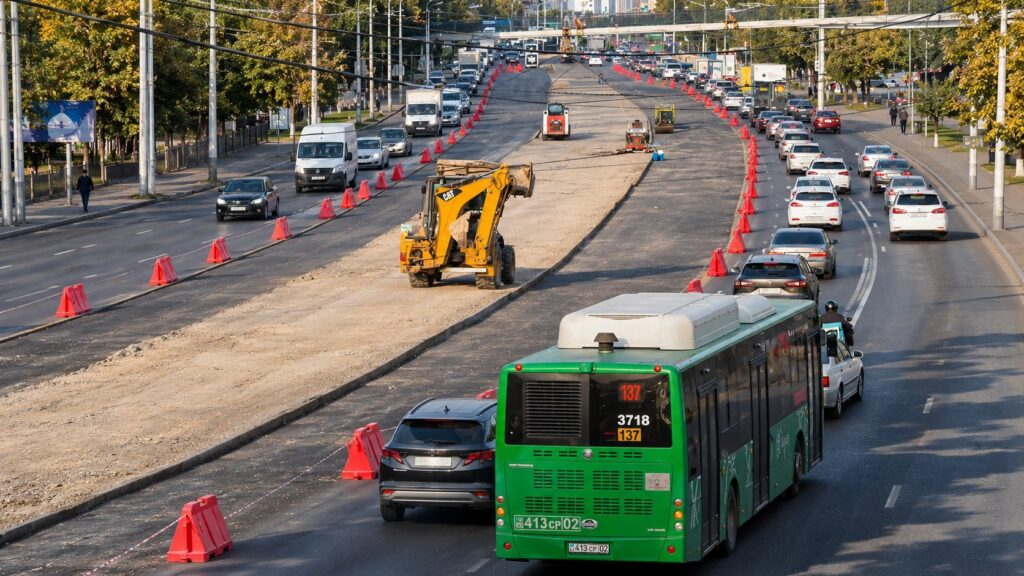
In early November, Almaty, Kazakhstan's largest city and former capital, began dismantling a dedicated bus rapid transit (BRT) lane on Raiymbek Avenue. The city administration, known as the akimat, said the work was necessary to coordinate the bus route with the planned SkyTrain monorail system. According to Vlast, an earlier draft of the city's master plan estimated construction costs at 567 billion tenge ($1.28 billion). On November 12, the Urban Forum Kazakhstan public foundation appealed to President Kassym-Jomart Tokayev to reconsider the project before construction begins in 2027. Urban planning experts argue that the decision to build a monorail was made without properly assessing other forms of public transportation. [caption id="attachment_60941" align="aligncenter" width="1024"] Image: TCA[/caption] The Dispute Over SkyTrain's Routes In June 2026, Tokayev instructed the administrations of Almaty and the surrounding Almaty region, together with Samruk-Kazyna, the national wealth fund that manages Kazakhstan's largest state-owned companies, to explore the construction of high-speed lines beyond the city limits. These included connections to Alatau, a new satellite city being developed as an economic and investment hub. However, plans for routes within Almaty itself were already under discussion before this instruction. Approximately 400,000 cars reportedly enter Almaty from the surrounding region every day. Suburban public transportation was intended to ease this burden, but both SkyTrain lines in the plans now being developed run within the city. Officials have said the network could eventually be extended into the surrounding region. According to information released by Almaty's Department of Road Infrastructure Development on November 17, the two SkyTrain lines will have a combined length of 46.4 kilometers. The project is scheduled for implementation between 2027 and 2030. The first line will run along Raiymbek Avenue from the Barlyk transportation hub in western Almaty to the road connecting the city with Talgar to the east. The second will run from Sain Street along Al-Farabi Avenue and via the Eastern Bypass Road to the Halyk Arena complex. The tracks will be elevated 10–15 meters above ground, with trains traveling at an average speed of 35 kilometers per hour. Earlier materials published by the Almaty Development Center indicated that the system would have 20 stations, while in September the Department of Road Infrastructure Development reported plans for 13 stations on the first line and 14 on the second, including two interchange stations. The official construction cost will be determined following a state review of the project. According to preliminary estimates by the Almaty Development Center, each line could accommodate up to 40 million passenger trips annually. Three Transportation Projects Alongside preparations for SkyTrain, Almaty is building a light rail transit (LRT) line and reconstructing Raiymbek Avenue to accommodate bus rapid transit (BRT) services operating in dedicated lanes. [caption id="attachment_60939" align="aligncenter" width="1536"] Image: TCA[/caption] Construction of the LRT system began in April 2026. The initial 18.3-kilometer section will include 34 stops. Some 61.4 billion tenge ($138 million) has been allocated for construction in 2026, with services scheduled to begin in late 2027. Almaty has been discussing the project...

Kazakhstan Mandates BIM Design for All New Buildings

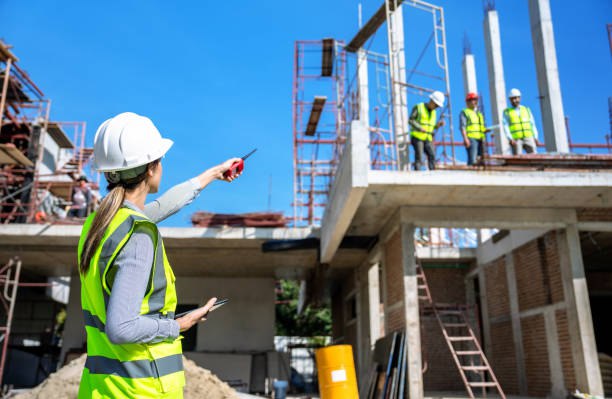
Kazakhstan has approved a digitalization plan for its construction sector that mandates the use of Building Information Modeling (BIM) for all new residential and commercial developments. According to the press service of the Prime Minister of Kazakhstan, Deputy Prime Minister  Minister of Artificial Intelligence and Digital Development Zhaslan Madiev and Minister of Industry and Construction Yersayin Nagaspayev have jointly endorsed the 2026-2027 plan to digitize the construction industry. The initiative outlines the sector’s digital transformation across the full lifecycle of facilities from planning and design to construction, commissioning, and post-construction operation. “The plan includes a series of practical measures aimed at simplifying and accelerating construction processes,” the press service stated. “Among the priorities are mandatory BIM design, automation of public services in construction, creation of digital facility passports, and conversion of building norms and standards into machine-readable formats. These changes are expected to reduce manual processes, minimize errors, and improve predictability in project delivery.” BIM design integrates data on geometry, technical characteristics, and construction processes into a unified digital model, enabling stakeholders to coordinate changes, assess design decisions, and identify potential issues prior to construction. Its adoption is expected to enhance quality, efficiency, and coordination throughout a project’s lifespan from conception to demolition. The digitalization drive is also intended to increase transparency in the sector, reduce costs and timelines, lower administrative barriers, and improve the safety and quality of construction projects. In a related development, President Kassym-Jomart Tokayev recently signed a new Construction Code aimed at streamlining regulations in architecture, urban planning, and construction. The code seeks to improve procedural transparency and establish uniform rules for all market participants. The document clarifies permit procedures, reinforces quality control, and standardizes construction materials and technologies. Following criticism from the business community, the Ministry of Industry and Construction revised the draft to address key concerns. Nazira Usenova, deputy chair of the board of the Atameken National Chamber of Entrepreneurs, noted that some provisions risked complicating processes and increasing bureaucratic burdens. “What is important for the industry is not the number of control mechanisms, but their effectiveness and predictability,” she said. Compromise solutions were ultimately reached on the most sensitive issues. Experts have cautioned, however, that some provisions will require further scrutiny during implementation.Viktor Mikryukov, president of the Association of Developers of Kazakhstan, said transparency and consistency were essential. “The new rules must not become a tool for excessive pressure on entrepreneurs. Their application must avoid broad interpretation by regulators and ensure uniformity across Kazakhstan.” Among the key agreements reached was the retention of a five-year warranty period for completed construction projects and a ten-year warranty for structural elements, including the load-bearing frame, facade, and roof. The Code also promotes self-regulation, improves engineering and technical certification standards, furthers digitization, strengthens oversight in seismic zones, expands the powers of local maslikhats, and enhances public involvement in urban planning. The Construction Code will come into force on July 1. As previously reported by The Times of Central Asia, Kazakhstan launched a unified electronic construction platform on...