
• KGS/USD = 0.01144 0%
  • KZT/USD = 0.00212 0%
  • TJS/USD = 0.10699 0.19%
  • UZS/USD = 0.00008 0%
  • TMT/USD = 0.28490 0%
  • KGS/USD = 0.01144 0%
  • KZT/USD = 0.00212 0%
  • TJS/USD = 0.10699 0.19%
  • UZS/USD = 0.00008 0%
  • TMT/USD = 0.28490 0%
  • KGS/USD = 0.01144 0%
  • KZT/USD = 0.00212 0%
  • TJS/USD = 0.10699 0.19%
  • UZS/USD = 0.00008 0%
  • TMT/USD = 0.28490 0%
  • KGS/USD = 0.01144 0%
  • KZT/USD = 0.00212 0%
  • TJS/USD = 0.10699 0.19%
  • UZS/USD = 0.00008 0%
  • TMT/USD = 0.28490 0%
  • KGS/USD = 0.01144 0%
  • KZT/USD = 0.00212 0%
  • TJS/USD = 0.10699 0.19%
  • UZS/USD = 0.00008 0%
  • TMT/USD = 0.28490 0%
  • KGS/USD = 0.01144 0%
  • KZT/USD = 0.00212 0%
  • TJS/USD = 0.10699 0.19%
  • UZS/USD = 0.00008 0%
  • TMT/USD = 0.28490 0%
  • KGS/USD = 0.01144 0%
  • KZT/USD = 0.00212 0%
  • TJS/USD = 0.10699 0.19%
  • UZS/USD = 0.00008 0%
  • TMT/USD = 0.28490 0%
  • KGS/USD = 0.01144 0%
  • KZT/USD = 0.00212 0%
  • TJS/USD = 0.10699 0.19%
  • UZS/USD = 0.00008 0%
  • TMT/USD = 0.28490 0%

Viewing results 1 - 6 of 5

Uzbekistan’s Cotton Sector: Focus Shifts to Farmers as Dialogue Continues

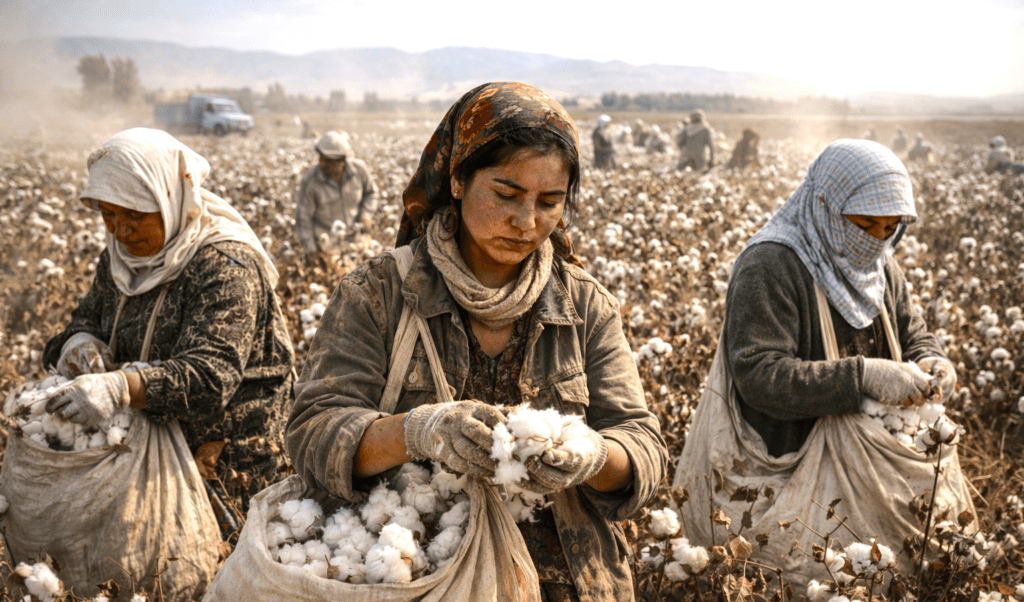
The Times of Central Asia previously published an interview with Komoliddin Ikromov, head of the Agribusiness Association, addressing recent land disputes, legal processes, and ongoing reforms in Uzbekistan’s agricultural sector. In a separate conversation, Umida Niyazova, founder of the Uzbek Forum for Human Rights, has offered an additional perspective, focusing on the conditions faced by cotton and wheat farmers. Her remarks come in the context of a recent joint report by the Uzbek Forum and Human Rights Watch examining structural issues in the agricultural system. While the report has drawn international attention, Niyazova emphasized that its primary focus differs from earlier discussions centered on cotton pickers. Focus on farmers rather than pickers Niyazova said public debate in recent years has largely focused on forced labor among cotton pickers, particularly prior to reforms introduced after 2019. However, she noted that the new report shifts attention to another group. “Our recent report on the cotton sector in Uzbekistan does not focus on cotton pickers, but rather on cotton and wheat producers, farmers,” she told The Times of Central Asia. “This is a different segment of workers whose problems have, for decades, remained overshadowed by the issue of forced labor of cotton pickers... The central finding of our report is that the working conditions of farmers producing cotton and wheat in Uzbekistan place them at risk of forced labor.” Basis for assessing risk Niyazova explained that this conclusion is based on eleven indicators developed by the International Labour Organization, “which define warning signs that individuals may be at risk.” However, the report does not conclude that specific cases constitute forced labor. “We did not have sufficient information to determine that any particular farmer is working under forced labor conditions,” she told TCA. “However, we were able to conclude that cotton and wheat farmers in general are at risk due to the conditions in which they work.” These indicators include factors such as vulnerability, intimidation, threats, withholding of wages, and abusive working conditions. At the same time, she acknowledged that Uzbekistan has made progress in addressing earlier concerns related to cotton picking. Changes in cotton picking practices Niyazova said the situation for cotton pickers has changed significantly in recent years. “These are seasonal workers, primarily rural residents, who are recruited by farmers or mahallas (neighborhoods) to harvest cotton over a two-month period,” she said. “Since the 2020 harvest, payment rates for manual cotton picking have increased. This has been an important, though not the only, factor in attracting voluntary laborers.” According to the Ministry of Agriculture, a recommended price of 2,000 UZS ($0.16) per kilogram of hand-picked cotton was set for 2025. During the harvest, prices may also be determined through agreements between cluster operators, farms, and pickers. Niyazova said additional reforms have contributed to changes in the sector, including the introduction of private clusters, increased mechanization, and government oversight. “Mechanization has increased year by year, reducing the need for manual labor,” she said, adding that by 2025, more than 50% of the harvest...
Tajik Cotton Exports to Iran Reach Record Levels

Since the start of 2025, Iran has imported more than 30,000 tons of cotton fiber from Tajikistan, accounting for over 83% of the country’s total foreign sales of this product. The value of these exports has reached $45.7 million. Geography and Structure of Exports Khurshed Zuhurzoda, First Deputy Director of the Tajikistan Export Agency, said Iran’s demand is driven by a shortage of raw materials for its domestic textile industry. According to the Iranian Cotton Fund, the country’s annual cotton demand stands at around 180,000 tons, while domestic production meets only 70,000-80,000 tons. Geographic proximity and the high quality of Tajik fiber have made it one of Iran’s primary import sources. From January to June 2025, Tajikistan exported 36,300 tons of cotton fiber worth $54.6 million to foreign markets. Of this, more than 30,900 tons, 83.61% in both value and volume, went to Iran. Other buyers included Russia ($4 million), Turkey ($1.97 million), Pakistan ($1.1 million), and China ($286,000). The Khatlon region was the largest domestic supplier, providing $29.6 million worth of exports (54.22%), followed by Sughd with $25 million (45.78%). The average export price per ton was $1,506. Negotiations on Expanding Cooperation On July 30, during the 10th Consultation of the Ministers of Agriculture of Shanghai Cooperation Organisation (SCO) member states in China, Tajik Agriculture Minister Kurbon Hakimzoda met with Iranian Agriculture Minister Gholamreza Nouri. Talks covered topics ranging from cotton supplies to the introduction of smart farming systems. Priorities included food security, development of greenhouse complexes, fish farming, organic agriculture, digital technologies, internationally accredited laboratories, climate change adaptation, and joint projects for product processing and packaging. Nouri emphasized that strengthening agricultural ties with neighboring countries is a strategic priority for Iran. Hakimzoda, in turn, noted “satisfactory progress” in implementing existing agreements. Prospects: Moving from Raw Cotton to Value-Added Exports Tajikistan forecasts raw cotton production to grow from 422,000 tons in 2026 to 437,000 tons in 2028. Cotton fiber output is projected at 150,000 tons, while yarn production will increase from 49,000 to 54,000 tons. The government’s export strategy aims to gradually reduce unprocessed cotton exports, from 72,000 tons in 2026 to 56,000 tons in 2028, while boosting yarn exports from 14,000 to 18,000 tons. Agricultural expert Bakhodur Khaito said this shift could alter trade arrangements with Iran. “With a reduction in direct fiber supplies, Dushanbe could offer Tehran more yarn, develop joint ventures, localize processing, and promote finished products to third markets,” he noted.

U.S. Cuts Funding for Uzbek Cotton Transparency Project

On April 30, during a cabinet meeting at the White House attended by President Donald Trump, U.S. Labor Secretary Lori Chavez-DeRemer announced the cancellation of more than $38 million in foreign aid programs, including funding for a project aimed at improving transparency and labor practices in Uzbekistan’s cotton industry. “We have saved $250 million by canceling foreign aid programs under ‘America Last,’” said Chavez-DeRemer, referring to initiatives the Trump administration believes do not align with U.S. interests. “It makes no sense for our funds to be spent on such things. Thank you DOGE for the savings. What we found was fraud.” Chavez-DeRemer's reference to DOGE, the Department of Government Efficiency, led by Elon Musk, drew laughter in the room. Musk added, “Some of these things are so ridiculous you can't believe it! Uzbek cotton farmers?! It sounds like a comedy sketch.” The targeted Uzbek cotton project began in August 2022 and was initially scheduled to run through 2026. It received $2 million in its first year, with a further $1 million planned for 2025. The project aimed to improve labor conditions and prevent forced labor in Uzbekistan’s cotton sector, while helping workers and employers meet international standards. In a video statement posted on X (formerly Twitter), Chavez-DeRemer reinforced the administration’s shift in aid priorities: “On day one, I promised that putting American workers first will be our top priority. At the direction of President Trump, we have wasted no time. Last week, we terminated several foreign aid grants, saving over $38 million... I bet you didn’t even know your hard-earned tax dollars were being spent on things like enhancing transparency in Uzbekistan’s cotton industry, supporting labor standards in Congo, or climate change programs in Brazil and Colombia.” Uzbekistan’s cotton industry has long been under international scrutiny for the systemic use of forced labor. In recent years, however, the government has undertaken reforms and introduced strict monitoring systems to address these concerns with support from international partners, leading to organizations such as Cotton Campaign ending its call for a global boycott of Uzbek cotton. Additionally, the industry is being modernized through privatization and investments in technology, aiming to boost efficiency and sustainability.
