• KZT/USD = 0.00223
  • TJS/USD = 0.10860
  • UZS/USD = 0.00008
  • TMT/USD = 0.29760
  • KZT/USD = 0.00223
  • TJS/USD = 0.10860
  • UZS/USD = 0.00008
  • TMT/USD = 0.29760
  • KZT/USD = 0.00223
  • TJS/USD = 0.10860
  • UZS/USD = 0.00008
  • TMT/USD = 0.29760
  • KZT/USD = 0.00223
  • TJS/USD = 0.10860
  • UZS/USD = 0.00008
  • TMT/USD = 0.29760
  • KZT/USD = 0.00223
  • TJS/USD = 0.10860
  • UZS/USD = 0.00008
  • TMT/USD = 0.29760
  • KZT/USD = 0.00223
  • TJS/USD = 0.10860
  • UZS/USD = 0.00008
  • TMT/USD = 0.29760
  • KZT/USD = 0.00223
  • TJS/USD = 0.10860
  • UZS/USD = 0.00008
  • TMT/USD = 0.29760
  • KZT/USD = 0.00223
  • TJS/USD = 0.10860
  • UZS/USD = 0.00008
  • TMT/USD = 0.29760
06 November 2026

Viewing results 1 - 6 of 2

Kazakhstan’s Carbon Black: Finding Value in Mining By-Products

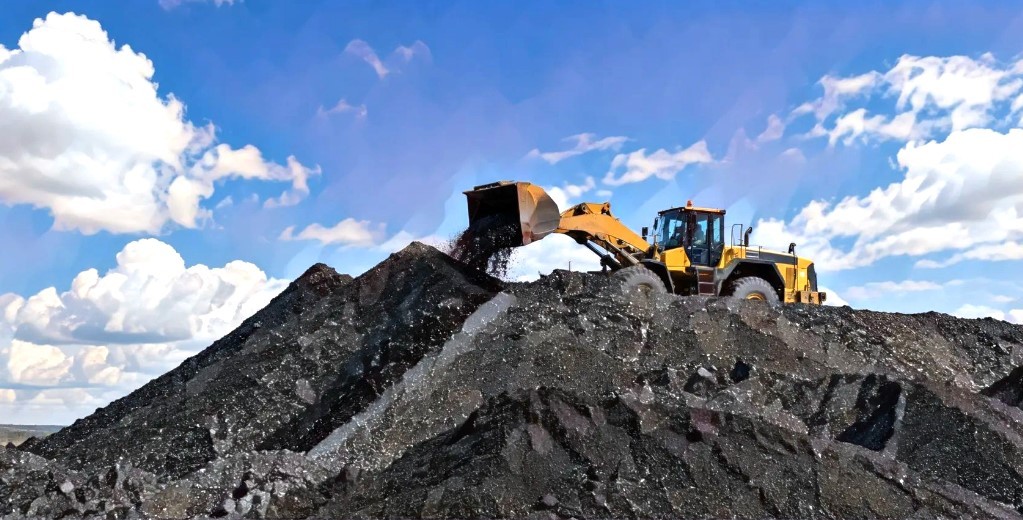
London-listed Ferro-Alloy Resources (FAR) is developing a large vanadium deposit in Kazakhstan, as The Times of Central Asia reported in July, and operates a smaller concentrate-processing plant that recovers vanadium, molybdenum and nickel from purchased concentrates. The project could supply growing markets for vanadium and other critical materials. Beyond its core business, FAR has found additional value in by-products already present in the ore. These include its proprietary Carbon Black Substitute (CBS), a rubber-reinforcing filler that the company says is commercially viable, as well as uranium and rare earth minerals, which are not yet in the project economics and could add to future earnings if they prove profitable. Nicholas Bridgen, FAR’s CEO until October 26 and now its non-executive deputy chairman, told TCA: “Our ore gives us multiple sources of revenue. The vanadium pays for the mine and much else, while the carbon and silica left behind, not to mention rare earth metals, become products in their own right.” At an 8% post-tax discount rate, FAR’s Phase 1 delivers a $748 million net present value (NPV) and a 22% internal rate of return (IRR), the company reports, rising to US$931.6 million and 31% on lower capex (November 2025). These figures already include the original CBS, made from vanadium-plant tailings; FAR’s New CBS, made from waste rock, is excluded and would be additional. Rubber manufacturers represent 93% of carbon black demand, making them a potential market for CBS. FAR estimates that the product could sell for about 60–74% less than the conventional carbon black prices cited below and have approximately 90% lower production emissions. Carbon black Carbon black is a reinforcing filler found in most rubber goods, including tires, hoses, conveyor belts, and shoe soles. Its primary particles, only tens of nanometers wide, fuse into aggregates with very high surface area, and rubber chains attach to that surface through both physical and chemical bonds. This makes the rubber stronger, harder, and more resistant to wear. Amorphous silica performs a comparable role, with its surface silanol groups linked to the rubber by silane coupling agents, and it is frequently used alongside carbon black. Unlike graphite, a naturally occurring, highly ordered crystalline carbon prized for conductivity, lubrication and batteries, carbon black is an engineered, near-spherical amorphous carbon made in a furnace for rubber reinforcement. The global carbon black market stood at 15.15 million tonnes in 2025 and is forecast to reach 21.83 million tonnes by 2034, expanding at a CAGR of 4.14%. Rising demand for tires and automotive products is driving much of the growth. Why it is costly Barry Angeline, chemical engineer and polymer physicist, explains that “more than 95% of carbon black is manufactured through the oil-furnace process, which heats and decomposes hydrocarbon feedstocks at high temperatures. The resulting microscopic carbon particles,” he continued, “are quenched, separated from exhaust gases, then processed into pellets for use primarily as a reinforcing agent in rubber. Roughly 1.5 tonnes of fossil feedstock is consumed per tonne of carbon black, and 2.5 tonnes or more of...

Opinion: Could Vanadium Be Kazakhstan’s Next Breakout Critical Metals Story?

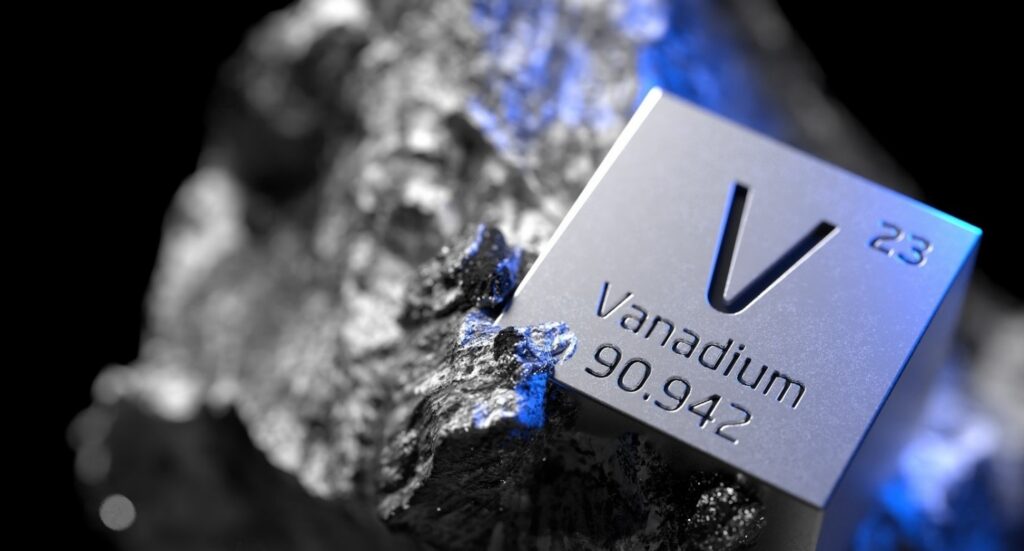
Vanadium is viewed as a critical mineral by the United States, the European Union, Russia, China and many other countries because of its importance to energy storage and industrial alloys. At the Astana Metals & Metallurgy (AMM) Congress, Ferro-Alloy Resources CEO Nicholas Bridgen discussed the company’s assets, strategy, and valuation with The Times of Central Asia, noting that the company appears undervalued amid supply chain disruptions and the rising strategic importance of vanadium. The discussion highlighted vanadium’s emerging demand-supply imbalance and efforts to better align market perception with fundamentals. Of the critical metals that will define the next half-century, vanadium has perhaps the strongest claim to indispensability: it hardens the steel in our infrastructure and defense systems, and it stores the energy that our grids will increasingly depend on. Yet the market has consistently failed to price that future in, and nowhere is that mispricing more visible than in the vanadium deposits of Kazakhstan. In 1941, with the Second World War raging, Soviet geologists fanned out across Central Asia looking for strategic minerals. Around 180 kilometers east of Almaty, in the foothills of the Tian Shan mountain range along the borders with China and Kyrgyzstan, they found tungsten at the Boguty deposit. At roughly the same time, they were delineating what would become the Northern Katpar and Upper Kairakty tungsten deposits. The geology was well understood, and the resource was real, but nothing happened for the better part of 75 years. The deposits sat idle not because tungsten was unimportant, but because there was no pressing reason for, first, the Soviet Union or later the West to develop them. That changed when the scale of China's dominance in critical metals became impossible to ignore. By the early 2020s, China was producing over 75% of the world’s tungsten output, alongside similarly dominant shares of rare earth elements and a range of other strategic minerals. This concentration of supply was not accidental. It was the product of decades of deliberate industrial policy, patient capital, and a willingness to operate at low margins long enough to drive out competitors. The Tungsten Lesson Chinese mining company Jiaxin International Resources Investment Ltd. moved in 2014 to acquire Boguty for an undisclosed sum, almost certainly a modest one. The deal further consolidated China’s grip on global tungsten supply. Jiaxin then spent approximately $300 million developing the deposit and listed on the Hong Kong Stock Exchange at a valuation in excess of $600 million. The investment thesis seemed straightforward enough at the time. In 2025, it looked positively prescient: China imposed export controls on tungsten, and key prices outside China more than doubled. According to the Financial Times, Jiaxin’s market capitalization stands at close to HKD 22.3 billion, equal to $2.84 billion, approximately 9.5 times the stated development expenditure. [caption id="attachment_52262" align="aligncenter" width="1432"] Image: Kaz Resources[/caption] Meanwhile, Skyline Builders Group Holding Ltd. and Cove Kaz Capital Group LLC (“Cove Kaz”) have moved to acquire the two other formerly dormant tungsten deposits in Kazakhstan, Northern Katpar and Upper Kairakty. On this...