
• KGS/USD = 0.01143 0%
  • KZT/USD = 0.00212 0%
  • TJS/USD = 0.10823 0.19%
  • UZS/USD = 0.00008 0%
  • TMT/USD = 0.28571 0%
  • KGS/USD = 0.01143 0%
  • KZT/USD = 0.00212 0%
  • TJS/USD = 0.10823 0.19%
  • UZS/USD = 0.00008 0%
  • TMT/USD = 0.28571 0%
  • KGS/USD = 0.01143 0%
  • KZT/USD = 0.00212 0%
  • TJS/USD = 0.10823 0.19%
  • UZS/USD = 0.00008 0%
  • TMT/USD = 0.28571 0%
  • KGS/USD = 0.01143 0%
  • KZT/USD = 0.00212 0%
  • TJS/USD = 0.10823 0.19%
  • UZS/USD = 0.00008 0%
  • TMT/USD = 0.28571 0%
  • KGS/USD = 0.01143 0%
  • KZT/USD = 0.00212 0%
  • TJS/USD = 0.10823 0.19%
  • UZS/USD = 0.00008 0%
  • TMT/USD = 0.28571 0%
  • KGS/USD = 0.01143 0%
  • KZT/USD = 0.00212 0%
  • TJS/USD = 0.10823 0.19%
  • UZS/USD = 0.00008 0%
  • TMT/USD = 0.28571 0%
  • KGS/USD = 0.01143 0%
  • KZT/USD = 0.00212 0%
  • TJS/USD = 0.10823 0.19%
  • UZS/USD = 0.00008 0%
  • TMT/USD = 0.28571 0%
  • KGS/USD = 0.01143 0%
  • KZT/USD = 0.00212 0%
  • TJS/USD = 0.10823 0.19%
  • UZS/USD = 0.00008 0%
  • TMT/USD = 0.28571 0%

Viewing results 1 - 6 of 6

From a Student Initiative to a Youth Movement: How Volunteering Is Developing in Kyrgyzstan

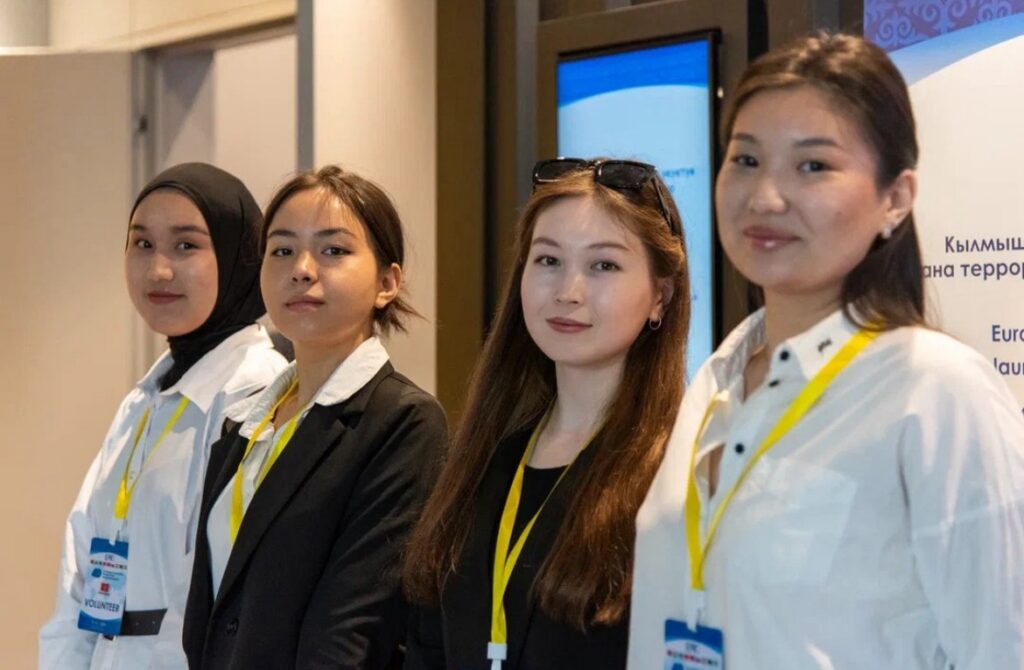
In 2023, Kyrgyzstan adopted a law establishing the legal basis for volunteer activity, while the Ministry of Culture, Information and Youth Policy has been named Kyrgyzstan’s focal point for the International Year of Volunteers 2026. UN Volunteers has also reported that nearly 100 youth and volunteer organizations are active across the country, with major public events expected to rely heavily on trained volunteers. The Times of Central Asia spoke with Aruuke Karmyshakova, executive director of Active Volunteers, about why more young people in Kyrgyzstan are entering volunteer work, how the organization cooperates with state bodies, international partners, and educational institutions, and why sustainable funding remains a central challenge for the sector. TCA: What gap did Active Volunteers set out to fill when it was founded, and how did the organization develop from there? Aruuke: Active Volunteers was founded in 2017 through the initiative of Bekbolot Stalbekov. Bekbolot wanted to create a platform where students could develop not only academically, but also beyond the classroom, to try themselves in real projects, gain practical experience, and show initiative. At first, it was a small student group of like-minded people. But it very quickly became clear that there were many active and versatile young people like this. With each new project, the number of participants grew, the team expanded, and the initiatives became increasingly large-scale. That is how, from a small student idea, we gradually grew into a full-fledged youth foundation with many different areas of work. TCA: How has the organization’s mission evolved as its work has expanded into different areas? Aruuke: Today, we define our mission as the comprehensive, multi-sphere development of young people and society as a whole. It is not one single direction, but a complex approach: we are involved in charitable assistance, educational projects, cultural initiatives, and support for civic activity. We help young people develop in science, art, media, leadership, ecology, and many other fields. The main idea is that every participant should be able to unlock their potential while also bringing real benefit to the country. Members of our team, Malika Baibolotova, Nurzhigit Kazygulov, Sofya Khurshudova, and Elaman Zhusupov, are already participating in international projects such as the “Strong Youth - Strong Country” program from the Civic Participation Foundation, funded by the European Union and UNICEF. They are undergoing regular training, which will continue until 2027-2028, and they will then be ready to establish and implement their own initiatives and projects. TCA: Has the profile of volunteers in Kyrgyzstan changed in recent years? Aruuke: Previously, most volunteers were university and college students, but since 2023 the picture has changed noticeably. Today, the age range has become much wider: school students starting from the age of 13-14, university students, young specialists, and also middle-aged people come to us. Everyone finds their own niche, some help in education, some in cultural events, and others in social projects. But what unites everyone is one thing: a sincere desire to contribute to the development of Kyrgyzstan. [caption id="attachment_49262" align="aligncenter" width="2560"] @Active...

Attempting to Build a Litter-Free Kazakhstan: An Interview with Ecologist Kamila Akimbekova

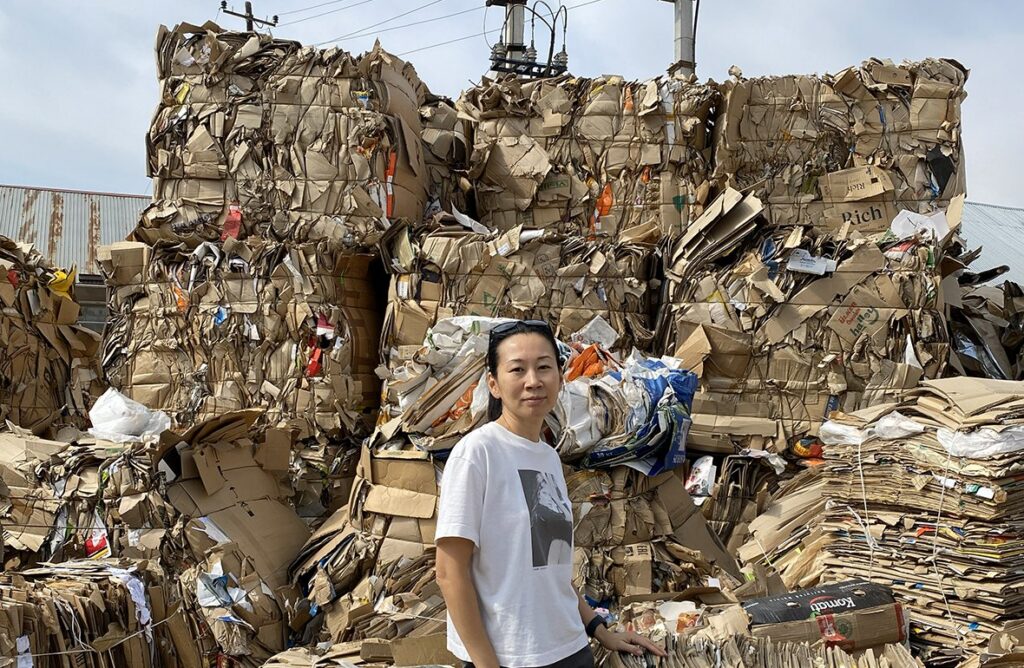
Ten years ago, waste recycling in Almaty was largely the domain of individual enthusiasts. Today, environmental campaigns draw thousands, and conversations about responsible consumption have become part of daily life for many city residents. One of the pioneers of this movement is Kamila Akimbekova, an eco-influencer and co-organizer of environmental initiatives. In an interview with The Times of Central Asia, she reflects on the evolution of Almaty’s eco-community, the principles behind the zero waste concept, and how small, consistent changes can reshape a city. TCA: Kamila, you had a successful career in banking. What prompted your transition to environmental activism?  Kamila: I think my interests evolved. People often think recycling is a new trend, but it actually existed in the USSR: students collected waste paper, and people returned glass for reuse. It was an effective circular economy. When I became a mother for the second time, I began thinking more deeply about my impact on the world. I started researching whether Almaty had recycling facilities. At the time, information was scarce, and it wasn’t easy to locate collection points, but I didn’t give up. TCA: Was access to information more limited 10-15 years ago? Kamila: Absolutely. Social media was less developed, and online information was often outdated or unreliable. I started looking for people who shared my values and eventually connected with Almaty’s early eco-activists. They were scattered individuals with a shared desire for change. Over time, we formed a real community, launched joint projects, and I began sharing what I learned on my blog. That’s how I transitioned to eco-influencing. Today, I have around 30,000 Instagram followers, an engaged audience concerned about the environment. TCA: Is the eco-community large now? Kamila: It’s grown significantly, especially in Almaty, though we’re also connected with activists across Kazakhstan. Participation has multiplied. Our early events drew 20-50 people. Now we see around 2,000. There’s strong interest from students and school-children, I lecture regularly and see growing volunteerism. At our last campaign, electronic sensors showed that 1,900 people attended. TCA: Is it true that women form the core of the eco-community? Kamila: Yes, that’s backed by studies. Women tend to be more environmentally conscious, likely due to traditional roles as caretakers of the home and future generations. TCA: Today, people can recycle much more than just paper, glass, and plastic. How did that expansion come about? Kamila: I wanted a convenient way to dispose of multiple waste types, old medicines, unused items, plastics, metals, e-waste, etc. In 2019, we invited companies like Rocket Plastic and an e-waste recycler to set up at our events. We also partnered with the Almaty Pop-Up Store and expanded through collaborations with the Darmarka project and the Recycle Birge team. TCA: I was surprised to learn you accept unusual items, used cooking oil, expired candy, even food scraps for farmers. Kamila: We follow the zero waste concept, which aims to reduce waste to zero. Many newcomers think sorting is the most important part, but recycling is actually the last...