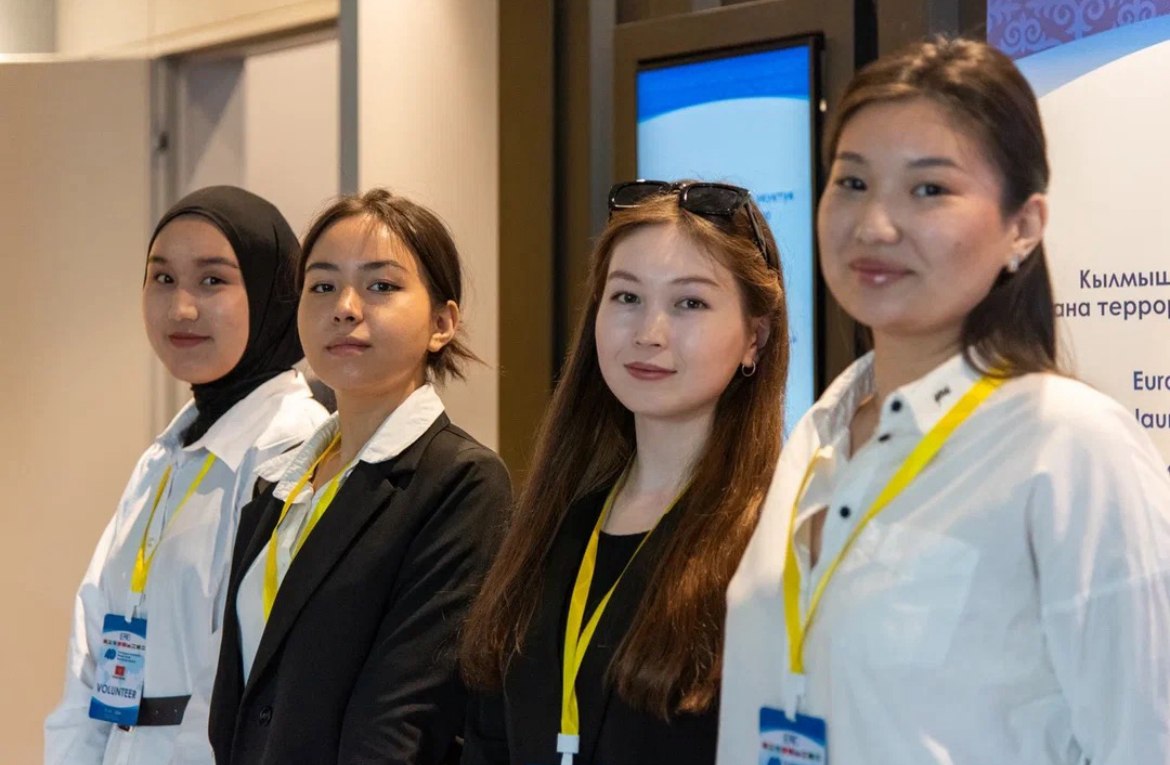
In 2023, Kyrgyzstan adopted a law establishing the legal basis for volunteer activity, while the Ministry of Culture, Information and Youth Policy has been named Kyrgyzstan’s focal point for the International Year of Volunteers 2026. UN Volunteers has also reported that nearly 100 youth and volunteer organizations are active across the country, with major public events expected to rely heavily on trained volunteers.
The Times of Central Asia spoke with Aruuke Karmyshakova, executive director of Active Volunteers, about why more young people in Kyrgyzstan are entering volunteer work, how the organization cooperates with state bodies, international partners, and educational institutions, and why sustainable funding remains a central challenge for the sector.
TCA: What gap did Active Volunteers set out to fill when it was founded, and how did the organization develop from there?
Aruuke: Active Volunteers was founded in 2017 through the initiative of Bekbolot Stalbekov. Bekbolot wanted to create a platform where students could develop not only academically, but also beyond the classroom, to try themselves in real projects, gain practical experience, and show initiative.
At first, it was a small student group of like-minded people. But it very quickly became clear that there were many active and versatile young people like this. With each new project, the number of participants grew, the team expanded, and the initiatives became increasingly large-scale. That is how, from a small student idea, we gradually grew into a full-fledged youth foundation with many different areas of work.
TCA: How has the organization’s mission evolved as its work has expanded into different areas?
Aruuke: Today, we define our mission as the comprehensive, multi-sphere development of young people and society as a whole. It is not one single direction, but a complex approach: we are involved in charitable assistance, educational projects, cultural initiatives, and support for civic activity.
We help young people develop in science, art, media, leadership, ecology, and many other fields. The main idea is that every participant should be able to unlock their potential while also bringing real benefit to the country.
Members of our team, Malika Baibolotova, Nurzhigit Kazygulov, Sofya Khurshudova, and Elaman Zhusupov, are already participating in international projects such as the “Strong Youth – Strong Country” program from the Civic Participation Foundation, funded by the European Union and UNICEF. They are undergoing regular training, which will continue until 2027-2028, and they will then be ready to establish and implement their own initiatives and projects.
TCA: Has the profile of volunteers in Kyrgyzstan changed in recent years?
Aruuke: Previously, most volunteers were university and college students, but since 2023 the picture has changed noticeably. Today, the age range has become much wider: school students starting from the age of 13-14, university students, young specialists, and also middle-aged people come to us.
Everyone finds their own niche, some help in education, some in cultural events, and others in social projects. But what unites everyone is one thing: a sincere desire to contribute to the development of Kyrgyzstan.
@Active Volunteers
TCA: Why, in your opinion, are young people in Kyrgyzstan increasingly interested in volunteering and public initiatives?
Aruuke: There are several reasons. First, it is a powerful source of experience, networking, and stepping out of one’s comfort zone. Second, young people increasingly want not just to “receive,” but to influence what is happening around them and see real results from their activities.
In addition, there is now much more understanding that volunteering is a serious investment in oneself. It develops leadership qualities, communication, project management, teamwork, and other skills that are highly valued both in education and in a career. Many are looking for meaning, like-minded people, and the opportunity to be part of something bigger.
TCA: What usually motivates young people to become volunteers?
Aruuke: Most often, the motivation is complex: the desire to help others, gain new experience, find one’s community, and actively develop skills. For those who have never tried it, it may sometimes seem strange that so much can be gained from “unpaid” work. But when a person becomes involved, they quickly understand how valuable it is.
One example is the international Meikin Asia festival. In addition to the main volunteer team, we had a separate group of translators working in English, French, Spanish, and Uzbek. They accompanied foreign artists everywhere, in hotels, at soundchecks, backstage at concerts, and at official receptions. We paid great attention to their comfort. As a result, many of these volunteers still keep in touch with the artists and receive personal invitations to other countries. Such experience is priceless.
TCA: How is the image of a volunteer changing in Kyrgyzstan?
Aruuke: The image of a volunteer is changing for the better. Before the COVID-19 pandemic in 2020, little was known about volunteering, and it was often perceived simply as “free help.” After the pandemic, the number of people wanting to volunteer increased sharply, and the attitude toward volunteering became more conscious.
Today, more and more people see volunteering as an important part of personal development, an opportunity to gain unique experience, international connections, and professional skills that are difficult to acquire at university.
TCA: Active Volunteers has projects related to parliamentary democracy and civic education. Why is it important for you to work on this topic?
Aruuke: This topic is fundamental for us. One of our first programs, the “School of Parliamentary Democracy,” was a comprehensive educational initiative that gave young people knowledge, practical skills, resources, and confidence for active participation in the country’s socioeconomic, cultural, and political life.
We also launched the “Oilon, Oigon!” media hub to support young media creators producing high-quality and useful content. Within these programs, we hold seminars, master classes, workshops, and training sessions, helping young people move from theory to action.
TCA: How do you explain to young people that civic participation is not just politics?
Aruuke: We explain that civic participation is, first of all, everyday responsibility for the society in which we live. It is not necessarily big politics, but concrete action: helping others, organizing initiatives, and solving problems at one’s own level.
And we show this in practice, not just in words. Our volunteers regularly participate in state and international events. For example, together with the Department of Tourism under the Ministry of Economy, we recently accompanied foreign delegations as part of the SCO. Earlier, we helped organize the 2025 International Forum of Volunteers of CIS countries, as well as many other significant events.
TCA: Which Active Volunteers projects have best represented the organization’s work in recent years?
Aruuke: Every project is important in its own way because behind each one there are people and real change. But if we are talking about scale and significance, the projects of 2024-2025 stand out, when we represented Kyrgyzstan internationally.
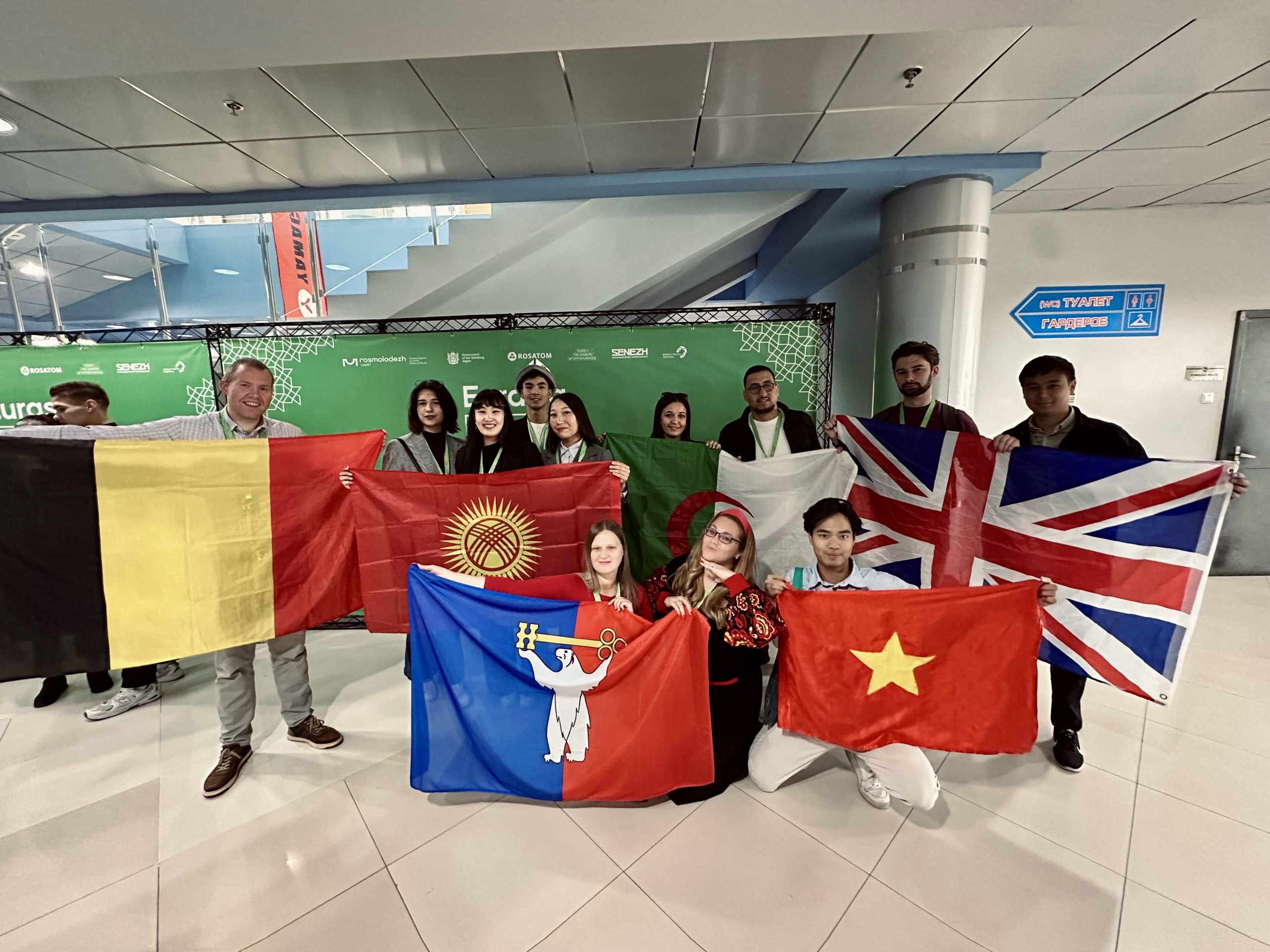
Our directors, Rinat Sovetkanov and Aruuke Karmyshakova, took part in the prestigious Eurasia Global Forum in autumn 2025, which brought together 500 participants from more than 113 countries. We also participated in the first Forum of Sports Volunteers of the Organization of Turkic States in Baku. Such participation greatly inspires our team and shows the high level of preparation of our young people.
TCA: Is there one volunteer story or initiative that best shows why your work is needed?
Aruuke: There are many such stories, but the path of our former program director, Alina Marseleva, is especially inspiring. She joined us almost at the very beginning and went through a long journey with the organization. She participated in events, organized them, and grew as a leader.
Alina strengthened her skills in project management, public speaking, working in an international environment, time management, and team building. As a result, all this accumulated experience helped her receive a full scholarship to one of the leading universities in Europe, Sapienza University in Italy, where she is now successfully studying for her master’s degree. This is a vivid example of how volunteering becomes a real springboard for major life opportunities.
TCA: What difficulties do volunteer organizations in Kyrgyzstan face?
Aruuke: The main difficulty is the large number of ideas and projects combined with limited sustainable funding. It is not always easy to find resources for everything that we want to implement. But even here, the situation has noticeably improved compared with previous years. We are learning to work more effectively, build partnerships, and move forward despite the difficulties.
@Active Volunteers
TCA: How willing are government bodies, universities, and businesses to cooperate with volunteer organizations today?
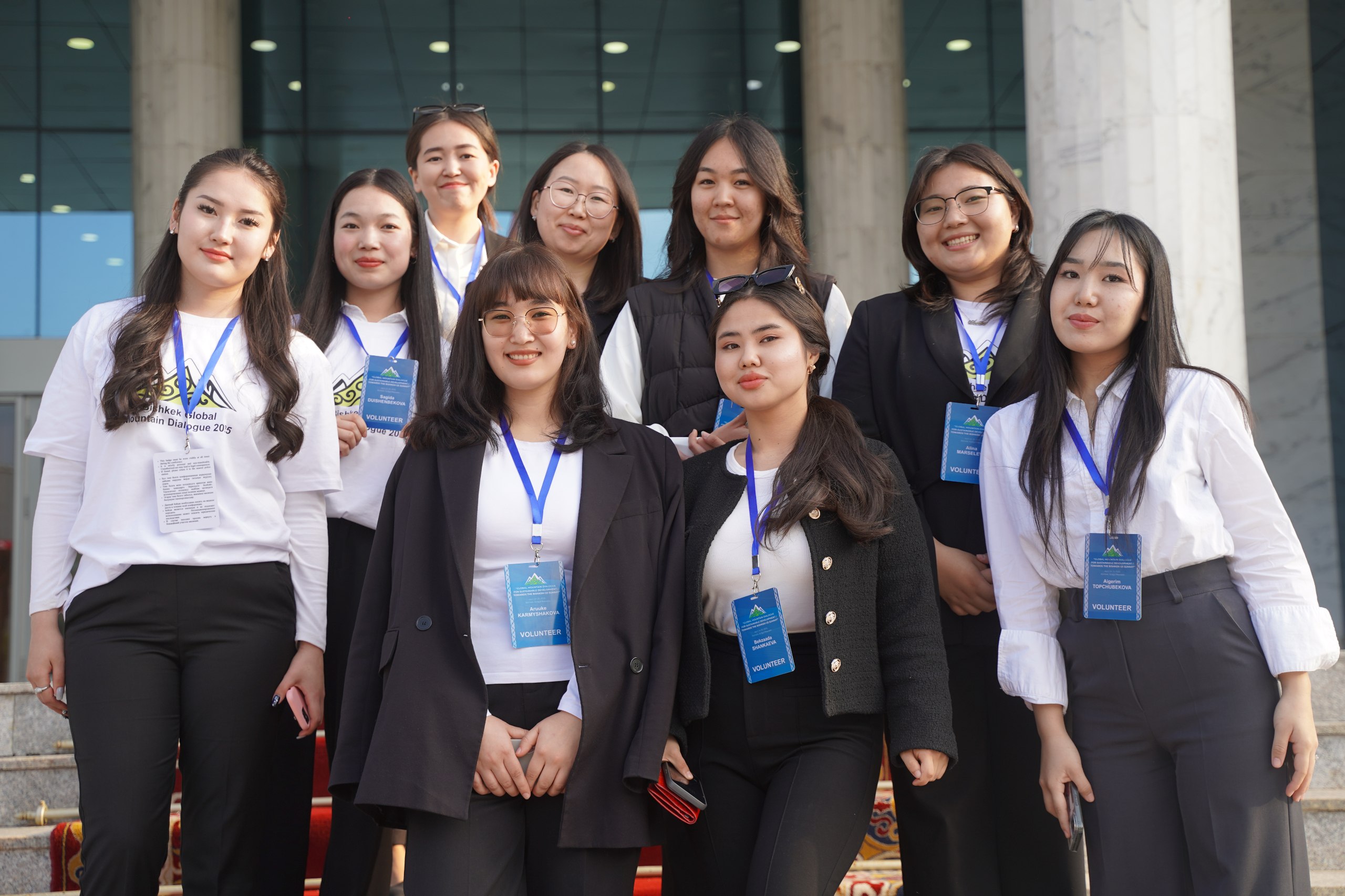
Aruuke: Today, the attitude is very positive and constructive. Many structures themselves come to us with proposals for cooperation. We work closely with the Ministry of Culture, Information and Youth Policy of the Kyrgyz Republic, the Jogorku Kenesh, the Department of Tourism, leading universities such as KNU, IAU, and others, as well as various public and international organizations. Such partnerships help us significantly scale our projects.
TCA: Do you think the state should involve volunteer organizations more actively in work with youth, education, ecology, and social projects?
Aruuke: Yes, absolutely. And it is important to note that this process is already actively underway. Joint initiatives are appearing, and young people themselves are showing initiative and getting involved in them. The more real trust and support there is, the stronger and more effective the result will be for the whole country.
TCA: Does Kyrgyzstan have enough infrastructure for the development of volunteering, training programs, platforms, support, and recognition of volunteer experience?
Aruuke: The infrastructure is gradually developing, but it is still not enough. At the same time, new organizations and initiatives appear every day. They all have different areas of work, but a common goal: the sustainable development of Kyrgyzstan. The state has also begun providing more support by creating better conditions. This is a mutual process, and we can see how the situation is improving.
TCA: How do you work with young people from the regions? Is there a difference between Bishkek and other cities or villages?
Aruuke: Most of our projects are still implemented in Bishkek, but we certainly do not forget the regions. Many young people from the regions launch their own local initiatives, and some specifically come to the capital to take part in our projects. This motivation and energy greatly inspire us to continue our work and try to reach even more young people across the country.
TCA: How does international cooperation affect the development of volunteering in Kyrgyzstan? Is there interest in exchanging experience with other Central Asian countries?
Aruuke: International cooperation has a very positive effect. Our active volunteers often travel to Kazakhstan, Uzbekistan, Russia, and other countries, often with full or partial funding, including flights and accommodation. This is an excellent opportunity to exchange experience, adopt best practices, and return with new ideas. Such exchange greatly broadens horizons and improves the quality of our work.
TCA: How do you see the future of volunteering in Kyrgyzstan in five to ten years?
Aruuke: In five to ten years, I see volunteering as a well-structured, professional, and respected sphere that will become a natural part of life for many young people. There will be more sustainable funding, systems for recognizing volunteer experience, training programs, and infrastructure.
Volunteering will not simply be “help,” but a real platform for personal growth, a starting point for a career, and real influence on the future of the country. Most importantly, the youth of Kyrgyzstan will take responsibility for the development of their country into their own hands even more confidently and actively. We are already on this path.